

Corded vs. Cordless Chainsaws: Which Power Source is Best for Your Yard?
Thinking about getting an electric chainsaw but scratching your head over whether to go corded or cordless? You’re not alone! It’s a common dilemma for homeowners, DIY enthusiasts, and even seasoned landowners looking for a convenient, eco-friendly alternative to gas models. As someone who’s spent countless hours with all types of chainsaws, I can tell you that both corded and cordless options have their unique strengths and weaknesses. The “best” one really depends on your specific needs, where you’ll be working, and what kind of tasks you’re tackling.
Table Of Content
- Corded vs. Cordless Chainsaws: Which Power Source is Best for Your Yard?
- The Corded Chainsaw: Uninterrupted Power, Close to Home
- Pros of Corded Chainsaws
- Cons of Corded Chainsaws
- The Cordless Chainsaw: Freedom and Flexibility Unleashed
- Pros of Cordless Chainsaws
- Cons of Cordless Chainsaws
- Key Comparison Points: What Really Matters When Choosing
- Power and Performance
- Portability and Reach
- Run Time and Recharge
- Maintenance and Ease of Use
- Cost
- Making Your Choice: Which One is Right For You?
- Who is a Corded Chainsaw For?
- Who is a Cordless Chainsaw For?
- Final Thoughts: Power Your Way to Productive Cutting
Today, we’re going to dive deep into a practical, unbiased comparison. My goal is to equip you with all the info you need to make an informed decision, so you can pick the perfect electric chainsaw that feels like an extension of your own hand. Let’s cut through the confusion!
The Corded Chainsaw: Uninterrupted Power, Close to Home
First up, let’s talk about the reliable workhorse that is the corded electric chainsaw. These machines are often the entry point for many homeowners into the world of powered cutting, and for good reason. They are generally simpler, lighter, and more budget-friendly than their battery-powered cousins or gas-powered beasts.
Pros of Corded Chainsaws
- Consistent Power: This is the biggest advantage. As long as it’s plugged in, a corded chainsaw delivers continuous, unwavering power. You won’t experience any power fade as you might with a diminishing battery charge. This means you can keep cutting for as long as you need, provided you have a power source nearby. Most models boast 12-15 amp motors, which is ample for cutting through branches up to 14-18 inches in diameter.
- Lighter Weight: Without a heavy battery pack, corded chainsaws are typically lighter and better balanced. This reduces operator fatigue, making them easier to handle for extended periods, especially for those who might not have the upper body strength for heavier machines.
- Lower Initial Cost: Generally, corded Electric Chainsaws are the most affordable option on the market. This makes them an excellent choice if you’re on a budget or only need a chainsaw for occasional, light-duty work around your property. You won’t need to factor in the cost of expensive batteries or chargers.
- Minimal Maintenance: Like all electric chainsaws, corded models require very little maintenance compared to gas chainsaws. No fuel mixing, no spark plug changes, no carburetor issues – just keep the chain sharp and oiled.
Cons of Corded Chainsaws
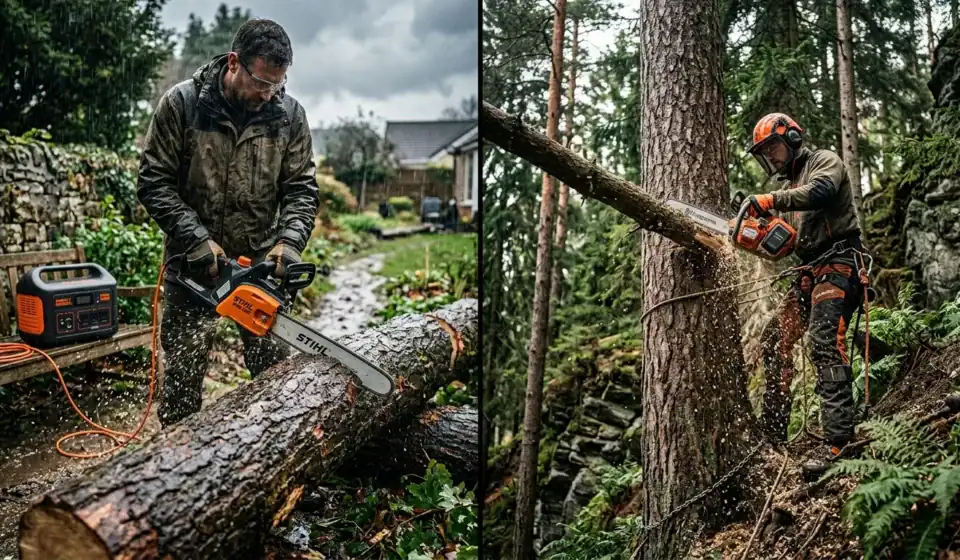
- Limited by Cord Length: This is the obvious drawback. Your cutting radius is dictated by the length of your extension cord and the proximity of a power outlet. For example, imagine you’re cleaning up storm damage on the far side of your property, 100 feet from the nearest outlet. You’d need a substantial, heavy-duty outdoor extension cord, potentially several, to reach your work area. This isn’t just inconvenient; it can also be a safety hazard.
- Tripping Hazard: A long extension cord snaking across your yard creates a significant tripping risk. You also run the risk of accidentally cutting through the cord itself, which can be dangerous and damage your equipment.
- Not for Remote Use: If you need to clear brush in a back woodlot or trim trees at the property line where power isn’t available, a corded model simply won’t cut it.
- Generally Less Powerful Than Gas: While powerful for their class, corded electric chainsaws usually can’t match the raw torque and cutting speed of a comparable gas-powered model, especially for very thick or hardwood tasks.
A great example of a robust corded model for homeowners is the Black+Decker 15 Amp 16-inch Electric Chainsaw, which offers solid power for its class, or the Remington RM1425 Limb N Trim for lighter jobs. These are perfect for clearing fallen branches, pruning limbs, or cutting small logs for firewood near your home or workshop.
The Cordless Chainsaw: Freedom and Flexibility Unleashed
Now, let’s turn our attention to the cordless, battery-powered chainsaws. These tools have seen immense advancements in recent years, becoming incredibly capable and a favorite among many for their sheer convenience and portability.
Pros of Cordless Chainsaws
- Ultimate Portability: This is where cordless chainsaws truly shine. No cords mean you can take them anywhere – deep into the woods, to the furthest corner of your property, or up a ladder (safely, of course!) without worrying about power outlets or tripping hazards. This freedom is a game-changer for many users.
- Instant Start: Just pop in a charged battery, push a button, and you’re ready to go. No pull cords, no choke, no priming, no frustrating starts. This is a huge convenience, especially for quick tasks or when you need to stop and start frequently.
- Quieter Operation: Cordless chainsaws are significantly quieter than both corded and gas models. This means less disturbance for your neighbors and a more comfortable experience for you. You can often work without ear protection, though I still recommend it as a best practice, especially with prolonged use.
- Zero Emissions: Since they run on battery power, there are no harmful exhaust fumes. This makes them ideal for enclosed spaces (though good ventilation is still advised) and a much more environmentally friendly option.
- Good for Light to Medium Tasks: Modern cordless chainsaws, especially those using 40V, 60V, or even 80V lithium-ion batteries, are surprisingly powerful. They can handle felling small trees (up to 12-16 inches in diameter), bucking logs, and extensive limbing with ease. Many offer bar lengths from 10 to 18 inches.
Cons of Cordless Chainsaws
- Limited Run Time: The biggest constraint is battery life. Depending on the battery’s Amp-hour (Ah) rating and the intensity of your cutting, you might only get 20-45 minutes of continuous cutting on a single charge. If you have a lot of work to do, you’ll need multiple batteries or face significant downtime for recharging.
- Battery Cost and Maintenance: Batteries are expensive, often costing a significant portion of the chainsaw’s price. They also degrade over time and require proper storage to maximize their lifespan. For instance, leaving them fully charged or fully depleted for extended periods can shorten their overall life.
- Heavier Than Corded: The battery pack adds considerable weight to the chainsaw, making cordless models generally heavier than their corded counterparts. This can lead to increased fatigue during longer cutting sessions.
- Power Can Fade: As the battery charge dwindles, you might notice a drop in power and cutting efficiency. This isn’t usually a problem with high-quality, modern batteries until they’re quite low, but it’s something to be aware of.
Popular cordless models include the DeWalt 20V MAX XR Compact Chainsaw for lighter tasks, the Ego Power+ 56V 18-inch Chainsaw for a balance of power and battery life, and the Greenworks 80V 18-inch Chainsaw for serious cordless performance. These are excellent choices if you’re tackling work across a larger property or want the freedom to roam.
Key Comparison Points: What Really Matters When Choosing
So far we’ve covered the individual strengths and weaknesses. Now let’s get to the really critical point: how do they stack up head-to-head on the features that matter most to you?
Power and Performance
Honestly, for sheer consistent power over an extended period, a corded chainsaw often has an edge. It draws power directly from the grid, so there’s no battery drain or fade. This means it can maintain its optimal cutting speed indefinitely. Cordless models, while increasingly powerful, will eventually experience a power drop as the battery depletes. For heavy-duty, continuous cutting of larger wood near a power source, corded is hard to beat.
Portability and Reach
This is where cordless chainsaws are the undisputed champions. The ability to work anywhere, without being tethered to an outlet, offers unparalleled freedom. If you have a large property, frequently work in remote areas, or need to climb ladders for pruning (always with extreme caution and proper technique!), a cordless model is the only practical choice. Corded models are confined to the reach of your extension cord, which is always a limiting factor.
Run Time and Recharge
A corded chainsaw offers infinite run time – as long as there’s electricity. You can work all day without interruption. For cordless models, run time is finite and determined by the battery’s capacity (Ah) and the task at hand. You’ll need to factor in recharge times, which can range from 30 minutes to several hours, or invest in multiple expensive batteries to keep working continuously. This is often the biggest hurdle for those considering cordless.
Maintenance and Ease of Use
Both types of electric chainsaws are significantly lower maintenance than gas models. There’s no fuel to mix, no carburetors to clean, and no fussy pull-starts. However, cordless models can be slightly simpler to use due to the absence of cord management. You just click the battery in and go. With a corded model, you always have to be mindful of the cord’s placement to avoid tripping or accidentally cutting it.
Cost
In terms of initial purchase, corded chainsaws are almost always more affordable. You often get a solid 14-16 inch model for well under $100-$150. Cordless chainsaws, especially those with higher voltage batteries and longer bar lengths, can easily run from $200-$400 or more, particularly when you factor in the cost of a good battery and charger, and potentially extra batteries. Long-term, you’ll need to consider the eventual replacement cost of cordless batteries.
Making Your Choice: Which One is Right For You?
So, after all this comparison, how do you decide? Based on my experience and countless conversations with homeowners, here’s my straightforward advice:
Who is a Corded Chainsaw For?
If your primary cutting tasks are close to your home, garage, or workshop, a corded chainsaw is likely your ideal choice. This includes:
- Homeowners with small to medium-sized yards.
- Those who primarily cut firewood in a designated area near an outdoor outlet.
- Anyone doing occasional pruning, limbing, or clearing fallen branches in an accessible area.
- Budget-conscious buyers looking for reliable, consistent power without the premium cost of batteries.
- Users who prioritize lighter weight and ease of handling for longer sessions.
You’ll appreciate the uninterrupted power and lower cost, provided you can manage the extension cord safely. To be fair, a good quality, heavy-gauge outdoor extension cord (like a 12-gauge for lengths up to 100 feet) is a must, and it’s an additional purchase to factor in.
Who is a Cordless Chainsaw For?
If freedom of movement and versatility are paramount, a cordless chainsaw is worth the investment. It’s perfect for:
- Landowners with larger properties where power outlets are scarce.
- Anyone needing to clear brush, prune trees, or cut logs in remote areas.
- Users who value quick, hassle-free starts and quieter operation.
- Those who want an eco-friendly option with zero emissions.
- Individuals who don’t mind investing in extra batteries for extended run time.
In my opinion, if you’re frequently moving around your property, or you value the convenience of just grabbing your saw and going without fumbling for an outlet, the cordless option will significantly enhance your workflow and enjoyment.
Final Thoughts: Power Your Way to Productive Cutting
Ultimately, the best choice between a corded and cordless chainsaw boils down to your specific needs, your property layout, and your budget. There’s no single “better” option; there’s only the option that’s better for *you*.
Consider the typical tasks you’ll perform, how often you’ll use the saw, and where these tasks usually take place. If you’re mainly sticking close to home with an outlet in sight, a corded model offers fantastic value and consistent performance. If you crave the freedom to roam and tackle tasks anywhere on your property, a cordless chainsaw, despite its higher upfront cost and battery considerations, will be an invaluable tool. Whichever you choose, remember that proper safety practices and regular chain maintenance are crucial for both types of chainsaws. Now that you’re armed with this knowledge, you can confidently choose the electric chainsaw that will serve you best for years to come!