


Mastering the Outdoor Domain: A Strategic Guide to Power Tools for the Modern Landowner

As a seasoned chainsaw professional, I’ve spent countless hours navigating forests and properties, witnessing firsthand the sheer power and indispensable utility of a well-tuned chainsaw. For felling trees, bucking logs, or clearing serious brush, nothing quite compares to its raw might and precision. But let’s be honest: a chainsaw, while a mighty king, cannot rule the entire outdoor domain alone. Your property isn’t just about the big cuts; it’s a dynamic landscape demanding a nuanced approach and a diverse arsenal of specialized equipment.
Table Of Content
- The Foundation of Flawless Greenery: Precision Lawn Care Systems
- Walk-Behind Wonders: The Workhorse for Most Yards
- Riding High: Efficiency for Expansive Estates
- Sculpting the Edges: The Art of Precision Trimming and Defining Boundaries
- The Versatile String Trimmer: Beyond Just Weeds
- Dedicated Edgers: For that Crisp, Professional Line
- Tackling Tougher Growth: Brush Cutters for the Unruly
- The Breath of Cleanliness: Debris Management and Property Aesthetics
- Blowers: Clearing the Path to Perfection
- Vacuum/Mulchers: The Multi-Tasking Cleanup Crew
- Chippers & Shredders: Transforming Waste into Resources
- Building Your Smart Power Tool Ecosystem: Synergy and Strategic Investment
- The Rise of Battery Ecosystems: Powering Your Whole Yard
- Gas vs. Electric: Matching Power Source to Purpose
- Strategic Acquisition: Investing in the Right Tools for Your Property
Thinking that your chainsaw can handle every task on your land is like expecting a specialized surgeon to also be your general practitioner, dentist, and optometrist – it simply isn’t feasible or efficient. A truly optimized property, one that looks pristine and functions beautifully, requires a symphony of tools, each expertly designed for its specific role. Today, we’re going to expand our horizons beyond the chain and bar, diving into the strategic world of essential power tools that complete your outdoor power equipment ecosystem. We’ll explore how to choose, utilize, and integrate these machines to transform your property into the envy of the neighborhood, all while making your work smarter, not just harder.
The Foundation of Flawless Greenery: Precision Lawn Care Systems
Your lawn is often the largest, most visible component of your property, acting as the canvas for your outdoor living space. Maintaining a lush, healthy, and neatly manicured lawn isn’t just about aesthetics; it contributes to property value, prevents weed invasion, and provides a pleasant environment. Achieving this requires more than just a simple cut; it demands a precision lawn care system tailored to your specific acreage and terrain. Let’s break down the essential components.
Walk-Behind Wonders: The Workhorse for Most Yards
For many homeowners with yards ranging from small urban plots to half-acre suburban spaces, a walk-behind mower remains the cornerstone of their lawn care system. These versatile machines offer excellent control and maneuverability for navigating obstacles and precise edging.
- Gas-Powered Mowers: These are the traditional choice, known for their robust power and ability to tackle thick, wet grass without bogging down. Engine sizes are typically measured in cubic centimeters (CCs) or sometimes horsepower (HP), with larger numbers indicating more power. A common homeowner model might feature an engine around 140-190 CCs. Look for features like self-propulsion (especially on larger or sloped yards), which significantly reduces user fatigue, and versatile bagging/mulching/side-discharge options. Brands like Honda (e.g., HRN series) and Toro (e.g., Recycler series) are renowned for their reliability and cutting performance. Gas mowers require fuel (often regular gasoline, though some demand specific blends) and regular oil changes, spark plug checks, and air filter cleaning.
- Battery-Electric Mowers: The game-changer for modern homeowners. These machines offer incredible convenience: instant starts with the push of a button, significantly quieter operation, zero emissions during use, and minimal maintenance (no fuel, oil, or spark plugs). Battery voltage (V) and Amp-hours (Ah) are key specs, determining power and runtime. A 56V or 80V system with a 5.0 Ah battery is common for suburban yards. Many battery systems, like those from EGO Power+ or Greenworks Pro, offer interchangeable batteries across a whole suite of outdoor tools, creating a truly unified ecosystem. While runtime is limited by battery capacity, most offer enough power for typical residential lawns, and having a spare battery can extend your work sessions.
Regardless of power source, always prioritize a mower with an adjustable cutting height, allowing you to adapt to grass type and seasonal conditions. A good rule of thumb: never remove more than one-third of the grass blade length at a time to maintain lawn health.
Riding High: Efficiency for Expansive Estates
When your property stretches beyond three-quarters of an acre, or if you simply value speed and comfort, riding lawn mowers become a necessity. These machines drastically cut down mowing time and effort.
- Garden Tractors: These are your traditional riding mowers, steered with a steering wheel and typically offering capabilities beyond just mowing, such as towing small carts, spreading fertilizer, or even snow blowing with attachments. They are excellent for properties with gentle slopes and varied terrain. Look for engine power measured in horsepower (typically 18-25 HP) and deck sizes ranging from 42 to 54 inches. John Deere’s S100 series offers reliable entry-level options.
- Zero-Turn Mowers (ZTRs): For maximum efficiency and maneuverability on larger, more complex landscapes (anything over an acre with obstacles), ZTRs are unparalleled. Their independent wheel motors allow them to pivot 180 degrees in place, eliminating the need for wide turns and significantly reducing mowing time, often by 30-50%. ZTRs are controlled by lap bars or joysticks, offering a different driving experience that takes some getting used to. Look for powerful engines (often V-twin, 20-30+ HP) and heavy-duty fabricated decks (48-60+ inches) for durability. Brands like Cub Cadet (Ultima series), Husqvarna, and Ferris are leaders in this category.
For any mower, remember that a dull blade tears grass, leaving ragged edges that are prone to disease and give your lawn a less vibrant look. Sharpen your mower blades at least once per season, or more frequently if you encounter sandy soil or debris.
Sculpting the Edges: The Art of Precision Trimming and Defining Boundaries
Even the most perfectly mowed lawn can look unfinished without crisp edges and tidy borders. This is where specialized trimming and edging tools come into their own, providing the crucial detail work that elevates a good yard to a great one. These tools allow you to precisely manage vegetation where your mower can’t reach, creating clean lines and preventing overgrowth.
The Versatile String Trimmer: Beyond Just Weeds
Often called a weed eater or weed whacker, the string trimmer is indispensable for cutting grass around trees, fences, garden beds, and other obstacles. It uses a rapidly spinning nylon line to cut vegetation.
- Power Sources: Like mowers, string trimmers come in gas, corded electric, and battery-electric variants.
- Gas Trimmers: Offer the most power and unlimited runtime for extensive, heavy-duty trimming, tackling thick weeds and dense growth. Engine sizes typically range from 25-35 CCs. Models like the STIHL FS 56 RC-E or Husqvarna 128LD are popular for their balance of power and user-friendliness.
- Battery Trimmers: Provide excellent convenience, quiet operation, and zero emissions. Voltage (V) and Amp-hours (Ah) again dictate power and run time. Modern battery trimmers, such as the DeWalt 20V/60V MAX or Milwaukee M18 FUEL models, are powerful enough for most residential tasks and share batteries with other tools, a significant advantage.
- Shaft Types: Straight shafts offer better reach under bushes and are generally preferred by professionals, while curved shafts can be more comfortable for some users and easier to maneuver in tight spots.
- Line Types: Don’t overlook the importance of the cutting line! Different diameters (e.g., 0.080″ for light grass, 0.095″ for heavier weeds) and shapes (round, square, twisted, serrated) exist. Thicker, more aggressive lines are needed for tough weeds and brush, while standard round line is fine for light grass.
Dedicated Edgers: For that Crisp, Professional Line
While many string trimmers offer an “edging mode,” a dedicated lawn edger creates a far superior, razor-sharp line along driveways, sidewalks, and flower beds. These tools feature a vertical metal blade that cuts a clean trench between the lawn and hard surfaces.
- Blade Depth Control: Essential for consistent results. Most edgers allow you to adjust the blade depth, typically from 0.5 to 2.5 inches, to match your desired edge and terrain.
- Wheel Guidance: Edgers ride on wheels, making it easy to follow straight lines and curves with precision.
- Power Options: Gas-powered edgers, like the McLane 101-5.5GC, offer the most power for tough, overgrown edges. Battery-electric models, such as the Ryobi 40V Edger, provide convenience for regular maintenance. If you crave that truly professional border, a dedicated edger is an invaluable investment.
Tackling Tougher Growth: Brush Cutters for the Unruly
Sometimes, a string trimmer just isn’t enough. For clearing dense brush, saplings, and heavy weeds in neglected areas, a brush cutter is the tool of choice. These are essentially heavy-duty trimmers capable of mounting metal blades (like steel brush blades or saw blades) instead of just nylon line.
- Engine Power: Brush cutters typically have more powerful engines (often 30 CCs and up) and more robust gearboxes than standard string trimmers.
- Blade Attachments: The key differentiator. You can swap out the string head for a variety of metal blades designed to slice through thick stalks, woody vegetation, and small trees.
- Safety: Due to the power and metal blades, brush cutters demand extra caution and proper PPE, including a face shield and heavy-duty gloves. STIHL FS 91 R or Husqvarna 525LS are examples of robust brush cutters that can handle significant clearing tasks.
The Breath of Cleanliness: Debris Management and Property Aesthetics
After all the cutting, trimming, and shaping, you’re inevitably left with a collection of leaves, grass clippings, and small branches. Efficient debris management is crucial for maintaining a clean, healthy, and visually appealing property. It’s not just about tidiness; excessive organic matter can smother grass, harbor pests, and clog drainage.
Blowers: Clearing the Path to Perfection
Leaf blowers are the ultimate tool for quickly moving leaves, grass clippings, and light debris. They save immense time compared to raking and are essential for giving your property a final, polished look.
- Handheld Blowers: Ideal for smaller yards, driveways, and quick cleanups. They are lighter and easier to maneuver. Both gas (e.g., Husqvarna 125B) and battery-electric (e.g., EGO LB6504) models are widely available. Key metrics are CFM (Cubic Feet per Minute), which measures air volume, and MPH (Miles Per Hour), which measures air speed. Higher CFM is generally better for moving large piles, while higher MPH is effective for dislodging wet, stuck-on debris.
- Backpack Blowers: For larger properties (over half an acre), significant leaf fall, or commercial use, backpack blowers are indispensable. They offer much greater power and comfort for extended periods. Gas-powered models dominate this category (e.g., STIHL BR 600, Echo PB-580T), with powerful engines often exceeding 60 CCs and delivering massive CFM and MPH numbers. Battery backpack blowers are also emerging, offering quieter operation for sensitive environments.
When using a blower, always wear hearing protection, eye protection, and a dust mask. Be mindful of directing debris away from neighbors and roads.
Vacuum/Mulchers: The Multi-Tasking Cleanup Crew
For those who want to collect debris efficiently and reduce its volume, a blower that converts into a vacuum/mulcher is a fantastic multi-functional tool. These machines not only suck up leaves but also shred them into fine mulch, which can be easily bagged, composted, or used as garden bedding.
- Shredding Ratio: A key specification for mulchers is the shredding ratio (e.g., 10:1 or 16:1), indicating how much the volume of debris is reduced. A 16:1 ratio means 16 bags of leaves are reduced to just one bag of mulch.
- Impeller Material: Look for metal impellers over plastic for better durability and mulching performance, especially if you deal with tougher debris. Brands like Black+Decker (BV6000) and WORX (Trivac series) offer popular electric and battery vacuum/mulchers.
Chippers & Shredders: Transforming Waste into Resources
For landowners dealing with substantial amounts of branches, woody debris, or garden waste beyond what a vacuum/mulcher can handle, a dedicated chipper or shredder is a powerful asset. These machines process larger materials, reducing them to manageable wood chips or fine compostable material.
- Chipping Capacity: This refers to the maximum diameter of branches the machine can process, typically ranging from 1.5 inches for electric models (Sun Joe CJ603E) to 3-4 inches or more for gas-powered units (ECHO Bear Cat SC2170).
- Hopper Design: Look for a wide, easily accessible hopper for safe and efficient feeding.
Chippers and shredders not only help you clear your property but also allow you to create valuable mulch for your garden beds, enriching your soil and suppressing weeds – a true closed-loop system for yard waste.
Building Your Smart Power Tool Ecosystem: Synergy and Strategic Investment
The key to mastering your outdoor domain isn’t just owning a collection of tools; it’s about building a cohesive, efficient, and strategically chosen ecosystem of equipment. This approach maximizes your investment, simplifies maintenance, and ultimately makes your property care more enjoyable and productive.
The Rise of Battery Ecosystems: Powering Your Whole Yard
For many homeowners, the most impactful strategic decision is embracing a single battery platform. Modern battery technology has advanced to the point where cordless tools can rival the power of their gas counterparts for most residential tasks, with numerous advantages:
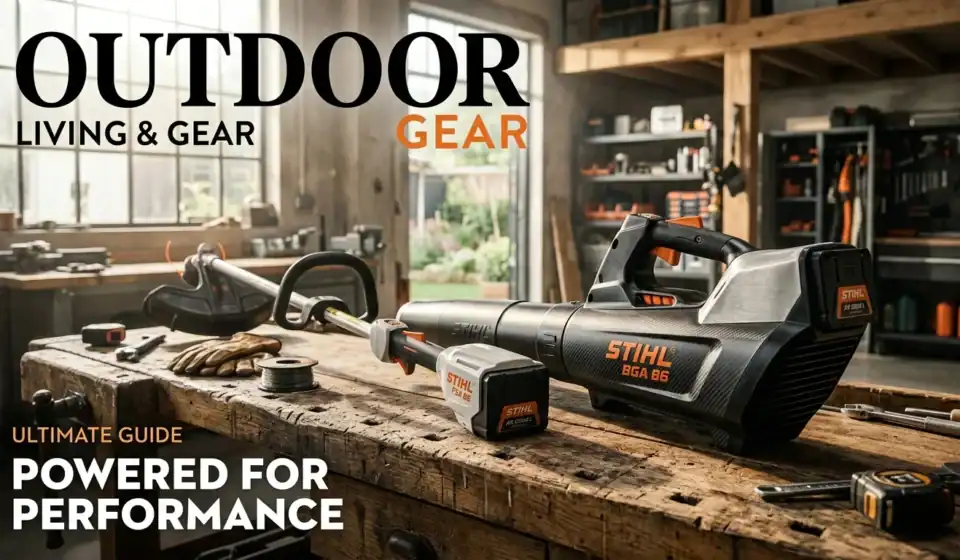
- Interchangeability: The ability to use the same battery across your mower, trimmer, blower, hedge trimmer, and even chainsaw (for lighter tasks) is incredibly convenient. It reduces clutter, saves money on duplicate batteries and chargers, and ensures you always have a charged power source.
- Convenience & Maintenance: Instant starts, no pull cords, no fuel mixing, no spark plugs, no oil changes. Just pop in a charged battery and go.
- Quiet & Eco-Friendly: Significantly lower noise levels are a blessing for both you and your neighbors, and zero emissions mean a cleaner breathing environment.
- Key Considerations: When choosing a battery platform, consider the voltage (V – generally higher means more power) and Amp-hours (Ah – higher means longer runtime). Brands like EGO Power+, Greenworks Pro, DeWalt 20V/60V MAX, Milwaukee M18/M28, and STIHL’s AP System offer robust and extensive battery tool lines. Commit to one platform if possible to maximize interchangeability.
Gas vs. Electric: Matching Power Source to Purpose
While battery tools are rapidly improving, gas-powered equipment still holds a vital place in certain scenarios:
- Gas Dominance: For professional users, very large properties, or tasks demanding extreme, continuous power (e.g., large riding mowers, heavy-duty backpack blowers, or powerful chainsaws for felling large trees), gas engines still offer superior sustained performance and unlimited runtime (as long as you have fuel). Two-stroke engines (common in smaller tools like trimmers and handheld blowers) require a specific gas-oil mixture, while four-stroke engines (common in mowers) use straight gasoline and have a separate oil reservoir.
- Electric (Corded & Battery) Strengths: For convenience, lower noise, minimal maintenance, and environmental benefits, electric tools are often the preferred choice for residential users. Corded electric tools offer unlimited runtime but are tethered by an extension cord, making them best for smaller, confined areas.
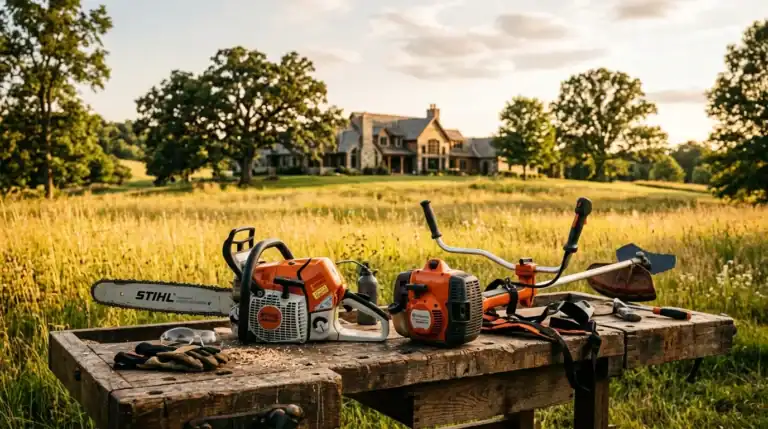
The best approach often involves a hybrid strategy: a powerful gas-powered chainsaw for the big jobs, a gas riding mower for expansive lawns, but then a suite of battery-powered handheld tools (trimmer, blower, hedge trimmer) for convenience and quiet operation on daily tasks.
Strategic Acquisition: Investing in the Right Tools for Your Property
Building your ideal power tool ecosystem is an investment, so approach it strategically:
- Assess Your Needs: Honestly evaluate your property’s size, terrain, type of vegetation, and the tasks you perform most frequently. Do you have a small urban lawn or several acres of varied landscape?
- Set a Budget: Quality tools last longer and perform better, but they come at a cost. Prioritize essential tools first, then expand your arsenal.
- Research and Read Reviews: Don’t buy blindly. Look for reputable brands known for durability, performance, and customer support.
- Consider Multi-Functional Tools: Some tools, like certain string trimmers, offer attachments that convert them into edgers, pole saws, or cultivators, saving space and money.
- Invest in Quality PPE: Regardless of the tool, always prioritize safety. Eye protection, hearing protection, gloves, and appropriate footwear are non-negotiable.
By thoughtfully considering these aspects, you’ll move beyond simply acquiring tools and start building a smart, synergistic system that empowers you to manage your outdoor domain with unparalleled efficiency and pride.
So, while your chainsaw will always be the king of the forest, remember that a truly magnificent kingdom requires a full complement of loyal and specialized subjects. Invest wisely, maintain diligently, and enjoy the fruits of your labor as you transform your property into a perfectly manicured masterpiece.