


Why a Lightweight Chainsaw is Your Homeowner Hero
For homeowners, DIY enthusiasts, and anyone managing a smaller property, a lightweight chainsaw isn’t just a convenience—it’s often the smartest, safest choice. These nimble machines strike a perfect balance, offering enough power for common yard tasks like limbing, clearing brush, and cutting small to medium-sized firewood, all without the cumbersome weight and fatigue associated with larger, professional-grade saws.
Table Of Content
- Why a Lightweight Chainsaw is Your Homeowner Hero
- Gas vs. Electric vs. Battery: Choosing Your Power Source
- Gas-Powered Lightweight Chainsaws
- Corded Electric Lightweight Chainsaws
- Battery-Powered Lightweight Chainsaws
- Key Features to Look for in a Lightweight Chainsaw
- Bar Length & Chain Type
- Weight & Balance
- Safety Features
- Ease of Maintenance
- Top Picks for Homeowners (2026)
- What to Watch Out For: Avoiding Common Pitfalls
- Essential Safety Tips for Lightweight Chainsaws
- Frequently Asked Questions
- What tasks are lightweight chainsaws best for?
- Are battery chainsaws powerful enough?
- How often should I sharpen my chain?
Maneuverability is key when you’re working around your home. Imagine you’re clearing storm debris after a windy night: branches are everywhere, some tangled, some overhead. Trying to wield a heavy, 15-pound beast in such a situation is not only exhausting but significantly increases your risk of an accident. A lighter saw, typically under 10 pounds (powerhead only), allows for much better control, reduces strain on your arms and back, and makes those awkward cuts far safer and easier to execute. Honestly, for most residential tasks, you just don’t need a massive saw.
Based on my years of experience, I believe that the reduced physical demand of a lightweight chainsaw translates directly into improved safety, especially for less experienced users. You’ll maintain better balance, have quicker reaction times, and ultimately feel more confident and less fatigued, which prevents mistakes. This isn’t about sacrificing capability; it’s about matching the tool to the job and prioritizing user comfort and safety.
Gas vs. Electric vs. Battery: Choosing Your Power Source
When you’re eyeing a lightweight chainsaw, the first big decision you’ll face is the power source. Each has its pros and cons, perfectly suited for different homeowner needs. Let’s break them down.
Gas-Powered Lightweight Chainsaws
Gas chainsaws offer the most raw power and unrestricted mobility for their size. They’re ideal if you need to tackle slightly larger branches, work in remote areas without power outlets, or simply prefer the traditional feel and performance. Look for models in the 30cc to 40cc engine size range, typically paired with a 12-inch to 16-inch bar. These offer an excellent power-to-weight ratio for homeowners.
- Pros: Excellent power, no cords, go anywhere, quick refueling.
- Cons: Louder, require fuel mixing, more maintenance (carburetors, spark plugs), emissions.
- Examples: The Stihl MS 170 (30.1cc, 16″ bar, around 8.6 lbs powerhead) and the Husqvarna 120 Mark II (38.2cc, 16″ bar, around 10.7 lbs powerhead) are classic homeowner favorites for their reliability and performance.
Corded Electric Lightweight Chainsaws
If you’re primarily working close to a power outlet, a corded electric chainsaw is a fantastic, low-hassle option. They’re quiet, start instantly with the push of a button, and require minimal maintenance. The trade-off, of course, is being tethered to an extension cord, which can limit your range and sometimes be a tripping hazard. For tasks like cutting firewood near your garage or pruning in the backyard, they’re incredibly convenient.
- Pros: Instant start, quiet, zero emissions, very little maintenance, no fuel.
- Cons: Limited by cord length, potential tripping hazard, generally less powerful than gas.
- Examples: Models like the Oregon CS1500 (15 amp, 18″ bar, 12.6 lbs) or various WEN models (e.g., 14-amp, 16″ bar) are popular for their ease of use and robust performance within their limitations.
Battery-Powered Lightweight Chainsaws
Battery-powered chainsaws have truly revolutionized the lightweight category in recent years. They combine the cord-free mobility of gas with the instant start, quiet operation, and low maintenance of electric models. While initial battery runtimes and power used to be concerns, modern 40V to 80V systems now offer impressive cutting ability and decent duration for most homeowner tasks. They are perfect for quick jobs, limbing, and general yard cleanup where you don’t want to deal with gas or cords.
- Pros: Cord-free, quiet, instant start, zero emissions, low maintenance, increasingly powerful.
- Cons: Limited run time per charge, batteries can be expensive, power can drop as battery drains.
- Examples: The Greenworks 40V 12-inch (around 6 lbs without battery) or the EGO Power+ 56V 16-inch (around 10.5 lbs without battery) are excellent choices, offering impressive power and user-friendliness.
Key Features to Look for in a Lightweight Chainsaw
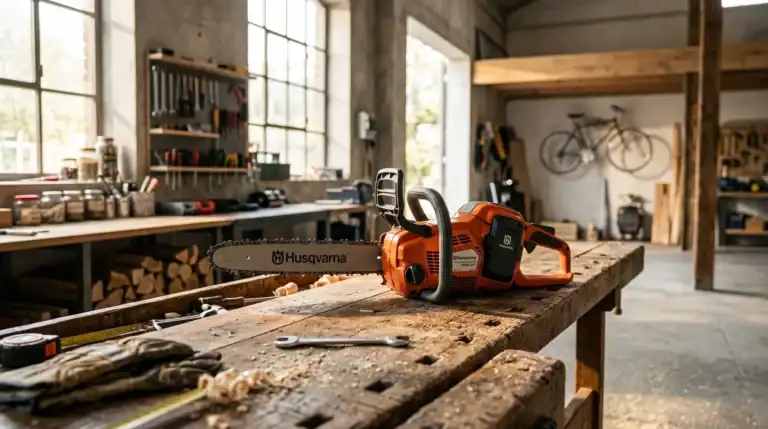
Beyond the power source, specific features can make a huge difference in your experience. Don’t just pick the cheapest option; consider these points for maximum value and safety.
Bar Length & Chain Type
For most homeowners, a 12-inch to 16-inch bar is perfect. This length is manageable for limbing, felling small trees (up to 12-14 inches in diameter with proper technique), and cutting firewood. Always prioritize chains with low-kickback designs, often indicated by a green label on the chain or bar. This is a critical safety feature for less experienced users.
Weight & Balance
Aim for a powerhead weight of under 10 pounds, if possible. But weight isn’t the only factor; how the saw feels in your hands, its balance, is equally important. A well-balanced saw, even if it’s a pound or two heavier, can feel lighter and be easier to control than a poorly balanced lighter one. Always try to hold the saw before buying, if possible, to get a feel for it.
Safety Features
Even lightweight chainsaws require respect. Look for models with a chain brake (manual or inertia-activated) that stops the chain instantly in case of kickback. An anti-vibration system will reduce user fatigue, and a good front handguard protects your hand. These aren’t optional; they’re essential for safe operation.
Ease of Maintenance
Features like tool-less chain tensioning and an automatic chain oiler will save you a lot of time and frustration. For gas models, accessible air filters and spark plugs are a plus. For electric and battery models, ensure the chain and bar are easy to remove and clean. Regular maintenance is crucial for longevity, so easier access means you’re more likely to do it.
Top Picks for Homeowners (2026)
To help you narrow down your choices, here’s a quick comparison of some excellent lightweight chainsaws that consistently impress us here at Best Professional Chainsaw:
| Model | Power Type | Engine/Voltage | Bar Length | Approx. Weight (Powerhead Only) | Key Features |
|---|---|---|---|---|---|
| Stihl MS 170 | Gas | 30.1cc | 16 inches | 8.6 lbs | Reliable, good power, compact design |
| Husqvarna 120 Mark II | Gas | 38.2cc | 16 inches | 10.7 lbs | Air Injection, X-Torq engine, easy starting |
| EGO Power+ CS1604 | Battery | 56V | 16 inches | 10.5 lbs (w/o battery) | Tool-free chain tensioning, brushless motor, weather-resistant |
| Greenworks 40V 20312 | Battery | 40V | 12 inches | 6.0 lbs (w/o battery) | Very lightweight, ideal for limbing, auto-oiler |
| Oregon CS1500 | Corded Electric | 15 Amp | 18 inches | 12.6 lbs | Integrated PowerSharp sharpening system, instant start |
What to Watch Out For: Avoiding Common Pitfalls
Choosing a lightweight chainsaw is great, but there are a few traps I’ve seen homeowners fall into. First, don’t undersize for truly big jobs. A lightweight saw is fantastic for its intended purpose, but trying to fell a mature oak with a 12-inch battery saw is dangerous and inefficient. Know your saw’s limits.
Secondly, be wary of extremely cheap, no-name brands. While tempting, these often compromise on critical safety features, build quality, and after-sales support. Investing a little more in a reputable brand like Stihl, Husqvarna, EGO, or Greenworks will pay dividends in reliability, performance, and peace of mind.
Finally, neglecting maintenance is a common mistake. Even lightweight saws need their chain sharpened, bar cleaned, and oil reservoir checked. A dull chain is not only less efficient but also increases the risk of kickback. Check out our ultimate guide to chainsaw maintenance for detailed steps.
Essential Safety Tips for Lightweight Chainsaws
No matter how light or easy to use a chainsaw is, safety must always be your top priority. Always wear appropriate Personal Protective Equipment (PPE), including a hard hat, eye protection, hearing protection, chainsaw gloves, chainsaw chaps, and steel-toed boots. Make sure your work area is clear of obstructions and bystanders.
Understand how to handle kickback by always keeping a firm two-hand grip and avoiding cutting with the tip of the bar. Maintain a stable stance and never cut above shoulder height. Before you even start the saw, take a moment to plan your cuts and identify potential hazards. For more in-depth knowledge, our comprehensive chainsaw safety guide is a must-read.
Frequently Asked Questions
What tasks are lightweight chainsaws best for?
Lightweight chainsaws excel at limbing fallen branches, pruning small trees, clearing brush, and cutting small to medium-sized firewood. They are also fantastic for general yard cleanup and storm damage removal, offering the maneuverability needed for precise cuts.
Are battery chainsaws powerful enough?
Modern battery chainsaws, especially those with 40V to 80V systems, are surprisingly powerful. They are more than capable of handling most homeowner tasks, including cutting through 10-14 inch diameter logs, making them a very viable and convenient option.
How often should I sharpen my chain?
You should sharpen your chainsaw chain every time you refuel (for gas saws) or after a couple of hours of cutting (for electric/battery saws), or immediately if you notice it’s cutting slowly, tearing wood, or producing sawdust instead of chips. A sharp chain is a safe and efficient chain.
Choosing the best lightweight chainsaw for your home is about finding that sweet spot where power meets ease of use and, crucially, safety. By considering the power source, key features, and reputable brands, you’re well on your way to making an informed decision that will serve you reliably for years to come. Remember, the right tool makes every job safer and more satisfying. So, get out there, tackle those yard projects with confidence, and always prioritize safety!