


Unleashing the Full Potential of Your Corded Electric Chainsaw
Corded electric chainsaws are fantastic tools for homeowners, DIY enthusiasts, and even some landowners. They offer instant starts, less noise, zero emissions, and no fuel mixing headaches. While they might not have the raw power or unrestricted mobility of their gas-powered cousins, with the right approach, you can significantly maximize their cutting power and operational reach. As your trusted chainsaw expert, I’m here to share actionable tips to get the most out of your electric workhorse.
Table Of Content
Boosting Cutting Power and Efficiency
The “power” of your corded electric chainsaw isn’t just about its motor’s amperage; it’s also about how efficiently that power is delivered to the wood. Here’s how to ensure every watt counts:
- Keep Your Chain Razor Sharp: This is the single most important factor for maximizing cutting power. A dull chain forces your saw’s motor to work harder, leading to slower cuts, overheating, and potential motor damage. It also creates fine sawdust instead of wood chips. Learn to sharpen your chain regularly, or have it professionally sharpened. A sharp chain glides through wood, making quick, clean cuts.
- Maintain Proper Chain Tension: A chain that’s too loose can derail, which is dangerous, and a chain that’s too tight creates excessive friction, robbing power and causing premature wear. Check your owner’s manual for the correct tension; generally, the chain should be snug against the guide bar but still allow you to pull it around the bar with a gloved hand.
- Use the Right Chain Type: For general homeowner tasks, a low-kickback, semi-chisel chain is often recommended. While full-chisel chains cut faster, they require more power and are more prone to kickback, making them less suitable for beginners. Technical Term: Kickback refers to the sudden, uncontrolled upward and backward motion of the chainsaw if the tip of the guide bar strikes an object or gets pinched.
- Don’t Force the Cut: Let the saw do the work. Apply steady, moderate pressure. Forcing the saw causes the motor to bog down, generates more heat, and doesn’t cut faster. Electric chainsaws typically have bar lengths ranging from 14 to 18 inches and motor amperages from 12 to 15 Amps. Match your saw to the task; a 14-inch, 12-Amp saw is great for pruning, while an 18-inch, 15-Amp model can handle felling small trees.
- Keep it Clean: Regularly clean out sawdust and debris from the chain, guide bar groove, and especially the motor’s air vents. Blocked vents can lead to overheating, reducing performance and shortening motor life.
Extending Your Operational Reach Safely
The primary limitation of a corded electric chainsaw is its reliance on an electrical outlet. However, with careful planning and the right equipment, you can significantly extend your working radius.
- Choose the Correct Extension Cord: This is critical for both performance and safety. A cord that’s too long or too thin (high gauge number) will suffer from voltage drop. Technical Term: Voltage drop is the reduction in electrical potential along the length of a conductor. It means less power reaches your chainsaw, causing it to run weaker, overheat, and potentially damage the motor.
- Length and Gauge Match:
- For lengths up to 50 feet, a 14-gauge (14 AWG) cord is usually sufficient for most 12-15 Amp chainsaws.
- For lengths up to 100 feet, you absolutely need a 12-gauge (12 AWG) cord to prevent significant voltage drop.
- Avoid using cords longer than 100 feet. If you need more reach, consider a battery-powered chainsaw or a gas model.
- Outdoor Rating: Always use an outdoor-rated extension cord (look for “W” or “WA” on the jacket) that can withstand weather and abrasion.
- Don’t Overload: Never plug multiple high-draw tools into a single extension cord or circuit.
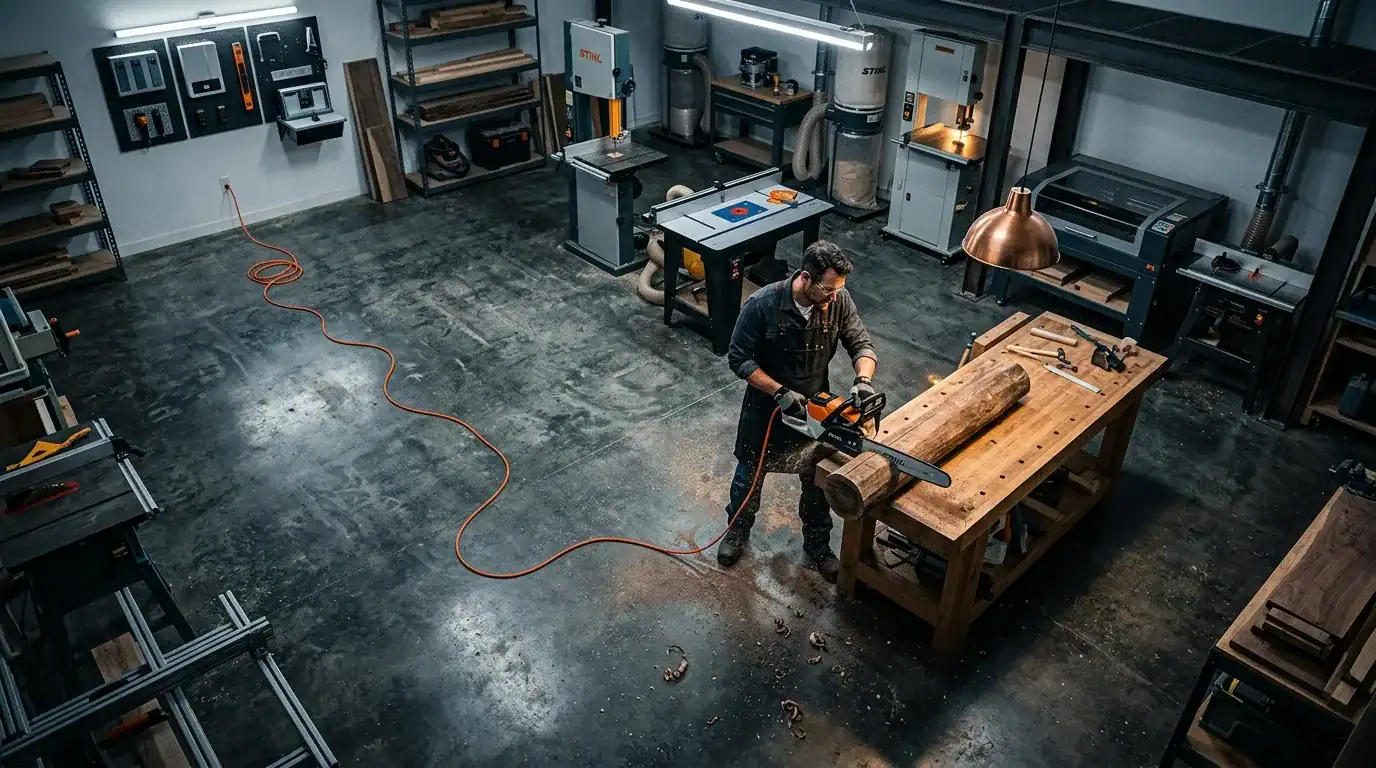
- Plan Your Cutting Area: Before you start, lay out your extension cord carefully. Ensure it’s not in the cutting path, won’t get tangled around your feet, and won’t snag on branches or debris. Use cord holders or ties to keep it out of the way.
- Secure Connections: Use a cord lock or tie a knot (called a “lineman’s knot”) between the chainsaw cord and the extension cord to prevent accidental disconnection during operation.
- Consider a Corded Electric Pole Saw for High Reach: While we’re talking about reach, remember that a standard chainsaw is not designed for overhead work. For cutting high branches safely, a dedicated corded electric pole saw is the proper tool. Don’t try to extend your chainsaw with ladders or makeshift attachments; it’s extremely dangerous.
Safety First, Always!
No matter how powerful or far-reaching your chainsaw becomes, safety must always be your top priority. Always wear appropriate Personal Protective Equipment (PPE) including safety glasses, hearing protection, gloves, sturdy footwear, and chainsaw chaps. Be aware of your surroundings, especially the extension cord, and keep bystanders at a safe distance.
By implementing these tips – keeping your chain sharp, using proper technique, and selecting the right extension cord – you’ll transform your corded electric chainsaw into a more powerful, efficient, and safer tool for all your outdoor cutting needs. Happy cutting!