



Why Choose a Remington Pole Saw for Your Property?
As someone who’s spent countless hours maintaining properties and tackling tough arboreal challenges, I often get asked about reliable tools for overhead work. When it comes to reaching those stubborn high branches without hauling out a ladder or hiring a professional, a pole saw is an absolute game-changer. And among the various brands available, Remington has carved out a solid reputation, particularly among homeowners and landowners, for delivering practical and dependable outdoor power equipment.
Table Of Content
- Why Choose a Remington Pole Saw for Your Property?
- Understanding Remington Pole Saw Models: Electric, Gas, and Cordless
- Remington Electric Pole Saws (Corded)
- Remington Gas-Powered Pole Saws
- Remington Cordless Pole Saws (Battery-Powered)
- Key Parts of Your Remington Pole Saw and How They Work
- The Cutting Head: Bar, Chain, and Sprocket
- The Powerhead: Motor, Engine, and Battery
- The Pole and Handle System
- Maintaining Your Remington Pole Saw for Peak Performance and Longevity
- Pre-Operation Checks: Your Safety Checklist
- Post-Operation Maintenance: Keeping It Clean and Sharp
- Seasonal and Long-Term Storage
- Safety First: Essential Practices for Operating a Remington Pole Saw
- Personal Protective Equipment (PPE): Your First Line of Defense
- Work Area Preparation and Hazard Assessment
- Proper Cutting Techniques for Pole Saws
Remington pole saws stand out for their blend of accessibility, decent performance, and user-friendly design. They aren’t always the most advanced professional models, but for the vast majority of users, they offer a fantastic balance of features needed to keep your trees neat and tidy. Whether you’re a seasoned DIY enthusiast or just starting to manage your property’s trees, a Remington pole saw provides the reach and cutting power you need to prune effectively, remove dead limbs, and maintain your landscape safely from the ground.
The primary advantage of any pole saw is safety; it keeps you off a ladder while cutting. Remington enhances this with adjustable poles and ergonomic designs that make handling less fatiguing. They’ve consistently focused on delivering tools that are easy to start, operate, and maintain, which is crucial for users who might not be working with chainsaws every day. From electric models perfect for light yard work to more robust gas-powered options for thicker branches, Remington offers a range that caters to various needs and property sizes.
Understanding Remington Pole Saw Models: Electric, Gas, and Cordless
Remington offers pole saws across the three major power platforms: electric (corded), gas-powered, and cordless (battery-powered). Each type has its unique strengths and ideal applications, and understanding these differences is key to choosing the right tool for your specific trimming tasks. Let’s break down what each offers.
Remington Electric Pole Saws (Corded)
For homeowners with smaller yards or those who primarily deal with lighter pruning tasks close to an outdoor power outlet, a Remington electric corded pole saw is often an excellent choice. These models are typically lighter, quieter, and produce zero emissions during operation, making them a more eco-friendly option for residential use. Their consistent power supply means you don’t have to worry about fuel mixes or battery life; just plug them in and you’re ready to cut.
Typical Remington corded electric pole saws feature motors ranging from 6 to 8 amps, providing ample power for cutting branches up to 6-8 inches in diameter. Common bar lengths are around 8 to 10 inches, which is perfect for most small to medium-sized limbs. While the cord limits mobility, an appropriately rated extension cord can extend your reach significantly. These models are known for their instant start-up and minimal maintenance, primarily involving chain and bar care.
Remington Gas-Powered Pole Saws
If you’re tackling larger properties, thicker branches, or need the freedom to work far from any power source, a Remington gas-powered pole saw will be your workhorse. These models offer superior power and mobility compared to their electric counterparts, allowing you to slice through dense wood with greater speed and efficiency. They are favored by landowners and those with more substantial tree trimming demands, often capable of handling branches up to 10-12 inches in diameter.
Remington gas pole saws typically feature 2-cycle engines, meaning they require a specific gasoline-to-oil mixture, usually around 40:1 or 50:1. Engine displacements often range from 25cc to 30cc, providing robust power for tougher jobs. While heavier, noisier, and requiring more maintenance (like air filter cleaning and spark plug checks), their unrestricted mobility and sustained power output make them indispensable for serious tree maintenance. Always remember to wear appropriate hearing protection when operating these powerful machines.
Remington Cordless Pole Saws (Battery-Powered)
The cordless pole saw strikes a fantastic balance between the quiet, emission-free operation of electric models and the mobility of gas-powered units. For medium-sized properties or quick trimming tasks where convenience is paramount, a Remington battery-powered pole saw offers unparalleled ease of use. You get the freedom from cords and fuel, coupled with respectable cutting power for a wide range of tasks.
Remington cordless models typically operate on 20V to 40V lithium-ion battery platforms, often sharing batteries with other Remington outdoor power tools. These batteries provide sufficient runtime for numerous cuts, though it’s always wise to have a spare battery on hand for larger jobs. Bar lengths usually fall in the 8 to 10-inch range, ideal for branches up to 6-8 inches thick. While they might not match the raw power of a gas saw for heavy-duty work, their instant start, lower noise, and minimal ongoing maintenance make them incredibly appealing for most residential users.
Key Parts of Your Remington Pole Saw and How They Work
To effectively operate and maintain your Remington pole saw, it’s crucial to understand its core components. Think of your pole saw as a finely tuned instrument; each part plays a vital role in its overall performance and, more importantly, your safety. Let’s delve into the essential features you’ll find on most Remington pole saws.
The Cutting Head: Bar, Chain, and Sprocket
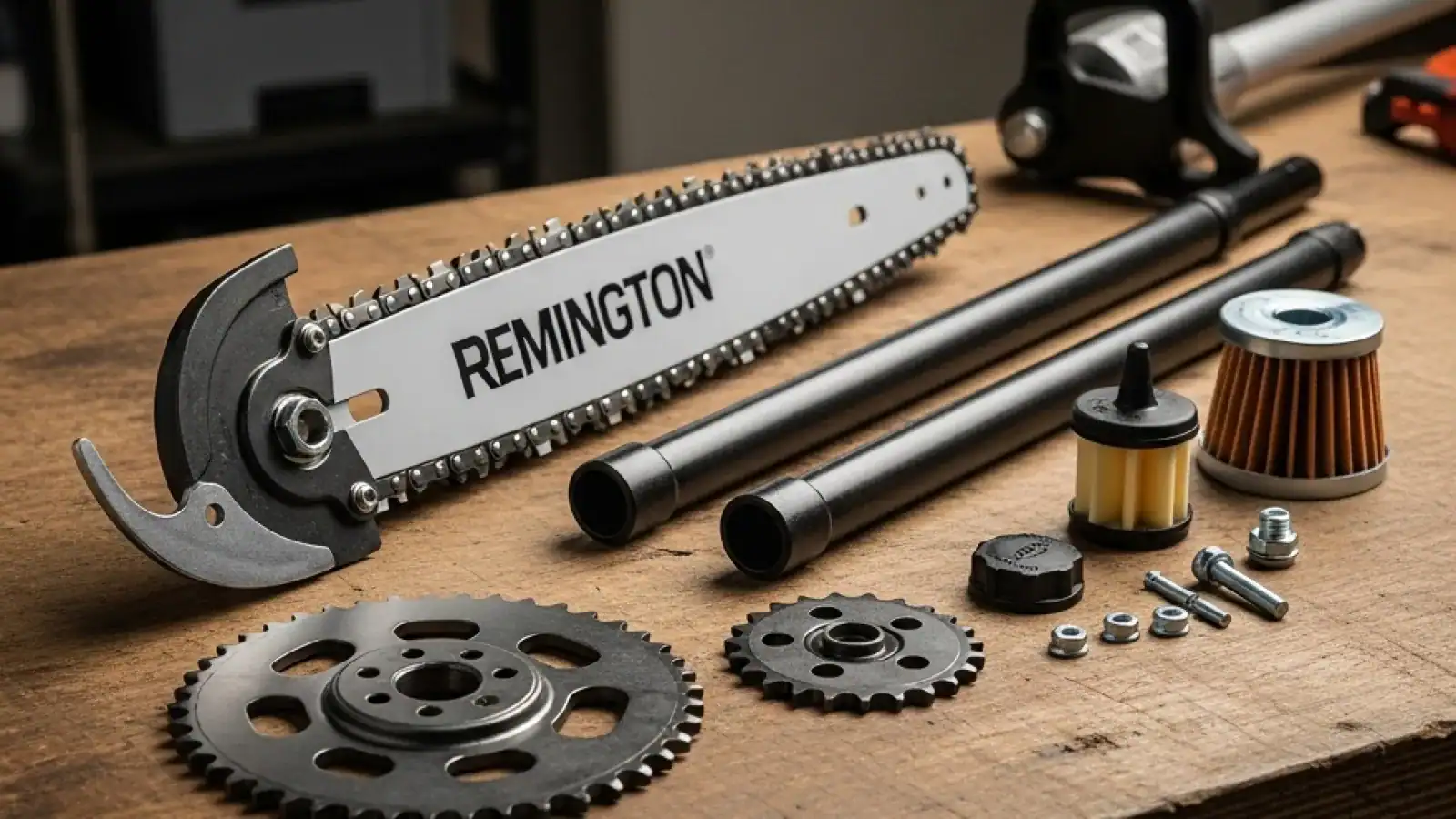
At the business end of your pole saw is the cutting head, consisting of the guide bar, the saw chain, and the drive sprocket. The guide bar is the metal blade around which the chain rotates; its length dictates the maximum diameter of the branch you can cut in a single pass. Remington pole saws typically feature bars ranging from 8 to 12 inches. The saw chain, with its sharp cutters, is what actually does the work. Pole saws generally use low-profile or semi-chisel chains for smoother cutting and reduced kickback, which is critical when working at height. The drive sprocket, housed within the powerhead, engages with the chain’s drive links to propel it around the bar.
Proper chain tension is paramount for both safety and efficiency. A chain that’s too loose can derail, while one that’s too tight can cause excessive wear on the bar and sprocket, and even overheat the motor. Most Remington pole saws feature a simple chain tensioning system, often a screw adjustment on the side of the cutting head, allowing you to easily maintain the correct tension – snug, but still allowing the chain to be pulled freely by hand around the bar.
The Powerhead: Motor, Engine, and Battery
The heart of your pole saw is its power source. For electric models, this is an electric motor, rated in amps, which converts electrical energy into rotational force to drive the chain. Gas-powered pole saws feature a small internal combustion engine, typically a 2-stroke engine measured in cubic centimeters (cc), which burns a fuel-oil mixture. Cordless pole saws are powered by a rechargeable lithium-ion battery pack, with voltage (V) and amp-hour (Ah) ratings indicating its power and run-time capabilities.
Regardless of the power source, this powerhead also houses critical components like the throttle trigger and safety switch (to prevent accidental start-up), and often the automatic oiler system. The auto-oiler continuously lubricates the bar and chain during operation, which is vital for reducing friction, preventing overheating, and extending the life of these cutting components. Without adequate lubrication, your chain will dull quickly, and your bar can be permanently damaged.
The Pole and Handle System
The pole extension is what gives a pole saw its distinct advantage. Remington offers both telescoping poles, which slide to extend, and sectional poles that can be assembled for greater reach. These are typically made from lightweight yet durable materials like fiberglass or aluminum to reduce user fatigue while providing the necessary rigidity. The locking mechanisms (e.g., lever clamps, twist collars) are crucial for securely fixing the pole at the desired length, preventing accidental collapse during operation.
The handle and grips are designed for user comfort and control. They often feature ergonomic shapes and anti-vibration materials to minimize strain during extended use. The placement of the auxiliary handle provides a stable two-hand grip, which is essential for safely maneuvering the saw and absorbing kickback forces. Always ensure your grips are clean and dry for a firm hold.
Maintaining Your Remington Pole Saw for Peak Performance and Longevity
Just like any precision tool, your Remington pole saw requires regular care to remain safe, efficient, and reliable. Neglecting maintenance not only degrades performance but can also significantly shorten the lifespan of your equipment and, critically, increase the risk of accidents. Let’s walk through the essential maintenance practices.
Pre-Operation Checks: Your Safety Checklist
Before every use, make it a habit to perform a quick inspection. First, check the chain oil reservoir. Is it full? A dry chain can overheat and damage both the chain and guide bar within minutes. Next, inspect the chain tension – it should be snug but still allow the chain to be pulled around the bar by hand with moderate effort. A loose chain can derail, while a tight one can strain the motor. Visually inspect the chain cutters for sharpness and any damage. A dull chain makes cutting difficult, can bind, and puts extra strain on the motor.
For gas models, ensure you have fresh, correctly mixed fuel. For cordless, check the battery charge. Lastly, confirm that all pole connections are securely locked and that there are no loose fasteners or damaged components on the saw itself. This quick routine takes only a couple of minutes but can save you hours of frustration and potential injury.
Post-Operation Maintenance: Keeping It Clean and Sharp
After each use, dedicated maintenance goes a long way. Start by cleaning the guide bar groove – sawdust and debris can pack into the groove, impeding chain movement and oil flow. A small flat tool or a wire brush can help here. Flip your guide bar periodically (after every 4-8 hours of cutting) to ensure even wear on both sides, extending its life. Check for and de-burr any rough edges that form on the bar’s rails.
The most crucial maintenance is chain sharpening. Ever tried cutting with a dull knife? It’s frustrating, right? The same goes for your pole saw chain. A sharp chain cuts quickly and cleanly, reducing effort and kickback risk. Most Remington pole saws use low-profile chains, which typically require a 5/32-inch round file, filed at a 30-degree angle. Learn to sharpen your chain regularly, or have it professionally sharpened. For gas models, periodically clean or replace the air filter to ensure proper engine performance, and inspect the spark plug for wear.
Seasonal and Long-Term Storage
When storing your pole saw for an extended period, proper preparation is essential. For gas models, either run the fuel tank dry or use a fuel stabilizer to prevent fuel degradation and carburetor issues. Clean the entire saw thoroughly, removing all sawdust, sap, and debris. Lubricate the chain and bar with fresh chain oil, and for cordless models, remove the battery and store it partially charged (around 50-60%) in a cool, dry place.
Store your Remington pole saw in a clean, dry location, preferably hung up or in its original case, away from extreme temperatures and moisture. This prevents corrosion, keeps seals from drying out, and ensures your saw is ready to go when the next trimming task arises. Following these steps will ensure your Remington pole saw provides years of reliable service.
Safety First: Essential Practices for Operating a Remington Pole Saw
Operating any chainsaw, even a pole saw, comes with inherent risks. As someone who’s spent years in the field, I can tell you that most accidents happen when people get complacent or neglect fundamental safety practices. Your safety and the safety of those around you are paramount. Always approach tree trimming with respect for the tool and the task.
Personal Protective Equipment (PPE): Your First Line of Defense
Before you even think about starting your Remington pole saw, ensure you’re wearing the correct Personal Protective Equipment (PPE). This is non-negotiable. You’ll need eye protection (safety glasses or a full face shield) to guard against flying chips and debris. Hearing protection (earplugs or earmuffs) is crucial, especially with gas models, to prevent long-term hearing damage. Sturdy work gloves provide a better grip and protect your hands from splinters and minor cuts.
Wear a hard hat if there’s any risk of falling debris. While not always strictly necessary for pole saws, chainsaw chaps or protective trousers offer excellent protection for your legs and are a smart investment for any chainsaw user. Finally, robust, closed-toe footwear with good ankle support will help maintain stable footing and protect your feet from falling branches or errant cuts.
Work Area Preparation and Hazard Assessment
Before making a single cut, take a moment to assess your work area. Clear the ground around the base of the tree of any obstacles, tripping hazards, or debris that could impede your movement. Ensure there’s a clear escape path in case the branch falls unexpectedly or in an unforeseen direction. Importantly, always check for overhead hazards: power lines, phone lines, or other utility wires. If a branch is near a power line, do NOT attempt to cut it yourself; call a professional arborist or your utility company.
Establish a safe perimeter and ensure no people, pets, or property are within the falling zone of the branch you’re cutting. Never operate a pole saw directly above your head or cut branches that are above shoulder height. This significantly increases the risk of the branch falling on you or causing you to lose control of the saw due to kickback.
Proper Cutting Techniques for Pole Saws
Using a pole saw effectively requires specific techniques to minimize risk. Always maintain a stable stance with both feet firmly on the ground, and use a two-hand grip on the pole. Avoid overreaching, which can lead to loss of balance and control. Let the saw do the work; don’t force it through the wood. Too much pressure can cause binding or kickback.
For larger branches (typically over 2-3 inches in diameter), employ the three-cut method to prevent bark stripping and binding. First, make an undercut about one-third of the way through the branch, a foot or so away from the trunk. Second, make a top cut a few inches further out from the undercut, allowing the branch to fall cleanly. Finally, make a flush cut near the trunk to remove the remaining stub. This method helps control the fall of the branch and protects the tree. Always be aware of the branch’s tension and potential for spring-back, especially when cutting smaller limbs.
After completing your cuts, safely lower the pole saw to the ground, engage the chain brake or safety lock, and if it’s a gas or cordless model, turn off the engine/remove the battery. Take your time, stay alert, and prioritize safety above all else. Your yard will look great, and you’ll be able to enjoy it knowing you’ve done the work responsibly.