


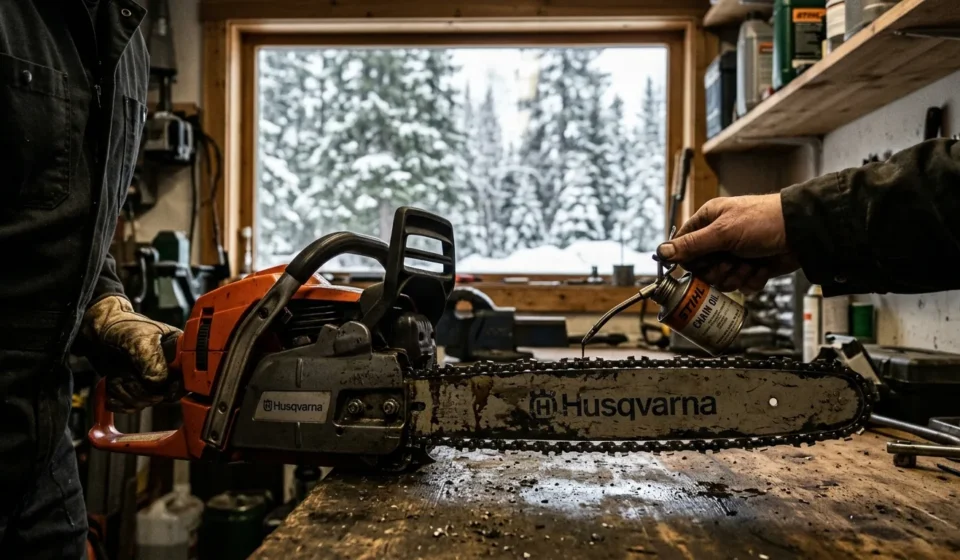

As the leaves fall and the chill sets in, many of us pack away our outdoor power equipment, including our trusty chainsaws. But simply tossing your saw into the shed until spring is a recipe for frustration and costly repairs. Trust me, as someone who’s seen countless chainsaws come into the shop with avoidable issues, proper chainsaw winterizing for long-term storage isn’t just a suggestion; it’s a critical investment in your tool’s longevity and reliability. Let’s make sure your chainsaw is ready to roar back to life when you need it next.
Table Of Content
- Why Winterize Your Chainsaw? Avoid Spring Headaches
- Fuel System: The Heart of the Matter
- Stabilizing the Fuel
- Emptying the Carburetor
- Bar, Chain, and Sprocket Care: Keeping Things Sharp
- Cleaning and Sharpening Your Chain
- Lubrication and Protection
- Engine and Air Filter Maintenance: Beyond the Fuel
- Spark Plug Inspection and Cylinder Protection
- Air Filter and Cooling Fins
- Final Storage Tips & Location
Why Winterize Your Chainsaw? Avoid Spring Headaches
You might be thinking, “It’s just sitting there, what’s the big deal?” Honestly, it’s a huge deal. Neglecting proper chainsaw storage can lead to a cascade of problems. Fuel left in the tank and carburetor can degrade, leaving behind gummy deposits that clog tiny fuel passages. This is especially true with modern ethanol-blended fuels, which are notorious for attracting moisture and corroding fuel system components.
Beyond the fuel system, rust can form on the chain and bar, seals can dry out, and parts can seize. Imagine this situation: spring arrives, you’ve got a big storm cleanup project, you pull out your chainsaw, and it just won’t start. Or worse, it starts but runs terribly, sputtering and dying. Now you’re scrambling to get it serviced, losing valuable time and money. A few simple steps now can save you that headache later.
Proper chainsaw maintenance for winter ensures your saw is protected from these elements, preserving its performance and extending its lifespan. It’s about being proactive rather than reactive, making sure your investment is safe and sound during its downtime.
Fuel System: The Heart of the Matter
The fuel system is often the most vulnerable part of a chainsaw during storage. This is where most starting problems originate after a long break. Addressing it correctly is non-negotiable.
Stabilizing the Fuel
The first step is to treat your fuel. Add a high-quality fuel stabilizer to your chainsaw’s fuel tank. I recommend using a stabilizer designed for small engines, and if possible, one that specifically counteracts the effects of ethanol. Follow the product’s instructions for the correct ratio.
Once the stabilizer is added, run the chainsaw for 5-10 minutes. This circulates the treated fuel throughout the entire fuel system, including the carburetor, ensuring all components are protected. For long-term storage, using ethanol-free fuel for your last tank of the season can also make a huge difference, even with a stabilizer.
Emptying the Carburetor
Even with stabilized fuel, it’s best practice to run the carburetor dry. After you’ve circulated the stabilized fuel, turn off the fuel valve (if your saw has one) and then restart the chainsaw. Let it run until it completely stalls out. This ensures there’s no liquid fuel left in the carburetor bowl or jets to gum up over time.
Why is this so important? Because even stabilized fuel can eventually degrade if left sitting in the carburetor for months. Those tiny passages in the carburetor are incredibly sensitive, and a small amount of residue can lead to big problems in the spring. This step is a cornerstone of proper small engine winterization.
Bar, Chain, and Sprocket Care: Keeping Things Sharp
While the engine’s internal workings are crucial, don’t forget the parts that do the actual cutting. The bar and chain take a beating, and they deserve attention before storage.
Cleaning and Sharpening Your Chain
Remove the guide bar and chain from the chainsaw. First, give them a thorough cleaning. Use a stiff brush and a good degreaser to remove all traces of sap, pitch, sawdust, and any sticky residue. Pay close attention to the guide bar groove – a small pick or screwdriver can help clear it out. A clogged groove prevents proper lubrication of the chain during operation.
Next, sharpen your chain. A sharp chain is a safe and efficient chain. While you might be tempted to do this in the spring, doing it now means it’s ready to go immediately when you need it. Check for any damaged links and replace the chain if necessary. Properly sharpened cutters will also be less prone to rust and damage during storage.
Lubrication and Protection
Once clean and sharp, apply a light coating of general-purpose oil to the entire chain to prevent rust. For the guide bar, clean the sprocket nose (if applicable) and add a few drops of grease to its bearing. Wipe down the entire bar and chain with an oily rag. This layer of oil acts as a protective barrier against moisture and corrosion.
Now, what about the bar oil reservoir? Some experts recommend draining it completely, while others suggest filling it. In my opinion, it’s usually best to drain the tank and clean it out. Residual bar and chain oil can thicken or separate over time, potentially clogging the oiler’s pickup filter. After draining, you can give the tank a quick wipe and then reattach the bar and chain, or store them separately in an oily cloth.
Engine and Air Filter Maintenance: Beyond the Fuel
The fuel system might be primary, but other engine components also need some love before hibernation.
Spark Plug Inspection and Cylinder Protection
Remove the spark plug. Inspect it for wear, carbon buildup, or damage. If it looks fouled or worn, replace it with a new one; otherwise, clean it thoroughly with a wire brush. While the spark plug is out, add a few drops (about a teaspoon) of two-stroke engine oil or a dedicated fogging oil directly into the cylinder. Gently pull the starter cord 2-3 times to distribute the oil, which will coat the cylinder walls and piston, preventing rust and corrosion.
Reinstall the spark plug, but don’t connect the spark plug cap yet. Leaving it disconnected adds an extra layer of safety, preventing accidental starts during storage. This small step can make a big difference in the engine’s health come spring.
Air Filter and Cooling Fins
Remove and clean your air filter. If it’s a foam filter, wash it with warm, soapy water, let it dry completely, and then lightly re-oil it with appropriate air filter oil. If it’s a paper filter, tap out loose debris or replace it if it’s heavily soiled. A clean air filter ensures optimal performance when you start up next season.
Finally, inspect and clean the engine’s cooling fins. These are the metal ridges around the engine that dissipate heat. Accumulated sawdust and debris can act as insulation, leading to overheating. Use a brush or compressed air to clear them thoroughly. Give the entire chainsaw exterior a good wipe-down to remove any grime.
Final Storage Tips & Location
You’ve done the hard work of preparing your chainsaw; now let’s ensure it rests in the right place.
Store your chainsaw in a clean, dry location with a stable temperature. Drastic temperature fluctuations can cause condensation, leading to rust and deterioration of rubber components. A shed or garage is generally fine, provided it’s not prone to dampness or extreme cold. Avoid storing it directly on a concrete floor, which can draw moisture.
Consider covering your chainsaw with a breathable tarp or old blanket to keep dust and debris off. For battery-powered chainsaws, remember to remove the battery and store it separately in a cool, dry place at about a 50-70% charge, as per the manufacturer’s recommendations. This prevents self-discharge and prolongs battery life.
By following these steps, you’re not just putting your chainsaw away for the winter; you’re preserving its peak performance. You’ll be glad you took the time when spring arrives and your chainsaw fires up with the same reliability as the day you stored it.