

For anyone looking to tackle wood-cutting tasks, the fundamental choice often boils down to two primary power sources: the traditional rumble of a gas chainsaw or the quieter hum of an electric chainsaw. Each brings its own set of advantages and limitations to the timber, making the decision far from straightforward. The real question isn’t just “which is better,” but “which is more efficient for *your* specific needs and environment?”
Table Of Content
- The Powerhouse Mechanics: Gas vs. Electric Engines
- How Gas Chainsaws Deliver Power
- The Mechanics of Electric Chainsaws
- Efficiency Unpacked: What Does It Really Mean for Your Saw?
- Raw Cutting Power and Speed
- Operational Runtime and Mobility
- Energy Consumption and Cost
- Practical Considerations and User Experience
- Noise, Emissions, and Environmental Impact
- Maintenance and Longevity
- Weight, Ergonomics, and Vibration
- Head-to-Head Comparison: Gas vs. Electric Chainsaws
- Making Your Decision: Recommendations for Specific Use Cases
- For the Homeowner with Occasional Tasks
- For the Landowner or Frequent User
- For Professional-Grade Work
- Frequently Asked Questions
- Which chainsaw is easier to start?
- Are electric chainsaws powerful enough?
- Which chainsaw requires less maintenance?
- Is a gas chainsaw more efficient for large trees?
- Are cordless electric chainsaws worth it?
As an outdoor power equipment specialist with years of hands-on experience, I’ve seen both types of saws evolve dramatically. What was once a clear-cut distinction in performance has become a nuanced discussion, particularly with the advancements in battery technology. This article will dissect the concept of efficiency in detail, examining everything from raw cutting power to operational costs and environmental impact, ensuring you have all the information needed to make an informed choice for your next cutting project.
The Powerhouse Mechanics: Gas vs. Electric Engines
Understanding efficiency begins with appreciating how these machines generate and deliver power. It’s not merely about how fast a chain spins, but the entire system from energy input to kinetic output at the cutting edge. Let’s delve into the core differences that define their operational characteristics.
How Gas Chainsaws Deliver Power
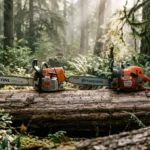
At the heart of every gas chainsaw is a two-stroke internal combustion engine. These engines are typically measured in cubic centimeters (CC) for their displacement, which directly correlates to their potential power output. For instance, a homeowner-grade saw might range from 30cc to 50cc, while professional models can exceed 70cc or even 90cc, delivering immense torque and rotational speed to the chain.
The power delivery in a gas saw is robust and sustained. Fuel, a precise mixture of gasoline and two-stroke oil, is ignited, driving a piston that turns a crankshaft, which in turn spins the clutch and sprocket, engaging the chain. This system allows for continuous operation as long as there’s fuel in the tank, making it ideal for prolonged, heavy-duty work like felling large trees or bucking substantial logs. Models like the Husqvarna 450 Rancher (50.2cc) or the Stihl MS 271 Farm Boss (50.2cc) exemplify this reliable, enduring power, capable of handling guide bars up to 20 inches with ease, and even larger for more specialized professional saws.
The Mechanics of Electric Chainsaws
Electric chainsaws, on the other hand, derive their power from an electrical current. This category bifurcates into two distinct types: corded and cordless. A corded electric chainsaw plugs directly into a power outlet, offering unlimited runtime within the confines of an extension cord’s reach. Their power is typically measured in amperes (amps) or watts, with common models ranging from 8 to 15 amps, providing sufficient power for pruning, limbing, and cutting smaller logs, usually supporting bar lengths up to 18 inches. They offer instant startup and consistent power as long as they’re connected.
Cordless electric chainsaws, or battery chainsaws, are the latest evolution, offering unmatched mobility. They are powered by rechargeable lithium-ion battery packs, typically ranging from 18V to 80V, and with varying ampere-hour (Ah) ratings which dictate runtime. These saws often feature brushless motors, which are significantly more efficient, converting more energy into cutting power and extending battery life compared to older brushed designs. While a high-end 60V or 80V battery chainsaw can surprisingly compete with smaller gas saws for power on shorter tasks, like a Greenworks Pro 80V or a DeWalt 60V MAX, their sustained output and bar length capabilities (typically 12-18 inches) are generally less than a mid-range gas model. The efficiency here is in their immediate readiness and ease of use.

Efficiency Unpacked: What Does It Really Mean for Your Saw?
When we talk about chainsaw efficiency, it’s a multifaceted concept. It’s not just about raw horsepower or how quickly a battery drains. It encompasses everything from the speed and effectiveness of the cut to the cost of operation, maintenance, and even the user’s physical effort. Let’s break down these critical aspects.
Raw Cutting Power and Speed
For sheer, unadulterated cutting power and speed through dense wood, the gas chainsaw still reigns supreme. Its internal combustion engine generates higher RPMs and significantly more torque, allowing it to drive longer bars and larger, more aggressive chains through substantial timber without bogging down. This is particularly evident when felling mature trees or bucking large diameter logs for prolonged periods. Professionals relying on saws like the Stihl MS 462 R C-M (72.2cc) or the Husqvarna 572 XP (70.6cc) understand that for maximum output and the ability to maintain consistent cutting speed under heavy load, gas is the undisputed champion.
Electric chainsaws, while powerful for their size, generally cannot match this sustained, high-output performance. A corded electric chainsaw might zip through an 8-inch limb quickly, but ask it to fell a 15-inch oak, and you’ll feel it struggle, requiring more passes and increased strain on the motor. Cordless models have made impressive strides, with some 80V models claiming gas-like power, but their true efficiency lies in quick, repetitive tasks. They excel at processing smaller diameter wood, pruning, and clearing brush, where their instant torque and consistent speed through manageable cuts make them incredibly effective. For example, a quick 10-inch cut with a DeWalt 60V MAX Flexvolt can feel as efficient as a small gas saw, but try to do that for an hour straight, and you’ll likely run through multiple battery packs.
Operational Runtime and Mobility
Runtime is another crucial aspect of efficiency. Gas chainsaws offer virtually unlimited runtime, provided you have a can of pre-mixed fuel readily available. This makes them inherently more efficient for remote work sites, storm cleanup, or extended projects where access to power outlets or charging stations is limited. Their mobility is unparalleled, allowing users to move freely across large properties or deep into forests without being tethered.
The situation is starkly different for electric chainsaws. Corded models are restricted by the length of their extension cord, typically limiting them to yard work or areas close to a power source. While you get continuous power, the cord itself can be a safety hazard and a significant inconvenience when maneuvering around branches or larger cutting areas. Cordless chainsaws offer superior mobility, rivaling gas saws in this regard, but their runtime is entirely dependent on battery capacity and the intensity of the cutting task. A typical 4.0 Ah battery on a 40V saw might give you 30-40 minutes of intermittent cutting, but heavy use can drain it in 15-20 minutes. Efficient use of cordless saws often requires investing in multiple batteries and a fast charger, which adds to the initial cost. For instance, imagine this situation: you’re clearing a large section of storm-damaged trees far from any power outlet. A gas saw with a spare fuel can means uninterrupted work. With a cordless saw, you’d be hauling several heavy battery packs, constantly swapping them out, and hoping you have enough to finish the job.
Energy Consumption and Cost
When considering efficiency from a financial perspective, both the immediate and long-term costs associated with energy consumption and maintenance come into play. For gas chainsaws, fuel costs can add up, especially with rising gasoline prices. A typical homeowner might spend $20-$40 a year on fuel and oil, but a commercial user could easily spend hundreds. Beyond fuel, gas saws require more frequent and intricate maintenance, including spark plug changes, air filter cleaning, fuel filter replacement, and carburetor adjustments. These tasks contribute to the overall operational cost and time commitment, even if you do them yourself.
Electric chainsaws, particularly corded models, are generally more economical to run, consuming electricity that is often cheaper per unit of energy than gasoline. Cordless models involve charging batteries, which also uses electricity, but the primary long-term cost consideration is the battery packs themselves, which have a finite lifespan and can be expensive to replace. However, their maintenance is significantly simpler. There are no spark plugs, fuel filters, or carburetors to worry about; typically, it’s just chain sharpening, bar lubrication, and keeping the saw clean. This reduced maintenance translates to lower running costs and less downtime, making them very efficient in terms of user effort and direct expense.
Practical Considerations and User Experience
Beyond raw power and costs, the overall user experience plays a significant role in a chainsaw’s practical efficiency. How comfortable is it to use? How safe is it? These factors contribute directly to how effectively a user can accomplish tasks.
Noise, Emissions, and Environmental Impact
This is an area where electric chainsaws hold a distinct advantage. Their motors operate significantly quieter than gas engines, typically in the 80-95 dB range, compared to the 100-115 dB of a gas saw. This not only makes them more pleasant to operate, reducing ear fatigue and the need for heavy hearing protection in some situations, but also makes them more neighbor-friendly. You can start an electric saw early in the morning without disturbing the entire street, which is a massive plus for residential users. I’ve heard countless stories of homeowners appreciating the peace and quiet of their electric models after years of struggling with noisy gas saws.
Furthermore, electric saws produce zero direct emissions. Gas saws, on the other hand, emit exhaust fumes containing carbon monoxide, hydrocarbons, and nitrogen oxides – pollutants that are harmful to both the operator and the environment. For those prioritizing eco-friendliness or working in enclosed spaces (like a workshop, though proper ventilation is *always* critical), an electric saw is a far more responsible and efficient choice. This environmental advantage is a growing consideration for many users today.
Maintenance and Longevity
From a maintenance perspective, electric chainsaws are inherently simpler and, in my opinion, more efficient for the average homeowner. There’s no need to mix fuel, worry about stale gas gumming up the carburetor, or perform regular engine tune-ups. Maintenance largely involves keeping the chain sharp, ensuring the bar is oiled, and cleaning debris from the housing. This ease of maintenance contributes directly to efficiency by reducing downtime and the need for specialized tools or trips to the repair shop. While components can fail, the overall system is less complex and prone to fuel-related issues.
Gas chainsaws, while robust, demand more attention. Regular cleaning of the air filter, replacement of the fuel filter, spark plug inspection and replacement, and seasonal carburetor adjustments are all part of responsible ownership. Neglecting these can lead to performance issues, hard starting, or even engine failure. Based on my experience, many homeowners find these tasks daunting, leading to less efficient operation or costly professional servicing. However, a well-maintained gas saw from brands like Stihl or Husqvarna can offer exceptional longevity and reliability for decades.
Weight, Ergonomics, and Vibration
Generally, electric chainsaws are lighter than their gas counterparts. A typical 14-inch corded electric saw might weigh 8-10 lbs, while a comparable gas saw could be 10-15 lbs without fuel. This weight difference, combined with reduced vibration, significantly improves user comfort and reduces fatigue, especially during extended periods of use or when working overhead. Lighter weight means better maneuverability and control, which can indirectly lead to more efficient and safer cutting. The ergonomic design of many battery-powered saws also often includes better balance due to the battery placement, further enhancing handling.
Gas chainsaws, due to their engine and fuel tank, tend to be heavier and produce more vibration. While modern gas saws incorporate sophisticated anti-vibration systems, the inherent nature of a reciprocating engine means there will always be more vibration than an electric motor. This can cause operator fatigue more quickly, affecting precision and potentially safety over long work sessions. So far we’ve covered the mechanical and practical aspects. Now let’s get to the really critical point: how do they stack up side-by-side in terms of features and recommendations?
Head-to-Head Comparison: Gas vs. Electric Chainsaws
To provide a clearer perspective, here’s a direct comparison of key features, performance, and operational aspects between these two types of chainsaws. This table highlights their primary strengths and weaknesses.
| Feature | Gas Chainsaw | Electric Chainsaw (Corded) | Electric Chainsaw (Cordless/Battery) |
|---|---|---|---|
| Power Output | Highest, sustained torque for heavy tasks. | Consistent, moderate power for light-medium tasks. | Good power for light-medium tasks, improving rapidly. |
| Runtime | Unlimited with fuel, very efficient for remote, long jobs. | Continuous as long as plugged in, efficient for steady work. | Limited by battery life, efficient for quick, intermittent tasks. |
| Mobility | Excellent, completely untethered. | Restricted by cord length. | Excellent, completely untethered. |
| Maintenance | Complex: fuel mix, spark plug, filters, carburetor. | Simple: chain sharpening, bar oiling. | Simple: chain sharpening, bar oiling, battery care. |
| Noise Level | High (100-115 dB). | Low (80-95 dB). | Low (80-95 dB). |
| Emissions | Significant exhaust fumes. | Zero direct emissions. | Zero direct emissions. |
| Starting | Pull-start, can be challenging. | Instant push-button start. | Instant push-button start. |
| Weight | Heavier (10-20+ lbs). | Lightest (8-12 lbs). | Medium (10-15 lbs with battery). |
| Typical Bar Length | 16-36 inches. | 12-18 inches. | 10-18 inches. |
| Ideal Use | Heavy-duty felling, bucking large logs, remote work. | Light pruning, limbing, small log cutting near power. | Pruning, limbing, storm cleanup, smaller felling, remote. |
Making Your Decision: Recommendations for Specific Use Cases
After examining all these facets, it becomes clear that there isn’t a single “most efficient” chainsaw. Efficiency is entirely contextual. Your best choice hinges on the type of work you primarily do, your environment, and your personal preferences for maintenance and operation.
For the Homeowner with Occasional Tasks
If your tasks mostly involve occasional pruning, limbing small branches (up to 10-12 inches in diameter), or cutting firewood from pre-cut logs, an electric chainsaw is likely the most efficient choice for you. A corded electric model (e.g., Black+Decker 15-Amp 16-inch) is fantastic for yard work near an outlet, offering consistent power without battery concerns. For greater flexibility around the yard, a cordless electric chainsaw (e.g., Ryobi 40V 14-inch or Ego Power+ 56V 18-inch) provides easy startup, low maintenance, and sufficient power for most homeowner needs. Their quiet operation and zero emissions make them highly efficient for suburban environments.
The efficiency here comes from ease of use, instant startup, and minimal maintenance. You don’t have to worry about fuel storage, engine issues, or mixing gas. Just grab it, pop in a charged battery (or plug it in), and go. This saves significant time and frustration for infrequent users.
For the Landowner or Frequent User
For individuals with larger properties, those who frequently process firewood, or need to clear substantial storm debris, the decision becomes more nuanced. A mid-range gas chainsaw (e.g., Husqvarna 440 or Stihl MS 250) offers the power and extended runtime needed for more demanding tasks, including felling medium-sized trees (up to 18-24 inches) and prolonged bucking. Its ability to operate continuously without recharging, especially in remote areas, makes it highly efficient for these scenarios. You’ll invest more time in maintenance, but the raw power and endurance will pay off.
However, modern high-voltage cordless chainsaws are closing the gap. If your tasks are heavy but intermittent, and you’re willing to invest in multiple battery packs, a professional-grade cordless model like the Stihl MSA 220 C-B (with AP 300 S battery) or the Husqvarna 540i XP could offer a compelling balance of power and convenience, eliminating fuel headaches while still providing serious cutting capability for bar lengths up to 16-18 inches. They offer a strong argument for efficiency when you factor in time saved on maintenance and startup.
For Professional-Grade Work
When it comes to commercial logging, extensive land clearing, or felling very large trees, the gas chainsaw remains the undisputed champion for overall efficiency. Its superior power-to-weight ratio, ability to drive long guide bars (20-36 inches), and unlimited runtime are non-negotiable for these demanding applications. Models like the Husqvarna 572 XP or Stihl MS 462 are engineered for sustained, heavy-duty performance that current electric models simply cannot match, especially when tackling timber with diameters exceeding 24 inches.
The efficiency here is about maximizing output in the most challenging conditions. Professionals need tools that won’t bog down, can run all day, and deliver consistent, powerful cuts. While battery technology is advancing, the logistical challenge of having enough charged batteries for a full day of professional felling still favors gasoline. I believe that for those who rely on a chainsaw for their livelihood, the robustness and raw capability of a well-maintained gas saw continue to offer the highest efficiency.
Frequently Asked Questions
Which chainsaw is easier to start?
Electric chainsaws are significantly easier to start, featuring instant push-button activation. Gas chainsaws require a pull-start mechanism, which can sometimes be challenging, especially in cold weather or if the saw hasn’t been used recently.
Are electric chainsaws powerful enough?
Yes, for most homeowner tasks like pruning, limbing, and cutting small to medium logs (up to 18 inches), electric chainsaws are very powerful. High-voltage cordless models can even handle surprisingly heavy-duty tasks, rivaling smaller gas saws in specific scenarios.
Which chainsaw requires less maintenance?
Electric chainsaws require considerably less maintenance than gas chainsaws. There are no fuel filters, spark plugs, carburetors, or engine oil to worry about, simplifying upkeep to mainly chain sharpening and bar oiling.
Is a gas chainsaw more efficient for large trees?
For felling and bucking large trees (over 18-20 inches in diameter), a gas chainsaw is far more efficient due to its superior sustained power, torque, longer bar capabilities, and unlimited runtime.
Are cordless electric chainsaws worth it?
Yes, for homeowners and many landowners, cordless electric chainsaws offer excellent value. Their convenience, mobility, quiet operation, and low maintenance make them highly efficient for a wide range of tasks, especially if you already own other tools in the same battery platform.
Ultimately, the “more efficient” chainsaw is the one that best aligns with your specific cutting needs, budget, and comfort level with maintenance. For quick, quiet, and convenient tasks around the house, electric models, particularly cordless chainsaws, offer unparalleled efficiency. For demanding, prolonged work in challenging environments, the raw power and endurance of a gas chainsaw remain unmatched. At Best Professional Chainsaw, we always advocate for choosing the tool that empowers you to work safely and effectively, ensuring your investment truly enhances your productivity.