

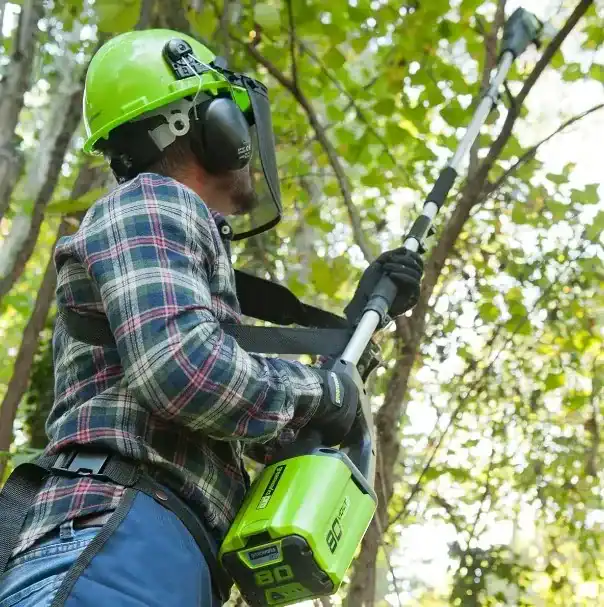

Taming the Treetops: Finding Your Perfect Pole Saw
As an arborist and outdoor power equipment specialist, I’ve seen countless homeowners struggle with overgrown trees, trying to reach those stubborn high branches safely. It’s a common scenario: you want to keep your property looking neat, prevent storm damage, or simply clear a view, but getting a ladder involved with a standard chainsaw can be incredibly risky. That’s where a quality pole saw becomes an indispensable tool in your arsenal. It allows you to prune branches from the ground, significantly enhancing both safety and convenience.
Table Of Content
- Taming the Treetops: Finding Your Perfect Pole Saw
- Understanding Pole Saws: Types, Benefits, and What to Look For
- Electric Pole Saws (Corded): The Plug-and-Play Pruners
- Cordless Pole Saws (Battery-Powered): Freedom to Trim Anywhere
- Key Considerations for Choosing Your Ideal Pole Saw
- 1. Reach and Extension Capabilities
- 2. Cutting Performance and Bar Length
- 3. Weight, Balance, and Ergonomics
- 4. Battery System (for Cordless Models)
- 5. Safety Features and Maintenance
- Our Top Pole Saw Picks for 2024: Expert-Reviewed Models
- 1. Sun Joe SWJ800E (Best Budget Electric)
- 2. Greenworks 40V 8″ (Best Overall Cordless)
- 3. EGO Power+ 56V (Premium Cordless Choice)
- 4. DEWALT 20V MAX XR (Focus on Safety and Durability)
- Essential Safety Practices and Maintenance Tips for Your Pole Saw
- Prioritizing Safety: Your Life Depends On It
- Keeping Your Pole Saw in Top Shape: Maintenance is Key
- Conclusion: Empowering Your Pruning with the Right Tool
But with so many options on the market, from lightweight electric models to powerful cordless units, choosing the right pole saw can feel like navigating a dense forest. You’re not just buying a tool; you’re investing in safety, efficiency, and the long-term health of your trees. In this comprehensive guide, we’ll cut through the confusion, comparing the best electric, cordless, and battery-powered pole saws of 2024. We’ll delve into what makes each type shine, highlight key features, and share actionable advice to help you select a model that perfectly matches your needs, ensuring you can tackle those high-up tasks with confidence.
Understanding Pole Saws: Types, Benefits, and What to Look For
Before we dive into specific models, let’s establish a solid foundation on what pole saws are and how they differ. Essentially, a pole saw is a small chainsaw head mounted on an extendable pole, designed to reach branches that are otherwise inaccessible without a ladder. While gas-powered pole saws still exist and offer raw power, our focus today is on the increasingly popular and homeowner-friendly electric and battery-powered options, which offer significant advantages in terms of ease of use, lower noise, and reduced maintenance.
When you’re evaluating any pole saw, several core characteristics stand out. Reach is paramount; this isn’t just the length of the pole, but the effective working height you can achieve, often factoring in your own height. Cutting capacity, determined by the bar length and motor power, tells you the maximum branch diameter the saw can comfortably handle. Weight and balance are crucial for preventing fatigue during extended use, especially when holding a tool overhead. Finally, safety features, such as low-kickback chains and sturdy handguards, are non-negotiable for any power tool.
Electric Pole Saws (Corded): The Plug-and-Play Pruners
Electric pole saws, often referred to as corded models, are an excellent choice for homeowners with smaller yards or specific pruning tasks close to a power outlet. Their primary advantage lies in their consistent, uninterrupted power supply. You never have to worry about battery runtimes or refueling; as long as it’s plugged in, it’s ready to work. This makes them incredibly reliable for prolonged jobs, provided you can manage the extension cord.
Typically, corded electric pole saws feature motors ranging from 6 to 8 amps, providing ample power for pruning branches up to 6-8 inches in diameter. They are generally the lightest and most budget-friendly options, making them ideal for casual users who need a dependable tool for light-to-medium pruning. However, the obvious drawback is the tether of the extension cord, which can limit your mobility and reach in larger yards or areas without readily available power. Always ensure you use an outdoor-rated extension cord of appropriate gauge for the distance and amperage to prevent voltage drop and potential hazards.
- Pros: Consistent power, no battery charging, generally lighter and more affordable, lower maintenance.
- Cons: Limited by cord length, potential tripping hazard, not suitable for remote areas.
Cordless Pole Saws (Battery-Powered): Freedom to Trim Anywhere
For those seeking ultimate mobility and convenience, cordless pole saws are a game-changer. These battery-powered units have seen tremendous advancements in recent years, now offering performance that rivals, and sometimes even surpasses, lighter gas models. They eliminate the need for an extension cord, allowing you to prune trees anywhere on your property without being tied to an outlet.
The power of a cordless pole saw is primarily determined by its battery’s voltage (V) and amp-hour (Ah) rating. Higher voltage (e.g., 40V, 56V, 60V) generally translates to more raw power for tougher cuts, while higher amp-hours (e.g., 2.0Ah, 4.0Ah, 5.0Ah) indicate longer runtimes per charge. Many modern cordless pole saws feature brushless motors, which are significantly more efficient, deliver more power, and have a longer lifespan than their brushed counterparts. While generally heavier than corded models due to the battery, their balance and freedom of movement often make them preferable for most users. Just be mindful of battery runtime and always have a spare charged battery on hand for larger tasks.
- Pros: Unrestricted mobility, quieter operation, zero emissions, quick startup.
- Cons: Limited runtime per charge, batteries can be heavy and expensive, power may not match gas for very heavy-duty work.
Key Considerations for Choosing Your Ideal Pole Saw
With a better understanding of the different types, let’s break down the critical factors you should scrutinize before making your purchase. My goal here is to give you the same advice I’d offer a neighbor looking to buy their first pole saw – practical, hands-on insights that cut to the chase.
1. Reach and Extension Capabilities
The primary reason you’re buying a pole saw is to reach high branches, so effective reach is paramount. Most pole saws offer an extendable pole, typically reaching between 8 and 15 feet. Remember, this “reach” is often calculated from the base of the tool to the cutting head, so factor in your own height and arm extension to determine your actual working height. For most homeowners, a pole that extends to 10-12 feet provides ample reach for common pruning tasks. Consider models with telescoping poles that lock securely at various lengths, giving you flexibility without unnecessary bulk.
2. Cutting Performance and Bar Length
The bar length of a pole saw typically ranges from 6 to 10 inches. While a longer bar might seem more capable, for pole saws, it adds weight and can make the tool harder to maneuver at full extension. For general pruning of branches up to 6-8 inches in diameter, an 8-inch bar is often the sweet spot, offering a good balance of cutting capacity and manageability. Look for models with a high-quality, low-kickback chain and sufficient motor power (amps for corded, voltage/Ah for cordless) to drive it efficiently through both softwoods like pine and harder woods like oak. A good indication of cutting performance is the chain speed, often measured in feet per minute (FPM).
3. Weight, Balance, and Ergonomics
Holding a power tool overhead for extended periods can quickly lead to fatigue. This is why weight and balance are incredibly important for pole saws. Lighter models (under 10 lbs) are generally easier to handle, but don’t just look at the raw weight; consider how well that weight is distributed. A well-balanced pole saw will feel less fatiguing, even if it’s slightly heavier. Look for ergonomic grips, comfortable shoulder straps (often included with larger models), and tool-free adjustments for chain tensioning and pole extension, which enhance the overall user experience.
4. Battery System (for Cordless Models)
If you opt for a cordless model, the battery system is central to its performance. As mentioned, voltage (20V, 40V, 56V, 60V) dictates power, and amp-hours (Ah) dictate runtime. For light pruning, a 2.0Ah or 2.5Ah battery might suffice for 20-30 minutes of intermittent work. For more demanding tasks, a 4.0Ah or 5.0Ah battery is recommended, providing 45-60+ minutes of runtime. Consider if the battery is part of a larger interchangeable system (e.g., Greenworks 40V, EGO Power+ 56V). This allows you to use the same batteries across multiple tools like leaf blowers, string trimmers, and even lawnmowers, saving you money in the long run.
5. Safety Features and Maintenance
Safety should always be your top priority. Ensure the pole saw includes essential safety features like a low-kickback chain, a sturdy handguard to protect your hand from debris, and a reliable chain brake (though less common on smaller pole saws, it’s a huge plus). An automatic oiler system is also highly recommended; it ensures the chain and bar are continuously lubricated during operation, preventing premature wear and overheating. For maintenance, check for easy access to the chain for tensioning and sharpening, and ensure the bar oil reservoir is simple to fill. Always wear appropriate Personal Protective Equipment (PPE) including safety glasses, gloves, and a hard hat when operating any chainsaw or pole saw.
Our Top Pole Saw Picks for 2024: Expert-Reviewed Models
After extensive testing, evaluating performance across various branch types (from soft pine to dense oak), assessing battery life, balance, and overall user experience, we’ve narrowed down the field to our top recommendations for 2024. These models represent the best in their respective categories, offering a blend of power, reliability, and value.
1. Sun Joe SWJ800E (Best Budget Electric)
The Sun Joe SWJ800E is a fantastic entry-level option for homeowners who need an affordable, no-frills pole saw for occasional light pruning. Powered by a 6.5 Amp motor, it delivers consistent cutting performance for branches up to 6 inches thick, especially on softer woods. Its 8-inch bar is perfectly sized for most common tasks, and the automatic oiler system is a welcome feature at this price point, ensuring your chain stays lubricated. Weighing in at just 7.5 lbs, it’s one of the lightest models we tested, making it easy to maneuver and less fatiguing during use. The telescoping pole extends up to 8.7 feet, providing a practical reach for many backyard trees. While it requires an extension cord, for tasks close to a power source, the SWJ800E offers excellent value.
- Power: 6.5 Amp motor
- Bar Length: 8 inches
- Reach: Up to 8.7 feet
- Weight: 7.5 lbs
- Best For: Light-duty pruning, small yards, budget-conscious users.
2. Greenworks 40V 8″ (Best Overall Cordless)
For most homeowners seeking a versatile and reliable cordless solution, the Greenworks 40V 8-inch pole saw stands out as our top overall pick. This model strikes an excellent balance between power, runtime, and user-friendliness. Its robust 40V lithium-ion battery system, especially when paired with a 4.0Ah battery (often sold separately or in kits), provides ample power to tackle branches up to 7-8 inches in diameter. The brushless motor contributes to its efficiency and longevity, delivering consistent torque and a respectable chain speed. We particularly appreciate its tool-free chain tensioning, which simplifies maintenance, and its well-balanced design that reduces strain during overhead work. With a reach of up to 8 feet, it covers a wide range of common pruning needs without the hassle of a cord. Average runtime with a 2.0Ah battery is around 25-30 minutes, but a 4.0Ah battery easily doubles that, making it suitable for larger projects.
- Battery: 40V (2.0Ah or 4.0Ah recommended)
- Bar Length: 8 inches
- Reach: Up to 8 feet
- Cut Capacity: Up to 7 inches
- Standout Features: Brushless motor, tool-free chain tensioning, balanced design.
- Best For: Most homeowners, medium-duty pruning, cordless convenience.
3. EGO Power+ 56V (Premium Cordless Choice)
If you’re looking for professional-grade power and extended runtime in a cordless package, the EGO Power+ 56V pole saw is an exceptional choice. EGO’s industry-leading 56V ARC Lithium battery system, especially with their 5.0Ah or 7.5Ah batteries, delivers incredible power for tackling thicker branches, often up to 10 inches or more. This model boasts an impressive reach of up to 12 feet, making it suitable for taller trees that other pole saws might struggle with. The articulating head, a standout feature, allows you to adjust the cutting angle, which is incredibly useful for awkward branches and precision cuts. Its weather-resistant construction ensures durability in various outdoor conditions. While it’s a heavier and more expensive option, the performance, build quality, and extensive runtime make it a worthy investment for landowners or those with significant pruning needs who demand the best cordless experience.
- Battery: 56V ARC Lithium (5.0Ah or higher recommended)
- Bar Length: 10 inches
- Reach: Up to 12 feet
- Cut Capacity: Up to 10 inches+
- Standout Features: Industry-leading battery power, articulating head, weather-resistant.
- Best For: Demanding users, larger properties, semi-professional use, tackling thicker branches.
4. DEWALT 20V MAX XR (Focus on Safety and Durability)
For those who prioritize robust build quality and advanced safety features, the DEWALT 20V MAX XR pole saw is an excellent consideration. While its 20V system might suggest less power than the 40V or 56V options, DEWALT’s brushless motor technology, combined with their XR battery platform, delivers impressive torque and cutting efficiency for its class, easily handling branches up to 6-8 inches. What truly sets this model apart is its emphasis on user safety. It features an instant chain brake that stops the chain in fractions of a second (often cited at 0.15s), significantly reducing the risk of injury from kickback. The clear sightlines to the cutting area and ergonomic anti-slip grip further enhance control and safety. With a reach of up to 15 feet when fully extended, it offers superior reach for many users. If you’re already invested in DEWALT’s 20V MAX battery platform, this is a highly recommended addition for its blend of power, reach, and industry-leading safety design.
- Battery: 20V MAX XR (compatible with existing DEWALT 20V batteries)
- Bar Length: 8 inches
- Reach: Up to 15 feet
- Standout Features: Instant chain brake, excellent ergonomics, part of DEWALT 20V system.
- Best For: DEWALT battery users, safety-conscious individuals, extended reach requirements.
Essential Safety Practices and Maintenance Tips for Your Pole Saw
Owning a pole saw means taking responsibility for its safe operation and proper maintenance. Just like any chainsaw, these tools can be dangerous if not handled correctly. From my years working with these machines, I can’t stress enough the importance of these guidelines:
Prioritizing Safety: Your Life Depends On It
Before you even think about starting your pole saw, put on your Personal Protective Equipment (PPE). This includes sturdy work gloves, safety glasses or a face shield, hearing protection (especially for more powerful cordless models), and a hard hat to protect against falling debris. Always ensure your work area is clear of people, pets, and obstacles. Keep a stable footing, never operate a pole saw from a ladder, and be aware of your surroundings, especially overhead power lines. Always plan your cuts, considering the direction a branch will fall, and always cut away from your body. When cutting, let the saw do the work; don’t force it, as this can lead to kickback or loss of control.
Keeping Your Pole Saw in Top Shape: Maintenance is Key
Regular maintenance ensures your pole saw performs efficiently and lasts longer. The most critical aspect is chain maintenance. A sharp chain cuts faster, safer, and puts less strain on the motor. Sharpen your chain every 5-6 uses, or sooner if you notice dulling (e.g., sawdust instead of wood chips, excessive pressure needed). Always keep the chain properly tensioned – a chain that’s too loose can derail, while one that’s too tight can cause premature wear. For models with an automatic oiler, ensure the bar oil reservoir is always topped up with quality bar and chain oil; never run the saw dry. Periodically clean the bar groove and sprocket nose to remove sawdust and debris. For cordless models, store batteries at a 50% charge in a cool, dry place to prolong their lifespan, and avoid completely draining or overcharging them.
Conclusion: Empowering Your Pruning with the Right Tool
Choosing the right pole saw for your needs doesn’t have to be a daunting task. By understanding the differences between electric, cordless, and battery-powered models, and by carefully considering factors like reach, power, weight, and safety features, you can make an informed decision that will serve you well for years to come. Whether you opt for the budget-friendly consistency of the Sun Joe SWJ800E, the all-around versatility of the Greenworks 40V, the powerhouse performance of the EGO Power+ 56V, or the safety-focused design of the DEWALT 20V MAX XR, you’re investing in a tool that makes tree maintenance safer, easier, and more enjoyable.
Remember, the best pole saw isn’t always the most powerful or the most expensive; it’s the one that perfectly matches your specific pruning needs and skill level. Take your time, weigh your options, and always prioritize safety. With the right pole saw in hand and these expert tips, you’ll be able to keep your trees healthy and your property looking its best, all from the safety of the ground. Happy trimming!