
Cut Smarter, Not Harder: Choosing the Right Electric Chainsaw Motor for Your Property

As an experienced chainsaw professional, I’ve seen countless homeowners and landowners grapple with a fundamental question when choosing an electric chainsaw: “What’s the real difference between brushed and brushless motors, and why should I care?” It’s a common point of confusion, but understanding these two core technologies is critical to investing in the right tool for your property’s demands. Forget the technical jargon for a moment; let’s talk about what these motor types mean for your cutting power, your battery life, and your long-term satisfaction.
Table Of Content
- The Core Powerhouse: What Makes an Electric Chainsaw Run?
- Brushed Motors: The Dependable, Cost-Effective Workhorse
- How They Operate: A Mechanical Spark of Power
- The Practicalities of Brushed Power: Who Benefits?
- The Trade-offs: What to Expect
- Brushless Motors: The Modern Marvel of Efficiency and Power
- How They Operate: Electronic Precision, No Contact
- The Practicalities of Brushless Power: Why the Upgrade is Worth It
- Making Your Choice: Matching Motor Type to Your Cutting Ambitions
- 1. Your Typical Cutting Tasks and Frequency
- 2. Budget Constraints
- 3. Desired Performance and User Experience
- The Verdict: Invest in What Serves You Best
Electric chainsaws, both corded and battery-powered, have revolutionized how many of us approach tree and limb management. They’re quieter, cleaner, and often lighter than their gas-powered counterparts. But beneath the hood, the motor is the heart of the operation, dictating everything from how quickly you can slice through a seasoned oak log to how often you’ll need to swap batteries or perform maintenance. My goal here isn’t just to explain the mechanics, but to empower you with the knowledge to make an informed, practical decision that aligns with your specific cutting ambitions and budget.
The Core Powerhouse: What Makes an Electric Chainsaw Run?
Before we dive into the specifics, let’s establish what an electric motor does in your chainsaw. Simply put, it converts electrical energy into mechanical energy to spin your chain. It’s the muscle behind every cut. Think of it like the engine in a car – different engine types offer different performance characteristics, fuel efficiency, and maintenance needs. Similarly, the design of an electric motor significantly impacts your chainsaw’s capabilities.
Electric motors operate on the principle of electromagnetism. By manipulating magnetic fields, they create rotational force. The primary distinction between brushed and brushless motors lies in how these magnetic fields are generated and controlled to produce that rotation. This difference, though seemingly minor on the surface, cascades into significant variations in power delivery, efficiency, durability, and ultimately, the user experience.
Brushed Motors: The Dependable, Cost-Effective Workhorse
Brushed electric motors are the elder statesman of the electric tool world. They’ve been around for decades and are still prevalent in many entry-level or budget-friendly electric chainsaws, particularly corded models. Their design is relatively straightforward, which contributes to their lower manufacturing cost and, consequently, their more accessible price point for consumers.
How They Operate: A Mechanical Spark of Power
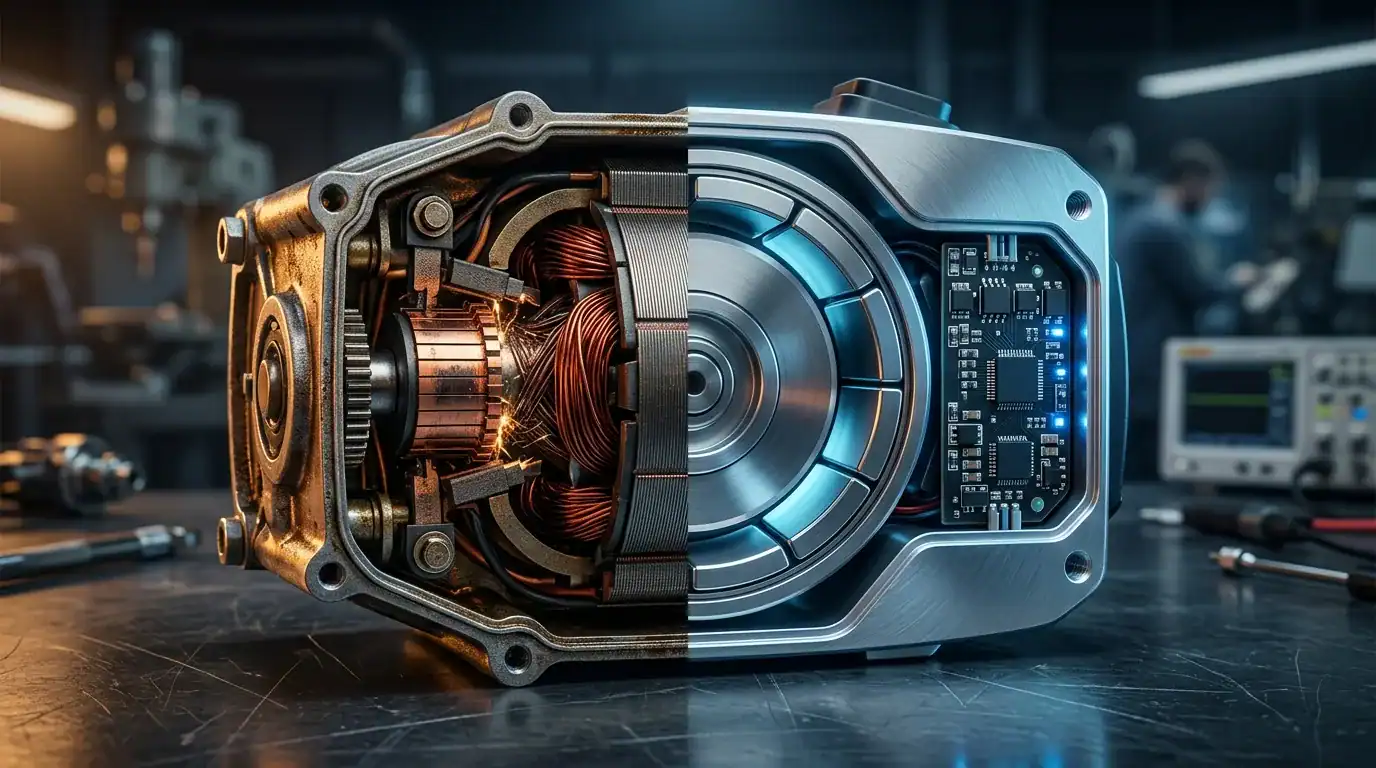
Imagine a spinning cylinder (the rotor or armature) wrapped with copper wire coils. Surrounding this rotor are stationary magnets (the stator). To get the rotor to spin, electricity needs to be delivered to its coils. This is where the “brushes” come in. Small blocks of carbon, called brushes, make direct physical contact with a segmented metal ring on the rotor called the commutator. As the rotor spins, the brushes slide across these commutator segments, continuously transferring electrical current to different coils. This creates an electromagnetic field in the rotor that interacts with the stationary magnets, causing the rotor to turn. This continuous push-and-pull is what drives your chainsaw chain.
The Practicalities of Brushed Power: Who Benefits?
- Budget-Conscious Users: If you’re looking for an electric chainsaw for occasional, light-duty tasks and your budget is tight, a brushed motor model is often the most economical entry point.
- Light Pruning & Yard Work: For seasonal tasks like trimming small branches (up to 4-6 inches in diameter), cutting back hedges, or cleaning up storm debris once or twice a year, a brushed motor corded electric chainsaw with, say, a 14-inch bar (e.g., a Ryobi 14-inch 12-amp corded electric chainsaw) offers ample power and saves you money.
- Familiarity & Repair: Because this technology has been around so long, many technicians are familiar with brushed motor repairs, and parts (especially replacement brushes) can be readily available.
The Trade-offs: What to Expect
While effective, the mechanical nature of brushed motors comes with some inherent limitations:
- Wear and Tear: The carbon brushes are consumable components. They are constantly rubbing against the commutator, leading to friction, heat, and gradual erosion. Over time, these brushes wear down and need replacement – a tell-tale sign is often reduced power or intermittent operation. This means periodic maintenance and potential downtime.
- Reduced Efficiency: That friction between the brushes and commutator isn’t just about wear; it’s also a source of wasted energy, manifesting as heat. This inefficiency means that for battery-powered brushed chainsaws, you’ll get shorter runtimes per charge compared to a brushless equivalent. For corded models, it translates to more electricity consumed for the same output.
- Heat and Noise: The friction generates more heat, which can limit how long you can continuously operate the saw without risking overheating. This friction also contributes to a generally louder operation compared to brushless motors. You might even see small sparks around the motor housing, which is normal for a brushed motor, but indicates the wear process in action.
- Power Density: Brushed motors typically produce less power and torque for their size and weight than brushless designs. This means they might struggle more with thicker wood or denser materials.
Brushless Motors: The Modern Marvel of Efficiency and Power
Brushless electric motors represent a significant technological leap forward. They are now the standard in most high-performance, battery-powered outdoor power equipment, including premium electric chainsaws. If you’re looking at a modern cordless chainsaw from brands like Stihl (e.g., MSA 220 C-B), Ego (e.g., CS1800), Greenworks, or Husqvarna, it almost certainly features a brushless motor.
How They Operate: Electronic Precision, No Contact
The key differentiator is the absence of brushes and a commutator. In a brushless motor, the role of the rotating element and the stationary element is essentially flipped. The rotor now consists of permanent magnets, while the coil windings (the stator) are stationary around the outside. How does it spin without physical contact?
This is where the “brains” come in. An advanced electronic controller, often called an Electronic Speed Controller (ESC) or inverter, precisely directs electrical current to the stationary stator coils. This controller rapidly switches the polarity of the magnetic fields in the stator coils. These electronically controlled, rotating magnetic fields then interact with the permanent magnets on the rotor, causing the rotor to spin. Because there’s no physical contact to transfer current, there’s no friction from brushes.
The Practicalities of Brushless Power: Why the Upgrade is Worth It
- Unmatched Efficiency: Without the friction and electrical arcing of brushes, significantly less energy is wasted as heat. This directly translates into substantially longer runtimes per battery charge for cordless models – often 50% or more compared to brushed counterparts. For demanding tasks like bucking firewood or felling small trees (e.g., a 16-inch bar on an Ego Power+ CS1604), this extended run-time is a game-changer.
- Superior Power and Torque: Brushless motors can pack more power and torque into a smaller, lighter package. The precise electronic control allows for optimal power delivery, enabling them to tackle tougher cutting tasks with greater ease and less bogging down, even comparable to smaller gas saws in certain applications.
- Extended Lifespan & Low Maintenance: The absence of brushes means there are no consumable parts to wear out in the motor itself. This dramatically increases the motor’s lifespan and reduces maintenance requirements. You won’t be replacing brushes, ever.
- Cooler and Quieter Operation: Less friction means less heat generation, allowing for longer continuous use without overheating. It also makes for a noticeably quieter operating experience, which is a huge benefit for homeowner use and neighborhood harmony.
- “Smarter” Performance: The electronic controller isn’t just about spinning the motor; it’s smart. It can monitor the load on the motor and adjust power output accordingly. This means if you hit a tough spot in the wood, the controller can instantly deliver more power, preventing stalls and improving overall cutting efficiency. It can also provide overload protection, safeguarding the motor from damage.
Making Your Choice: Matching Motor Type to Your Cutting Ambitions
Now that we’ve peeled back the layers of brushed and brushless technology, how do you translate this into a confident buying decision for your next electric chainsaw? It boils down to a few key considerations:
1. Your Typical Cutting Tasks and Frequency
- Occasional Light Pruning (small limbs, brush clearing): If your primary needs involve tidying up small branches (1-4 inches) a few times a year, a corded electric chainsaw with a brushed motor (e.g., a Black+Decker 12-Amp 16-inch corded chainsaw) offers excellent value. It will handle these jobs with ease, and you won’t feel the need for the advanced efficiency of brushless.
- Regular Yard Maintenance & Medium-Duty Work (limbs up to 8-10 inches, occasional firewood): For more frequent use, dealing with medium-sized limbs, or cutting up smaller logs for a fire pit, a battery-powered brushed chainsaw might suffice, but you’ll likely experience shorter battery life and potentially less consistent power. This is where a brushless battery-powered chainsaw truly shines. Its extended runtime and consistent power will make these tasks much less frustrating.
- Demanding Property Management & Firewood Processing (felling small trees, bucking large logs): If you have a larger property, frequently process firewood, or need to fell small to medium-sized trees (10-18 inches in diameter), a high-performance brushless battery-powered chainsaw is the undeniable choice. Models with 16-inch or 18-inch bars, powered by 60V or higher battery systems, deliver the torque and sustained power necessary for serious work, rivaling many smaller gas saws. For instance, a Greenworks Pro 80V 18-inch brushless chainsaw can tackle substantial cutting tasks without flinching.
2. Budget Constraints
- Lowest Entry Cost: Brushed motor chainsaws (especially corded) are almost always the most affordable option upfront.
- Long-Term Value: While brushless chainsaws have a higher initial price tag, their superior efficiency (fewer battery purchases/charges over time), greater durability, and reduced maintenance needs often translate to lower long-term ownership costs and a better return on investment, especially for frequent users.
3. Desired Performance and User Experience
- Efficiency & Runtime: If maximizing battery life and minimizing charging downtime is crucial (e.g., for extensive work away from power outlets), brushless is the clear winner.
- Power & Torque: For tackling tough, dense wood or making quick, clean cuts without bogging down, the consistent and “smart” power delivery of a brushless motor is vastly superior.
- Noise & Comfort: Brushless motors generally operate quieter and generate less heat, contributing to a more comfortable and less fatiguing cutting experience.
- Maintenance Preference: If you prefer a “set it and forget it” tool with minimal internal motor maintenance, brushless is the way to go. If you don’t mind occasionally replacing carbon brushes every few years on a lightly used tool, brushed might be acceptable.
The Verdict: Invest in What Serves You Best
The evolution from brushed to brushless motors in electric chainsaws isn’t just a technical footnote; it’s a game-changer for performance and user satisfaction. For the homeowner who needs a reliable, budget-friendly tool for very light, occasional pruning, a brushed corded electric chainsaw can be an excellent, practical choice.
However, for anyone seeking higher performance, longer runtimes, greater durability, and a more robust tool capable of handling a wider range of cutting tasks – from regular limb removal to significant firewood preparation – a brushless electric chainsaw is undoubtedly the superior investment. It offers a more efficient, powerful, and ultimately more rewarding cutting experience, making your time in the yard or woodlot more productive and enjoyable. Understand your needs, weigh the pros and cons, and choose the motor that empowers you to cut smarter, not harder.