


There’s nothing quite as frustrating as pulling the starter cord on your chainsaw, expecting that familiar roar of power, only to be met with a pathetic sputter or, worse, complete silence. Often, when your reliable workhorse starts acting up – struggling to start, idling rough, or losing power mid-cut – the culprit isn’t some complex engine failure. More often than not, it’s a simple, inexpensive component: the spark plug. This tiny part is absolutely critical for igniting the fuel-air mixture that powers your saw.
Table Of Content
- Why Your Chainsaw Needs a Healthy Spark Plug (And When to Check It)
- What Does a Spark Plug Do, Anyway?
- Signs of a Failing Spark Plug
- How Often Should You Replace It?
- Gathering Your Tools and the Right Spark Plug
- Essential Tools for the Job
- Choosing the Correct Replacement Spark Plug
- Step-by-Step Guide: Replacing Your Chainsaw Spark Plug Safely
- Safety First!
- The Replacement Process
- Post-Replacement Check
- Troubleshooting Common Spark Plug Issues and Final Tips
- What Your Old Spark Plug Tells You
- Avoiding Future Problems
Honestly, replacing a chainsaw spark plug is one of the easiest and most impactful DIY maintenance tasks you can perform. It’s a skill every homeowner, landowner, or chainsaw enthusiast should master. Not only does it restore your saw’s performance, but it also saves you a trip to the repair shop. In this comprehensive guide, I’ll walk you through everything you need to know, just like I would if we were in my workshop together.
Why Your Chainsaw Needs a Healthy Spark Plug (And When to Check It)
What Does a Spark Plug Do, Anyway?
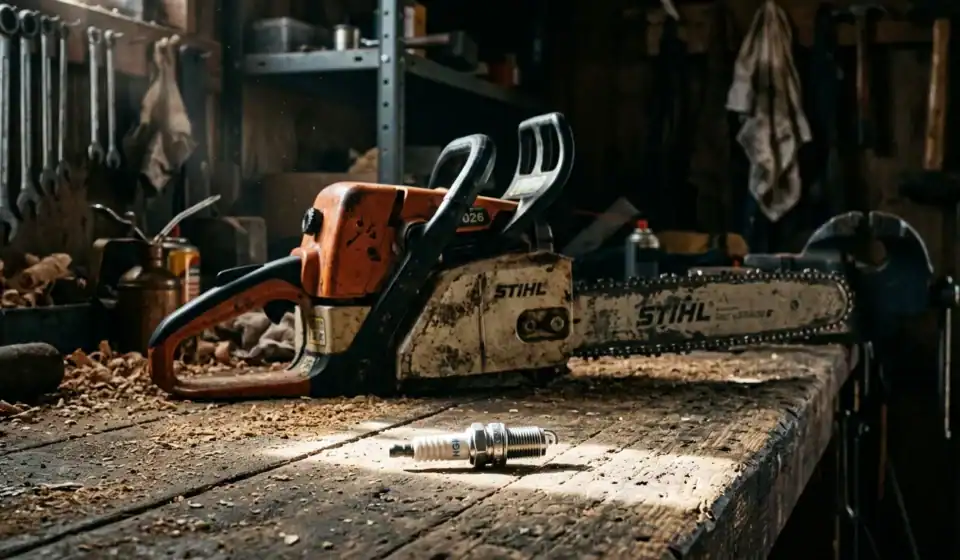
At its core, a spark plug’s job is straightforward: to create a precisely timed electrical spark that ignites the compressed fuel and air mixture inside your engine’s combustion chamber. Think of it as the tiny lightning bolt that kick-starts every power stroke. An insulator prevents the voltage from going astray, ensuring it jumps across a small gap between two electrodes. This spark is what makes your chainsaw bark to life and keep cutting.
When that spark is weak, intermittent, or doesn’t happen at all, your engine simply won’t run efficiently – or sometimes, not at all. The fuel might not ignite completely, leading to poor performance, increased emissions, and wasted fuel. It’s truly amazing how much difference such a small component can make.
Signs of a Failing Spark Plug
How do you know if your spark plug is on its way out? The signs are usually quite clear. The most common indicators include:
- Hard Starting: You have to pull the starter cord many more times than usual.
- Rough Idling: The saw struggles to maintain a consistent idle speed, often sputtering or stalling.
- Loss of Power: The saw bogs down easily under load, even with a sharp chain.
- Misfires: You hear irregular popping sounds, indicating incomplete combustion.
- Increased Fuel Consumption: An inefficient burn means you’re using more fuel for the same amount of work.
For example, imagine this situation: You’re out felling a tricky oak, and your Stihl MS 271 Farm Boss, which usually starts on the second pull, suddenly needs ten or fifteen pulls. Then, when it finally starts, it just won’t hold an idle and dies out repeatedly. Before you panic and think it’s a major carb issue, take a moment. That’s a classic sign that your spark plug is likely fouled or worn out.
How Often Should You Replace It?
As a general rule of thumb, I recommend checking your spark plug annually or every 50-100 hours of operation, whichever comes first. Many manufacturers, like Husqvarna and Echo, suggest similar intervals. For instance, a Stihl chainsaw manual often recommends replacement around every 100 hours of use. However, if you notice any of the symptoms we just discussed, don’t wait for the recommended interval – check it immediately. Regular inspection allows you to catch problems before they become major headaches. A quick visual check can often tell you a lot about your engine’s health!
Gathering Your Tools and the Right Spark Plug

Essential Tools for the Job
Before you begin, gather your tools. You don’t need a whole lot, which is part of what makes this such a simple task:
- Spark Plug Wrench: Most chainsaws come with a multi-tool that includes a spark plug wrench (often a combination socket for the plug and a screwdriver for other adjustments). If not, a standard socket wrench with the correct size socket (usually 13mm, 16mm, or 19mm for small engines) will do.
- Screwdriver: You might need a flathead or Torx driver to remove the engine cover, depending on your saw model (e.g., some Husqvarna models use Torx screws).
- Wire Brush: For cleaning around the spark plug well.
- Feeler Gauge: Essential for checking and adjusting the spark plug gap (more on this soon!).
- Safety Glasses and Gloves: Always a good idea when working with machinery.
Having these ready will make the process smooth and quick. Trust me, rummaging for tools mid-task is never fun.
Choosing the Correct Replacement Spark Plug
This is arguably the most critical step. Using the wrong spark plug can lead to poor performance, engine damage, or difficult starting. Always, and I mean always, consult your chainsaw’s owner’s manual to find the exact spark plug type recommended by the manufacturer. You’ll typically find a code like “NGK BPMR7A” or “Champion RCJ7Y.” These codes specify the plug’s thread size, reach, heat range, and other vital characteristics.
Why is this so important? Different plugs have different “heat ranges,” which affect how quickly they dissipate heat. A plug that’s too hot can cause pre-ignition and engine damage, while one that’s too cold can lead to fouling. Brands like NGK, Champion, and Bosch are reputable. While aftermarket plugs can be tempting due to price, in my opinion, sticking to the OEM (Original Equipment Manufacturer) recommended plug or a high-quality equivalent from a trusted brand is always the safest bet for optimal performance and longevity. You’re investing in a chainsaw like an Echo CS-590, so why skimp on a critical component?
Step-by-Step Guide: Replacing Your Chainsaw Spark Plug Safely
Safety First!
Before you even think about touching your chainsaw’s engine, prioritize safety. This isn’t just a suggestion; it’s a non-negotiable rule:
- Ensure the chainsaw’s engine is completely OFF and COLD. Never work on a hot engine.
- Engage the chain brake.
- Disconnect the spark plug boot from the spark plug. This prevents any accidental starting while you’re working.
- Place the chainsaw on a stable, flat surface.
These steps minimize the risk of injury and accidental starting. Seriously, don’t skip them.
The Replacement Process
Now, let’s get down to the actual replacement:
- Locate and Access the Spark Plug: The spark plug is usually located under a removable engine cover, often near the starter housing. You might need to remove a few screws to access it. Once the cover is off, you’ll see the spark plug boot, a rubber cap that connects the ignition wire to the plug. Gently but firmly pull the boot straight off the plug.
- Clean Around the Plug Well: Before removing the old plug, use a wire brush or compressed air to clean any dirt, sawdust, or debris from around the spark plug well. You don’t want any of this falling into the combustion chamber when the plug is removed.
- Remove the Old Spark Plug: Fit your spark plug wrench or socket onto the old plug. Turn it counter-clockwise (lefty loosey) to loosen and remove it. It might be a bit tight initially, but should loosen fairly easily. Once loose, you can often unscrew it by hand.
- Inspect the Old Plug: Take a good look at the old plug. What does it tell you?
- Brown/Gray Deposits: Ideal, indicates good combustion and fuel mixture.
- Black/Sooty: Too rich fuel mixture, dirty air filter, or operating too cold.
- White/Blistered: Too lean fuel mixture, engine running too hot, or incorrect plug.
- Oily/Wet: Too much oil in the fuel mix, worn piston rings, or other internal engine issues.
This inspection can give you valuable insights into your engine’s health.
- Prepare the New Spark Plug: Most new spark plugs come pre-gapped, but it’s always a good practice to double-check. Consult your chainsaw manual for the correct gap specification (e.g., 0.020-0.025 inches or 0.5-0.6mm for many small engines). Use a feeler gauge to measure the gap between the center and ground electrodes. If adjustment is needed, gently bend the ground electrode using a small tool or the gapping tool on your feeler gauge. Be careful not to damage the center electrode.
- Install the New Spark Plug: Hand-thread the new spark plug into the engine block. This is crucial to avoid cross-threading, which can cause significant damage. Once it’s finger-tight, use your spark plug wrench to tighten it. Don’t overtighten! A good rule of thumb is to tighten it about 1/2 to 3/4 of a turn past finger-tight for a new plug with a gasket, or about 1/8 to 1/4 turn for a used plug. Refer to your manual for specific torque specs if you have a torque wrench, but for most DIYers, snug is good.
- Reattach the Spark Plug Boot: Push the spark plug boot firmly back onto the new spark plug until you feel it “click” into place. Ensure it’s seated securely to prevent misfires.
Post-Replacement Check
With the new spark plug in place and the boot reconnected, reassemble any covers you removed. Now, start your chainsaw. You should notice an immediate improvement in starting ease, idle quality, and overall power. If it still runs rough, you might have a deeper issue, but a new spark plug is always a great place to start troubleshooting.
Troubleshooting Common Spark Plug Issues and Final Tips
What Your Old Spark Plug Tells You
The condition of your old spark plug is a diagnostic tool in itself. A constantly fouled (black, sooty) plug often indicates that your fuel-oil mixture is too rich, your air filter is clogged, or you’re running the saw in very cold conditions without proper adjustment. Conversely, a white or blistered electrode can signal a lean fuel mixture, which can lead to overheating and serious engine damage. Pay attention to these visual clues; they guide you towards preventing future problems.
Avoiding Future Problems
To keep your new spark plug, and thus your chainsaw, running optimally, here are a few final tips:
- Always use the correct fuel-to-oil mixture ratio as specified by your chainsaw manufacturer. Don’t eyeball it!
- Regularly clean your air filter. A clogged filter restricts airflow, leading to a rich mixture that can foul your spark plug.
- Don’t ignore the early signs of a struggling saw. A quick check of the spark plug can save you a lot of hassle and potential repair costs down the line.
- Store your chainsaw properly, especially during long periods of inactivity.
Replacing your chainsaw spark plug is more than just a maintenance task; it’s an act of care for your valuable tool. It’s a simple, empowering DIY project that gives you a deeper understanding of your chainsaw’s engine and ensures it’s always ready for the next challenging job. So, next time your saw hesitates, remember this guide. You’ve got this. Take a moment, check your manual, and give your chainsaw the fresh spark it deserves. Your saw, and your patience, will thank you for it!