

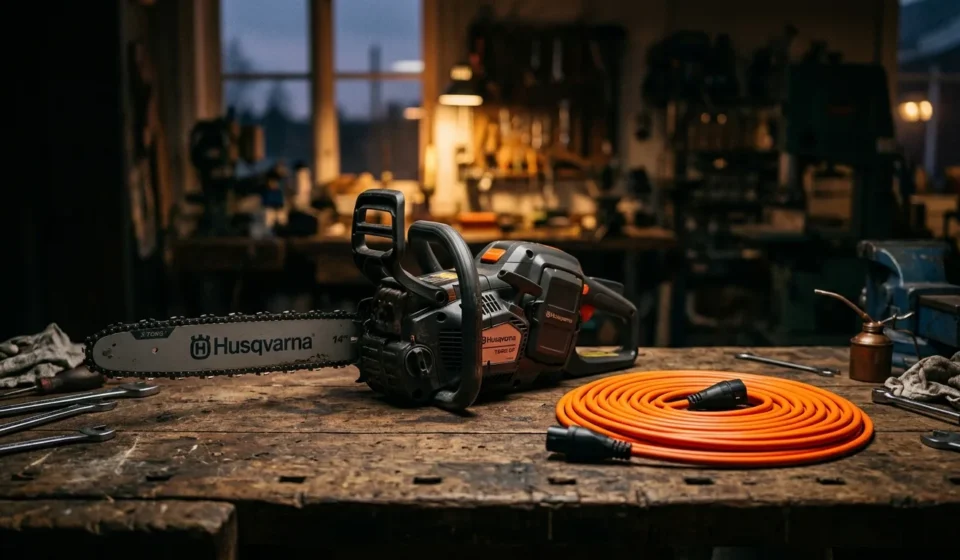

You’ve got your electric chainsaw ready to go, safety gear on, and a few branches marked for removal. But before you plug in and power up, let me ask you this: Are you grabbing just any old extension cord lying around? If so, you might be heading for trouble. For electric chainsaws, the extension cord isn’t just a simple power conduit; it’s a critical component that dictates both your tool’s performance and, more importantly, your safety. Using the wrong cord can lead to frustrating power loss, overheating, and even dangerous electrical hazards.
Table Of Content
- Why the Right Cord Matters: Power, Performance, and Protection
- Understanding Voltage Drop and Amperage
- The Dangers of Undersized Cords
- Choosing Your Extension Cord: The Core Principles
- Gauge (AWG) Explained: Thicker is Better
- Length: The Balancing Act
- Outdoor Rating and Features
- Safety First: Best Practices for Corded Chainsaw Use
- Pre-Use Inspection
- Managing the Cord During Operation
- GFCI Protection: Your Lifesaver
- Storage and Maintenance
- When to Consider Alternatives
- Conclusion: Power Up Smart, Cut Safely
As an experienced outdoor power equipment specialist, I’ve seen countless homeowners underestimate the importance of this connection. The truth is, maximizing reach and maintaining safety with an electric chainsaw hinges almost entirely on choosing and using the correct extension cord. This guide will cut through the confusion, giving you actionable advice to ensure your electric chainsaw runs powerfully and safely every time you use it.
Why the Right Cord Matters: Power, Performance, and Protection
Electric chainsaws are fantastic tools for many homeowners. They’re lighter, quieter, and don’t require fuel mixing like their gas-powered counterparts. However, they demand a consistent flow of electricity to operate efficiently. An improperly matched extension cord can severely compromise this flow, turning a powerful tool into a sluggish, potentially dangerous one.
Understanding Voltage Drop and Amperage
Let’s talk a little technical for a moment, but I promise it’ll be clear. Every electrical tool draws a certain amount of current, measured in amperes (amps). Most corded electric chainsaws, like the popular WORX WG303.1 14.5 Amp 16-inch or a Black+Decker 15-Amp 16-inch model, are high-draw devices, often requiring between 12 to 15 amps. When electricity travels through an extension cord, especially a long or thin one, it encounters resistance. This resistance causes a phenomenon called voltage drop. Simply put, the voltage available at the chainsaw end of the cord is lower than at the wall outlet.
What does this mean for your chainsaw? A significant voltage drop translates directly into reduced power at the motor. The chainsaw tries to compensate by drawing more current, which can lead to overheating of the motor and the cord itself. This isn’t just inefficient; it significantly shortens the lifespan of your tool and creates a serious fire risk. Imagine your chainsaw struggling, bogging down on cuts, and feeling unusually hot – that’s often a tell-tale sign of an undersized cord.
The Dangers of Undersized Cords
Beyond poor performance, using an undersized or damaged extension cord with a high-draw tool like an electric chainsaw poses several distinct hazards. The most immediate risk is overheating, which can melt the cord’s insulation, expose live wires, and even ignite nearby flammable materials. This can also lead to tripped circuit breakers, which, while a safety mechanism, indicate that your setup is drawing too much current or experiencing a fault. Repeated trips are a clear warning sign.
For example, imagine this situation: You’re tackling that stubborn branch high up, and you’ve got an old, thin 16-gauge cord stretched 100 feet across the yard. Your 15-amp chainsaw starts sputtering, the motor whines, and you notice a distinct warmth radiating from the cord. That’s your system screaming for help! You’re risking motor burnout and a potential electrical fire just to save a few bucks on the right cord. It’s simply not worth it.
Choosing Your Extension Cord: The Core Principles
So, how do you pick the right cord? It boils down to a few key factors: gauge, length, and construction. Get these right, and you’re well on your way to safe and efficient cutting.
Gauge (AWG) Explained: Thicker is Better
The gauge of an extension cord refers to the thickness of its wire, measured by the American Wire Gauge (AWG) system. This is a crucial detail: the lower the AWG number, the thicker the wire. Thicker wires have less electrical resistance and can safely carry more current over longer distances. Here’s a quick breakdown:
- 16-gauge: Generally suitable for light-duty tools (up to 10 amps) over short distances (up to 25 feet). For chainsaws, this is almost always too thin.
- 14-gauge: A step up, good for medium-duty tools (10-12 amps) up to 50 feet. For a 12-amp electric chainsaw, a 14-gauge cord might suffice for shorter tasks, but it’s pushing it.
- 12-gauge: This is where you should generally start for electric chainsaws. It’s ideal for 13-15 amp tools up to 50 feet, and can handle 10-12 amp tools up to 100 feet. Many quality chainsaws will perform well with a 12-gauge cord.
- 10-gauge: The heavy-duty champion. Recommended for 13-15 amp chainsaws, especially when needing to extend beyond 50 feet, up to 100 feet. This gauge provides the least voltage drop and the most safety for high-draw tools over distance.
My advice? When in doubt, always go with a thicker gauge. A 10-gauge cord will perform better and last longer than a 12-gauge with a 15-amp chainsaw over 75 feet, based on my experience.
Length: The Balancing Act
While gauge is critical, length plays an equally important role. The longer the cord, the greater the potential for voltage drop, even with a thick gauge. My rule of thumb is to always use the shortest possible cord that still allows you to comfortably and safely reach your cutting area. Avoid using multiple extension cords daisy-chained together to achieve extra length; this significantly increases resistance and fire risk.
If you find yourself needing more than 100 feet of cord, you should seriously re-evaluate whether an electric chainsaw is the right tool for that particular job. Sometimes, the limitations of corded outdoor power equipment mean you might need to consider a battery-powered or gas-powered alternative, which we’ll touch on later.
Outdoor Rating and Features
Since you’ll be using your chainsaw outside, your extension cord must be rated for outdoor use. Look for cords marked with a “W” (Weather-resistant) or designations like “SJOW,” “SJOOW,” or “SJTW.” These indicate that the cord has a durable, weather-resistant jacket designed to withstand moisture, sunlight, and abrasions common in outdoor environments. Furthermore, always ensure your cord is a three-prong (grounded) type to match your chainsaw’s plug and provide essential safety grounding. Some cords also come with lighted ends, which are a handy feature for quickly confirming power flow, especially in dimly lit conditions.
Safety First: Best Practices for Corded Chainsaw Use
Choosing the right cord is half the battle; the other half is using it safely. These electric chainsaw tips are crucial for preventing accidents and ensuring reliable operation.
Pre-Use Inspection
Before every use, take a moment to inspect your extension cord. Look for any cuts, nicks, frays, or exposed wires. Check the plug and receptacle ends for damage or bent prongs. A compromised cord is a serious hazard and should be immediately replaced or repaired by a qualified professional. Also, ensure the cord’s insulation isn’t brittle or cracked, especially if it’s an older cord that’s been exposed to the elements. This proactive step is a fundamental part of good chainsaw maintenance.
Managing the Cord During Operation
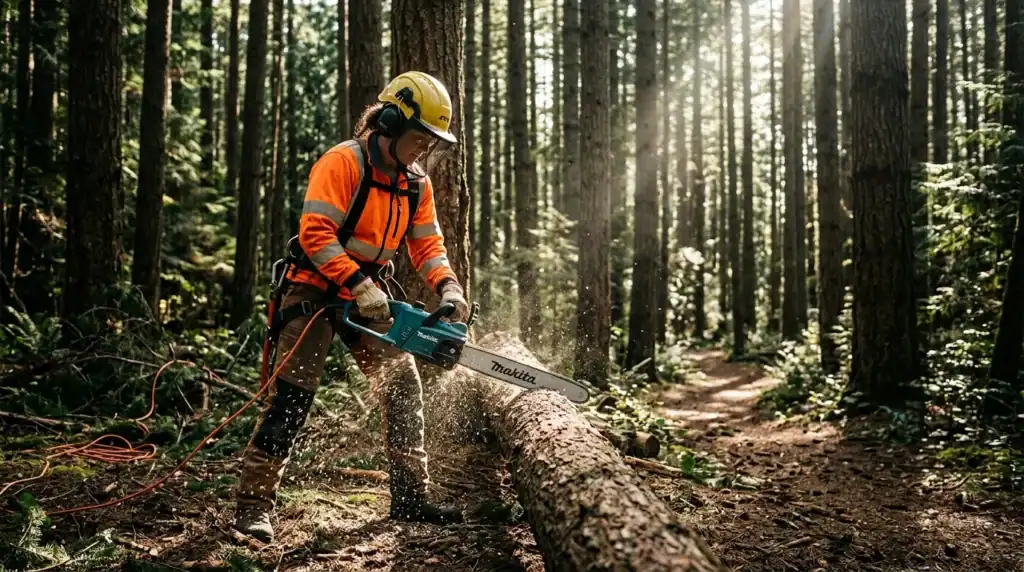
This is where many accidents happen. The cord can easily get in the way of your cutting path or become a tripping hazard. Always keep the extension cord behind you and away from the chainsaw’s bar and chain. I always recommend using the cord retainer clip (often a small hook or slot) found on most electric chainsaws. This simple feature prevents the cord from accidentally pulling out of the chainsaw’s receptacle, which can be jarring and dangerous mid-cut. But what would you do if the cord snags anyway? Immediately release the trigger and assess the situation safely. Never try to free a snagged cord while the chainsaw is running.
Avoid wrapping the cord around limbs or letting it lie underfoot where you might trip. Draping it over your shoulder might seem convenient, but it can restrict movement and increase the risk of snagging. It’s all about planning your cuts and your cord’s path before you even start the saw.
GFCI Protection: Your Lifesaver
When working with electric tools outdoors, especially near potential moisture, a Ground Fault Circuit Interrupter (GFCI) is non-negotiable. A GFCI is designed to protect you from severe electrical shock by rapidly shutting off power if it detects a ground fault (i.e., electricity flowing along an unintended path, like through you!). Most outdoor outlets are already GFCI-protected, but if yours isn’t, you can purchase an inexpensive in-line GFCI adapter that plugs into the outlet before your extension cord. This extra layer of protection is one of the most important aspects of chainsaw safety for electric models.
Storage and Maintenance
Proper storage significantly extends the life of your extension cord. Always coil your cord neatly after use, avoiding kinks or tight bends that can damage the internal wiring. Store it in a dry, protected area, away from direct sunlight, extreme temperatures, and heavy objects that could crush it. Regularly cleaning the cord to remove dirt and debris will also help preserve its outer jacket. A well-maintained cord is a safe and reliable cord.
When to Consider Alternatives
To be fair, while electric chainsaws with the right extension cord are excellent for many yard tasks, there are limitations. If your cutting area is consistently beyond 100 feet from a power source, or if you’re dealing with very large, dense trees that require maximum power over extended periods, an electric chainsaw might not be the ideal choice, even with the best extension cord.
In such scenarios, you might find more freedom and power with a battery-powered chainsaw (like a DeWalt 20V MAX XR or EGO Power+ 56V), which offers excellent portability without the cord, or a gas-powered model (such as a Stihl MS 170 or Husqvarna 120 Mark II) for professional-grade power and unlimited reach. These options are often discussed on Best Professional Chainsaw because they solve the range problem that corded electric models inherently have. Understanding these limitations is part of being a savvy user of outdoor power equipment.
Conclusion: Power Up Smart, Cut Safely
The humble extension cord is far more critical to your electric chainsaw’s performance and your personal safety than most people realize. By investing in the right gauge and length, ensuring it’s outdoor-rated, and diligently following safe handling practices, you empower your electric chainsaw to operate at its peak efficiency while minimizing risks. Remember, a cheap or improper cord isn’t a bargain; it’s a liability waiting to happen.
Take the time to assess your needs, choose a high-quality cord, and integrate these safety tips into your routine. Your chainsaw will thank you with reliable performance, and more importantly, you’ll protect yourself and your property. Cut smart, cut safe!