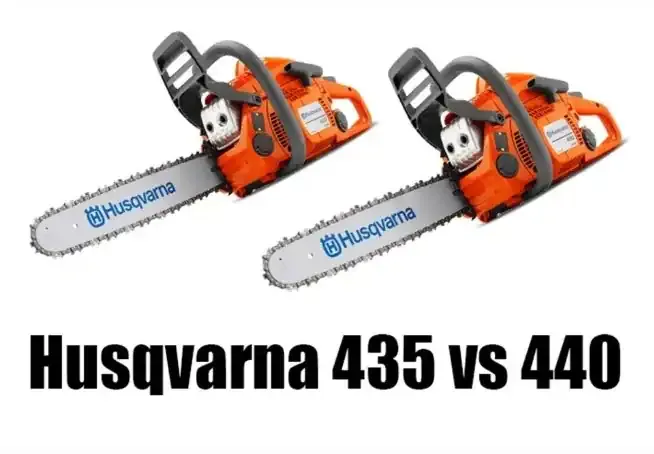
Quick answer: While both machines share the same lightweight 40.9 cc X-Torq® engine block, the Husqvarna 440 delivers 2.4 horsepower compared to the 435's 2.2 horsepower. The Husqvarna 435 is ideal for light limbing and occasional firewood duty with a 16-inch bar, whereas the extra torque of the Husqvarna 440 allows it to maintain RPM under heavy load and cleanly drive an 18-inch guide bar through hardwood logs.
Husqvarna 435 vs 440: Direct Comparison and Key Differences
To understand why two chainsaws with identical engine displacement cut differently in dense wood, you have to examine how Husqvarna tunes their transfer ports and carburetors. Both models utilize a cast 40.9 cc cylinder, but the Husqvarna 440 features slightly modified port timing and fuel delivery that pushes output from 1.6 kW (2.2 hp) up to 1.8 kW (2.4 hp) at a rated 9,000 RPM. That additional 0.2 horsepower sounds minor on paper, but in the cut, torque preservation matters significantly more than raw top-end speed. When buried in a 14-inch log of seasoned red oak, the 435 will experience noticeable chain drag if you apply downward pressure, while the 440 maintains its power band and continuous chip discharge.
Dry weight between the two powerheads is extremely close, making physical handling nearly identical during overhead limbing or brush clearing. The 435 weighs approximately 9.2 lbs (4.2 kg) dry without bar and chain, while the 440 comes in at 9.8 lbs (4.4 kg) due to minor internal structural differences and bar mount hardware choices. Both powerheads utilize Husqvarna’s signature forged three-piece crankshaft, which drastically reduces internal flexing compared to cheap, stamped single-piece shafts found in budget consumer saws. This commercial-grade bottom end allows both models to handle rapid throttle cycling without stressing the crank bearings or wrist pin assembly.
| Specification | Husqvarna 435 | Husqvarna 440 | Key Takeaway |
| Engine Displacement | 40.9 cc | 40.9 cc | Identical size—the difference is in tuning. |
| Power Output (HP) | 2.2 hp (1.6 kW) | 2.4 hp (1.8 kW) | 440 is 9% more powerful. |
| Power-to-Weight Ratio | 0.52 hp/lb | 0.53 hp/lb | The 440 is negligibly heavier but noticeably more powerful. |
| Weight (Excl. Cutting Eq.) | 9.2 lbs (4.2 kg) | 9.8 lbs (4.4 kg) | The difference in Husqvarna 435 vs 440 weight is marginal. |
| Max Recommended Bar | 16 inches | 18 inches | 440 handles longer bars more effectively. |
| Max Power Speed | 9,000 rpm | 9,000 rpm | Both rev equally high for fast cutting speed. |
| Torque, max. | Not specified (Lower than 440) | 2.16 Nm | The 440 delivers more force to the chain. |
Both models come equipped from the factory with a narrow-kerf cutting system utilizing a .325-inch chain pitch and a .050-inch drive link gauge. Paired with Husqvarna's SP33G X-Cut® semi-chisel chain, this setup reduces resistance in the cut by removing less wood per pass than standard full-kerf 3/8-inch chains. If you want to explore more options across gas-powered chainsaws in this displacement bracket, understanding fuel efficiency and chain dynamics is crucial before making a final investment.
| Specification Parameter | Husqvarna 435 | Husqvarna 440 |
|---|---|---|
| Engine Displacement | 40.9 cc (2.5 cu. inch) | 40.9 cc (2.5 cu. inch) |
| Power Output | 2.2 hp (1.6 kW) @ 9,000 RPM | 2.4 hp (1.8 kW) @ 9,000 RPM |
| Dry Powerhead Weight | 9.2 lbs (4.2 kg) | 9.8 lbs (4.4 kg) |
| Recommended Bar Lengths | 13 to 16 inches (33 to 40 cm) | 13 to 18 inches (33 to 45 cm) |
| Chain Pitch & Gauge | .325" Pitch / .050" Gauge | .325" Pitch / .050" Gauge |
| Fuel Tank Capacity | 12.5 fl oz (0.37 Liters) | 12.5 fl oz (0.37 Liters) |
| Standard Fuel/Oil Ratio | 50:1 (2-Stroke Synthetic) | 50:1 (2-Stroke Synthetic) |
| Vibration Level (Front/Rear Handle) | 3.8 / 4.2 m/s² | 3.8 / 4.2 m/s² |
Cutting Capabilities, Bar Lengths, and Real-World Handling
Matching the correct guide bar length to your powerhead's horsepower output is essential for tool longevity and operator safety. While retailer bundles sometimes package the Husqvarna 435 with an 18-inch bar, practical field testing shows that a 16-inch laminated bar is the functional sweet spot for this 2.2 hp engine. Running an 18-inch bar on the 435 increases oil pump load and friction surface area, leading to engine lugging during full-bar cuts in green pine or hard ash. Conversely, the Husqvarna 440 has enough secondary torque to run an 18-inch guide bar reliably, provided you do not force the saw into the timber and let the sharp cutter teeth pull the unit through organically.
Ergonomics on both units excel in tight spaces due to their slim saw body architecture and flat underside base plate. Husqvarna integrates their LowVib® system into both models, isolating the front and rear handles from the engine chassis using heavy-duty steel coil springs rather than cheap rubber bushings. Rubber mounts tend to soften and degrade over time when exposed to bar oil mist and UV light, whereas steel dampening springs maintain consistent dampening characteristics (3.8 m/s² front handle vibration) across temperature extremes. This low vibration rating prevents operator hand fatigue during full-day cutting sessions on forest property.
Pro tip: Brand new chains stretch rapidly during their initial thermal cycles. When breaking in a fresh SP33G X-Cut chain on either saw, make 3 light cuts through soft maple, shut off the engine, engage the chain brake, and check tension. A loose chain on these high-RPM .325" pitch setups can easily derail, damaging the drive link tangs and gouging the aluminum chain catcher pin mounted under the sprocket cover.
Starting behavior is nearly identical between both units thanks to the integrated Smart Start® spring-assisted starter mechanism and combined choke/stop switch. The Smart Start design reduces starter cord pull resistance by up to 40%, preventing hard recoil snaps back into your wrist. Additionally, both saws feature an automatic, non-adjustable oil pump that delivers bar oil at a steady rate matched to engine RPM, ensuring the bar groove and nose sprocket remain continuously lubricated whenever the clutch engages at 4,300 RPM.
Comparing the 435 and 440 Against Nearby Models
To accurately judge where these 40 cc tools sit in the wider outdoor power equipment market, you must evaluate them against lighter budget options, larger mid-range property saws, and competing brands. Homeowners often wonder if stepping down to an entry-level saw like the Husqvarna 120 Mark II saves money without sacrificing utility, or if jumping up to a 50 cc platform like the 450 Rancher is necessary for cutting larger wood piles.
The Husqvarna 120 Mark II features a smaller 38.2 cc engine outputting 1.8 hp and uses a simpler engine housing with a clamshell plastic crankcase. While fine for light pruning, it lacks the Air Injection® centrifugal air cleaning system found on the 435 and 440. Air Injection uses the engine flywheel fan blades to separate dust and large wood fibers before air reaches the primary paper filter, extending filter service intervals up to five times longer. Moving down to the 120 Mark II results in more filter maintenance, higher vibration levels, and slower cutting speeds.
| Feature | Husqvarna 120 Mark II | Husqvarna 435 | Why Choose the 435? |
| Power Output (HP) | 1.88 hp | 2.2 hp | Significantly more power for heavier bucking. |
| Engine Displacement | 38.2 cc | 40.9 cc | A more robust, slightly larger engine core. |
| Filter | Standard | Air Injection™ | Superior centrifugal air cleaning system for longer filter life. |
| Durability | Entry-level components | Robust 400-series construction | Better lifespan and sustained performance for regular use. |
Moving up the chain ladder brings us to the husqvarna 450 rancher, a popular 50.2 cc machine delivering 3.2 hp. The 450 Rancher comfortably pulls a 20-inch bar through large hardwood trunks with ease. However, that increased power comes with an added 2.0 lbs of dry powerhead weight (11.2 lbs total). If your primary work involves limbing felled trees, trimming medium branches, or bucking saplings under 12 inches in diameter, carrying the extra mass of a 50 cc saw will tire your arms quickly. If you eventually require commercial timber felling capacity, exploring professional chainsaws in the 60 cc to 70 cc bracket makes more sense than pushing mid-range saws past their duty limits.
When stacked against its primary competitor, the Stihl MS 180, the Husqvarna 435 offers superior build quality and engine displacement. The MS 180 runs a smaller 31.9 cc engine (2.0 hp) on a lightweight 3/8" Picco chain platform. While the MS 180 is exceptional for small yard cleanup due to its ultra-light 9.0 lb frame, it lacks the rigid bar mounting stability and engine torque needed for processing full cords of firewood. The Husqvarna 435 and 440 both outperform the MS 180 in timber diameter capacity and vibration dampening execution.
Essential Maintenance, Fuel Mixing, and Safety Gear
Maintaining peak power and engine longevity on a 2-stroke mid-range saw requires strict adherence to fuel quality standards and preventative checks. Modern high-revving 2-stroke engines operate at tight internal clearances and high operating temperatures. Running stale fuel or incorrect fuel-to-oil ratios will cause piston scuffing, lean misfires, or complete engine seizure within just a few tanks of operation.
- Fuel Preparation: Mix mid-grade or premium ethanol-free gasoline (89 octanes or higher) with a high-grade ISO-L-EGD or JASO FD certified synthetic 2-stroke air-cooled engine oil at an exact 50:1 ratio (2.6 fl oz of oil per 1 gallon of gas). Never use ethanol blended fuel higher than E10, as ethanol attracts moisture, degrades fuel lines, and runs hot.
- Air Filter Cleaning: Thanks to centrifugal Air Injection, check the fleece air filter every 10 to 15 operating hours. Tap out dry dust or wash in warm soapy water, allowing it to dry completely before reinstallation.
- Spark Plug Maintenance: Inspect the NGK CMR6H spark plug every 25 hours. Maintain an electrode gap of 0.020 inches (0.5 mm) and replace the plug if carbon deposits bridge the gap.
- Bar and Chain Care: Clean the guide bar rail groove using a putty knife after every work session, clear the oil inlet hole, and grease the bar nose sprocket. File cutter teeth at a 30-degree angle using a 3/16-inch (4.8 mm) round file, maintaining accurate depth gauge settings at .025 inches.
Safety equipment is non-negotiable when operating high-speed equipment spinning a razor-sharp steel chain at over 45 miles per hour. Always wear personal protective equipment meeting current ANSI standards before pulling the pull-cord. Essential safety gear includes chainsaw chaps certified under ASTM F1897 containing multi-layer cut-retardant Aramid fibers, an ANSI Z89.1 approved hard hat with a fold-down wire mesh face screen, wrap-around ANSI Z87.1 safety glasses, NRR 25+ dB hearing protection ear muffs, heavy leather cut-resistant gloves, and steel-toe work boots with non-slip traction soles. To ensure proper field operation and chain maintenance safety, check our full chainsaw safety guidelines before tackling large timber tasks.
For most landowners who cut 2 to 4 cords of firewood per year, clear fallen limbs after summer storms, and maintain medium timber stands, the Husqvarna 440 offers the best balance of power, weight, and long-term utility. The additional 0.2 hp allows you to run an 18-inch bar comfortably through mixed hardwoods without stalling the powerhead. Choose the Husqvarna 435 if you already own a larger 50 cc or 60 cc saw and simply need a lightweight 16-inch companion saw for limbing top branches. Once you select your machine, purchase a fresh 50:1 synthetic fuel mix, equip your protective chaps, and keep your chain cutters sharp for clean, efficient wood cutting.
Frequently Asked Questions
Is the Husqvarna 440 worth the extra money over the 435?
Yes, for most users the Husqvarna 440 is worth the small price increase. The additional 0.2 horsepower derived from its tuned 40.9 cc engine provides noticeably better torque retention when bucking logs over 10 inches in diameter, allowing you to cut faster without bogging the engine down.
Can I run an 18-inch bar on the Husqvarna 435?
While the Husqvarna 435 bar mount physically accepts an 18-inch bar, it runs best with a 16-inch bar. The 2.2 hp engine loses cutting momentum when an 18-inch bar is fully engaged in dense hardwood, whereas the 2.4 hp Husqvarna 440 handles an 18-inch bar much more effectively.
What chain size and file diameter do the 435 and 440 use?
Both models use a .325-inch pitch, .050-inch gauge chain standard from the factory (such as Husqvarna SP33G X-Cut). To sharpen this chain correctly, use a standard 3/16-inch (4.8 mm) round file held at a 30-degree top-plate filing angle.
What fuel mix ratio should I use in my Husqvarna 400-series chainsaw?
Husqvarna requires a strict 50:1 ratio of gasoline to two-stroke oil. This equals 2.6 fluid ounces of high-quality synthetic 2-stroke oil per 1 gallon of ethanol-free pump gas rated at 89 octane or higher.
Sources
- Husqvarna Group Technical Data Sheet: 435 II & 440 II Operator Manuals (husqvarna.com)
- ANSI B175.1 Safety Requirements for Gasoline-Powered Chain Saws
- OSHA Standard 1910.266: Logging Operations & Personal Protective Equipment Requirements
| Feature | Husqvarna 435 | Husqvarna 450 Rancher | Why Choose the 450? |
| Power Output (HP) | 2.2 hp | 3.2 hp | 45% more power. |
| Engine Displacement | 40.9 cc | 50.2 cc | Larger engine size for serious cutting. |
| Chassis | Homeowner plastic/metal blend | More robust, heavier-duty components | Better thermal management and durability for frequent, hard use. |
| Feature | Husqvarna 435 | Stihl MS180 | Key Advantage |
| Power Output (HP) | 2.2 hp | 1.9 hp | Husqvarna 435 is significantly more powerful. |
| Engine Displacement | 40.9 cc | 31.8 cc | 435 has nearly 9cc more volume. |
| Weight (Excl. Cutting Eq.) | 9.2 lbs | 8.6 lbs | Stihl is noticeably lighter. |
| Bar Length | Recommended 16" | Recommended 14" | Husqvarna handles larger wood better. |