Disclosure: As an Amazon Associate, we earn from qualifying purchases.
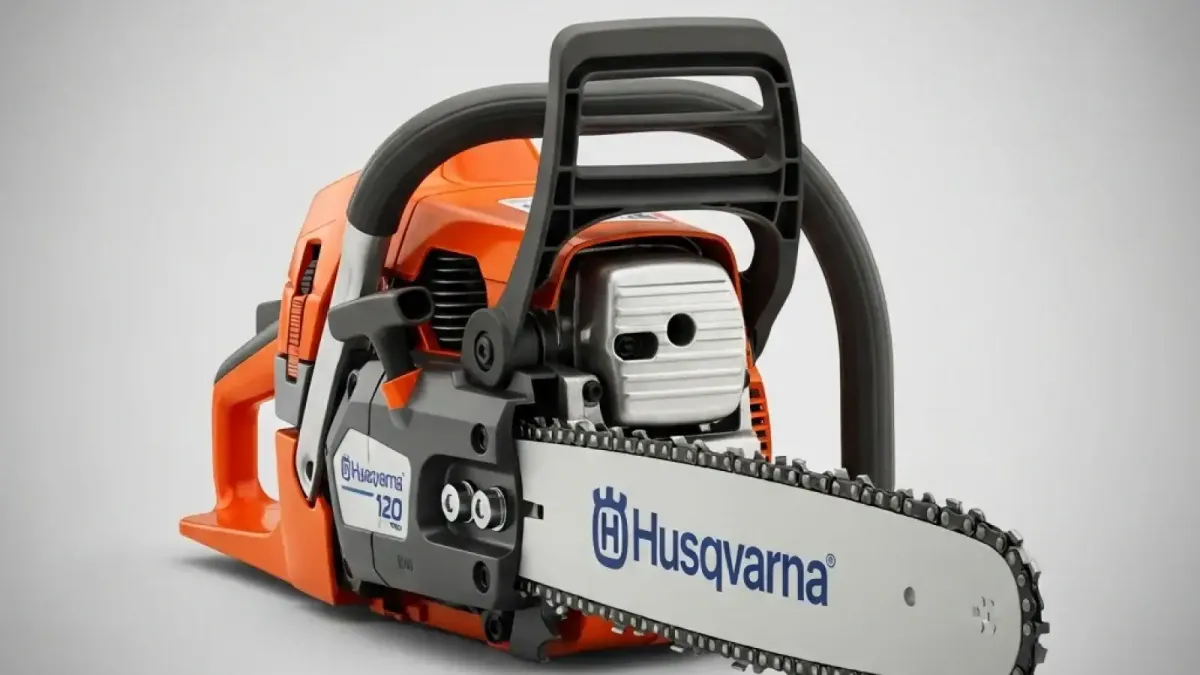
Selecting a compact, entry-level chainsaw for routine yard cleanup, firewood cutting, and limb trimming often leads homeowners directly to Husqvarna's 100-series line. Two models that frequently come up in discussions—and on retail shelves—are the original Husqvarna 120 and its revised successor, the Husqvarna 120 Mark II. While both units are engineered for light-duty domestic property maintenance, understanding how the Mark II refines the shortcomings of the first-generation machine will prevent frustrating starting issues and unwanted downtime in the woods.Quick answer: Comparing the original Husqvarna 120 and the 120 Mark II reveals identical core power specs—both feature a 38.2 cc X-Torq engine delivering 1.4 kW (1.9 hp)—but the Mark II delivers significantly better long-term reliability. Husqvarna upgraded the carburetor design, crankshaft bearings, and starting linkage in the 120 Mark II, resolving the stubborn cold starts, air leaks, and erratic idling that plagued the original 120.
Engine Performance and Technical Specifications
On paper, the powerhead specs for the Husqvarna 120 and the Husqvarna 120 Mark II look virtually identical. Both chainsaws rely on a 38.2 cc two-stroke engine engineered with Husqvarna’s proprietary X-Torq technology. This stratified scavenging design reduces exhaust emissions by up to 60 percent and increases fuel efficiency by approximately 20 percent compared to conventional non-X-Torq two-stroke engines. The power output sits at a respectable 1.4 kW (1.9 horsepower), spinning up to a maximum power speed of 9,000 RPM with an idle set near 3,000 RPM.
The distinction between the two models lies not in raw displacement, but in internal build quality and fuel delivery refinement. The original Husqvarna 120 was notorious for tuning drift—where temperature shifts or fuel age caused the engine to lean out or flood easily. In response, the 120 Mark II received an upgraded Zama carburetor with redesigned internal jetting and a sturdier choke linkage. This change maintains a stable air-fuel mixture during cold starts and reduces engine stalling during sudden throttle acceleration.
Furthermore, Husqvarna strengthened the crankshaft bearings and oil seal housings on the Mark II. Early production runs of the standard 120 suffered from premature air leaks around the crankcase seals when exposed to excessive heat under continuous loads. By reinforcing these mechanical components, the Mark II maintains crankcase compression much better over extended service intervals, keeping fuel drawing reliably from the tank into the cylinder.
Cutting Systems, Bar Configurations, and Chain Mechanics
Both machines are built around a light-duty cutting setup tailored for small timber, fallen limbs, and firewood blocks up to 10 to 12 inches in diameter. The standard factory configuration equips either saw with a 14-inch or 16-inch guide bar. While the engine can physically drive an 18-inch bar in softwoods, staying with a 14-inch or 16-inch bar maintains optimal chain speed and prevents premature clutch wear.
Fuel Metering Optimization: HIPA Carburetor Kit for Husqvarna 120

The cutting system utilizes a 3/8-inch Low Profile (LP) pitch chain with a .050-inch gauge (often paired with Husqvarna's H37 or standard low-kickback safety chain). This narrow-kerf setup removes less wood per cutter pass, requiring less horsepower from the 38.2 cc engine and keeping chain speed high. The chain oiling system on both models is driven by an automatic gear-driven oil pump that feeds bar oil from a 0.15-liter (5.07 fl oz) reservoir whenever the clutch engages.
Pro tip: On 38cc homeowner saws like the 120 Mark II, new chains stretch rapidly during the first 15 minutes of operation. Always check chain tension after cutting your first few small logs; a sagging 3/8" LP chain can easily derail and damage the aluminum drive sprocket cover or chain catcher pin.
Adjusting the chain tension on the original 120 required carefully balancing the front or side bar nuts while lifting the nose of the guide bar. The 120 Mark II features a reinforced side-mounted chain tensioner mechanism. This design keeps tensioning access clear of the bar studs and muffler area, making field adjustments safer and far less cumbersome when working in dirty conditions.
Specifications Comparison: Husqvarna 120 vs. 120 Mark II
To see how these two homeowner chainsaws stack up side by side, review the exact factory specification data detailed below:
| Specification | Husqvarna 120 (Original) | Husqvarna 120 Mark II |
|---|---|---|
| Engine Displacement | 38.2 cc (2.33 cu. in.) | 38.2 cc (2.33 cu. in.) |
| Power Output | 1.4 kW / 1.9 hp | 1.4 kW / 1.9 hp |
| Powerhead Weight (Dry) | 4.7 kg (10.4 lbs) | 4.85 kg (10.7 lbs) |
| Standard guide bar length | 14" to 16" | 14" or 16" (14" standard) |
| Chain Pitch & Gauge | 3/8" LP, .050" gauge | 3/8" LP, .050" gauge |
| Fuel Mixture Ratio | 50:1 (Gasoline to 2-stroke oil) | 50:1 (Gasoline to 2-stroke oil) |
| Carburetor / Air System | Standard Zama / Air Injection | Upgraded Zama / Air Injection |
| Starting System | Purge Pump & Choke Control | Combined Choke/Stop & Air Purge |
| Vibration Dampening | LowVib Steel Springs | LowVib Two-Mass Isolation |
Ergonomics, Safety, and Field Maintenance
Comfort and control are critical factors for occasional users who may not have developed the forearm stamina of professional arborists. Husqvarna addresses operator fatigue through its signature LowVib anti-vibration system. Instead of cheap rubber dampeners that degrade when exposed to chain oil and gasoline, the 120 and 120 Mark II use steel coil springs to isolate the engine chassis from the front and rear handles. This reduces vibration levels to approximately 2.1 m/s² at the front handle and 2.7 m/s² at the rear handle on the Mark II.
Cold-Start Ignition Diagnostics: Ram-Pro Inline Spark Tester

Safety hardware on both models meets strict safety standards. Each saw incorporates a double-acting inertia chain brake that stops chain rotation instantly in the event of a kickback force or manual push against the front handguard. Additionally, a throttle trigger lockouts switch prevents accidental acceleration, while a broad rear handguard protects against snapped or thrown chains.
For routine maintenance, both models feature Husqvarna's Centrifugal Air Injection system. Air entering the flywheel housing is spun rapidly; heavy sawdust and dirt particles are ejected outward before reaching the air filter compartment. On the 120 Mark II, air filter cover removal is simplified, making quick cleanings with warm soapy water simple after a long weekend of cutting firewood.
Which Saw Should You Buy and Next Steps?
If you are choosing between these two chainsaws on the second-hand market or selecting a brand-new model from an authorized dealer, the Husqvarna 120 Mark II is clearly the better machine. The engine refinements, improved starting characteristics, and sturdier crankcase sealing solve the exact reliability issues that made the original 120 frustrating to maintain. For property owners needing a dependable 14-inch or 16-inch saw for light storm cleanup and firewood duty, purchasing a new 120 Mark II—along with fresh 50:1 premixed ethanol-free fuel and proper personal protective equipment (cut-resistant chaps, safety glasses, and helmet)—is the best choice for trouble-free wood cutting.
Frequently Asked Questions
What fuel ratio does the Husqvarna 120 Mark II require?
The Husqvarna 120 Mark II uses a 50:1 fuel-to-oil mix ratio. Combine 1 US gallon of 89+ octane ethanol-free gasoline with 2.6 fluid ounces of high-quality two-stroke engine oil (ISO-L-EGD or JASO FD certified).
Clean Storage & Rail Care: Husqvarna Bar Scabbard with Scraper

Can I put an 18-inch bar on a Husqvarna 120 Mark II?
While the manufacturer rates the 38.2 cc engine to support bars up to 18 inches, a 14-inch or 16-inch guide bar provides significantly better chain speed and torque balance without overheating the engine or straining the centrifugal clutch.
Why won't my Husqvarna 120 start when hot?
Hot-start issues on the original 120 often stem from vapor lock in the fuel line or vaporized fuel flooding the carburetor due to heat soak. Using ethanol-free fuel, pressing the air purge primer bulb 6 to 8 times, and starting the saw on half-choke helps eliminate warm-start stalling.
What is the difference between the Husqvarna 236 and the 120 Mark II?
The Husqvarna 120 Mark II replaced the older Husqvarna 236 and 240 series. The 120 Mark II features an updated X-Torq engine housing, an improved carburetor choke circuit, and enhanced air filtration for easier starting and better cold-weather operation.
Sources
- Husqvarna Official Technical Data Sheet - 120 Mark II
- ANSI B175.1 Gasoline-Powered Chain Saws Safety Requirements
- OSHA 1910.266 Logging Operations & Portable Power Tool Safety
Looking for the Right Gear?
Check out our verified Top Professional Chainsaws & Safety Gear Essentials on Amazon.
As an Amazon Associate, we earn from qualifying purchases.