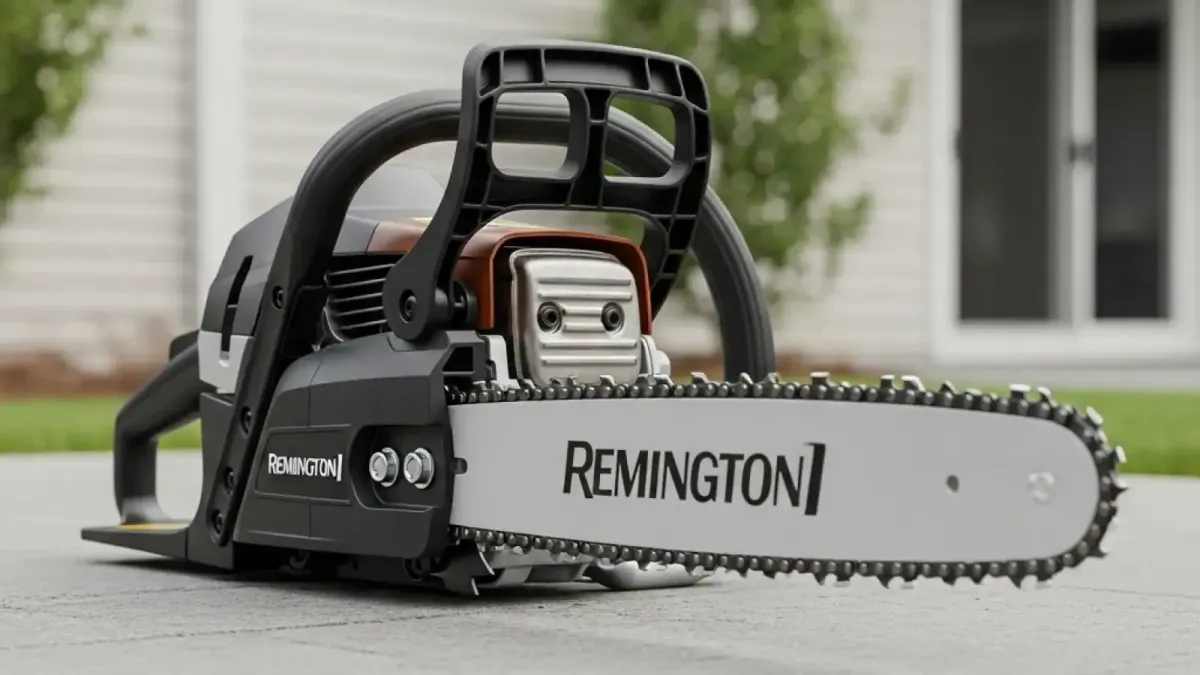
Quick answer: A Remington saw offers an exceptional blend of low-end torque, easy starting features, and affordable utility for residential and light-landowner cutting. For general firewood cutting and storm cleanup, the gas-powered 42cc RM4216 Rebel (16-inch) or 46cc RM4620 Outlaw (20-inch) provide the best balance of power and maneuverability, while their corded electric models like the 14-inch Limb N Trim handle low-maintenance yard pruning with zero engine tuning.
Selecting the Right Remington Saw: Gas, Electric, and Pole Models
Choosing the correct Remington saw starts with evaluating the diameter of the timber you plan to cut, your access to electrical outlets, and your physical comfort with engine maintenance. Remington organizes its lineup into three primary categories: corded electric saws, battery-operated tools, and traditional gas-powered two-stroke engines. Each configuration serves a specific role on the job site or around your homestead, so matching the powerhead to your typical workload is essential for efficient cutting and equipment longevity. Gasoline-powered models represent the core of the brand's mid-duty cutting tools. Built around displacements from 42cc up to 46cc, saws such as the RM4216 Rebel, RM4218 Ranger, and RM4620 Outlaw utilize die-cast crankcases coupled with heavy-duty guide bars. These two-stroke engines operate at high RPMs under load, giving you the chain speed necessary to pull clean chips through dense oak, hickory, and soft pine without stalling out the centrifugal clutch. If you regularly cut firewood logs over 10 inches in diameter or clear major blowdowns after heavy winter storms, a gas-powered unit gives you the unrestricted mobility needed to work anywhere on your acreage. Electric and pole-mounted options cater to yard maintenance where convenience, immediate push-button starting, and lower noise output take priority over raw power. Corded units like the 8-Amp Limb N Trim 14-inch saw excel at cutting fallen branches, trimming boundary fence lines, and slabbing soft woods within reach of an extension cord. Meanwhile, convertible pole saws like the RM1025P Ranger allow you to prune high branches safely from the ground before detaching the saw head to buck the fallen limbs into manageable lengths. For additional guidance on picking equipment tailored to your property, explore our chainsaw buying guide to compare different motor types and power outputs.Technical Specifications of Popular Remington Saw Models
To make an informed purchase, comparing the physical specifications, engine sizes, and cutting attachments across the Remington catalog is critical. Every Remington saw is factory-matched with a guide bar length and chain loop designed to stay within the power envelope of its engine or electric motor, preserving proper chain speed and avoiding premature thermal strain on internal components.| Model Name | Power System | Bar Length | chain pitch & Gauge | Dry Weight | Primary Application |
|---|---|---|---|---|---|
| Limb N Trim 14" | 8.0A Corded Electric | 14 Inches | 3/8" LP / .050" | 6.2 lbs | Light pruning, small yard clearing |
| RM4216 Rebel | 42cc 2-Stroke Gas | 16 Inches | 3/8" LP / .050" | 15.8 lbs | Firewood bucking, limb clearing |
| RM4218 Ranger | 42cc 2-Stroke Gas | 18 Inches | 3/8" LP / .050" | 16.2 lbs | Small tree felling, storm cleanup |
| RM4620 Outlaw | 46cc 2-Stroke Gas | 20 Inches | .325" Pitch / .050" | 16.6 lbs | Heavy log bucking, medium felling |
Hands-On Performance and Maintenance Guidelines for Every Remington Saw
Keeping a two-stroke Remington saw operating reliably year after year comes down to clean fuel, proper storage, and diligent chain tension management. Gas models require a fresh mix of 89-octane ethanol-free gasoline blended with a high-grade 2-stroke air-cooled engine oil at a 40:1 ratio (or 50:1 depending on the specific model year manual). Stale gasoline containing ethanol absorbs moisture from the air, causing gum deposits inside the tiny metering jets of the carburetor, which leads to hard starting, erratic idling, and lean air-fuel mixtures that can score the piston skirt. Automatic chain oiling systems are standard across most gas and electric units, continuously flooding the guide bar groove with specialized bar and chain lubricant. Never run motor oil or recycled crankcase fluid as a substitute; purpose-made bar oil contains tackifier additives that prevent the oil from slinging off the nose sprocket at 10,000 RPM. Before pulling the starter cord, check our chainsaw maintenance guide to establish a routine checklist for filter cleaning and spark plug replacement.Pro tip: Brand-new drive chains undergo significant initial stretch during their first 15 to 30 minutes of active wood cutting as the rivets seat into the link holes. When breaking in a new chain on a 46cc Outlaw or 42cc Rebel, stop the engine after your first 10 minutes, let the bar cool slightly, and reset the chain tension. Adjusting chain tension on a red-hot bar can cause the chain to contract as it cools, binding the drive links inside the bar groove and damaging the bar nose sprocket.
Regularly inspecting the cutting teeth for dullness or rock damage keeps the engine working within its design parameters. A sharp low-profile 3/8-inch or .325-inch chain pulls large, thick wood chips without requiring heavy downward pressure on the rear handle. If your Remington saw produces fine, powdery sawdust instead of distinct chips, or if the bar pulls to one side while cutting straight logs, stop immediately to file the cutters or replace the chain loop before heat damages the guide rails.Essential Safety Equipment and Operation Practices
Operating any chain saw safely demands proper personal protective equipment (PPE) and strict adherence to established cutting fundamentals. Before pulling the starter cord or plugging in an extension cord, equip yourself with cut-resistant chainsaw chaps meeting ASTM F1897 standards, an ANSI-approved hard hat with a integrated wire mesh face screen, wrap-around safety glasses, ear muffs rated for at least 25 NRR, and heavy leather work boots with steel or composite toes. Kickback remains the single greatest hazard when felling or bucking timber. Kickback occurs when the rotating chain contacts a hard branch or log inside the upper quadrant of the guide bar tip (the kickback zone), throwing the powerhead violently upward and back toward the operator. Remington addresses this safety concern by equipping their saws with low-kickback chains, wide front hand guards, and inertia-activated chain brakes capable of stopping chain rotation in a fraction of a second. * Inspect the chain brake by pushing the front guard forward to ensure it firmly locks the clutch drum before starting. * Always hold the saw with both hands, wrapping your left thumb completely around the front handlebar rather than resting it on top. * Stand to the side of the cut line rather than directly behind the guide bar to keep your body out of the kickback plane. * Avoid cutting branches above shoulder height to maintain physical leverage and balanced foot control at all times.Recommended Model Selection
If you need an all-around workhorse for seasonal firewood preparation and clearing fallen limbs, choose the gas-powered 42cc RM4216 Rebel equipped with a 16-inch bar; its light handling and manageable bar length provide ideal leverage for medium hardwoods. For heavier timber or clearing mature trees after severe weather, step up to the 46cc RM4620 Outlaw with a 20-inch bar, making sure to inspect chain tension after every fuel tank refill to preserve guide bar life.Frequently Asked Questions
Why does my Remington gas saw flood easily when starting cold?
Flooding usually happens when the choke lever remains pulled out for too many starter cord pulls after the engine has already fired ("popped"). Pull the choke out, tug the recoil cord until you hear the engine briefly pop, immediately push the choke lever in half-way or to the run position, and pull again until the engine starts.
What gas-to-oil mix ratio should I use in my Remington chainsaw?
Most modern 2-stroke gas Remington saws require a 40:1 gas-to-oil ratio (3.2 fluid ounces of 2-stroke oil per 1 gallon of ethanol-free 89+ octane gasoline). Always check the exact engine label or manual on older units, as some legacy engines use a 50:1 mix.
Can I use an extension cord with my electric Remington saw?
Yes, but you must use a heavy-duty outdoor extension cord rated for the saw's amperage. For an 8.0-Amp saw like the Limb N Trim, use a 14-gauge cord for lengths up to 50 feet, or a 12-gauge cord for lengths up to 100 feet to prevent voltage drops that overheat the motor.
How do I know when it is time to replace my guide bar?
Replace the bar if the guide rails show severe flaring or uneven wear, if the chain flops excessively to one side despite correct tension, or if the nose sprocket turns with heavy resistance or grinding noises.
Sources
- OSHA Logging Safety Standards (1910.266)
- ANSI B175.1 Chain Saw Safety Requirements
- Wikipedia: Chainsaw Operation and Mechanics
- MTD Products / Remington power equipment Official Technical Documentation
| Feature | Electric Models | Gas Models | 20-inch Model |
|---|---|---|---|
| Power | Moderate | High | Very High |
| Noise | Low | Moderate | High |
| Maintenance | Low | Moderate | High |
| Price | Affordable | Mid-range | Higher |
| Best For | Homeowners | Landscapers | Professionals |