Disclosure: As an Amazon Associate, we earn from qualifying purchases.
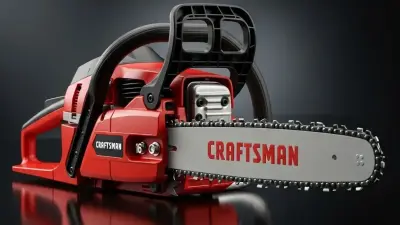
Craftsman chainsaws offer an accessible, reliable balance of cutting power and value for homeowners, landowners, and DIY woodcutters who need to handle tree trimming, storm cleanup, and firewood preparation. Built around gas engines ranging from 42cc to 46cc as well as 20V battery platforms, Craftsman models excel at medium-duty suburban tasks without demanding the steep price tag of production forestry saws. While they do not replace true commercial chainsaws designed for daily logging, heavy-duty gas variants like the Craftsman S205 20-inch chainsaw provide solid bucking capability for logs up to 18 inches in diameter.
Understanding the Craftsman Chainsaw Lineup
Choosing the correct equipment requires matching engine displacement or battery capacity with the size of timber you routinely cut. Craftsman categorizes its power saws into three primary power systems: gas-powered 2-cycle models, V20 battery-powered tools, and corded electric options.
Gas-Powered Models (S160 to S205 Series)
Craftsman gas saws utilize 2-cycle engines running on a 40:1 gas-to-oil mixture. The line is structured primarily around bar length and engine output:
- Craftsman S160 / S165 (16-Inch, 42cc): Designed for light felling, limb removal, and sapling clearing. The 42cc engine provides strong torque for residential yards, while the 16-inch bar keeps total weight manageable during overhead or extended trimming work.
- Craftsman S180 / S185 (18-Inch, 42cc): A versatile mid-range unit suitable for cutting firewood rounds and felling medium trees up to 15 inches thick. It shares the same 42cc power plant but adds reach for fallen trunk bucking.
- Craftsman S205 (20-Inch, 46cc): The flagship gas model featuring a 46cc full-crank high-output engine, a 5-point anti-vibration system, and an aluminum wrap handle. It stands among the most affordable 20 inch chainsaws for property owners who need to cut larger hardwoods like oak or maple.
Cordless V20 Battery Platform
For users seeking push-button starts and zero gas exhaust, Craftsman offers cordless options under its V20 battery ecosystem. Popular models include the 10-inch CMCCS610D1 and the 12-inch CMCCS630P1 brushless model. These saws operate quietly, demand minimal storage preparation, and handle light pruning or construction lumber slicing up to 10 inches in diameter with ease.
Continuous Bar Lubrication Restoration: HIPA Auto-Oiler Replacement Kit

Specifications and Model Comparison
Review the technical specifications below to determine which model fits your cutting workload and physical endurance demands:
| Model | Power Source | Engine / Voltage | Bar Length | Ideal Cutting Diameter |
|---|---|---|---|---|
| Craftsman V20 (CMCCS610D1) | Lithium-Ion Battery | 20V Max (2.0Ah / 4.0Ah) | 10 Inch | 2 to 8 Inches |
| Craftsman V20 Brushless (CMCCS630P1) | Lithium-Ion Battery | 20V Max (5.0Ah) | 12 Inch | 4 to 10 Inches |
| Craftsman S160 / S165 | 2-Cycle Gas (40:1 Mix) | 42cc Gas Engine | 16 Inch | 6 to 14 Inches |
| Craftsman S180 / S185 | 2-Cycle Gas (40:1 Mix) | 42cc Gas Engine | 18 Inch | 8 to 16 Inches |
| Craftsman S205 | 2-Cycle Gas (40:1 Mix) | 46cc Gas Engine | 20 Inch | 10 to 18 Inches |
Essential Starting and Maintenance Routines
Keeping a gas or battery chainsaw operational requires adhering to manufacturer guidelines for fuel management, filter cleaning, and bar oil delivery.
Cold Starting Procedure for Gas Models
- Set the saw on stable ground and ensure the chain brake is engaged by pushing the guard forward.
- Set the main ignition switch to the "ON" position.
- Press the fuel purge bulb 10 times until clear gas visible fills the dome.
- Pull the choke knob fully outward to close the choke plate.
- Pull the starter rope 3 to 5 times until the engine sputters or "pops".
- Push the choke knob back in, then pull the starter cord until the engine fires completely. Disengage the chain brake before squeezing the throttle trigger.
Routine Maintenance Tasks
To preserve engine compression and bar longevity, follow these maintenance schedules:
Precision Cutting-Depth Calibration: Oregon Raker & Flat File Tool Kit

- Fuel Preparation: Always use fresh 87-octane unleaded gasoline mixed at 40:1 with high-grade 2-cycle engine oil. Avoid gas with higher than 10% ethanol (E10) content, as ethanol degrades rubber fuel lines and carburetor diaphragms over time.
- Air Filter Inspection: Check the fleece or mesh air filter after every 2 to 3 tanks of gas. Tap out dry wood dust or wash the element in warm, soapy water before allowing it to air-dry completely. Clean intake passageways prevent fine wood particles from entering the carburetor throat.
- Bar and Chain Care: Ensure the automatic oiler reservoir is topped off with clean bar and chain oil every time you add fuel. Check chain tension by pulling a drive link out from the bar groove; the link bottom should touch the rail without sagging loose below the bar.
Homeowner Saws vs Commercial Chainsaws
Understanding the distinction between residential equipment and heavy-duty timber tools prevents overworking your machinery. While professional arborists and loggers seek out the best professional chainsaws featuring high-displacement engines (60cc to 90cc+), magnesium crankcases, and high chain speeds for all-day continuous operation, residential saws like Craftsman are optimized for utility and value.
Craftsman saws use consumer-grade low-kickback chains (typically 3/8-inch low profile or .325 pitch with a .050 gauge) that emphasize operator control over extreme cutting speed. If your work consists of seasonal firewood preparation, clearing storm debris, or trimming fence lines, a 42cc or 46cc Craftsman provides ample power at a fraction of the weight and cost associated with commercial chainsaws. However, if you plan to fall timber larger than 24 inches in diameter daily, step up to a professional forestry brand.
Chainsaw Safety Practices
Safe operation depends on personal protective equipment (PPE) and strict stance habits:
- Required Safety Gear: Wear cut-resistant chainsaw chaps, heavy leather boots over the ankle, protective gloves, safety glasses or a face shield, and hearing protection rated for at least 25 dB noise reduction.
- Avoiding Kickback: Never let the nose or tip of the guide bar touch logs, branches, or the ground while the chain is spinning. Kickback occurs when the top quadrant of the bar tip contacts an object, driving the saw violently upward and back toward the operator.
- Two-Handed Grip: Maintain a firm grip with thumbs wrapped completely around the front aluminum handle and rear throttle handle at all times during cutting operations.
Frequently Asked Questions
Spill-Proof Powerhead Storage: Craftsman Heavy-Duty Carrying Case

What oil-to-gas ratio do Craftsman 2-cycle chainsaws use?
Craftsman 2-cycle gas chainsaws require a strict 40:1 gasoline-to-oil mixture. This equates to 3.2 fluid ounces of 2-cycle engine oil mixed per 1 gallon of unleaded gasoline (minimum 87 octane).
Can I install a longer bar on my Craftsman 42cc or 46cc chainsaw?
It is best to stay within the manufacturer's recommended bar lengths. A 42cc saw performs best with a 14 to 18-inch bar, while the 46cc S205 handles up to a 20-inch bar. Installing a larger bar bogs down engine power, reduces chain speed, and accelerates clutch and bar wear.
Why is my Craftsman chainsaw chain not receiving bar oil?
Dry chains are usually caused by a clogged oil delivery hole near the bar mounting studs, sawdust buildup under the clutch cover, or a dirty bar groove. Clean out packed wood chips with a bar groove cleaner tool and verify that the bar oil reservoir port is flowing freely.