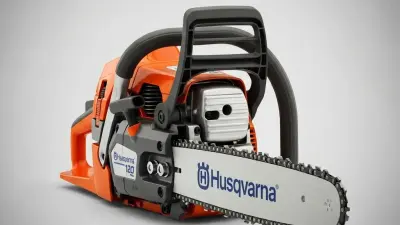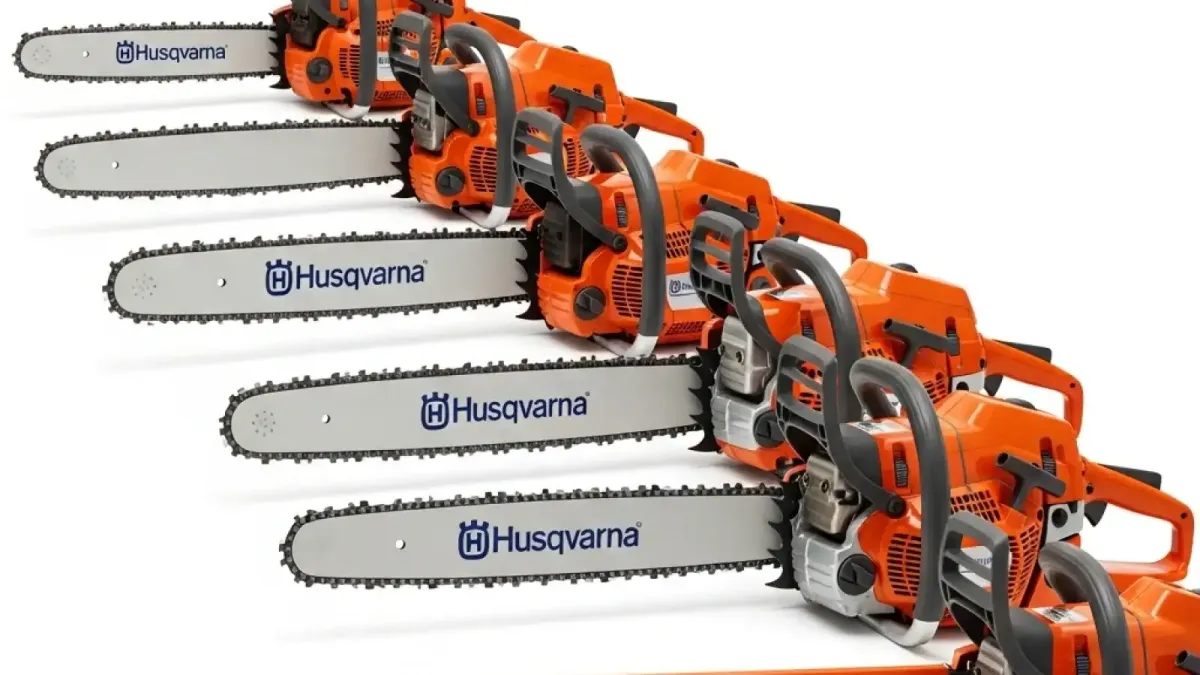
Quick answer: Selecting the right Husqvarna chainsaw comes down to matching engine size and bar length to your typical workload: occasional yard maintenance requires 35cc–40cc homeowner saws (14–16 inch bars like the 120 Mark II or 440), regular firewood cutting and property maintenance demand 50cc–60cc landowner models (18–20 inch bars like the 455 Rancher), while daily professional forestry demands 50cc–90cc+ XP series commercial saws (20–28+ inch bars like the 550 XP or 572 XP).
Husqvarna Chainsaw Lineup: Understanding Model Numbers and Series
Navigating the extensive catalog of Husqvarna power equipment becomes much simpler once you understand the brand's numbering convention and model hierarchy. Husqvarna categorizes its gas-powered chainsaws into distinct series—primarily 100, 300, 400, and 500—where the first digit generally indicates the saw's performance tier and target user group. The 100-series represents entry-level saws designed for budget-conscious homeowners, while the 400-series serves as the versatile "all-round" or semi-professional bracket, and the 500-series houses the heavy-duty XP (Extra Performance) commercial machines.
Engine technologies across these series differentiate how the saw delivers torque and manages emissions. Husqvarna's proprietary X-Torq® engine design increases low-end torque while reducing exhaust emissions by up to 75% and improving fuel economy by up to 20% compared to traditional two-stroke engines. Higher-tier models feature Air Injection™, a centrifugal air cleaning system that removes larger dust and wood particles before they reach the air filter, significantly extending filter service intervals during heavy bucking or felling.
For those interested in maximum efficiency without manual carburetor tuning, Husqvarna equips its professional 500-series saws with AutoTune™ technology. AutoTune™ automatically compensates for elevation, fuel quality, humidity, temperature, and clogged air filters by electronically governing the fuel mixture. This ensures optimal engine performance without needing screwdriver adjustments in the field, whether you are felling timber in humid lowlands or high-altitude mountain forests.
Selecting the Right Husqvarna Chainsaw: Specs and Model Comparison
When picking a saw, matching engine displacement (measured in cubic centimeters or cc) with the correct guide bar length, chain pitch, and gauge is crucial for safe and efficient operation. Undersizing a saw forces the engine to run under extreme load, causing overheating and premature wear, while oversizing leads to unnecessary operator fatigue. Below is a detailed comparison table of key Husqvarna gas chainsaw models spanning all user tiers.
| Model | Displacement (cc) | Power Output | Recommended Bar Length | Chain Pitch / Gauge | Best Used For |
|---|---|---|---|---|---|
| Husqvarna 120 Mark II | 38.0 cc | 1.8 hp (1.4 kW) | 14" - 18" (Standard: 16") | 3/8" LP / .050" | Light pruning, storm cleanup, small firewood |
| Husqvarna 440 Mark II | 40.9 cc | 2.4 hp (1.8 kW) | 16" - 18" (Standard: 18") | .325" / .050" | Medium residential work, limbs, seasonal firewood |
| Husqvarna 455 Rancher | 55.5 cc | 3.5 hp (2.6 kW) | 18" - 20" (Standard: 20") | 3/8" / .050" or .058" | Landowners, heavy firewood bucking, small felling |
| Husqvarna 550 XP Mark II | 50.1 cc | 4.0 hp (3.0 kW) | 14" - 20" (Standard: 18") | .325" / .050" or Pixel | Professional arborists, fast limbing, thinning |
| Husqvarna 572 XP | 70.6 cc | 5.8 hp (4.3 kW) | 18" - 28" (Standard: 24") | 3/8" / .050" or .058" | Heavy logging, big hardwood felling, milling |
Pro tip: Brand-new Husqvarna chainsaws experience rapid initial chain stretch during the first 15–20 minutes of cutting as the drive links seat into the bar groove. Always check and adjust tension after your first short cutting session; running a loose chain can cause it to derail, damaging the drive links, crankcase, or chain catcher, while an over-tightened chain puts extreme load on the clutch bearings and nose sprocket.
Essential Chainsaw Maintenance and Safety Gear for Husqvarna Owners
To keep a gas-powered Husqvarna operating reliably season after season, strict adherence to fuel quality and routine maintenance intervals is essential. Always mix fresh 89+ octane unleaded gasoline with high-quality 2-stroke oil at a strict 50:1 ratio (2.6 fl oz of oil per gallon of gas). Ethanol content in fuel should never exceed 10% (E10), as higher ethanol blends draw moisture, degrade fuel lines, and cause lean engine seizures. Using premixed ethanol-free fuel like Husqvarna XP+ prolongs carburetor life and eliminates fuel degradation during off-season storage.
Chain lubrication requires high-tack bar and chain oil to prevent friction and heat buildup along the guide bar rails. Always check that the automatic oiler is flowing by accelerating the saw over a clean stump or cardboard piece before cutting; you should see a fine spray of oil flicking off the bar nose. In addition to fuel and bar care, proper operation relies on keeping your saw clean and properly adjusted. Check our comprehensive guide on gas chainsaw maintenance to master air filter cleaning, spark plug replacement, and carburetor tuning routines.
Safety equipment is mandatory whenever starting or operating a chainsaw. Personal protective equipment (PPE) should include OSHA-compliant chainsaw chaps made with multi-layered cut-retardant fibers (such as Kevlar or Avertic), high-visibility forestry helmet with an integrated face mesh screen, sound-dampening hearing protection rated for at least 25 dB NRR, safety glasses with side shields, heavy-duty anti-vibration gloves, and steel-toe work boots. Operating a saw without proper PPE significantly increases the risk of severe lacerations, particularly to the legs and hands during sudden kickback events.
How to Choose the Best Husqvarna Chainsaw for Your Woodcutting Needs
Matching the saw to your specific cutting environment prevents overspending on features you don't need or burning out a saw that is too small. For casual homeowners with typical suburban yards, a lightweight model such as the Husqvarna 120 Mark II or 440 provides easy starting via the Smart Start® spring-assisted starter, easy maneuverability, and ample power for cutting fallen limbs and trimming small trees up to 12 inches in diameter.
Landowners, farmers, and firewood harvesters cutting 5 to 10 cords per season will benefit significantly from the additional torque found in the 50cc to 60cc range. Saws like the legendary Husqvarna 455 Rancher or 460 Rancher feature heavy-duty crankcases and higher output to pull a 20-inch bar through hard dense woods like oak, maple, and hickory without bogging down under load. These mid-range saws strike the ideal balance between power, bar reach, and long-term durability.
For forestry contractors, tree care professionals, and loggers, the XP series offers maximum power-to-weight ratios, rapid acceleration, and heavy-duty magnesium crankcases designed to withstand all-day operation. Models like the 550 XP Mark II for high-speed limbing or the 572 XP and 395 XP for felling large timber are built to run at full throttle for hours on end while utilizing LowVib® dampeners to isolate engine vibration from the operator's hands and arms.
Frequently Asked Questions
What is the difference between Husqvarna Rancher models and XP models?
Husqvarna Rancher models (like the 455 and 460) are semi-professional saws designed for farm, ranch, and heavy landowner use, featuring durable composite or split aluminum crankcases and reliable torque. XP (Extra Performance) models are pure commercial saws built with full magnesium crankcases, higher RPM ceilings, faster acceleration, AutoTune™ engine management, and maximum power-to-weight ratios for daily forestry work.
What gas to oil ratio does a Husqvarna gas chainsaw use?
All 2-stroke Husqvarna gas chainsaws require a precise 50:1 ratio of high-octane gasoline (minimum 89 octane, max 10% ethanol) to 2-stroke air-cooled engine oil. This equals 2.6 fluid ounces of 2-cycle oil per 1 gallon of gas.
Can I put a 20-inch bar on a Husqvarna 440 chainsaw?
While a 20-inch bar may physically mount on a Husqvarna 440, it is not recommended. The 40.9cc engine lacks sufficient torque to pull a fully buried 20-inch chain through dense timber effectively, leading to engine strain, excessive heat, slow cutting, and premature clutch wear. The sweet spot for the 440 is a 16-inch or 18-inch bar.
What does Husqvarna LowVib technology do?
LowVib® is Husqvarna's anti-vibration system that uses dampening springs or steel buffers to isolate the engine and cutting equipment from the handles. This dramatically reduces vibrations felt by the operator's hands and arms, reducing fatigue and minimizing the risk of Hand-Arm Vibration Syndrome (HAVS) during long working days.
If you need a reliable saw for occasional property maintenance, choose the Husqvarna 440 with an 18-inch bar; for cutting multiple cords of firewood and managing acreage, opt for the 455 Rancher with a 20-inch bar; and for professional timber felling, invest in the 572 XP equipped with a 24-inch bar and AutoTune™.
Sources
- Husqvarna Official Technical Data & Chainsaw Manuals
- OSHA standard 1910.266 - Logging Operations & Safety Standards
- Wikipedia - Chainsaw Engineering and History