Maintaining a razor-sharp cutting edge on a chainsaw is single-handedly the most effective way to protect your engine, speed up bucking operations, and prevent operator fatigue. When a chain dulls, timber workers and landowners often blame bar pinch or poor engine tuning, but the issue usually traces back to improper tooth profile geometry. Round files are precision tools calibrated to match specific tooth gullet dimensions down to thousandths of an inch. Understanding when to reach for a 7/32-inch (5.5 mm) round file versus smaller alternatives is what separates a smooth, self-feeding cut from an frustrating day of generating useless sawdust.
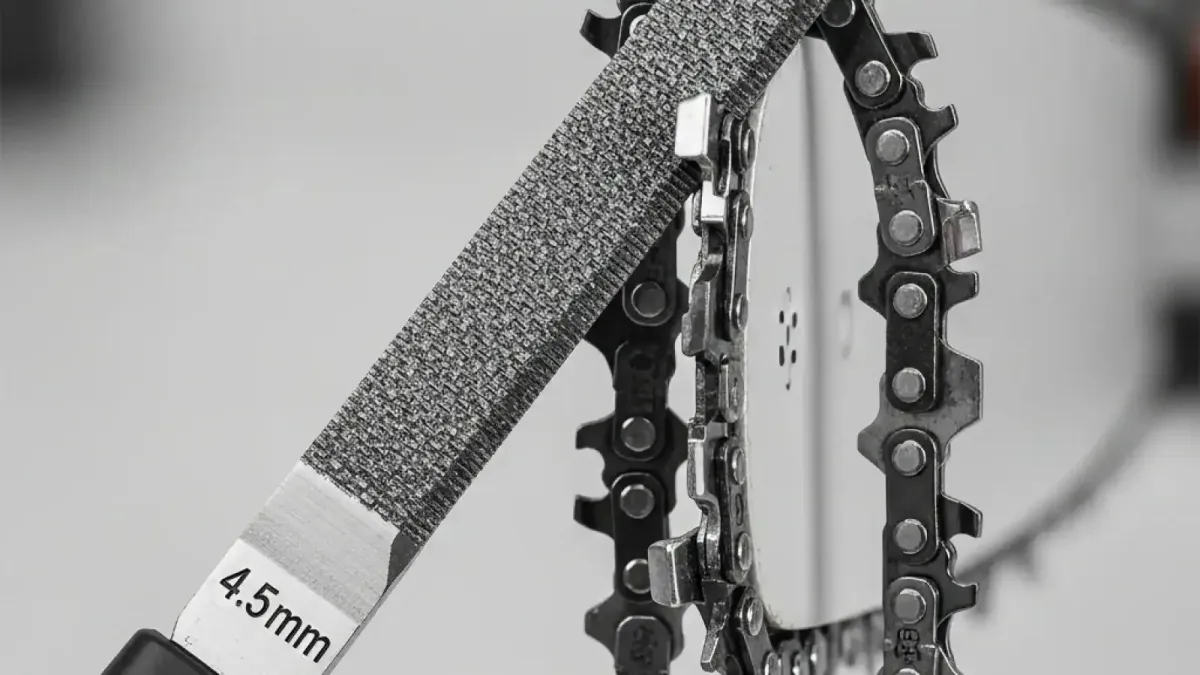
Quick answer: A 7/32-inch (5.5 mm) round file is designed specifically for full-size standard 3/8-inch pitch and select .404-inch pitch Chainsaw Chains commonly matched with 50cc to 90cc+ powerheads. Using this precise diameter preserves the factory side-plate hook angle and gullet radius, ensuring optimal chip clearance and preventing dangerous kickback risks.
Understanding Chain Pitch and File Selection
chainsaw chains are not universal. They are manufactured in distinct sizes defined by pitch, gauge, and cutter profile. Pitch is mathematically defined as the distance between any three consecutive rivets divided by two. Common pitches include 1/4-inch, 3/8-inch Low Profile (Picco), .325-inch, standard 3/8-inch, and .404-inch. power equipment manufacturers pair these pitches with engine displacement and bar lengths ranging from 16 inches on lightweight limbing saws up to 36 inches or more on professional felling units running 70cc to 120cc engines.
The 7/32-inch file is the absolute standard for full-sized 3/8-inch pitch chains found on workhorse professional and semi-pro saws like the Stihl MS 362, husqvarna 562xp, or classic Stihl MS 440. These saws run bars between 20 and 28 inches, pulling hefty loads through dense oak, hickory, and hard pine. Applying a file designed for a smaller .325-inch chain onto a 3/8-inch pitch cutter will remove metal in the wrong spot, undercutting the tooth top plate and compromising its structural integrity. Choosing the right file diameter keeps the geometry aligned with original factory specifications, which you can read about in our comprehensive chainsaw sharpener selection guide.
| Chain Pitch | Standard Chain Gauge | Recommended File Diameter | Typical Engine Displacement |
|---|---|---|---|
| 3/8" Low Profile (LP) | .043" - .050" | 5/32" (4.0 mm) | 30cc - 45cc |
| .325" Pitch | .050" - .063" | 3/16" (4.8 mm) / 11/64" | 45cc - 55cc |
| Standard 3/8" Pitch | .050", .058", .063" | 7/32" (5.5 mm) | 50cc - 90cc |
| .404" Pitch | .058" - .063" | 7/32" (5.5 mm) or 7/32" to 13/64" progressive | 80cc - 120cc+ |
Why Using the Exact 7/32 File Size Matters
The profile of a chisel or semi-chisel cutter consists of a top plate, a side plate, and the hollow gullet beneath them. When you stroke a 7/32 round file through the gullet of a 3/8-inch chain, approximately one-tenth (10%) of the file’s diameter should extend above the highest point of the cutter’s top plate. This overhang naturally creates a precise 80-degree to 85-degree side-plate angle, often referred to as the "hook." This hook allows the cutting corner to knife cleanly into wood fibers while pulling the tooth downward to take a uniform chip.
If an operator mistakenly uses a smaller 3/16-inch file on a standard 3/8-inch cutter, the file sits too low in the gullet. This creates a severe notch or excessive hook underneath the top plate. While an over-hooked tooth feels aggressively sharp on the first two cuts, the delicate edge dulls instantly, dulls prematurely upon contacting hard timber, and dramatically increases the risk of violent kickback. Conversely, using a file that is too large flattens the hook angle entirely. A tooth without adequate hook requires massive downward force from the operator to cut, generating extreme heat, wearing out bar rails, and stressing the saw's clutch assembly.
Pro tip: On 24-inch bars running 3/8 pitch chain, uneven left-to-right hand stroke pressure during field filing causes uneven tooth lengths. If one side of the chain gets filed shorter by just 0.010 inches, the saw will pull sharply to one side, wedging the bar mid-cut. Always count your file strokes per cutter—usually 3 to 4 smooth passes with steady forward force—to keep both side cutters symmetrical.
Keeping cutter geometry consistent also protects the motor. When a chain is properly sharpened with a 7/32 file, wood chips fly off cleanly rather than fine powder. Saws running properly sharp chains consume less 50:1 premixed fuel and bar oil, running cooler and extending the overall working life of cylinder walls and piston rings. Regular maintenance prevents costly overhauls, as noted in our guide to chainsaw maintenance routines.
Step-by-Step Guide to Sharpening with a 7/32 File
Sharpening in the field or shop requires a structured approach to maintain exact angles across all left and right cutters. Before starting, put on high-grade leather work gloves, clear wood chips from the chain chassis, and verify chain tension. The chain should be tight against the bar bottom with no sag, yet rotate smoothly by hand with the chain brake released.
- Step 1: Secure the guide Bar: Clamp the guide bar firmly in a bench vise or firmly drive a field stump vise into a solid log. Lock the bar tightly near its midpoint so the chain cannot twist sideways while filing.
- Step 2: Identify the Master Cutter: Examine the chain to find the shortest or most damaged cutter tooth. Mark the top plate with a bright paint marker or grease pencil; this master cutter determines how many file strokes every other tooth will receive.
- Step 3: Position the File & Holder: Lock your 7/32 file into a rigid file guide. Place the file inside the gullet at a 30-degree angle (or 25-degree for full chisel chains in frozen timber) relative to the guide bar centerline. Hold the file completely level with the horizon, unless your chain manufacturer explicitly specifies a 10-degree down-tilt angle.
- Step 4: Execute Smooth Forward Strokes: Apply firm, steady forward pressure pushing from the inside of the cutter out toward the exterior edge. Lift the file cleanly on the return stroke—never drag a file backward across raw steel, as doing so rapidly destroys the file's cutting teeth. Perform 3 to 5 smooth passes until the top plate edge displays a uniform silver sheen without bright dings or nicks.
- Step 5: Sharpen All Same-Side Cutters First: Work down one side of the bar, filing every left-hand cutter. Then rotate the saw around or step to the opposite side of the vice, filing all right-hand cutters with the identical number of strokes per tooth.
- Step 6: Lower Depth Gauges (Rakers): Every few sharpenings, lay a flat depth-gauge tool across adjacent teeth. If the raker sticks up above the gauge slot, take a flat mill file and stroke the raker top down level with the tool, usually targeting a height differential of .025 inches (.63 mm). Round off the leading corner of the raker slightly to ensure smooth feeding into the cut.
| Feature | Standard File | Best 7 32 Chainsaw File |
|---|---|---|
| Durability | Moderate | High (hardened steel) |
| Filing Precision | Average | Excellent |
| Comfort | Basic | Ergonomic handle options |
| Longevity | Shorter life | Extended lifespan |
| Value | Low | High |
Maintaining Your File and Technical Reference Guides
Even premium hardened-steel 7/32 files degrade if neglected. Wood resin, bar oil residue, and microscopic metal filings accumulate inside the teeth of the file, clogging the grooves and causing it to skate over cutter steel rather than bite. Clean your round files routinely using a stiff brass wire brush or file card. Never throw bare metal files loosely into a toolbox where they bounce against other steel tools; wrap them in oiled canvas or store them in plastic individual tubes to prevent edge chipping.
When working in remote woods or training crew members, having quick access to manufacturer specification sheets or printable filing guides ensures exact factory tolerances are met. Detailed references outline exact angle variations for different wood conditions—such as dropping cutter top angles from 30 degrees down to 25 degrees when processing dense hardwoods or frozen timber in winter. Always consult manufacturer guidelines for exact chain profile requirements before filing off substantial cutter material.
Choosing the Right Equipment Setup
If you operate a 50cc to 90cc chainsaw outfitted with a standard 3/8-inch pitch chain on an 18 to 28-inch guide bar, keep three double-cut premium 7/32-inch round files, a dedicated file holder frame, a drop-in depth gauge sheet, and personal protective equipment—including chainsaw chaps, eye protection, and helmet—in your kit bag at all times. Touch up cutters every two tanks of fuel rather than waiting for teeth to lose their edge completely. Taking two light strokes per tooth regularly keeps your machine cutting efficiently, reduces stress on powerhead components, and maximizes field productivity day after day.
Frequently Asked Questions
Can I use a 7/32 file on a .325 pitch chain?
No. A 7/32 file (5.5 mm) is too large for a .325 pitch chain, which requires a 3/16-inch (4.8 mm) or 11/64-inch file depending on the manufacturer. Using a 7/32 file on a .325 chain will severely undercut the tooth structure and destroy cutter geometry.
How often should I replace my 7/32 round file?
Under normal conditions, a quality high-carbon steel 7/32 round file effectively sharpens 5 to 7 full chain restorations before losing its bite. If the file slips easily across the steel tooth without removing fine silver metal shavings, throw it away and grab a new one.
What is the difference between a 7/32 file and a 13/64 file?
A 13/64-inch file (5.2 mm) is slightly smaller than a standard 7/32-inch file (5.5 mm). Some manufacturers, like Stihl, recommend stepping down from a 7/32 file to a 13/64 file once a 3/8 pitch cutter tooth has been filed back past its midpoint to preserve the correct hook angle as the cutter tapers back.
Why does my chainsaw pull to one side after filing with a 7/32 file?
Unequal cutting tooth lengths or uneven filing angles cause the saw to pull to one side. If you push harder or apply more strokes on one side of the chain, those teeth become shorter and bite differently, making the bar drift off-course in the cut.