Disclosure: As an Amazon Associate, we earn from qualifying purchases.
Selecting the best chain saws for your property comes down to matching engine displacement (from 35cc homeowner units to 70cc+ commercial saws), guide bar length (14 to 24 inches), and cutter chain geometry to your specific timber. Gas-powered models like the Stihl MS 271 Farm Boss (50.2cc) and Husqvarna 450 Mark II (50.2cc) lead the mid-range firewood class, while 36V to 80V cordless battery saws like the Milwaukee M18 Fuel or Ego Power+ Commercial offer fast, low-noise cutting for lighter clearing tasks. However, even the most powerful powerhead relies entirely on its chain: matching the saw with the best chainsaw chain—such as an Oregon PowerCut LGX full-chisel for clean wood cutting or a hardened semi-chisel chain for abrasive Australian hardwoods—is what determines your actual cutting speed and tool longevity.
Choosing the Right Chainsaw: Power Source Breakdown
Chainsaws fall into three main categories based on their powerhead design, each tailored to distinct workloads, run times, and maintenance capacities:
- Gasoline Chainsaws (35cc – 90cc+): Provide maximum torque and unlimited run time (refueling on site). Ideal for felling medium-to-large trees, bucking high-density firewood, and professional forestry. They require 2-stroke fuel mixing (typically 50:1 ratio), air filter cleaning, and spark plug maintenance.
- Cordless Battery Chainsaws (36V – 80V): Deliver instant trigger start, zero emissions, and quiet operation without pull cords or carburettor adjustments. Models running 16-inch to 18-inch bars match 40cc gas saws in cutting speed for suburban yard cleanup and limb trimming, though battery life limits extended forestry work.
- Corded Electric Chainsaws (12A – 15A): Budget-friendly, lightweight options restricted by extension cord range. Best suited for firewood processing within 100 feet of an electrical outlet.
Chainsaw Specifications Matrix
Use this reference table to match wood diameter and cutting tasks to powerhead size and guide bar capacity:
| Chainsaw Class | Engine / Power Output | Guide Bar Range | Primary Application |
|---|---|---|---|
| Compact Homeowner | 30cc – 40cc / 18V – 36V Battery | 12" – 16" (30 – 40 cm) | Pruning, light storm cleanup, small trees (<10" diameter) |
| Mid-Range / Landowner | 45cc – 55cc / 56V – 80V Battery | 16" – 20" (40 – 50 cm) | Firewood bucking, felling medium timber (10" – 16" diameter) |
| Professional / Forestry | 60cc – 90cc+ Gas | 20" – 36"+ (50 – 90+ cm) | Commercial logging, heavy hardwood felling, timber milling |
Husqvarna 555 Professional Gas Chainsaw, With X-Cut Chain, Outdoor Tools

Understanding Saw Chain Terminology: Pitch, Gauge, and Cutter Profiles
A chain saw powerhead performs only as well as its saw chain. To choose a replacement or upgraded chain, you must match three critical physical dimensions printed on your guide bar or existing chain drive links:
- Pitch: The average distance between any three consecutive rivets divided by two. Common sizes are 1/4", 3/8" Low Profile (Picco), .325", and standard 3/8". Larger pitches accommodate higher horsepower engines and thicker wood fibers.
- Gauge: The drive link thickness where it fits into the guide bar groove. Standard gauges include .043" (1.1mm), .050" (1.3mm), .058" (1.5mm), and .063" (1.6mm). Gauge must match your bar width precisely to prevent dangerous chain slip or premature wear.
- Drive Link Count: The exact total number of drive lugs on the inside of the loop, which dictates the total loop length for a specific bar length.
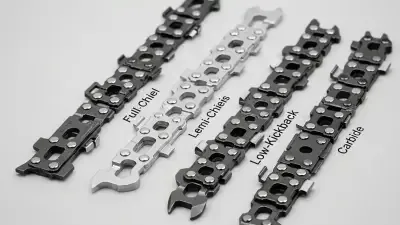
Cutter Geometry: Full-Chisel vs. Semi-Chisel
The cutter shape defines how the tooth shears wood grain:
Full-Chisel Cutters: Feature square, sharp-cornered teeth. They cut 10% to 15% faster in clean, soft-to-medium woods (like pine, spruce, or clean oak) because the square point severing wood fibers with surgical precision. However, full-chisel chains dull very quickly if they touch soil, sandy bark, or frozen timber, and carry a higher risk of kickback.
Semi-Chisel Cutters: Feature rounded corner radii on the cutting teeth. While slightly slower than full-chisel in pristine timber, semi-chisel teeth hold their razor edge far longer when working in dirty, weathered, or extremely dense wood. The rounded edge resists micro-chipping caused by silica, grit, or dried sap.
Husqvarna BLi30 7.5 Ah 40V Battery Electric Tools, 270Wh Lithium Ion Battery, 967937702

Selecting the Best Chainsaw Chain for Hardwood
Hardwood species present distinct challenges to cutting equipment. When searching for the best chainsaw chain to process dense native timber—such as ironbark, jarrah, spotted gum, red gum, or boxwood—standard full-chisel chains frequently dull within minutes due to high Janka hardness ratings and embedded mineral sap.
For these demanding conditions, selecting the best chainsaw chain for australian hardwood means opting for a heavy-duty semi-chisel profile (such as Stihl Rapid Micro RM or Carlton semi-chisel) or specialized carbide-tipped chain. Semi-chisel teeth distribute the cutting impact across a curved working corner, preventing the point from shattering when striking hard knots or dry grain. For extreme hardwood clearing or salvage cutting near ground levels, industrial carbide chains (like Rapco Terminator series) outlast standard steel chains up to 15 times before requiring diamond-wheel resharpening.
Top Saw Chain Recommendations
- Best Overall for Clean Timber (Speed): Oregon PowerCut 72LGX / EXL Series — A 3/8" pitch, .050" gauge full-chisel chain featuring offset depth gauges and low-vibration chassis design. Excellent for fast firewood bucking on 50cc to 70cc saws.
- Best Heavy-Duty Pro Chain: Stihl Rapid Super (RS) / Rapid Micro (RM) — Stihl's proprietary Swiss-manufactured steel offers industry-leading edge retention. RS provides unmatched cutting speed in clean hardwoods, while RM offers durable, long-lasting performance in abrasive, dry timber.
- Best for Australian Hardwoods & Dirty Wood: Carlton Semi-Chisel or Oregon SpeedCut 95TXL (.325" Low-Profile) — Highly resilient chrome-plated cutters built to withstand heavy heat buildup when cutting dense eucalyptus and dry logs.
Essential Maintenance Practices for Maximum Cutting Life
- Maintain Proper Chain Tension: A correctly tensioned cold chain should snap back flush against the underside of the guide bar when pulled down, exposing the full drive link tang without sagging.
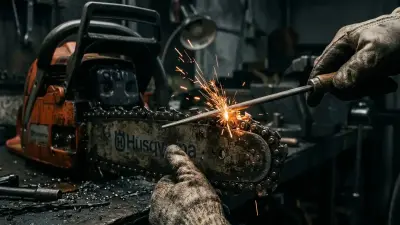
- File Cutters and Rakers Consistently: Sharpen cutter teeth at the manufacturer’s recommended angle (typically 25° to 30°) using a round file matched to your chain pitch (e.g., 5/32" for 3/8" Low Profile, 3/16" for .325", 7/32" for 3/8" standard). Check depth gauges (rakers) every 3 to 4 sharpenings using a flat file and depth gauge tool to maintain a .025" clearance.
- Keep Oil Ports Clear: Ensure bar oil is feeding continuously. Clear sawdust buildup from the guide bar groove and oil inlet hole every time you refill your fuel tank.
Chain Saw, Gas, 20 in. Bar, 59.8cc

Frequently Asked Questions
Can I put a 3/8" chain on a .325" guide bar?
No. The chain pitch, guide bar sprocket nose pitch, and drive sprocket on the saw powerhead must match identically. Running a 3/8" chain on a .325" bar or rim sprocket will instantly ruin the drive links and bar nose.
How often should I sharpen my chainsaw chain?
Sharpen your chain whenever the saw requires extra physical pressure to cut, produces fine dust instead of coarse wooden chips, or pulls to one side during a cut. Under clean cutting conditions, a light file touch-up every 1 to 2 tanks of fuel preserves cutter sharpness and extends chain life.
Sources
Looking for the Right Gear?
Check out our verified Top Professional Chainsaws & Safety Gear Essentials on Amazon.
As an Amazon Associate, we earn from qualifying purchases.