

Unlocking Chainsaw Power: Your Guide to Spark Plugs
Every time you pull that starter cord, a tiny but mighty component inside your chainsaw springs into action: the spark plug. It’s the unsung hero responsible for igniting the fuel-air mixture that powers your saw. Without a healthy spark plug, your chainsaw is just a fancy piece of metal. As an experienced outdoor power equipment specialist, I’m here to guide you through everything you need to know about chainsaw spark plugs – from selection and maintenance to troubleshooting common issues.
Table Of Content
- Unlocking Chainsaw Power: Your Guide to Spark Plugs
- The Heart of the Ignition System: How It Works
- Selecting the Right Spark Plug: Don’t Guess!
- Chainsaw spark plug maintenance: Keep It Firing
- 1. Inspection
- 2. Cleaning
- 3. Gapping
- 4. Replacement Intervals
- Troubleshooting Common Spark Plug Issues
- Hard Starting or No Start
- Engine Misfires or Runs Rough
- Loss of Power or Overheating
- Loose Spark Plug
- Final Thoughts from Your Chainsaw Expert
The Heart of the Ignition System: How It Works
In simple terms, a spark plug creates an electric spark that ignites the compressed fuel and air in your chainsaw’s engine cylinder. This ignition causes a small explosion, pushing the piston down and turning the crankshaft, which ultimately drives your chain. Chainsaws typically use two-stroke engines, which require a very specific spark to run efficiently.
Selecting the Right Spark Plug: Don’t Guess!
Choosing the correct spark plug is paramount. Using the wrong one can lead to poor performance, engine damage, or even failure. Always consult your chainsaw’s owner’s manual first! This is the definitive source for the exact spark plug model your saw requires.
- Heat Range: This refers to the plug’s ability to dissipate heat. A “hotter” plug retains more heat, while a “colder” plug dissipates it faster. Your manual will specify the correct heat range. Using the wrong one can cause overheating (too hot) or fouling (too cold).
- Thread Size and Reach: These must match your engine’s cylinder head perfectly to ensure a proper seal and correct electrode positioning within the combustion chamber.
- Electrode Type: While most chainsaws use standard copper electrodes, some might specify platinum or iridium for longer life, though these are less common in entry-level saws.
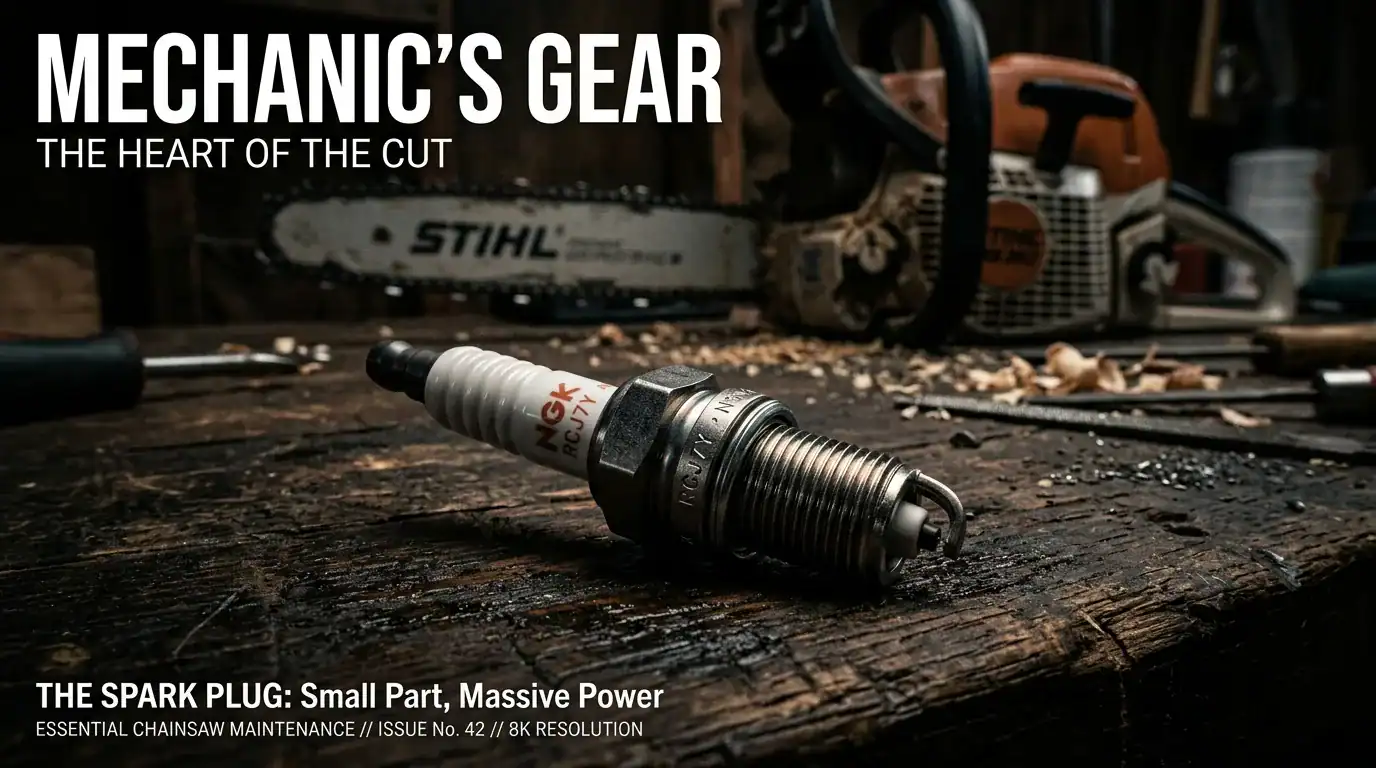
Common Brands and Examples: You’ll frequently see brands like NGK, Champion, and Bosch. For many popular homeowner chainsaws, an NGK BPMR7A or a Champion RCJ6Y are common choices. Always match the specific part number from your manual.
Chainsaw spark plug maintenance: Keep It Firing
Regular spark plug maintenance is key to reliable starting and consistent power. Before doing any work, always disconnect the spark plug boot to prevent accidental starting!
1. Inspection
Remove the spark plug (usually with a spark plug wrench). Examine the electrode and insulator tip:
- Healthy Plug: Light tan or grayish-white deposits. This indicates good combustion and a correct fuel mix.
- Fouled Plug: Black, sooty, oily, or wet deposits. This suggests a rich fuel mixture, incorrect oil, or a dirty air filter.
- Worn Electrode: Rounded or eroded electrodes. This means it’s time for a replacement.
2. Cleaning
If your plug is only lightly fouled, you can clean it:
- Use a stiff wire brush (a specialized spark plug brush works best) to gently remove deposits from the electrodes and insulator.
- You can also spray a small amount of carburetor cleaner on the deposits, then brush them away. Ensure the plug is completely dry before reinstallation.
3. Gapping
The gap between the center and ground electrodes is critical for a strong spark. Your owner’s manual will specify the correct gap (e.g., 0.020-0.025 inches or 0.5-0.6 mm).
- Use a wire-type feeler gauge to measure the gap.
- If adjustment is needed, carefully bend the ground electrode only using a gapping tool or a small, flat-bladed screwdriver until the gauge slides in with slight resistance.
4. Replacement Intervals
Even if it looks okay, spark plugs wear out. A good rule of thumb is to replace your chainsaw spark plug annually, or every 50-100 hours of operation, whichever comes first. This is a small investment for peace of mind and optimal performance.
Troubleshooting Common Spark Plug Issues
If your chainsaw is acting up, the spark plug is often the first place to check.
Hard Starting or No Start
- Symptom: Engine cranks but won’t fire, or struggles to catch.
- Possible Cause: Fouled plug (black, oily, wet), incorrect gap, or worn-out electrode.
- Solution: Inspect, clean, re-gap, or replace the plug. If fouled, also check your fuel mix (ensure it’s not too rich), air filter (clean or replace), and carburetor settings.
Engine Misfires or Runs Rough
- Symptom: Inconsistent power, stuttering, or loss of RPMs.
- Possible Cause: Incorrect gap, carbon buildup, or a plug nearing the end of its life.
- Solution: Check and adjust the gap. Clean or replace the plug. Ensure the spark plug boot is securely attached.
Loss of Power or Overheating
- Symptom:
- Possible Cause: Plug too hot (improper heat range) or severely worn electrode.
- Solution: Replace with the correct heat range plug as specified in your manual. A plug that is too “hot” can cause pre-ignition and engine damage.
Loose Spark Plug
- Symptom: Loss of compression, rattling noise, or exhaust gases leaking around the plug.
- Possible Cause: Improper installation.
- Solution: Remove, inspect for damage, and re-install correctly. Always hand-tighten first to avoid cross-threading, then use a wrench to snug it down firmly, but do not overtighten as this can strip threads or crack the cylinder head.
Final Thoughts from Your Chainsaw Expert
A properly functioning spark plug is fundamental to your chainsaw’s reliability and performance. By taking a few minutes to select the right one, maintain it regularly, and troubleshoot issues promptly, you’ll ensure your chainsaw is always ready for action. For more in-depth guides on chainsaw parts, maintenance, and expert advice, be sure to explore Best professional chainsaw. Keep your saw running smoothly, and always prioritize safety when operating any power equipment!