


Keep Your Chainsaw Running Strong: A DIY Guide to Replacing Common Wear Parts
As a chainsaw expert, I often tell folks that a chainsaw is only as good as its most neglected part. Even the best professional chainsaw models experience wear and tear. Over time, friction, heat, and constant use take their toll on various components. Knowing what to look for and how to replace these common wear parts isn’t just about saving money on repairs; it’s about ensuring your chainsaw operates safely, efficiently, and reliably for years to come.
Table Of Content
Think of it like getting advice from a trusted arborist. We’re going to walk through the most common chainsaw parts that wear out and provide you with clear, step-by-step instructions on how to replace them yourself. Before you start any work, always ensure your chainsaw is off, the spark plug wire is disconnected (to prevent accidental starting), and you’re wearing appropriate safety gear like heavy-duty gloves.
1. Chainsaw Chain
The chain is arguably the most frequently replaced component on your chainsaw.
- Signs of Wear: A dull chain is the most obvious sign. Look for small, rounded cutting edges instead of sharp, square ones. Other signs include excessive stretching (chain sags even when properly tensioned), burrs, cracks, or missing teeth. If your saw struggles to cut, produces fine sawdust instead of chips, or pulls to one side, your chain is likely worn or dull.
- When to Replace: After multiple sharpenings, when cutters are too small to be effective, or if the chain is severely damaged (e.g., bent links, deep cracks).
- Tools Needed: Your chainsaw’s scrench (combination wrench/screwdriver) and a new, correctly sized chain.
Step-by-Step Replacement:
- Safety First: Ensure the chainsaw is off, the chain brake is disengaged, and the spark plug wire is disconnected.
- Loosen Bar Nuts: Use your scrench to loosen the two (or sometimes one) nuts that hold the clutch cover in place. Don’t remove them completely yet.
- Remove Clutch Cover: Carefully remove the clutch cover. This will expose the drive sprocket and the chain.
- Remove Old Chain & Bar: Gently pull the guide bar forward to relax the chain tension, then lift the old chain off the drive sprocket and out of the bar groove. You can then remove the guide bar.
- Clean: Take this opportunity to clean any sawdust and debris from the clutch area, guide bar groove, and oil holes.
- Install New Chain: Place the new chain onto the drive sprocket first, ensuring the cutting teeth are facing the correct direction (usually forward on the top of the bar).
- Re-install Bar: Guide the chain into the groove of the guide bar and slide the bar studs through the bar.
- Rough Tension: With the chain in the bar groove and on the sprocket, gently pull the guide bar forward to take up most of the slack.
- Replace Clutch Cover: Reinstall the clutch cover and finger-tighten the bar nuts.
- Final Tensioning: Adjust the chain tension screw (usually located on the side or front of the chainsaw) until the chain is snug against the bottom of the bar, but you can still pull it freely with one gloved hand. The drive links should not lift out of the bar groove.
- Tighten Bar Nuts: Fully tighten the bar nuts.
Pro Tip: Always keep a spare chain on hand. When buying, ensure the new chain matches the pitch, gauge, and drive link count of your existing chain and guide bar. This information is usually stamped on your guide bar or found in your owner’s manual.
2. Guide Bar
The guide bar supports and guides the chain, and its condition is crucial for straight, efficient cuts.
- Signs of Wear: Worn guide bar rails (they’ll appear flared or burred), a discolored or burnt guide bar nose (especially if it’s a sprocket-nose bar), or uneven wear in the bar groove. If your saw cuts crooked or jams easily, the bar might be the culprit.
- When to Replace: When visible rail wear is severe, the bar groove is no longer uniform, or the sprocket nose is damaged. A good rule of thumb is to replace the bar after every 2-3 chain replacements.
- Tools Needed: Scrench, new guide bar.
Step-by-Step Replacement:
- Safety First: As always, ensure the chainsaw is off, the chain brake is disengaged, and the spark plug wire is disconnected.
- Remove Chain: Follow steps 1-4 from the “Chainsaw Chain Replacement” section to remove the chain and old guide bar.
- Clean & Inspect: Thoroughly clean the clutch area and around the bar studs. Inspect the oil delivery hole for blockages.
- Install New Bar: Slide the new guide bar onto the bar studs, ensuring the oil holes align.
- Install Chain: Follow steps 6-11 from the “Chainsaw Chain Replacement” section to install your chain and properly tension it.
Pro Tip: To extend the life of your guide bar, flip it regularly (every time you replace a chain or sharpen multiple times) to promote even wear on both sides of the rails. Make sure to keep the oil hole clean.
3. Drive Sprocket (Rim or Spur)
The drive sprocket engages with the chain’s drive links, transferring power from the engine.
- Signs of Wear: “Hooked” teeth (the teeth appear to lean or have a pointed, wave-like shape), visible wear marks on the sprocket, or the chain “jumping” or slipping on the sprocket.
- When to Replace: Generally, replace the drive sprocket every time you replace your guide bar, or after every 2-3 chains, to ensure optimal performance and extend chain life.
- Tools Needed: Scrench, new drive sprocket (and possibly a clutch removal tool for spur sprockets).
Step-by-Step Replacement:
- Safety First: Chainsaw off, spark plug wire disconnected.
- Remove Chain & Bar: Remove the clutch cover, chain, and guide bar as described previously.
- Access Sprocket:
- For Rim Sprockets: The rim sprocket typically sits freely on the clutch drum. You can often just lift it off.
- For Spur Sprockets: The sprocket is usually integrated with the clutch drum. You’ll need a clutch removal tool (often a piston stop tool and a special wrench) to unthread the clutch assembly. This can be a more involved process; consult your owner’s manual.
- Replace Sprocket: Remove the old sprocket and replace it with the new one. Ensure it’s correctly seated.
- Reassemble: If you removed the clutch, reattach it securely. Reinstall the guide bar, chain, and clutch cover. Adjust chain tension and tighten bar nuts.
Pro Tip: Always replace your drive sprocket when you replace your chain and bar. A worn sprocket will quickly wear out a new chain, defeating the purpose of replacing it.
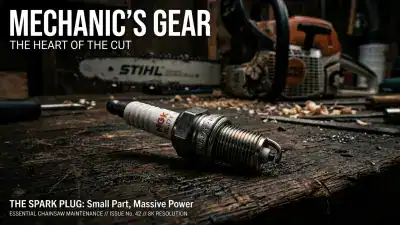
4. Spark Plug
The spark plug provides the spark that ignites the fuel-air mixture in the engine.
- Signs of Wear: Difficulty starting, rough idling, misfires, or loss of power. Visually, the electrode may appear fouled with carbon deposits, oil, or fuel, or the porcelain insulator might be cracked.
- When to Replace: Annually, or if you notice starting or running issues not attributed to fuel or air.
- Tools Needed: Spark plug wrench (usually part of your scrench), new spark plug (ensure it’s the correct type for your saw).
Step-by-Step Replacement:
- Safety First: Chainsaw off, spark plug wire disconnected. Let the engine cool down if it was recently run.
- Locate Plug: The spark plug is usually on top of the engine, under a rubber boot.
- Remove Plug Wire: Grasp the rubber boot firmly and pull straight up to disconnect the spark plug wire.
- Remove Old Plug: Place the spark plug wrench over the plug and turn counter-clockwise to loosen and remove it.
- Install New Plug: Hand-thread the new spark plug into the cylinder head, being careful not to cross-thread. Once finger-tight, use the wrench to tighten it snugly (usually about 1/4 to 1/2 turn after seating), but do not overtighten.
- Reattach Wire: Push the spark plug wire boot firmly back onto the new spark plug until it clicks into place.
Pro Tip: Always use the exact spark plug type recommended by your chainsaw manufacturer. Check the gap on the new plug with a feeler gauge before installing, though most come pre-gapped. For specific models like a Husqvarna 455 Rancher or Stihl MS 271 Farm Boss, consult your manual for the precise plug type.
5. Air Filter
The air filter prevents dirt and debris from entering the engine’s carburetor and cylinder.
- Signs of Wear: The filter appears visibly clogged with sawdust, dirt, or oil. A torn or damaged filter is also a clear sign. A dirty filter can lead to poor engine performance, hard starting, and reduced power.
- When to Replace: Inspect regularly (every few cutting sessions). Clean foam filters as needed; replace paper or felt filters annually or when they cannot be cleaned effectively, or if they are torn.
- Tools Needed: Screwdriver or latch to open the air filter cover, new air filter.
Step-by-Step Replacement:
- Safety First: Chainsaw off, spark plug wire disconnected.
- Access Filter: Locate the air filter cover (usually on the top or side of the engine housing). Unlatch it or remove the screws holding it in place.
- Remove Old Filter: Carefully remove the old air filter.
- Clean Area: Use a brush or compressed air to clean any debris from the air filter housing and around the carburetor intake. Be careful not to push debris into the carburetor.
- Install New Filter: Insert the new air filter, ensuring it is seated correctly and fits snugly.
- Replace Cover: Reattach the air filter cover and secure it.
Pro Tip: Some foam air filters can be washed with warm, soapy water, rinsed thoroughly, and allowed to air dry completely before re-oiling with specific air filter oil (if required by your manufacturer). Never use gasoline to clean filters!
6. Starter Rope
The starter rope is a critical component for getting your saw fired up.
- Signs of Wear: Fraying, thinning, knots, or a complete snap. Difficulty pulling the rope smoothly can also indicate internal issues within the recoil starter assembly, but a worn rope is usually the first sign.
- When to Replace: When the rope shows signs of fraying or breaks.
- Tools Needed: Screwdriver or Torx wrench (to remove the starter assembly), new starter rope (correct diameter and length), small pliers or tweezers, lighter (to melt ends).
Step-by-Step Replacement:
- Safety First: Chainsaw off, spark plug wire disconnected.
- Remove Starter Assembly: Unscrew and carefully remove the entire recoil starter assembly from the chainsaw housing.
- Release Tension (CAUTION): Before dismantling, note how the spring is tensioned. If the rope is broken and there’s no tension, you might need to manually wind the pulley. If there’s still tension, gently pull the old rope (or the remaining stub) and allow the recoil spring to fully unwind slowly.
- Remove Old Rope: Untie or cut the knot holding the old rope to the starter handle and the pulley. Remove the old rope.
- Thread New Rope: Thread the new rope through the starter handle, tying a secure knot. Then, thread the other end through the hole in the recoil pulley and tie another secure knot. Melt the ends of the rope with a lighter to prevent fraying.
- Re-tension Spring: This is the trickiest part. Wind the pulley counter-clockwise (the direction it spins when you pull the rope) until the spring is fully tensioned. Then, back off a few turns until the rope’s knot aligns with the exit hole in the housing. Pull the rope through the housing hole and attach the handle. There should be slight tension on the rope when the handle is fully retracted.
- Reinstall Assembly: Mount the starter assembly back onto the chainsaw, securing it with its screws.
Pro Tip: Use high-quality, durable starter rope designed for outdoor power equipment. Getting the spring tension correct can be challenging; if you’re unsure, watch a specific tutorial for your saw model or consider professional help for this particular repair.
Final Thoughts on Chainsaw Maintenance
Regular inspection and proactive replacement of worn parts are key to keeping your chainsaw safe, effective, and extending its working life. Always refer to your chainsaw’s owner’s manual for specific instructions, torque settings, and part numbers. By taking care of these common wear items, you’ll ensure your chainsaw is always ready for the next cutting task on your property, delivering reliable performance every time. For more expert advice and reviews on dependable tools, keep an eye on Best Professional Chainsaw!