
The Heart of Your cordless chainsaw: Understanding Battery Technology
Cordless chainsaws have revolutionized the way many homeowners, landowners, and even professionals approach tree care and woodcutting. Gone are the days of wrestling with tangled cords or mixing fuel. But what truly powers these convenient machines? It’s all in the battery! As your trusted chainsaw expert here at Best professional chainsaw, I’m going to demystify battery technology, so you can choose the right power source, maximize your chainsaw’s performance, and keep it running safely.
Table Of Content
- The Heart of Your cordless chainsaw: Understanding Battery Technology
- Lithium-Ion: The Powerhouse Behind Cordless Tools
- Key Battery Specifications Explained: Voltage, Amp-Hours, and Watt-Hours
- Voltage (V): The Power Driver
- Amp-Hours (Ah): The Runtime Reservoir
- Watt-Hours (Wh): The True Energy Measure
- Factors Affecting Battery Performance and Runtime
- Smart Battery Technology and Features
- Charging and Maintenance Tips for Longer Battery Life
- Choosing the Right Battery for Your Needs
- Conclusion
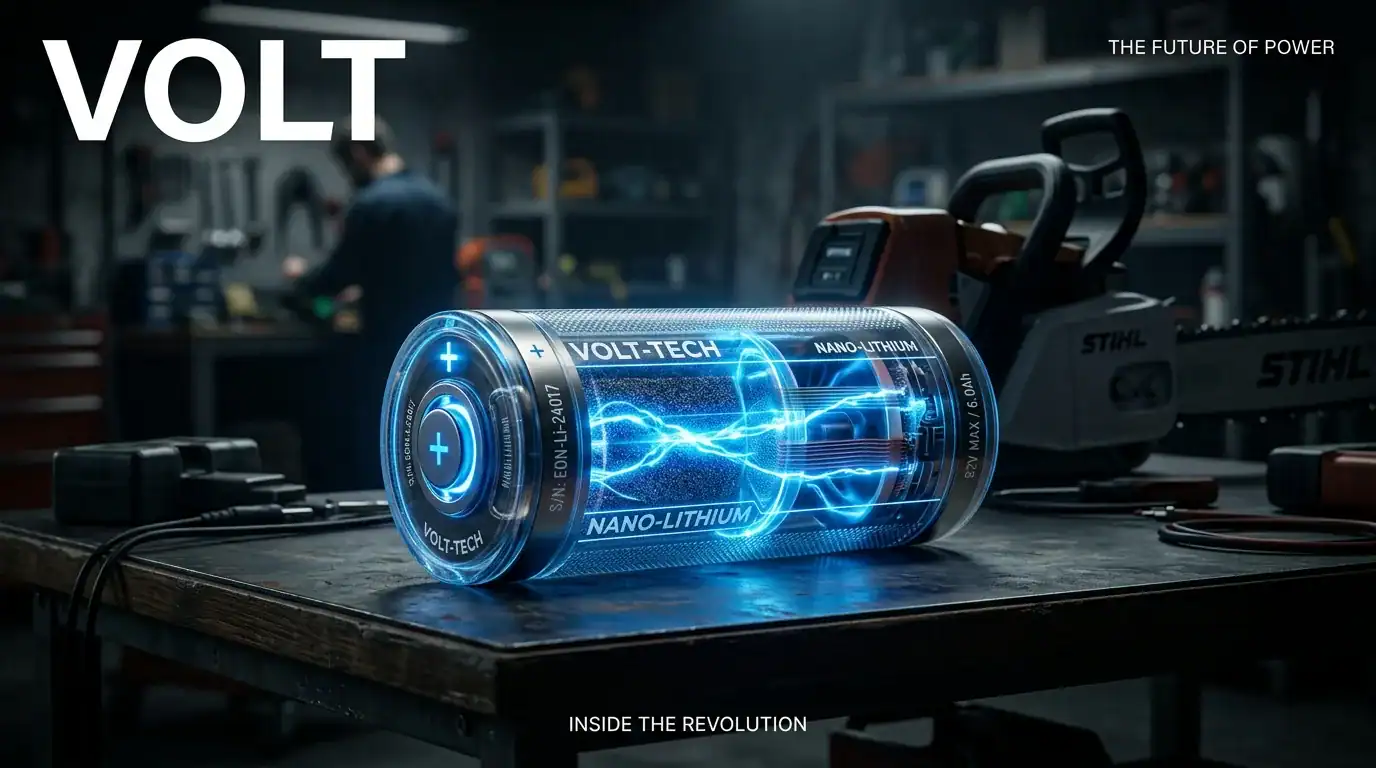
Think of your chainsaw battery as its fuel tank and engine combined. Understanding how it works is key to getting the most out of your cordless tool.
Lithium-Ion: The Powerhouse Behind Cordless Tools
Today, virtually every cordless chainsaw on the market, from homeowner models to pro-grade units, relies on Lithium-ion (Li-ion) battery technology. This wasn’t always the case; older cordless tools used Nickel-Cadmium (NiCad) or Nickel-Metal Hydride (NiMH) batteries. Li-ion batteries became the industry standard because they offer several significant advantages:
- Higher Energy Density: More power packed into a smaller, lighter package.
- No Memory Effect: You can charge them whenever you want, regardless of their current charge level, without damaging the battery’s capacity.
- Slower Self-Discharge: They hold their charge for much longer when not in use.
- Longer Lifespan: With proper care, Li-ion batteries can endure hundreds of charge cycles.
Key Battery Specifications Explained: Voltage, Amp-Hours, and Watt-Hours
When you look at a chainsaw battery, you’ll see a few numbers prominently displayed. These are crucial for understanding its capabilities:
Voltage (V): The Power Driver
The voltage (V) rating indicates the potential power output of your battery. Higher voltage generally translates to more power for the motor, allowing for longer bar lengths and more aggressive cutting through tougher wood. Think of it like the engine size in a car – more volts, more “horsepower” for your saw.
- Common Ranges: You’ll typically see cordless chainsaws ranging from 18V/20V (often interchangeable marketing terms for similar battery packs, like DeWalt 20V MAX) for lighter tasks, up to 40V, 60V, 80V, and even 120V systems for more demanding work and longer bar lengths (e.g., a 12-inch bar might use 40V, while a 16-18 inch bar could benefit from 60V or 80V).
- Compatibility: Always ensure your battery’s voltage matches your chainsaw’s requirements.
Amp-Hours (Ah): The Runtime Reservoir
The Amp-hour (Ah) rating tells you the battery’s capacity, essentially how much “fuel” it holds. A higher Ah rating means a longer runtime on a single charge. If voltage is about power, Amp-hours are about endurance.
- Practical Application: For light pruning or occasional firewood cutting, a 2.0 Ah or 4.0 Ah battery might suffice. For extensive clearing or felling larger trees, you’ll want 5.0 Ah, 6.0 Ah, 7.5 Ah, or even 10.0 Ah batteries for extended runtime.
Watt-Hours (Wh): The True Energy Measure
While Voltage and Amp-hours are important, Watt-hours (Wh) give you the complete picture of a battery’s total energy capacity. It’s calculated by multiplying Voltage by Amp-hours (V x Ah = Wh). This is the most accurate way to compare the total energy storage of different battery packs, especially across different voltage platforms.
- Example: A 40V 5.0 Ah battery has 200 Wh. An 80V 2.5 Ah battery also has 200 Wh, meaning they theoretically offer similar total work capacity, though the 80V will deliver it with more power.
Factors Affecting Battery Performance and Runtime
Even with a high-capacity battery, several factors can influence how long it lasts and how well it performs:
- Wood Type and Size: Cutting through dense hardwoods or larger diameter logs will drain the battery much faster than softwoods or smaller branches.
- Cutting Technique: Aggressive cutting, forcing the saw, or using a dull chain significantly increases power draw. Let the saw do the work!
- Bar and Chain Sharpness: A sharp, properly tensioned chain cuts efficiently. A dull chain makes the motor work harder, rapidly depleting the battery.
- Ambient Temperature: Extreme cold can temporarily reduce battery capacity and performance, while excessive heat can shorten its overall lifespan.
- Battery Age and Health: Like all batteries, Li-ion packs degrade over time and with repeated charge cycles, reducing their maximum capacity.
Smart Battery Technology and Features
Modern chainsaw batteries are more than just power cells. They often incorporate advanced features for safety, performance, and longevity:
- Battery Management Systems (BMS): This internal circuit board monitors voltage, temperature, and current flow to prevent overcharging, over-discharging, and overheating. It’s crucial for both safety and extending battery life.
- Charge Indicators: LED lights on the battery or tool show you the remaining charge, helping you plan your work or swap packs.
- Cell Balancing: Ensures all individual cells within the battery pack are charged and discharged evenly, optimizing performance and lifespan.
- Tool Compatibility: Many brands (e.g., EGO, Stihl, Husqvarna, DeWalt) design their batteries to be interchangeable across a range of their cordless tools, offering great value and convenience.
Charging and Maintenance Tips for Longer Battery Life
To get the most out of your investment and ensure your cordless chainsaw is always ready, follow these simple maintenance tips:
- Use the Correct Charger: Always use the charger specifically designed for your battery pack. Using an incompatible charger can damage the battery or create a fire hazard.
- Avoid Deep Discharge: While Li-ion batteries don’t have a “memory effect,” repeatedly running them down to zero can reduce their overall lifespan. Try to recharge them before they’re completely empty.
- Store Properly: Store batteries in a cool, dry place, away from direct sunlight and extreme temperatures. For long-term storage, aim for a 30-50% charge level.
- Allow to Cool: If a battery is hot after heavy use, let it cool down before placing it on the charger. Charging a hot battery can shorten its life.
- Keep Contacts Clean: Periodically wipe the battery terminals and charger contacts with a clean, dry cloth to ensure good electrical connection.
Choosing the Right Battery for Your Needs
When selecting a cordless chainsaw or buying spare batteries, consider these points:
- Match Voltage to Task: For light yard work and small branches, a 40V system might be perfect. For more serious firewood cutting or occasional felling, step up to 60V, 80V, or even 120V for maximum power.
- Match Ah to Runtime: Estimate how much continuous cutting you’ll do. If you need 30-45 minutes of active cutting, a 5.0 Ah battery is a good starting point. For longer jobs, consider a higher Ah battery or have multiple charged batteries on hand.
- Consider Your Ecosystem: If you already own other cordless tools from a specific brand (e.g., Greenworks, Ryobi, Milwaukee), investing in their chainsaw that uses the same battery platform can save you money and simplify charging.
Conclusion
Cordless chainsaws offer incredible convenience and performance, and it all boils down to the sophisticated battery technology powering them. By understanding voltage, amp-hours, and taking proper care of your Li-ion battery packs, you’ll ensure your cordless chainsaw from Best Professional Chainsaw delivers reliable power and efficiency for years to come. Happy cutting, and stay safe out there!