


The Unsung Hero: Why Your Cordless Chainsaw Charger Matters
Cordless chainsaws have revolutionized how we tackle tree work, offering incredible convenience, reduced noise, and zero emissions. But let’s be honest: a cordless chainsaw is only as good as its battery, and its battery is only as good as its charger. You might think a charger is just a charger, right? Plug it in, wait for the green light, and you’re good to go. But in my experience, understanding the nuances of your cordless chainsaw charger can significantly impact your tool’s performance, battery longevity, and overall efficiency on the job.
Table Of Content
- The Unsung Hero: Why Your Cordless Chainsaw Charger Matters
- The Heart of Your Cordless Chainsaw: Understanding Battery Basics
- Voltage and Amp-Hours: What Do They Mean for Charging?
- Lithium-Ion Power: Why It’s Different
- Unpacking Charger Types: From Standard to Smart
- Standard Chargers: The Reliable Workhorses
- Fast Chargers: Powering Up in a Pinch
- Multi-Port Chargers: For the Serious User
- Smart Chargers: The Future of Battery Care
- Charging Speed: More Than Just a Number
- Factors Affecting Charge Time
- Reading Your Charger’s Output (Amps)
- Brand Specifics and Compatibility
- Smart Charging Practices for Longevity and Performance
- The “Goldilocks Zone” of Battery Charge
- Don’t Overlook Storage Conditions
- Monitoring Battery Health
- Conclusion
Here at Best Professional Chainsaw, we often see folks investing in top-tier cordless models like the Stihl MSA 220 C-B or the DeWalt FlexVolt series, only to overlook the critical component that keeps them running. This guide isn’t just about plugging things in; it’s about making smart choices and adopting practices that will keep your electric chainsaw roaring (or humming quietly, as the case may be) for years to come. So, let’s dive deep into the world of cordless chainsaw chargers!
The Heart of Your Cordless Chainsaw: Understanding Battery Basics
Before we dissect chargers, we need to quickly grasp what they’re powering: your battery. Modern cordless chainsaws overwhelmingly rely on Lithium-Ion (Li-ion) batteries. These are fantastic because they offer high energy density, meaning more power in a smaller, lighter package, and they don’t suffer from the dreaded “memory effect” that plagued older battery chemistries. But not all Li-ion batteries are created equal, and understanding their specifications is key to proper charging.
Voltage and Amp-Hours: What Do They Mean for Charging?
When you look at a battery pack, you’ll typically see two main numbers: voltage (V) and amp-hours (Ah). The voltage (e.g., 40V, 60V, 80V) essentially tells you about the power output of the battery – higher voltage generally means more cutting power for tougher tasks. The amp-hours (e.g., 2.0 Ah, 5.0 Ah, 9.0 Ah) indicate the battery’s capacity, or how long it can deliver that power before needing a recharge. More Ah means longer run time.
So, what does this mean for charging? A higher Ah battery, like a 9.0 Ah DeWalt FlexVolt battery, will naturally take longer to charge than a smaller 2.0 Ah battery, even if both are 60V. Your charger needs to be compatible with your battery’s voltage, and its output will determine how quickly it can replenish those amp-hours. It’s like filling a bucket: a bigger bucket takes longer to fill, and a stronger hose fills it faster.
Lithium-Ion Power: Why It’s Different
The beauty of Li-ion batteries for chainsaws lies in their efficiency. Unlike nickel-cadmium batteries of old, you don’t need to fully discharge them before recharging. In fact, for optimal longevity, it’s often better not to run them completely dry. Li-ion cells are also incredibly stable, but they do require sophisticated electronics to manage their charge and discharge cycles safely. This is where your charger truly steps up to the plate, acting as a sophisticated control center rather than just a simple power supply.
Unpacking Charger Types: From Standard to Smart
Just as there are different types of chainsaws for different jobs, there are various chargers tailored for different needs. Knowing the difference can save you time and extend your battery’s life.
Standard Chargers: The Reliable Workhorses
Most cordless chainsaw kits, especially for entry-level models or those aimed at homeowners, come with a standard charger. These are typically lower amperage output (often 1-2 Amps). They’re perfectly adequate for occasional use, allowing you to charge your battery overnight or between infrequent tasks. They charge slower, which can actually be gentler on the battery over its lifetime, but they won’t win any speed contests. For example, charging a 5.0 Ah battery with a 2 Amp standard charger could take 2.5 to 3 hours or more, depending on its initial state and the charger’s efficiency.
Fast Chargers: Powering Up in a Pinch
When you need to get back to work quickly, a fast charger is indispensable. These boast higher amperage outputs, often ranging from 4 Amps up to 8 Amps or even 12 Amps for professional-grade systems like those from Husqvarna or Stihl. A fast charger can slash your charging time dramatically. That same 5.0 Ah battery might be ready in an hour or less with a 5 Amp fast charger. This is crucial for larger projects where you’re cycling through multiple batteries or for landowners who need their equipment ready for unexpected tasks. To be fair, fast chargers generally cost more, but the time saved is often worth every penny.
Multi-Port Chargers: For the Serious User
If you’re managing a fleet of cordless tools or have multiple batteries for your chainsaw, a multi-port charger is a game-changer. These units can charge two, four, or even more batteries simultaneously or sequentially. They are commonly seen in professional settings or for enthusiasts with extensive property to maintain. For instance, brands like EGO Power+ offer dual-port chargers that can charge two of their 56V batteries at once, dramatically increasing your operational uptime. It’s an investment that pays dividends in productivity.
Smart Chargers: The Future of Battery Care
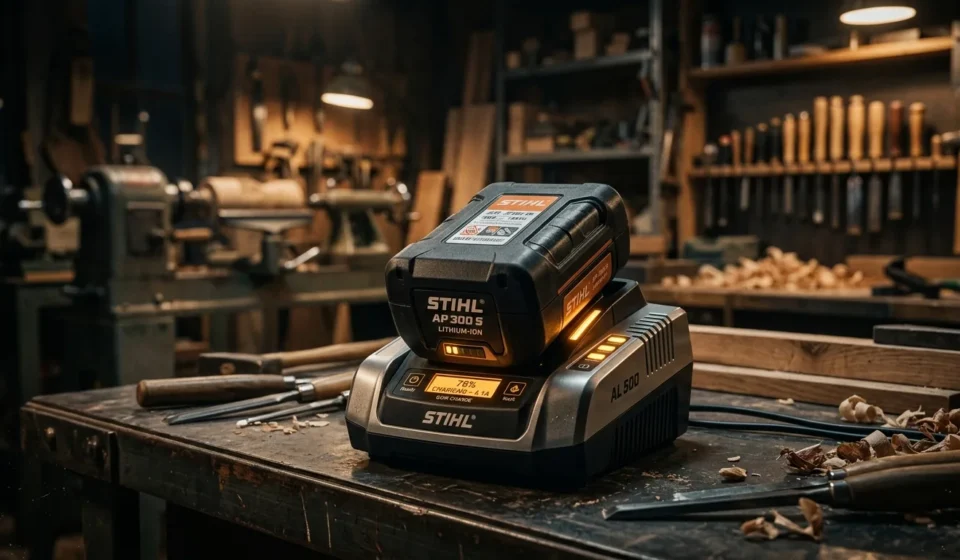
This is where technology really shines. Modern smart chargers are more than just power converters; they’re equipped with microprocessors that monitor your battery’s health and charge status. They feature sophisticated algorithms that optimize the charging process, protecting against overcharging, over-discharging, and overheating – all factors that can reduce battery life. Many will display diagnostic codes or detailed status information, letting you know if a battery is too hot to charge or if it’s nearing the end of its lifespan.
Imagine this situation: You’re halfway through a big project clearing storm damage, your primary battery dies, and you grab your spare. But when you plug in the dead one, your smart charger not only rapidly recharges it but also tells you if there’s an issue brewing, preventing future headaches. That peace of mind? Invaluable. Honestly, if you’re serious about getting the most out of your cordless chainsaw batteries, a smart charger is a non-negotiable upgrade.
Charging Speed: More Than Just a Number
When you pick up a charger, you’ll see its output rated in Amps (A). This number directly relates to how fast it can push electricity back into your battery. But charging speed isn’t just about the charger’s amperage; several factors come into play.
Factors Affecting Charge Time
The primary determinants of charge time are the battery’s capacity (Ah) and the charger’s output (Amps). A higher Ah battery needs more “fuel,” so it takes longer. A higher Amp charger delivers that fuel faster. But there’s more: battery temperature also plays a crucial role. If your battery is too hot (e.g., immediately after heavy use) or too cold, a smart charger will often delay charging or charge at a reduced rate to protect the battery cells. This is a safety feature that extends battery life, even if it means waiting a bit longer.
Reading Your Charger’s Output (Amps)
Let’s demystify the numbers. If you have a 4.0 Ah battery and a 2 Amp charger, a rough estimate for charge time (from empty) would be 4.0 Ah / 2 A = 2 hours. However, this is a simplified calculation; real-world charge times can be longer due to charging inefficiencies and protective measures. A 6.0 Ah battery with a 6 Amp fast charger, for example, might still take closer to an hour due to the charger managing cell temperature and balancing. Always check your charger’s specifications and user manual for accurate charge times for specific battery models.
Brand Specifics and Compatibility
One critical point I always emphasize: cordless chainsaw chargers are almost universally brand-specific and often voltage-specific. A DeWalt 60V MAX charger will not charge an EGO 56V battery, and a Greenworks 40V charger won’t work with their 80V batteries. Each brand designs its battery and charger ecosystem to work synergistically, ensuring safety and optimal performance. Attempting to use incompatible chargers can damage your battery, the charger, or even pose a safety risk. Stick to the charger designed for your battery, or an approved multi-voltage charger from the same brand.
Smart Charging Practices for Longevity and Performance
So far we’ve covered the types and speeds of chargers. Now let’s get to the really critical point: how to use them effectively to make your batteries last longer and perform better. These are practices I recommend to anyone using a cordless chainsaw, from the occasional trimmer to the seasoned landowner.
The “Goldilocks Zone” of Battery Charge
While Li-ion batteries don’t have a memory effect, they still prefer to operate within a certain charge range. Constantly discharging your battery to 0% and then charging it to 100% can put unnecessary stress on the cells over time. For optimal longevity, try to keep your batteries in the 20% to 80% charge range for most day-to-day use. Only charge to 100% when you know you’ll need maximum runtime for a big job. And avoid letting them sit at 0% for extended periods; that can lead to permanent damage.
Don’t Overlook Storage Conditions
When you’re not using your batteries, how you store them makes a huge difference. Store them in a cool, dry place, away from direct sunlight or extreme temperatures. Heat is particularly detrimental to Li-ion battery health. If you’re storing batteries for an extended period (say, over winter), aim to store them at around a 50-60% charge, not fully charged or fully depleted. This minimizes stress on the cells and reduces self-discharge. Let me add something here: never store a battery on a charger indefinitely unless the charger specifically has a “storage mode” or advanced maintenance charging. Most standard chargers aren’t designed for that.
Monitoring Battery Health
Keep an eye on your batteries for any signs of trouble. Is your battery getting unusually hot during charge? That’s a red flag, my friend. Are you noticing a significant reduction in run time, even after a full charge? Does the battery housing look swollen or damaged? These are indicators that your battery might be nearing the end of its useful life or has an internal fault. While smart chargers can detect some issues, your vigilance is the first line of defense. A healthy battery means a safe and efficient chainsaw operation.
Conclusion
Understanding your cordless chainsaw charger is more than just a technical detail; it’s an essential part of maximizing the performance and lifespan of your entire cordless system. From choosing between a standard or fast charger to adopting smart charging and storage practices, every decision you make impacts your tool’s reliability. Don’t let this unsung hero of your workshop be an afterthought.
By investing a little time to learn about charger types, speeds, and proper battery care, you’ll ensure your cordless chainsaw is always ready for action, cutting efficiently and safely for years to come. So, go ahead, give your charger the respect it deserves, and keep those cordless chainsaws at Best Professional Chainsaw running strong!