
Introduction to Electric Chainsaw Sharpeners
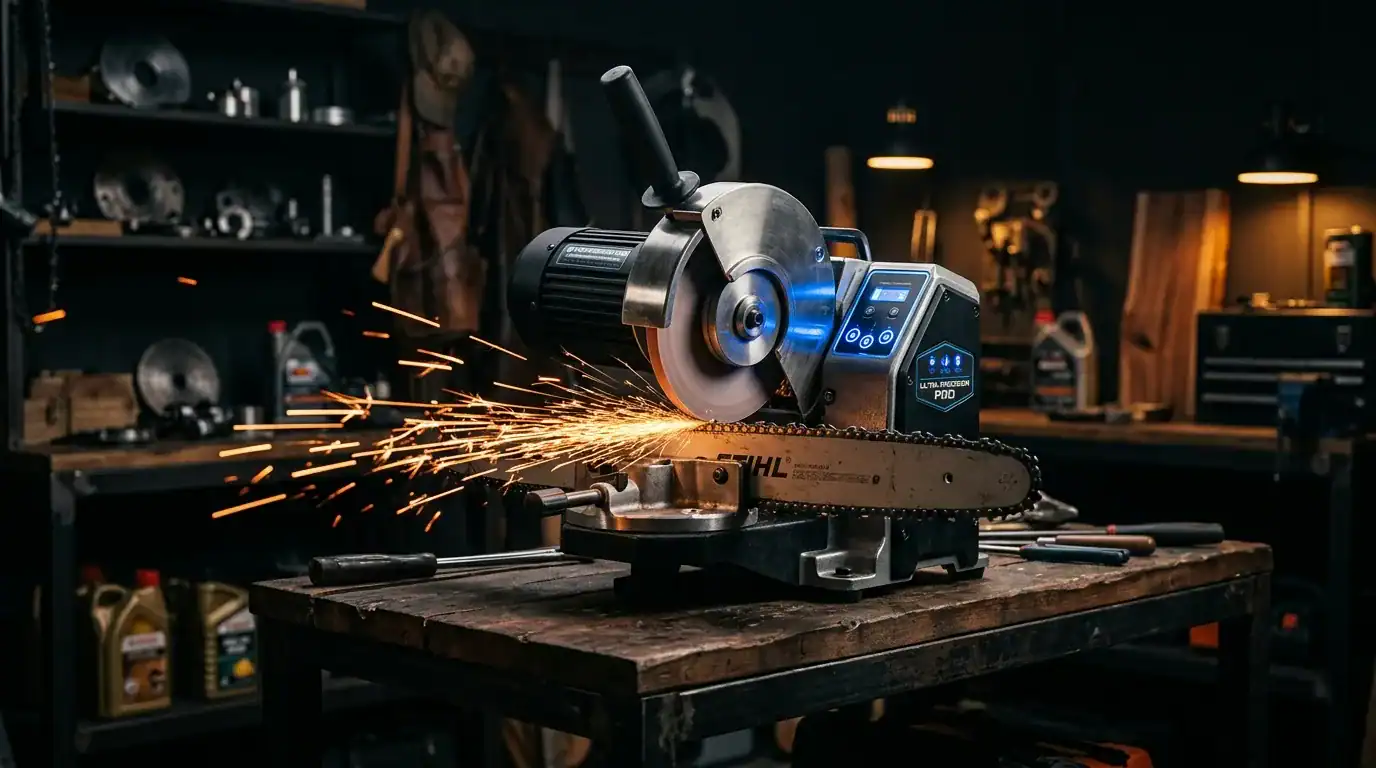
As a seasoned chainsaw user, you understand the importance of a razor-sharp chain for efficient, safe, and enjoyable cutting. While manual filing is a valuable skill, an electric chainsaw sharpener takes precision, consistency, and speed to a whole new level. For homeowners, landowners, and even professionals looking to extend chain life and reduce downtime, an electric sharpener is an invaluable investment. But with so many options on the market, how do you choose the right one? Let’s break down the essential features to look for in an electric chainsaw sharpener.
Table Of Content
- Introduction to Electric Chainsaw Sharpeners
- Power Source and Motor Quality
- Corded vs. Cordless Sharpeners
- Grinding Wheel Options and Compatibility
- Wheel Diameter, Thickness, and Material
- Precision Adjustability and Chain Stop/Indexing Mechanism
- Grinding Angle Adjustment and Down Angle (Tilt) Adjustment
- Clamping Mechanism and Stability
- Chain Vise and Table Stability
I recall a time when I was working on a logging project, and my chainsaw was struggling to cut through a thick tree trunk. I realized that my chain was dull, and I needed to sharpen it ASAP. That’s when I decided to invest in an electric chainsaw sharpener. It was a game-changer for me, as it saved me time and effort, and my cuts became smoother and more precise.
When it comes to electric chainsaw sharpeners, there are several factors to consider. The first thing to think about is the power source and motor quality. Do you need a corded or cordless sharpener? What is the ideal motor wattage for your needs? These are important questions to answer before making a purchase.
Power Source and Motor Quality
Corded vs. Cordless Sharpeners
Corded sharpeners are the most common type and are ideal for workshop use. They typically have a motor wattage between 85W and 230W, with higher wattage models providing more power and less bogging down under load. A continuous duty motor is essential for frequent sharpening, as it ensures that the sharpener can handle heavy use without overheating. On the other hand, cordless sharpeners are great for portability and convenience, allowing you to sharpen on-site directly from a vehicle’s 12V power outlet.
When choosing a corded sharpener, consider the motor wattage and type. A higher wattage motor will provide more power, but it may also increase the risk of overheating. Look for a sharpener with a high-quality motor that is designed for continuous use. Some popular corded sharpeners include the Oregon 520-120, which has a 120W motor and a compact design, and the Timberline Chainsaw Sharpener, which has a 200W motor and a durable construction.
Cordless sharpeners, on the other hand, offer more flexibility and convenience. They are ideal for field work, as they can be powered by a vehicle’s 12V outlet or a battery pack. However, they may not provide as much power as corded sharpeners, and their batteries may need to be recharged frequently. Some popular cordless sharpeners include the Stihl 2-in-1 EasyCut, which has a 12V motor and a compact design, and the Husqvarna Sharpener, which has a 12V motor and a durable construction.
Grinding Wheel Options and Compatibility
Wheel Diameter, Thickness, and Material
The grinding wheel is the heart of the sharpener, and it’s essential to choose a sharpener that can accommodate various wheel sizes and types. The wheel diameter is crucial, as it affects the sharpener’s ability to handle different chain pitches. Common wheel diameters range from 4-1/4 inches to 5-3/4 inches, and it’s essential to ensure that the sharpener can handle the wheel diameter you prefer or that comes standard.
The wheel thickness is also critical, as it affects the sharpener’s ability to handle different chain pitches. For example, 1/8-inch (3.2mm) wheels are typically used for .325-inch pitch chains, while 3/16-inch (4.7mm) wheels are used for 3/8-inch and .404-inch pitch chains. Some sharpeners also offer 1/4-inch (6.35mm) wheels for specialized chains. When choosing a sharpener, consider the wheel thickness and material, as well as the sharpener’s ability to accommodate different wheel sizes.
Aluminum oxide is the most common wheel material, but ceramic or corundum wheels offer faster material removal and longer life, especially for harder chains. Some advanced sharpeners can even use diamond wheels for sharpening carbide-tipped chains. When choosing a sharpener, consider the wheel material and its compatibility with your chain type.
Precision Adjustability and Chain Stop/Indexing Mechanism
Grinding Angle Adjustment and Down Angle (Tilt) Adjustment
Precision adjustability is critical for achieving factory-sharp edges. The ability to precisely adjust angles is paramount for different chains, such as full chisel, semi-chisel, and skip tooth chains. Look for a sharpener with a clear, easily adjustable scale, typically ranging from 0 to 35 degrees (or more) in both directions. The down angle (tilt) adjustment is also essential, as it affects the angle at which the grinding wheel approaches the tooth’s top plate.
A good indexing system ensures that each tooth is advanced consistently, preventing over-grinding or missing teeth. A robust chain vise that holds the chain securely and precisely in place is vital for consistent results. The depth limiter is also crucial, as it prevents the grinding wheel from going too deep into the cutter, preserving the tooth’s integrity and extending chain life.
When choosing a sharpener, consider the precision adjustability and chain stop/indexing mechanism. Look for a sharpener with clear markings, smooth adjustments, and a sturdy locking mechanism for these settings. Some popular sharpeners with advanced precision adjustability include the Oregon 520-120, which has a adjustable grinding angle and a robust chain vise, and the Timberline Chainsaw Sharpener, which has a adjustable down angle (tilt) and a depth limiter.
Clamping Mechanism and Stability
Chain Vise and Table Stability
A secure clamping system is essential for safety and precision. The chain should be held firmly without wobbling, and the sharpener should have a sturdy table and base. Look for a sharpener with a robust chain vise that can handle different chain sizes and types. The table stability is also critical, as it affects the sharpener’s ability to provide consistent results.
When choosing a sharpener, consider the clamping mechanism and stability. Look for a sharpener with a durable construction, a sturdy table, and a robust chain vise. Some popular sharpeners with advanced clamping mechanisms include the Stihl 2-in-1 EasyCut, which has a compact design and a robust chain vise, and the Husqvarna Sharpener, which has a durable construction and a sturdy table.
In conclusion, choosing the right electric chainsaw sharpener can be a daunting task, but by considering the key features and factors outlined above, you can make an informed decision. Remember to think about your specific needs and preferences, and don’t hesitate to reach out to a professional if you have any questions or concerns.