Mini Chainsaw Reviews: Top Models for Small Cutting Tasks
The Unsung Hero of Your Backyard: Why a Mini Chainsaw is a Must-Have
As a seasoned outdoor power equipment specialist, I’ve seen countless homeowners wrestle with oversized, heavy chainsaws for tasks that simply don’t warrant them. You know the drill: a rogue branch after a storm, a few overgrown shrubs, or even just preparing some kindling for the fire pit. While your trusty full-size chainsaw is indispensable for felling trees or bucking large logs, trying to maneuver it in tight spaces or for precision cuts can be frustrating, inefficient, and frankly, risky. It’s like using a sledgehammer to hang a picture.
Table Of Content
- The Unsung Hero of Your Backyard: Why a Mini Chainsaw is a Must-Have
- Understanding the Mini Chainsaw: More Than Just a Smaller Saw
- Choosing Your Perfect Partner: Key Features to Consider
- Power Source and Battery Performance
- Guide Bar Length and Cutting Capacity
- Chain Type and Kickback Prevention
- Weight, Ergonomics, and Safety Features
- Top Mini Chainsaw Models: Detailed Reviews and Recommendations
- Husqvarna 120i (Battery-Powered)
- Greenworks GMAX 40V 12-inch Cordless Chainsaw (Model 20312)
- WORX WG320 10-inch Cordless Chainsaw
- Ryobi PCLCS01B 6-inch Pruning Chainsaw (Bare Tool)
- Mastering Your Mini: Safe Operation and Essential Maintenance
- Prioritizing Safety: Before, During, and After Every Cut
- Keeping Your Mini Chainsaw in Top Shape: Maintenance Essentials
That’s precisely where the mini chainsaw steps in, proving itself to be an invaluable addition to any homeowner’s or DIY enthusiast’s arsenal. These compact, lightweight powerhouses are specifically designed to tackle those smaller, more delicate cutting jobs with remarkable ease and control. They’re built for convenience, offering a level of maneuverability that larger saws simply can’t match, transforming what used to be a chore into a quick, satisfying task. Forget struggling with hand saws or tiring out your arms; the right mini chainsaw can make all the difference.
Understanding the Mini Chainsaw: More Than Just a Smaller Saw

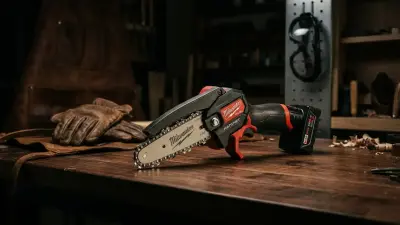
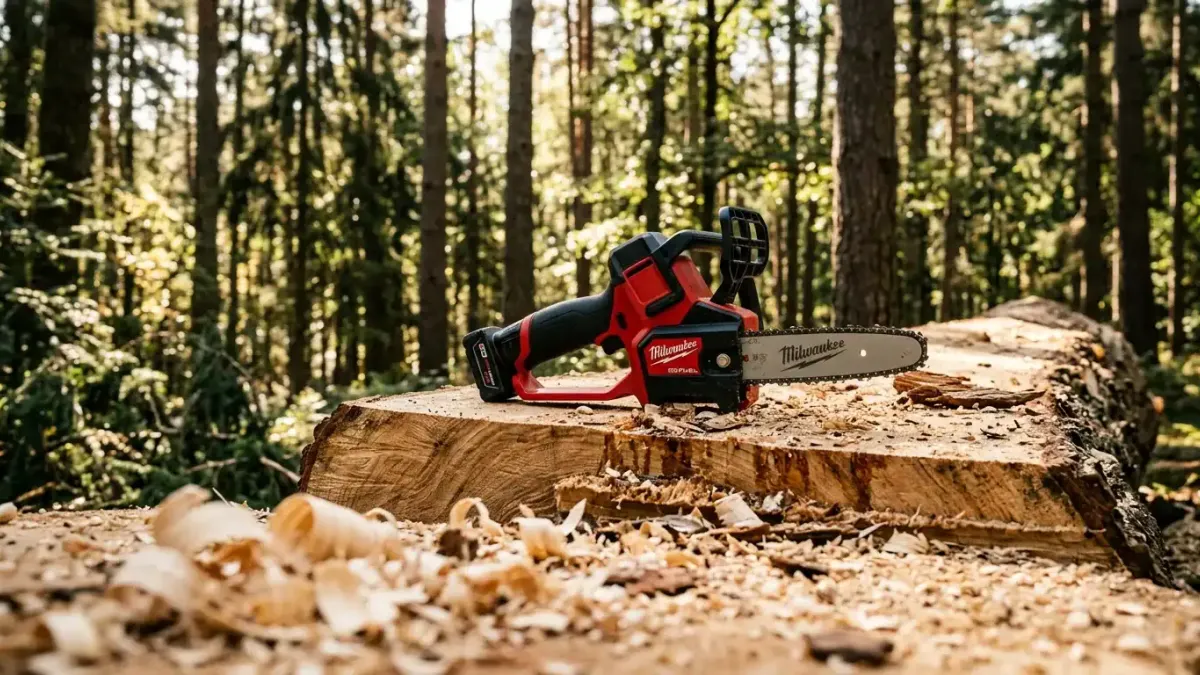
So, what exactly defines a “mini chainsaw”? Generally speaking, we’re looking at tools with guide bars typically ranging from 4 to 12 inches, though some might stretch to 14 inches. Unlike their gas-powered brethren, most mini chainsaws are battery-powered, making them exceptionally portable, quieter, and free from the fuss of fuel mixtures and pull starts. They are significantly lighter, often weighing between 3 to 10 pounds, which drastically reduces user fatigue and makes them ideal for overhead work or extended periods of use.
These compact saws are engineered for specific applications: think pruning fruit trees, trimming overgrown hedges, clearing small storm-damaged branches, cutting down small saplings, or even preparing firewood for a backyard fire pit. Their smaller size and lower power output mean they aren’t meant for felling mature trees or bucking large diameter logs. Instead, they excel at precision, accessibility, and user-friendliness, making them perfect for tasks that might otherwise require ladders, awkward angles, or hours of manual labor with pruning shears or hand saws. The key is to match the tool to the task, and for small-to-medium diameter wood, a mini chainsaw is often the safest and most efficient choice.
Choosing Your Perfect Partner: Key Features to Consider
Selecting the right mini chainsaw isn’t just about grabbing the first compact model you see. There are several critical features to evaluate, ensuring you pick a tool that perfectly aligns with your needs and enhances your cutting experience.
Power Source and Battery Performance
The vast majority of modern mini chainsaws are cordless, relying on rechargeable lithium-ion batteries. When comparing models, pay close attention to two key battery specifications: voltage (V) and amp-hours (Ah). Voltage dictates the overall power output, with common ranges from 18V/20V to 40V or even 60V. Higher voltage generally translates to more cutting power and speed. Amp-hours, on the other hand, indicate the battery’s capacity and, consequently, how long it will run on a single charge. A 4.0Ah battery will provide roughly twice the runtime of a 2.0Ah battery at the same voltage. Consider if the battery is interchangeable with other tools from the same brand (a huge plus for existing tool owners) and look for models that include a fast charger or even a second battery for uninterrupted work.
Guide Bar Length and Cutting Capacity
The guide bar length is arguably the most straightforward indicator of a mini chainsaw’s cutting capacity. Available lengths typically range from 4 inches for ultra-compact pruning up to 12-14 inches for more substantial branches. A 6-inch bar is fantastic for precise, one-handed pruning of branches up to 4 inches in diameter, while an 8-inch or 10-inch bar offers a good balance for general yard work, handling branches up to 6-8 inches comfortably. Remember, the effective cutting diameter is usually slightly less than the bar length. Always choose a bar length that slightly exceeds the typical diameter of the material you intend to cut, allowing for safer, more efficient work without pushing the saw to its limits.
Chain Type and Kickback Prevention
Mini chainsaws typically come equipped with low-profile, low-kickback chains. Kickback is a sudden, upward and backward motion of the guide bar that can occur if the nose of the bar contacts wood, or the chain is pinched. Low-kickback chains feature specific safety elements, such as guard links, designed to reduce this dangerous phenomenon. While all chainsaws carry a risk of kickback, these specialized chains significantly mitigate it, making them safer for less experienced users and for the types of tasks mini chainsaws are designed for. Always ensure your chain is sharp and properly tensioned; a dull or loose chain is less efficient and increases the risk of kickback.
Weight, Ergonomics, and Safety Features
Since mini chainsaws are often used for extended periods or in awkward positions, their weight and ergonomic design are crucial. Look for a well-balanced saw that feels comfortable in your hands, ideally with anti-vibration features and a secure grip. Many smaller models are designed for comfortable one-handed operation, which can be a huge advantage for light pruning. On the safety front, essential features include a handguard to protect against flying debris, a safety switch to prevent accidental starts, and a chain brake that can stop the chain instantly in case of kickback or loss of control. Always prioritize models with robust safety features, as they are your first line of defense.
Top Mini Chainsaw Models: Detailed Reviews and Recommendations
Having explored the essential features, let’s dive into some of the top-performing mini chainsaws on the market. These models represent a great balance of power, portability, and user-friendliness, making them ideal choices for homeowners and DIYers.
Husqvarna 120i (Battery-Powered)
- Key Specs: 12-inch bar, 36V Li-ion battery, approximately 8.5 lbs (with battery).
- Target User: Homeowners and landowners needing a more robust mini chainsaw for limbing, felling small trees (up to 8-10 inches diameter), and heavier pruning.
- Why it stands out: The Husqvarna 120i bridges the gap between true “mini” saws and entry-level full-size models. Its 12-inch bar provides excellent reach and cutting capacity, making it suitable for larger branches that might challenge smaller units. As part of Husqvarna’s battery ecosystem, its 36V battery offers respectable power and runtime, and can be shared with other tools. It’s known for its excellent ergonomics and balanced feel, making it comfortable for longer tasks.
- Considerations: While still compact, it’s on the heavier and larger side for a “mini” chainsaw, so it might be overkill for very light, one-handed pruning tasks.
Greenworks GMAX 40V 12-inch Cordless Chainsaw (Model 20312)
- Key Specs: 12-inch bar, 40V Li-ion battery, approximately 7.8 lbs (with battery).
- Target User: Homeowners seeking a versatile cordless chainsaw for general yard maintenance, including pruning, limbing, and cutting small to medium-sized logs.
- Why it stands out: Greenworks is a leader in battery-powered outdoor equipment, and their 40V 12-inch model is a testament to that. It offers strong cutting performance for its class, easily handling branches up to 8-10 inches. The 40V battery system is extensive, meaning you can use the same battery for blowers, trimmers, and more. It features tool-less chain tensioning, which is a huge convenience for quick adjustments in the field.
- Considerations: Like the Husqvarna 120i, its 12-inch bar makes it less “mini” than some ultra-compact options, but offers superior versatility.
WORX WG320 10-inch Cordless Chainsaw
- Key Specs: 10-inch bar, 20V Li-ion battery, approximately 6.2 lbs (with battery).
- Target User: Homeowners and DIYers who prioritize compactness and lightweight design for light pruning, clearing brush, and cutting small logs for campfires or projects.
- Why it stands out: The WORX WG320 strikes an excellent balance between cutting power and portability. Its 10-inch bar is perfect for most common backyard tasks, easily managing branches up to 6-8 inches. It’s notably lighter than the 12-inch models, making it very maneuverable and less fatiguing for extended use. The tool-free chain tensioning system and automatic chain lubrication are convenient features that simplify maintenance.
- Considerations: The 20V battery platform might offer less raw power or shorter runtimes compared to 40V or 36V systems for very demanding tasks, but it’s perfectly adequate for its intended use.
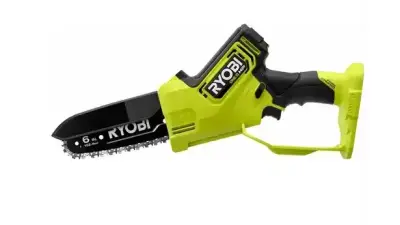
Ryobi PCLCS01B 6-inch Pruning Chainsaw (Bare Tool)
- Key Specs: 6-inch bar, 18V ONE+ Li-ion battery (sold separately), approximately 3.5 lbs (without battery).
- Target User: Existing Ryobi 18V ONE+ system users needing an ultra-compact, lightweight saw for intricate pruning, detail work, and very small branch removal.
- Why it stands out: For truly “mini” tasks, this Ryobi model is a fantastic choice. Its 6-inch bar and incredibly lightweight design make it ideal for one-handed operation and precise cuts in tight spaces. It’s excellent for pruning fruit trees, trimming ornamental shrubs, or quickly clearing small saplings. Being part of the extensive Ryobi ONE+ system means if you already own Ryobi 18V batteries, this bare tool is an economical addition.
- Considerations: As a bare tool, you’ll need to purchase the battery and charger separately if you don’t already have them. Its small bar limits it to very small diameter cutting tasks.
Mastering Your Mini: Safe Operation and Essential Maintenance
Even though mini chainsaws are smaller and generally less powerful than their full-sized counterparts, they are still potent cutting tools that demand respect and proper handling. Safety should always be your top priority, followed closely by consistent maintenance to ensure longevity and peak performance.
Prioritizing Safety: Before, During, and After Every Cut
Before you even think about starting your mini chainsaw, a thorough safety check is crucial. Always don proper Personal Protective Equipment (PPE): this includes safety glasses (or a full face shield), heavy-duty work gloves, hearing protection (even battery saws produce noise), long pants, and sturdy, closed-toe footwear. Ensure your work area is clear of obstacles, children, and pets. Check the chain tension – it should be snug but still allow you to pull the chain around the bar by hand. Verify the chain brake is functioning, and that the battery is fully charged and securely seated.
When operating, maintain a firm, two-handed grip whenever possible, even on models designed for one-handed use, especially if you’re new to chainsaws. Always be aware of the kickback zone – the upper quadrant of the bar tip – and avoid making contact with it. Plan your cuts to avoid pinching the bar, particularly when bucking logs or cutting springy branches. Always engage the chain brake when moving between cuts or repositioning the saw, and never operate the saw above shoulder height where control is compromised. If you’re cutting branches, always work from the bottom up to avoid the branch snapping or pinching the bar, and ensure you have a stable footing at all times.
Keeping Your Mini Chainsaw in Top Shape: Maintenance Essentials
A little regular care goes a long way in extending the life of your mini chainsaw and ensuring it operates safely and efficiently. After each use, take a few minutes to clean the saw. Remove sawdust, chips, and debris from the motor housing, bar, and chain. Check the bar oil reservoir and refill it if necessary – most mini chainsaws feature an automatic oiler, but some smaller models might require manual oiling.
Regularly check and adjust chain tension. A loose chain can derail, causing damage or injury, while an overly tight chain can accelerate wear on the bar and motor. A good rule of thumb is that the chain should be snug against the bar, but you should still be able to pull the drive links up slightly to see the bottom of the drive links. Furthermore, keep your chain sharp! A dull chain not only makes cutting harder and slower, but it also increases the risk of kickback and wear on the saw. You’ll know your chain is dull if it produces fine sawdust instead of coarse chips, or if it struggles to pull itself into the wood. Sharpening can be done with a round file (matching your chain’s pitch) or a specialized electric sharpener, or you can take it to a professional. Finally, always store your mini chainsaw in a clean, dry place, ideally with the battery removed, and out of reach of children.