

Choosing Your Pole Saw: Gas, Electric, or Battery Performance Showdown
As a homeowner, landowner, or simply someone who appreciates a well-maintained yard, you know that keeping trees pruned is essential for their health and appearance. When those branches are just out of reach, a pole saw becomes an indispensable tool. But with so many options – gas, corded electric, and battery-powered – choosing the right one can feel overwhelming. Don’t worry, as your trusted chainsaw expert, I’m here to break down the performance differences and help you find the perfect pole saw for your needs.
Table Of Content
- Choosing Your Pole Saw: Gas, Electric, or Battery Performance Showdown
- What Exactly is a Pole Saw?
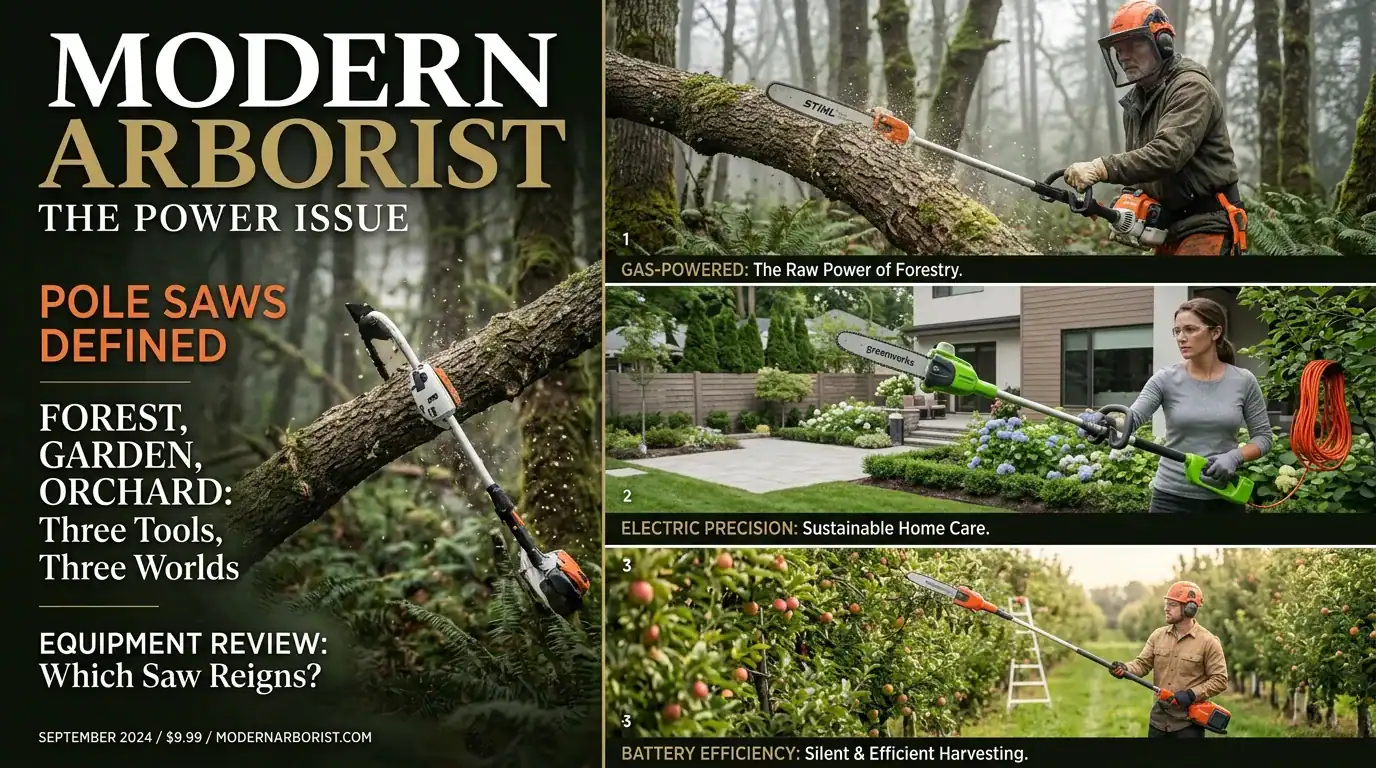
- Gas-Powered Pole Saws: Raw Power and Mobility
- Corded Electric Pole Saws: Lightweight and Convenient
- Battery-Powered Pole Saws: Freedom and Ease
- Choosing the Right Pole Saw for Your Needs
- Final Thoughts
What Exactly is a Pole Saw?
Before we dive into the comparisons, let’s clarify what a pole saw does. A pole saw is essentially a small chainsaw head mounted on a long extension pole. This design allows you to safely prune high branches from the ground, eliminating the need for ladders, which can be dangerous. They typically feature a small guide bar, often ranging from 6 to 12 inches, ideal for cutting limbs up to 8-10 inches in diameter.
Gas-Powered Pole Saws: Raw Power and Mobility
Gas pole saws are the traditional workhorses, often favored by professionals and those with large properties or demanding tasks.
- Pros:
- Superior Power: Generally offer the most power, capable of cutting through thicker branches (up to 10-12 inches with a good 10-12 inch bar) more quickly and efficiently than electric models. Engines typically range from 25cc to 35cc.
- Unlimited Run Time: As long as you have fuel, you can keep cutting.
- Complete Mobility: No cords or batteries to worry about, allowing you to move freely around large properties or remote areas.
- Cons:
- Noise and Emissions: They are loud and produce exhaust fumes, which can be a concern for neighbors and the environment.
- Maintenance: Require regular maintenance, including fuel mixing, spark plug checks, air filter cleaning, and carburetor adjustments.
- Weight and Vibration: Often heavier than electric models, leading to quicker fatigue, and significant vibration.
- Starting Difficulty: Can sometimes be tricky to start, especially in cold weather.
- Ideal Use: Large properties, extensive pruning, cutting thicker branches, professional landscaping, or areas without easy access to power.
Corded Electric Pole Saws: Lightweight and Convenient
Corded electric pole saws are an excellent choice for homeowners with smaller yards and accessible power outlets.
- Pros:
- Lightweight: Typically the lightest option, reducing operator fatigue.
- Quiet and Emission-Free: Much quieter than gas models and produce no harmful fumes, making them neighbor-friendly.
- Instant Start: Just plug in and press a button – no pull cords or fuel mixing.
- Low Maintenance: Very little maintenance required beyond keeping the chain sharp and oiled.
- Unlimited Run Time: As long as it’s plugged in, it will run.
- Cons:
- Limited Mobility: Restricted by the length of your extension cord, which can be a safety hazard and an inconvenience.
- Less Power: Generally less powerful than gas models, best suited for smaller branches (up to 6-8 inches). Motors typically range from 6 to 8 amps, with 6-8 inch bars.
- Cord Management: Constantly managing the cord can be cumbersome and poses a tripping hazard.
- Ideal Use: Small to medium-sized yards, light to medium pruning tasks, close to an outdoor power outlet, for those who prefer quiet operation and minimal maintenance.
Battery-Powered Pole Saws: Freedom and Ease
Battery-powered (cordless electric) pole saws offer a compelling blend of convenience and performance, bridging the gap between gas and corded electric.
- Pros:
- Excellent Mobility: No cords to restrict movement, offering the freedom of gas without the fumes.
- Quiet and Emission-Free: Like corded models, they are quiet and environmentally friendly.
- Instant Start: Simple push-button start.
- Low Maintenance: Similar to corded electric, very little required.
- Growing Power: Modern battery technology (20V, 40V, 80V, or even 120V systems) provides significant cutting power, often rivaling smaller gas models for cutting branches up to 8-10 inches.
- Cons:
- Limited Run Time: Dependent on battery charge. You’ll need spare batteries for extended work, which adds to the cost.
- Charging Time: Batteries need to be recharged, which can take several hours.
- Weight: Can be heavier than corded models due to the battery pack, though generally lighter than gas models.
- Cost: Often the most expensive upfront, especially when purchasing multiple batteries and a charger.
- Ideal Use: Medium to large properties, areas without easy power access, users who value convenience and lower noise/emissions without sacrificing too much power. Great for occasional, moderate pruning tasks.
Choosing the Right Pole Saw for Your Needs
Here’s how to make an informed decision:
- Property Size & Branch Thickness:
- For large properties with thick, stubborn branches (over 8 inches) and frequent use: Gas pole saw.
- For small to medium yards with lighter pruning (under 8 inches), close to power: Corded electric pole saw.
- For medium to large yards with moderate branches (up to 10 inches), where mobility is key, and you prefer less noise/fumes: Battery-powered pole saw.
- Frequency of Use:
- Daily or weekly heavy use: Gas.
- Occasional light trimming: Corded Electric or Battery.
- Budget:
- Lowest upfront cost: Often Corded Electric.
- Mid-range: Gas.
- Potentially highest upfront (due to batteries/charger): Battery-powered.
- Noise & Emissions:
- Concerned about noise/fumes: Corded Electric or Battery.
- Maintenance Preference:
- Willing to perform regular engine maintenance: Gas.
- Prefer minimal maintenance: Corded Electric or Battery.
No matter which type you choose, remember that safety is paramount. Always wear appropriate personal protective equipment (PPE), including eye protection, gloves, and a hard hat. Familiarize yourself with your pole saw’s manual and maintain a safe working distance from power lines. Here at Best Professional Chainsaw, we advocate for safe and efficient operation of all outdoor power tools.
Final Thoughts
Each type of pole saw has its distinct advantages and disadvantages. By carefully considering your specific needs, property size, and desired features, you can confidently select the pole saw that will make your tree pruning tasks safer, easier, and more enjoyable. Happy trimming!