



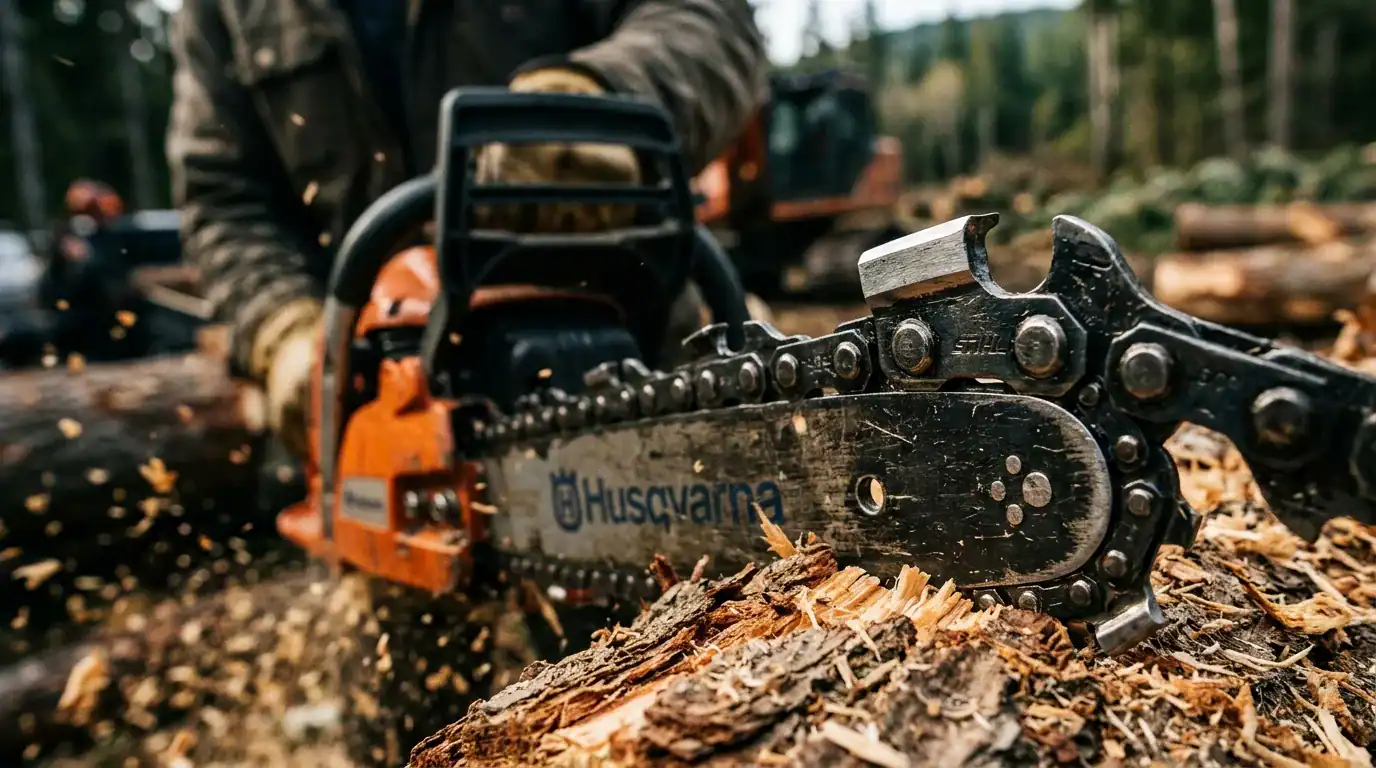

Unlock Your Chainsaw’s Full Potential: The Power of a Perfect Chain Angle
As a seasoned chainsaw professional, I often see folks struggling with their saws, not realizing that the secret to effortless, efficient, and safe cutting often lies in one critical factor: the chainsaw chain’s sharpening angle. A perfectly sharpened chain, with the correct angles, transforms your chainsaw from a struggling beast into a precision cutting machine. It’s not just about sharpness; it’s about having the right geometry to slice through wood like butter.
Table Of Content
- Unlock Your Chainsaw’s Full Potential: The Power of a Perfect Chain Angle
- Why Chain Angles Are Non-Negotiable for Great Cutting
- Understanding the Key Angles of Your Chainsaw Chain
- 1. Top Plate Filing Angle (The Aggression Angle)
- 2. Side Plate Angle (The Cleanliness Angle)
- 3. Depth Gauge Setting (The Raker – Not an Angle, but Critical!)
- Essential Tools for Precision Sharpening
- Step-by-Step: Sharpening Your Chain for Optimal Performance
- Common Mistakes to Avoid
- When to Sharpen Your Chain
- Conclusion: Sharp Angles, Safe Cuts
At Best professional chainsaw, we believe everyone, from the weekend warrior to the seasoned arborist, deserves to experience the satisfaction of a well-maintained saw. Let’s dive into the world of chainsaw chain angles and arm you with the knowledge to achieve optimal cutting performance.
Why Chain Angles Are Non-Negotiable for Great Cutting
Think of your chainsaw chain cutters as tiny chisels. For a chisel to work effectively, it needs a specific angle to bite into the material and clear the chips. The same goes for your chainsaw chain. The correct angles ensure:
- Effortless Cutting: The chain grabs the wood without excessive force, reducing fatigue.
- Faster Cutting Speed: Each tooth removes the maximum amount of wood efficiently.
- Reduced Wear and Tear: Both on your chain and your chainsaw’s engine, as it doesn’t have to work as hard.
- Enhanced Safety: A sharp, correctly angled chain is less prone to kickback and binding.
- Longer Chain Life: Proper sharpening removes less material and preserves the cutter’s integrity.
Understanding the Key Angles of Your Chainsaw Chain
There are a few critical angles you need to be aware of when sharpening your chainsaw chain:
1. Top Plate Filing Angle (The Aggression Angle)
This is arguably the most important angle. It’s the angle at which you file the top cutting surface of the tooth. Most chains typically require a 30-degree top plate filing angle. Some chains, especially those designed for ripping (cutting with the grain), might call for a shallower 10-degree angle, while others might go up to 35 degrees. Always check your chain manufacturer’s recommendations, usually found in your chainsaw manual or on the chain’s packaging.
- What it affects: This angle determines how aggressively the tooth bites into the wood. Too steep (e.g., 40 degrees) and the tooth will be weak and wear quickly. Too shallow (e.g., 20 degrees for cross-cutting) and it won’t cut efficiently, instead scraping the wood.
2. Side Plate Angle (The Cleanliness Angle)
The side plate angle is the angle on the side of the tooth that forms the cutting edge. When using a round file, this angle is usually achieved naturally as you file the top plate. It often ends up being around 85-90 degrees relative to the bar, or straight down from the top plate. Some specialized chains or sharpening systems might define this more precisely.
- What it affects: A sharp side plate helps to clear chips efficiently and ensures a smooth cut.
3. Depth Gauge Setting (The Raker – Not an Angle, but Critical!)
While not an angle, the depth gauge (often called the “raker”) is crucial for controlling how much wood each cutter takes. It’s the small hump in front of each cutting tooth. The height difference between the top of the depth gauge and the top of the cutting edge determines the “bite” of the chain.
- What it affects:
- Too high: The cutters won’t engage the wood properly, resulting in fine dust instead of chips, slow cutting, and high friction.
- Too low: The cutters will bite too aggressively, leading to a rough cut, excessive vibration, increased risk of kickback, and higher strain on your chainsaw.
- Adjustment: Depth gauges are filed down with a flat file. Use a depth gauge guide or a filing gauge for accuracy. The recommended clearance is typically between 0.025 inches (0.65 mm) and 0.030 inches (0.75 mm) for most general-purpose chains. Again, consult your chain’s specifications.
Essential Tools for Precision Sharpening
To achieve these angles consistently, you’ll need the right tools:
- Round Files: Matched to your chain’s pitch (e.g., 5/32″ for 3/8″ low profile chains, 3/16″ for .325″ chains, 7/32″ for 3/8″ standard/Pro chains).
- Flat File: For dressing the depth gauges.
- Filing Guide/Jig: These are invaluable! Brands like Oregon offer excellent filing guides, and Stihl’s 2-in-1 Easy File makes achieving consistent top plate and depth gauge angles a breeze. They ensure you maintain the correct top plate and side plate angles with every stroke.
- Depth Gauge Tool: Essential for precise depth gauge adjustments.
- Vise or Stump Vise: To securely hold your chainsaw bar while sharpening.
Step-by-Step: Sharpening Your Chain for Optimal Performance
- Safety First: Engage the chain brake and wear heavy-duty gloves.
- Secure the Bar: Clamp your chainsaw’s bar firmly in a vise.
- Find the Shortest Cutter: Start sharpening all teeth to the length of the shortest, most worn cutter to ensure consistency across the chain.
- Use a Filing Guide: Position your round file in the guide, aligning it with the top plate angle (e.g., 30 degrees).
- File with Purpose: Use firm, even strokes, filing only on the forward stroke. Lift the file on the return. Apply consistent pressure and count your strokes for each tooth (e.g., 3-5 strokes). Rotate the tooth slightly to keep the file seated.
- Sharpen Alternate Teeth: Sharpen all teeth facing one direction, then flip the saw (or move to the other side) and sharpen the remaining teeth.
- Check Depth Gauges: After sharpening a few teeth, use your depth gauge tool and flat file to lower any depth gauges that are too high. Remember, only file the top of the depth gauge, rounding off the front edge slightly if needed.
- Inspect Your Work: The cutting edge should be razor-sharp with no dull spots or burrs.
Common Mistakes to Avoid
- Inconsistent Angles: Freehand filing often leads to varying angles, causing uneven cutting. Use a guide!
- Wrong File Size: Using a file that’s too large or too small will ruin the cutter’s profile.
- Filing Backward: Only file on the forward stroke. Filing backward dulls the file and can create burrs.
- Neglecting Depth Gauges: A sharp chain with incorrect depth gauges will perform poorly.
- Over-Sharpening: Removing too much material shortens the chain’s life. Sharpen just enough to restore the edge.
When to Sharpen Your Chain
Your chain usually tells you when it needs attention:
- It produces fine dust instead of consistent, square chips.
- You have to push the saw harder than usual.
- The saw “jumps” or vibrates excessively.
- You see smoke coming from the cut, even with adequate oiling.
- You’ve hit dirt, rocks, or metal. (Sharpen immediately!)
A good rule of thumb for regular use is to check and touch up your chain every time you refill your fuel tank. For professional use, it might be even more frequent.
Conclusion: Sharp Angles, Safe Cuts
Mastering the chainsaw chain angle is a skill that pays dividends in performance, safety, and satisfaction. By understanding the top plate and side plate angles, and meticulously setting your depth gauges, you’ll transform your cutting experience. Invest in quality filing guides, take your time, and soon you’ll be achieving that perfect, effortlessly smooth cut every time.
For more detailed guides on chainsaw maintenance and choosing the right tools, keep exploring Best professional chainsaw – your trusted resource for all things power equipment.