



Unlock Your Timber’s Potential: Milling Logs with Your Chainsaw
Ever looked at a fallen tree in your yard or on your property and thought, “What a waste”? Or maybe you have a specific woodworking project in mind that requires unique dimensions or species of wood that are hard to find or expensive at the lumberyard. What if I told you that with the right tools and a bit of know-how, you could transform those logs into beautiful, usable lumber right at home? It’s not just for professional sawmills anymore; DIY chainsaw milling is a rewarding endeavor that puts you in control of your timber.
Table Of Content
- Unlock Your Timber’s Potential: Milling Logs with Your Chainsaw
- Why Mill Your Own Lumber? The Benefits & Realities
- Essential Equipment for DIY Chainsaw Milling
- The Chainsaw: Your Milling Powerhouse
- The Milling Attachment: Alaskan Mills and Rail Systems
- Chains: The Right Tooth for the Job
- Other Essential Gear
- Setting Up Your Mill & Making the First Cut
- Log Preparation and Stabilization
- Establishing Your First Cut: The Critical Step
- The Milling Process: Technique and Patience
- Safety First, Always!
- Post-Milling: Drying and Using Your Lumber
- Start Your Milling Journey Today!
There’s a deep satisfaction in crafting something from a tree you felled or found, knowing every step of its journey from forest to finished product. This guide from Best Professional Chainsaw will walk you through everything you need to know to start your own DIY chainsaw milling projects, turning raw logs into valuable boards, beams, and slabs.
Why Mill Your Own Lumber? The Benefits & Realities
The allure of milling your own lumber is strong, and for good reason. Primarily, it’s about cost savings. If you have access to logs, you can produce lumber for a fraction of what it would cost to buy it retail. This is especially true for specialty woods or large dimensions. Beyond the financial aspect, you gain incredible flexibility in board sizes. Need a 3.5-inch thick slab for a live-edge table? Or perhaps an unusually long beam for a pergola? Commercial sawmills often have standard sizes, but with your own setup, you can cut exactly what your project demands.
There’s also an environmental benefit: utilizing local timber reduces transportation costs and carbon footprint. Plus, there’s the sheer satisfaction of seeing a raw log transform into a stack of beautiful lumber by your own hand. However, it’s not without its considerations. Milling is labor-intensive and requires a significant time investment, from log preparation to the actual cutting and, finally, the crucial drying process. You’ll also need an initial investment in equipment, which we’ll cover next. But in my opinion, the rewards far outweigh these challenges for anyone passionate about woodworking and self-sufficiency.
For example, imagine this situation: a massive storm recently knocked down a beautiful old black walnut tree on your property. Instead of paying someone to haul it away or turning it into firewood, you could mill it into stunning, dark lumber perfect for a future dining room table or custom cabinetry. Not only would you save thousands on premium walnut, but you’d have a piece with a story, milled by your own hands. That’s the kind of project satisfaction we’re talking about.
Essential Equipment for DIY Chainsaw Milling
To turn those logs into lumber, you’ll need the right tools. This isn’t a job for just any chainsaw; power and reliability are key.
The Chainsaw: Your Milling Powerhouse
For successful milling, you need a powerful, professional-grade chainsaw. Forget the small homeowner models; they simply won’t have the torque or endurance. Look for saws with at least 70cc (cubic centimeters) of engine displacement, though 90cc or even 100cc+ is ideal for larger logs and faster milling. You’ll also need a sufficiently long bar. A general rule of thumb is that your bar should be at least two inches longer than the widest log you plan to mill. For most DIY projects, a 24-inch to 36-inch bar is common, but 48 inches or even longer might be needed for truly massive timber.
Excellent choices for milling include models like the Stihl MS 661 C-M, a true workhorse with 91.1cc and plenty of power for long bars. Another fantastic option is the Husqvarna 395XP or the even larger Husqvarna 3120XP, both renowned for their robust engines and reliability in demanding applications. These saws are built to handle the continuous, heavy load of ripping through dense wood.
The Milling Attachment: Alaskan Mills and Rail Systems
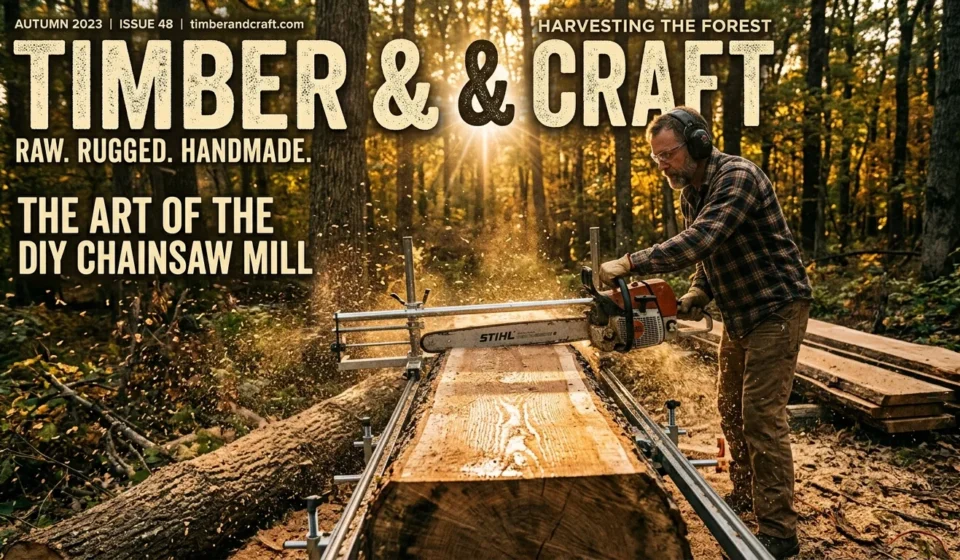
The most common and accessible milling attachment for homeowners is the Alaskan mill (also known as a slabber or chainsaw mill attachment). This is a simple, robust guide that clamps to your chainsaw bar, allowing you to make precise, consistent cuts. It essentially turns your chainsaw into a portable sawmill. These attachments are adjustable, letting you set your desired board thickness with ease. Some systems also incorporate a guide rail, often made from an aluminum ladder or a perfectly straight 2×4, which helps ensure your first cut is perfectly flat and straight – a critical step.
Chains: The Right Tooth for the Job
This is where many beginners make a mistake. You can use a standard cross-cutting chain, but it will be slow, generate a lot of heat, and dull quickly. For efficient milling, you need a ripping chain. Unlike a standard cross-cutting chain, which has a sharper, more aggressive angle designed to shear wood fibers across the grain, a ripping chain features a shallower, typically 10-degree cutting angle. This allows it to smoothly slice along the grain, producing a much cleaner cut with less resistance and heat build-up. Always keep several sharp ripping chains on hand, as they will still dull, especially if you hit any foreign objects in the log.
Other Essential Gear
Beyond the core milling setup, you’ll need a few other items: a peavey or cant hook for maneuvering logs, plastic or aluminum wedges to prevent the kerf (the cut slot) from pinching your bar, a reliable tape measure, marking chalk, and possibly a log arch or winch for larger logs. And, as always, never skimp on safety gear.
Setting Up Your Mill & Making the First Cut
So far, we’ve covered the ‘why’ and the ‘what’ of chainsaw milling. Now, let’s get down to the truly practical steps: how to actually set up your gear and make those first satisfying cuts.
Log Preparation and Stabilization
Before you even think about cutting, ensure your log is properly prepared and secured. Remove all branches, debris, and any dirt or small stones that could dull your chain. The log must be stable and elevated off the ground – use sturdy sawhorses, cribbing, or smaller logs to support it. A wobbly log is not only dangerous but will also lead to uneven cuts. Make sure it’s firmly chocked so it can’t roll or shift during milling.
Establishing Your First Cut: The Critical Step
The first cut is the most important one. It establishes the flat plane from which all subsequent cuts will be measured. For this, you’ll need a perfectly straight guide. Many use an aluminum ladder, a pair of straight 2x4s joined together, or specialized rail kits. This guide is temporarily secured to the top of your log, parallel to the direction you want your first slab to come off. Ensure it’s level and straight along its entire length. This guide allows your chainsaw mill attachment to glide smoothly, creating a perfectly flat initial surface. Without a straight first cut, every board you mill will be uneven.
The Milling Process: Technique and Patience
Once your guide is set and your chainsaw attachment is secured, it’s time to mill. Start your chainsaw and engage the chain. With even, steady pressure, push the chainsaw and mill attachment along your guide rail. Let the saw do the work; forcing it will lead to poor cuts, overheating, and premature wear on your equipment. Maintain a consistent speed, allowing the ripping chain to cleanly slice through the wood. As you mill, the kerf will fill with sawdust, so periodically clear it to prevent binding and ensure good visibility.
After the first slab is removed and you have a flat surface, you can remove your guide rail. The flat surface of the log now serves as your guide for subsequent cuts. Simply adjust your mill attachment to the desired board thickness and continue milling. But what if your first cut isn’t perfectly straight? Don’t panic! You can often use a longer straight edge to re-establish a new, straighter guide for a second “cleanup” cut, losing a little material but saving the rest of the log.
Safety First, Always!
Milling with a chainsaw is a powerful and potentially dangerous operation. Safety must be your absolute priority.
- Personal Protective Equipment (PPE): Always wear a helmet with face shield and hearing protection, chainsaw protective chaps, heavy-duty gloves, and steel-toe boots. No exceptions.
- Work Area: Ensure your work area is clear of trip hazards, stable, and free from bystanders, especially children or pets. Have an escape route planned.
- Fatigue: Chainsaw milling is physically demanding. Take frequent breaks to avoid fatigue, which can lead to mistakes. Stay hydrated.
- Kickback: While milling with an Alaskan mill attachment generally reduces the risk of kickback compared to freehand cutting, it’s still a powerful tool. Maintain a firm grip and be aware of your bar tip.
- Chainsaw Maintenance: A dull chain is a dangerous chain. Keep your ripping chains razor-sharp and properly tensioned. Always check your fuel and chain oil levels before starting.
Honestly, overlooking safety is the quickest way to turn a rewarding project into a regrettable one. Think through every step, and if something doesn’t feel right, stop and reassess.
Post-Milling: Drying and Using Your Lumber
Once you’ve milled your logs into beautiful planks, your work isn’t quite done. Freshly cut lumber, known as “green wood,” contains a lot of moisture and needs to be properly dried before it can be used for most projects. This process is called air drying or “seasoning.”
To air dry lumber, you need to “sticker” it. This means stacking your boards with small, evenly spaced strips of wood (called stickers) between each layer. These stickers allow air to circulate freely around every surface of every board. Place your stack on a level, solid foundation, raised off the ground, and ideally under a roof or tarp to protect it from direct rain and sun, which can cause warping or cracking. A good rule of thumb for drying time is one year per inch of thickness for most hardwoods, though this can vary based on species and climate. Patience here is key; rushing the drying process can ruin your beautiful, custom-milled lumber.
What can you build with your new lumber? The possibilities are endless! Think about custom furniture, garden beds, sheds, fencing, raised garden beds, or even small outbuildings. The unique character and custom dimensions of home-milled lumber can add a special touch to any project that store-bought wood simply can’t match.
Start Your Milling Journey Today!
Chainsaw milling is an incredibly empowering skill, transforming what might otherwise be waste into valuable resources. It connects you more deeply to your materials and offers immense satisfaction as you create something truly unique. From choosing the right powerful chainsaw, like those found at Best Professional Chainsaw, to mastering the precise cuts with your Alaskan mill and safely drying your timber, every step is a learning experience. Start small, prioritize safety, and enjoy the journey of turning logs into beautiful lumber right in your own backyard. Your next woodworking masterpiece could begin with a tree you milled yourself!