Mastering Chainsaw Kickback: Understand, Prevent, and React Safely
What Exactly is Chainsaw Kickback?
Let’s be blunt: chainsaw kickback is one of the most dangerous, unpredictable forces you’ll encounter when operating a chainsaw. It’s not just a minor jolt; it’s a sudden, violent, upward and backward thrust of the guide bar and chain towards the operator. Imagine trying to cut a piece of wood, and suddenly the saw decides it wants to come flying back at your face or chest. That’s kickback in a nutshell, and it happens with astonishing speed, often before you can even register what’s occurring. Understanding this force is the first step towards mastering your saw and keeping yourself safe.
Table Of Content
There are primarily two types of kickback, though they both lead to the same dangerous outcome. Rotational kickback is the most common and often the most severe. It occurs when the upper quadrant of the guide bar nose – what we call the "kickback zone" – makes contact with an object, or when the chain pinches in the cut. This contact causes the chain to momentarily stop or slow down, and the engine’s power, unable to drive the chain forward, translates into a rapid, upward, and backward rotational force of the entire saw. Think of it like a bicycle wheel hitting a curb head-on – the bike lurches violently.
The second type is pinch kickback, which happens when the wood closes in and pinches the chain in the cut, usually at the top or bottom of the guide bar. This can occur if the log isn’t properly supported, or if you’re cutting through wood under tension. When the chain gets pinched, the saw can be driven backward toward you, or pushed straight up. While less common than rotational kickback, it’s still incredibly dangerous and demands your full attention.
The Anatomy of Kickback: Why It Happens
Kickback isn’t some random act of fate; it’s a direct result of physics and, often, improper technique or equipment. Pinpointing the exact causes is crucial for prevention. The primary culprit, as I mentioned, is the kickback zone – that upper quadrant of the guide bar nose. This area has no chain running on the bottom of the bar to absorb the impact or pull the saw into the wood. Instead, it acts like a pivot point, and any contact here can unleash a powerful reactive force.
But it’s not just about where the bar hits. Several factors contribute to kickback. An improper cutting angle or trying to cut with just the tip of the bar (boring without proper technique, for example) significantly increases your risk. Imagine trying to pry open a lid with just the very tip of a screwdriver – it slips easily. A dull or improperly sharpened chain also plays a huge role. A sharp chain bites efficiently into the wood, pulling the saw forward. A dull chain, however, scrapes and bounces, making it much more likely to catch and initiate kickback. Honestly, this is one of the most overlooked aspects of chainsaw safety.
Another common scenario is cutting through brush or small limbs without proper control. Small branches can easily snag the kickback zone, whipping the saw back. Similarly, attempting to cut wood that is improperly supported, allowing it to shift or pinch the bar mid-cut, is a recipe for disaster. And then there’s your stance and grip. A weak, unbalanced stance or a loose grip drastically reduces your ability to control the saw, making you more vulnerable when kickback occurs.
Your Best Defense: Preventing Chainsaw Kickback
So far, we’ve covered what kickback is and why it happens. Now let’s get to the really critical point: how do you stop it before it even starts? Prevention is always your best strategy, and it involves a combination of proper technique, well-maintained equipment, and constant situational awareness.
Proper Stance and Grip
- Maintain a Firm Grip: Always hold the saw with both hands. Your left hand should firmly grip the front handle, thumb wrapped underneath, while your right hand holds the rear handle, controlling the throttle. This two-handed grip is non-negotiable.
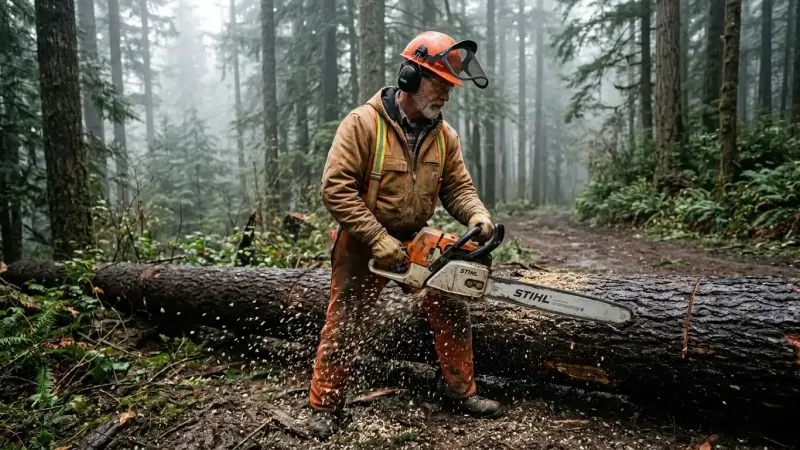
- Balanced Stance: Stand with your feet shoulder-width apart, one foot slightly forward, providing a stable base. Keep your weight balanced and your knees slightly bent. Your body should be slightly to the left of the cutting plane, not directly in line with the saw, so if kickback occurs, the saw is less likely to hit you.
- Keep Your Elbows Bent: Don’t lock your elbows. Keeping them slightly bent allows your arms to absorb some of the shock if kickback happens, giving you a better chance to maintain control.
Maintaining Your Chain and Bar
A sharp chain is not just about efficiency; it’s a vital safety feature. A properly sharpened chain cuts smoothly, reducing the likelihood of the chain catching or bouncing. Check your chain frequently for dullness or damage. Regularly inspect your guide bar for wear, especially at the tip. A worn bar tip can increase the risk of kickback. Always use low-kickback chains and guide bars – these are designed with features like guard links and reduced radius nose tips to minimize the kickback zone. Many homeowner-grade saws, like a Stihl MS 170 or Husqvarna 120 Mark II, come standard with these for good reason.
Strategic Cutting Techniques
- Avoid the Kickback Zone: As much as possible, keep the tip of the guide bar out of contact with the wood. Plan your cuts so you’re using the bottom or top of the bar, not the very nose.
- Full Throttle: Always engage the saw at full throttle before entering the wood and maintain it throughout the cut. A high chain speed is critical for smooth cutting and reduces the chance of the chain bogging down or catching.
- Clear the Area: Before starting a cut, clear away any small branches, vines, or debris that could snag the saw and cause kickback. This is especially true when felling trees or limbing.
- Proper Wood Support: Ensure logs are stable and properly supported to prevent pinching. When bucking a log on the ground, cut from the top down, then roll the log and finish the cut. If elevated, cut from the bottom up (underbucking) on the compression side, then from the top down (overbucking) on the tension side to avoid pinching.
When the Unthinkable Happens: How to React
Despite all precautions, kickback can still occur. It’s vital to know how to react in those split seconds. First and foremost, don’t panic. Your immediate, instinctive reaction might be to pull the saw towards you, but this is the worst thing you can do. Instead, the moment you feel that violent upward thrust, immediately release the throttle. This kills the power to the chain, bringing it to a stop.
Simultaneously, the chain brake should engage. Most modern chainsaws feature an inertia-activated chain brake designed to stop the chain within fractions of a second during a kickback event. As the saw is thrust upward, the inertia of the front hand guard trips the brake, locking the chain. This is why it’s so important to always keep your left hand on the front handle, ready to activate that brake if it doesn’t trip automatically. Never operate a saw with a malfunctioning chain brake – it’s a primary safety device.
Here’s a mini-scenario to illustrate: Imagine you’re limbing a fallen oak, and a smaller, unseen branch snags the very tip of your bar. WHAM! The saw lurches violently upwards. What do you do? Immediately release the throttle. Your firm, two-handed grip, with your left thumb wrapped around the handle, helps control the initial upward movement, and if the chain brake doesn’t engage automatically, the force of the kickback against your left hand should push the brake lever forward, stopping the chain. Hold onto the saw firmly, let the brake do its job, and regain your composure before assessing the situation. This isn’t about fighting the saw; it’s about letting its safety features and your trained reaction take over.
Choosing the Right Gear and Keeping It Maintained
Your equipment choice and its upkeep are foundational to kickback prevention. As I mentioned, always opt for low-kickback chains and guide bars. These are not just marketing buzzwords; they incorporate design elements like ramped depth gauges and guard links that physically reduce the chain’s tendency to bite too aggressively in the kickback zone. For homeowners and DIYers, choosing a saw with these features, often labeled with ‘reduced kickback’ or similar, is non-negotiable. Many saws you’ll find at Best Professional Chainsaw will explicitly list these safety features.
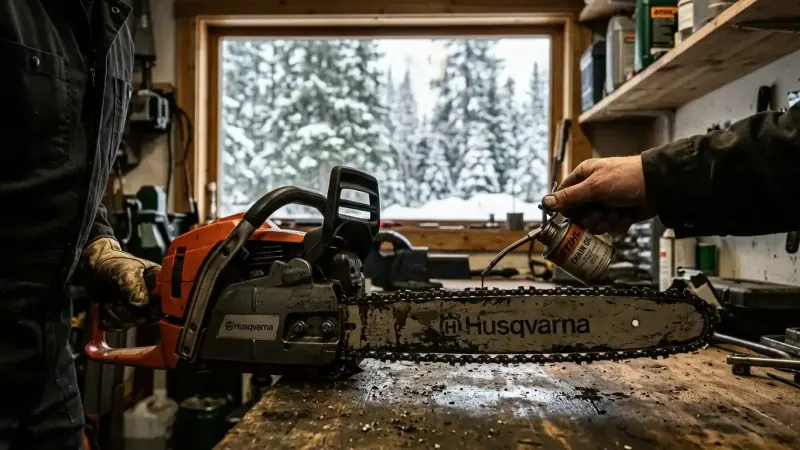
Beyond low-kickback components, ensure your chainsaw has a functional chain brake and test it every time you use the saw. Does it engage quickly? Does it hold the chain firmly? Never bypass or remove safety features. Furthermore, regularly check your chain tension – a loose chain can derail and also increase the risk of kickback. Keep your chain sharp, replace worn guide bars, and maintain proper chain lubrication. A well-lubricated chain reduces friction and operates more smoothly, lessening the chance of it binding in the wood.
In my opinion, investing a little time in understanding your saw’s manual and performing routine maintenance is just as important as knowing how to make a perfect cut. A well-maintained chainsaw is a safer chainsaw. Don’t skimp on your personal protective equipment (PPE) either: a hard hat, eye protection, ear protection, gloves, and chainsaw chaps are your last line of defense. They won’t prevent kickback, but they can significantly reduce the severity of injury if it does occur. Always prepare for the worst, even as you strive for the best.