



Battery Chainsaw Runtime: What to Expect
There’s nothing quite like the convenience of a battery-powered chainsaw. No fussy pull starts, no gas-oil mix, and no noisy exhaust fumes – just grab it, press a button, and you’re ready to cut. For many homeowners, landowners, and even some professionals, these tools have become indispensable. But if you’ve ever found yourself mid-cut, eyeing that last stubborn limb, only for your chainsaw to suddenly fall silent, you know the frustration. “How long will this battery last?” is the million-dollar question for anyone considering or already owning a battery chainsaw. It’s a question I hear all the time, and understanding the answer is key to maximizing your productivity and avoiding those unwelcome power interruptions.
Table Of Content
- Battery Chainsaw Runtime: What to Expect
- Decoding the Factors That Influence Your Battery Chainsaw’s Stamina
- The Power Couple: Battery Voltage (V) and Capacity (Ah)
- The Engine Under the Hood: Brushless Motors and Efficiency
- Bar Length, Chain Type, and the Wood You Cut
- Your Cutting Technique: A Hidden Power Drain
- Environmental Variables and Chainsaw Condition
- Mastering Your Battery Chainsaw: Practical Strategies to Extend Runtime
- Smart Battery Management: Charging, Storage, and Care
- Impeccable Chainsaw Maintenance: Sharpness is Key
- Adopt Efficient Cutting Practices
- Real-World Runtime Expectations and Smart Planning
- What to Expect from Different Battery Chainsaw Classes
- The Indispensable Spare Battery Strategy
- Choosing the Right Battery Chainsaw for Your Runtime Needs
- Matching the Tool to the Task
- Investing in a Robust Battery Ecosystem
The truth is, battery chainsaw runtime isn’t a fixed number printed on a box. It’s a dynamic equation influenced by a variety of factors, from the specific battery you’re using to the type of wood you’re cutting, and even your own technique. As an experienced arborist and outdoor power equipment specialist, I’ve seen firsthand how a little knowledge can make a huge difference in getting the most out of these incredible machines. This guide is designed to demystify battery chainsaw runtime, giving you the practical insights and actionable tips you need to work smarter, safer, and longer.
Decoding the Factors That Influence Your Battery Chainsaw’s Stamina
Before we can talk about extending runtime, we first need to understand what makes it tick. Think of your battery chainsaw as a team of components all working together, and each plays a role in how long you can keep cutting. Knowing these factors will empower you to make informed decisions, both when purchasing a saw and when using it in the field.
The Power Couple: Battery Voltage (V) and Capacity (Ah)
At the heart of every battery chainsaw is, of course, the battery itself. Two key specifications will tell you the most about its potential energy: voltage (V) and ampere-hours (Ah). Voltage represents the “push” or electrical potential, indicating the power output of the battery. Higher voltage generally means more raw power for tougher cuts. Capacity, measured in ampere-hours (Ah), tells you how much energy the battery can store, essentially its “fuel tank” size. A higher Ah rating means more fuel, and therefore, longer potential runtime.
To get a true sense of the battery’s total energy, we often look at Watt-hours (Wh), which is simply Voltage multiplied by Ampere-hours (V x Ah = Wh). For example, a 40V 4Ah battery provides 160 Wh of energy, while a 60V 2.5Ah battery also provides 150 Wh. While the 60V battery might deliver more instantaneous power, the 40V 4Ah would offer slightly longer runtime if both were used for the same, lighter task, assuming identical chainsaw efficiency. Many modern battery chainsaws operate in the 40V, 60V, or even 80V range, often paired with batteries ranging from 2.5 Ah to 8.0 Ah. For instance, a homeowner clearing brush might find a 40V 4Ah system like some Greenworks models perfectly adequate, whereas a professional felling medium trees might opt for a Stihl MSA 220 C-B with its AP 300 S battery (36V, 7.8Ah, 281 Wh) for significantly extended work sessions.
The Engine Under the Hood: Brushless Motors and Efficiency
Not all electric motors are created equal. Modern battery chainsaws overwhelmingly feature brushless motors, and for good reason. Unlike older brushed motors, brushless designs are significantly more efficient, converting a higher percentage of battery power into cutting force rather than wasted heat. This improved efficiency directly translates to longer runtime on a single charge and often provides more torque for demanding tasks. When shopping for a battery chainsaw, always prioritize models with brushless motors for superior performance and battery life.
A well-designed brushless motor also offers greater durability and requires less maintenance compared to its brushed counterparts, as there are no carbon brushes to wear out. This means not only do you get more cuts per charge, but your chainsaw will likely have a longer lifespan, making it a smarter long-term investment. Manufacturers like DeWalt, EGO, and Husqvarna prominently feature advanced brushless motor technology in their battery chainsaw lines, contributing greatly to their impressive runtimes.
Bar Length, Chain Type, and the Wood You Cut
The business end of your chainsaw – the bar and chain – has a substantial impact on runtime. A longer guide bar, say 18 inches compared to 12 inches, requires more power from the motor to pull the chain through the cut, thus draining the battery faster. Similarly, the type of chain matters. An aggressive, full-chisel chain designed for fast cutting will draw more power than a semi-chisel or low-profile chain, especially when dealing with tough wood. This is a crucial consideration: matching your bar and chain to the task at hand is not just about efficiency, but also about battery conservation.
Perhaps the most significant external factor is the wood itself. Cutting softwoods like pine and cedar is far less demanding on your battery than tackling dense hardwoods such as oak, maple, or hickory. The diameter of the wood also plays a role; making repeated small cuts will generally consume less power overall than trying to fell a large, thick tree in a single pass. For example, a 60V battery chainsaw with an 18-inch bar might clear a pile of 4-inch pine branches for 45 minutes, but might only last 20 minutes when bucking 12-inch oak logs.
Your Cutting Technique: A Hidden Power Drain
Just like with a gas saw, how you operate a battery chainsaw significantly impacts its performance and, crucially, its runtime. A heavy-handed approach, where you push the saw too hard into the wood, forces the motor to work overtime, rapidly depleting the battery. This “forcing” also creates more friction and heat, which are enemies of efficiency. Instead, let the saw do the work; guide it with moderate, consistent pressure, allowing the chain to bite and pull itself through the wood.
Smooth, controlled cuts are not only safer, reducing the risk of kickback, but they are also far more energy-efficient. Avoid jerky movements or twisting the saw in the cut, which can bind the chain and overload the motor. Think of it like driving a car – smooth acceleration and steady speed use less fuel than sudden stops and starts. Mastering a deliberate, measured cutting technique is one of the easiest and most effective ways to extend your battery chainsaw’s working time.
Environmental Variables and Chainsaw Condition
Believe it or not, the weather can affect your battery’s performance. Extreme cold temperatures can temporarily reduce battery capacity and power output. While modern lithium-ion batteries are robust, working in freezing conditions will generally yield shorter runtimes than working on a mild day. Conversely, excessive heat can also be detrimental, especially during charging or if the battery gets too hot during heavy use. Always store and charge your batteries within the manufacturer’s recommended temperature ranges.
Finally, the overall condition of your chainsaw impacts runtime. A dull chain, for example, forces the motor to work much harder to cut, consuming significantly more power than a razor-sharp one. Similarly, a chain that’s improperly tensioned – either too loose or too tight – increases friction and reduces efficiency. Regular cleaning of the saw, especially around the chain and bar groove, also ensures smooth operation and prevents unnecessary power drain from debris buildup.
Mastering Your Battery Chainsaw: Practical Strategies to Extend Runtime
Now that we understand the variables, let’s translate that knowledge into actionable steps. These are the strategies I share with my clients and fellow enthusiasts to get the absolute most out of their battery chainsaws, turning potential frustration into satisfying productivity.
Smart Battery Management: Charging, Storage, and Care
Your battery is the lifeblood of your chainsaw, and proper care is paramount for both runtime and longevity. Firstly, always use the charger specifically designed for your battery pack; using off-brand chargers can damage the battery or reduce its lifespan. Secondly, avoid completely draining your battery to 0% if possible. While modern lithium-ion batteries handle deep discharges better than older battery chemistries, consistently running them to empty can still put undue stress on the cells. Aim to recharge when the battery indicator shows 10-20% remaining.
For storage, keep your batteries in a cool, dry place away from direct sunlight and extreme temperatures. If storing for extended periods (e.g., over winter), it’s often recommended to store lithium-ion batteries at around a 50-70% charge, rather than fully charged or fully depleted. This practice helps maintain cell health and minimizes self-discharge. Never leave a battery on a charger indefinitely, as “trickle charging” can sometimes reduce its overall lifespan. Treat your batteries well, and they’ll return the favor with consistent power and extended runtime.
Impeccable Chainsaw Maintenance: Sharpness is Key
This cannot be stressed enough: a sharp chain is not just a luxury, it’s a necessity for optimal runtime and safety. A dull chain doesn’t cut; it scrapes and tears, forcing your motor to strain and draw excessive power. I often tell people that sharpening your chain is like giving your chainsaw a fresh tank of gas – it instantly improves efficiency. Learn to sharpen your chain regularly, or have it professionally sharpened. You’ll notice an immediate difference in cutting speed and, consequently, how long your battery lasts.
Beyond sharpness, pay attention to chain tension. A chain that’s too loose can derail, posing a safety risk, and one that’s too tight creates excessive friction, wasting battery power. Check the tension frequently, especially as the chain heats up and stretches during use. Keep the guide bar groove clean of sawdust and debris, and ensure the bar oiler is functioning correctly. Proper lubrication reduces friction, which directly impacts power draw. A well-maintained chainsaw glides through wood with minimal effort, preserving precious battery life.
Adopt Efficient Cutting Practices
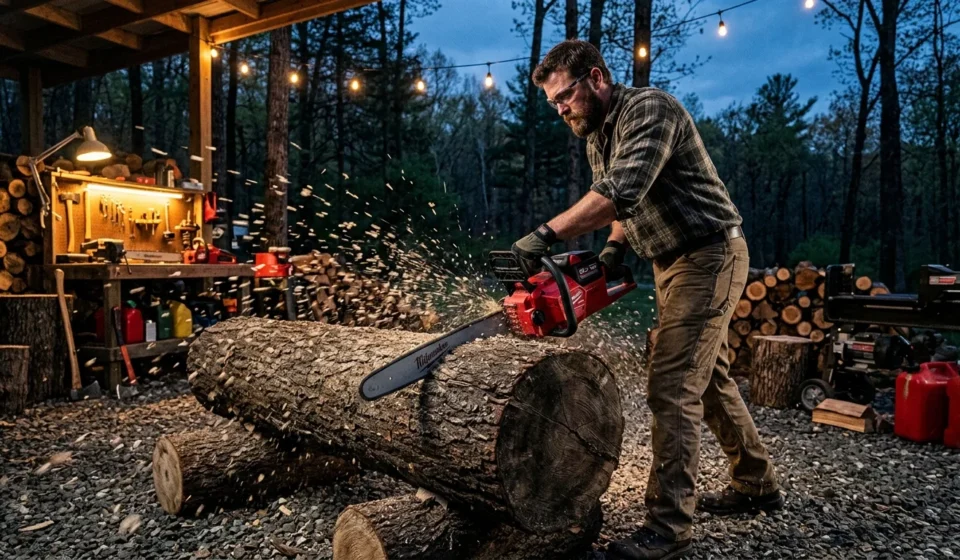
Your approach to cutting can significantly impact how long your battery lasts. Instead of trying to power through the thickest part of a log in one go, consider making multiple, shallower cuts. This allows the motor to maintain a more consistent, efficient RPM rather than constantly surging under heavy load. When bucking larger logs, use techniques like boring cuts or plunge cuts to create relief, reducing the amount of wood the chain needs to cut simultaneously.
Always clear the area around your workpiece to ensure you have a stable stance and clear sightlines, which allows for smoother, more controlled cuts. Plan your cuts to avoid binding the bar, which can cause sudden power spikes and even lead to kickback. By adopting a methodical and thoughtful cutting strategy, you’ll not only enhance safety but also dramatically improve your chainsaw’s runtime. It’s about working smarter, not harder, with your battery-powered tool.
Real-World Runtime Expectations and Smart Planning
So, what can you realistically expect from a battery chainsaw in terms of runtime? It’s crucial to manage expectations, as marketing claims often reflect ideal, light-load scenarios. Your actual runtime will vary, but understanding general performance categories can help you plan your work effectively.
What to Expect from Different Battery Chainsaw Classes
For light-duty tasks, such as pruning small branches (up to 4-6 inches in diameter) or clearing brush, a typical 40V 4Ah battery on a 10-12 inch bar chainsaw might give you 30-45 minutes of intermittent cutting. This is usually plenty for quick yard cleanups. Models like the Greenworks 40V 12-inch or the Ryobi 40V 12-inch are good examples in this category.
Moving up to medium-duty work – bucking firewood from 6-12 inch diameter logs, or felling smaller trees – you’ll want a 60V or 80V system with a 14-18 inch bar and a 4Ah to 6Ah battery. A DeWalt 60V MAX 16-inch chainsaw with a 5Ah battery, for instance, might provide 20-30 minutes of continuous cutting on medium hardwoods, or significantly more if you’re making intermittent cuts on softer wood. The Husqvarna 540i XP, a professional-grade battery saw, combined with a BLi300 battery (36V, 8.4Ah), offers impressive power and extended runtime for felling and limbing, often comparable to a 40cc gas saw for sustained work.
For heavy-duty tasks, like processing large amounts of firewood or felling larger trees, professional-grade battery saws with high-capacity batteries (e.g., Stihl MSA 300 C-O with AP 500 S battery, or Husqvarna 572i XP equivalent with two BLi300s) are designed for longer, more demanding work. Expect 15-25 minutes of continuous heavy cutting, but these systems are usually part of a larger battery ecosystem, meaning you’ll likely have multiple batteries on hand. Remember, these are rough estimates; the actual runtime will always depend on the wood, the chain, and your technique.
The Indispensable Spare Battery Strategy
The single most effective way to ensure uninterrupted work with a battery chainsaw is to invest in at least one, if not two, spare batteries. This might seem obvious, but it’s often overlooked. While one battery is in use, another can be charging, creating a near-continuous workflow. For larger projects, this strategy is not just convenient; it’s essential. Imagine having to stop work for an hour or more just to wait for a battery to recharge – that’s valuable time lost.
When purchasing your chainsaw, consider buying a kit that includes multiple batteries, or budget for extra batteries separately. Many manufacturers offer battery systems where the same batteries can power a range of tools (e.g., leaf blowers, string trimmers), adding further value to your investment. Having a fully charged backup ready to go means you can tackle larger tasks with confidence, knowing that a mid-job power outage is easily remedied by a quick battery swap.
Choosing the Right Battery Chainsaw for Your Runtime Needs
Ultimately, making the right choice for your battery chainsaw comes down to aligning its capabilities with your specific needs. Don’t overbuy, but certainly don’t underbuy – either extreme can lead to frustration with runtime.
Matching the Tool to the Task
Before you even look at models, take an honest inventory of the typical tasks you’ll be performing. Are you primarily pruning small limbs around the yard a few times a year? A lighter, less powerful 40V system with a 12-inch bar will likely suffice, offering excellent maneuverability and decent runtime for those intermittent tasks. If you’re a landowner regularly clearing fallen branches, bucking firewood, or tackling small-to-medium tree felling, you’ll benefit greatly from a 60V or 80V system with a 16-18 inch bar and higher Ah batteries. These saws strike a good balance between power, weight, and runtime for more demanding, yet still homeowner-centric, work.
For professionals or those with extensive acreage and serious wood-cutting needs, investing in a top-tier, high-voltage (e.g., 36V professional series from Stihl or Husqvarna) battery chainsaw with large-capacity batteries and a robust charging infrastructure is the way to go. These saws are designed for sustained, heavy-duty use, often competing directly with smaller gas chainsaws in terms of performance, though they will always require multiple batteries for all-day operation. By accurately assessing your typical workload, you can select a chainsaw and battery combination that delivers the runtime you need without unnecessary expense or frustrating limitations.
Investing in a Robust Battery Ecosystem
Beyond the chainsaw itself, consider the broader battery ecosystem offered by the manufacturer. Many brands – such as EGO, DeWalt, Stihl, Husqvarna, and Greenworks – have developed extensive lines of outdoor power equipment that all run on the same battery platform. This means that a battery you buy for your chainsaw might also power your leaf blower, string trimmer, or hedge trimmer. Investing in a system like this can be incredibly cost-effective in the long run, as you can share batteries across multiple tools, ensuring you always have a charged one ready for any task.
When you’re comparing systems, look not just at the chainsaw’s performance, but also at the range of available battery capacities and charger speeds. Faster chargers can significantly reduce downtime between battery swaps, further enhancing your overall productivity. Think of it as building a versatile toolkit; a strong battery ecosystem ensures your investment provides maximum utility and minimizes the headaches of incompatible power sources. Understanding battery chainsaw runtime isn’t just about avoiding a dead battery; it’s about smart planning, proper maintenance, and choosing the right tool for the job to ensure safe, efficient, and satisfying work every time you pick up your saw.