

After a decade spent working with chainsaws, from clearing storm debris to felling mature trees, one truth stands above all others: safety is paramount. It’s not just a suggestion; it’s the bedrock upon which all efficient and effective chainsaw work is built. Ignoring safety protocols doesn’t make you faster; it makes you a statistic. Before you even think about starting that engine, let’s talk about equipping yourself properly and understanding the critical risks.
Table Of Content
- Mastering the Stance & Grip: Your Control Center
- Core Cutting Techniques for Common Tasks
- Felling Trees: Precision and Planning
- Limbing and Bucking: Breaking Down the Tree
- Optimizing Efficiency: Beyond the Cut
- The Power of a Sharp Chain
- Matching the Saw to the Job
- Troubleshooting & Advanced Tips from the Field
- Proactive Kickback Prevention
- Regular Maintenance: Your Saw’s Lifeline
- An Anecdote on Learning and Respect
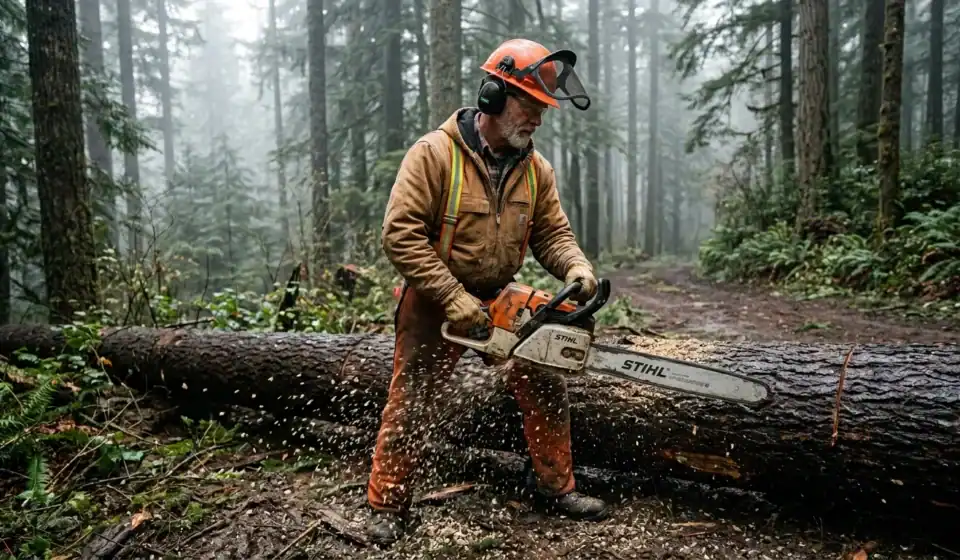
Your Personal Protective Equipment (PPE) is your first line of defense. This isn’t optional gear for professionals; it’s essential for anyone operating a chainsaw. At a minimum, you need a sturdy helmet with an integrated face shield (mesh is excellent for visibility and ventilation) and hearing protection (earmuffs are ideal for consistent noise). Chainsaw protective chaps or pants, often made from layers of Kevlar or Dyneema, are critical; they’re designed to snag and stop a moving chain in milliseconds, preventing severe leg injuries. Don’t forget robust work gloves for grip and vibration dampening, and steel-toe work boots with good ankle support to protect your feet and ensure stable footing.
Beyond gear, understanding the inherent dangers of a chainsaw is crucial. The primary risks include kickback, pushback, pull-in, falling objects, and entanglement. kickback, the sudden, violent upward and backward rotation of the saw, occurs when the nose or tip of the guide bar strikes an object or gets pinched. Pushback happens when the top of the bar contacts wood, pushing the saw back towards you. Pull-in occurs when the bottom of the chain contacts wood, pulling the saw forward. Always be aware of your surroundings, potential hazards like unstable branches or logs, and always have a clear escape route planned, especially when felling trees. Remember, a moment of complacency can lead to a lifetime of regret.
Mastering the Stance & Grip: Your Control Center
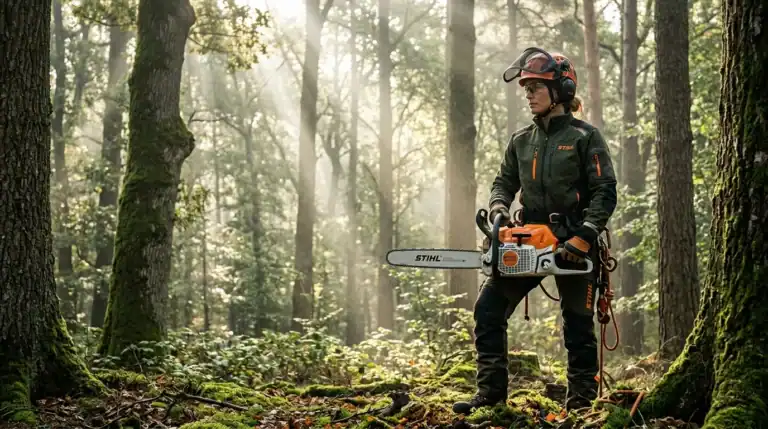
Once you’re geared up and aware of the risks, the next step towards safe and efficient cutting is mastering your physical interaction with the saw. Your stance and grip dictate your control, balance, and ultimately, your ability to execute precise cuts while mitigating kickback risks. Think of it as preparing for a dance – your body needs to be ready to move with the saw, not against it.
A proper stance is wide and stable, with your feet roughly shoulder-width apart, one foot slightly forward of the other. This gives you a balanced base and allows you to shift your weight and pivot smoothly. Always maintain three points of contact with the ground – your two feet and the saw, or your two feet and one hand if you’re briefly repositioning. Avoid leaning directly over the saw, especially when making cuts; instead, keep the saw to the side of your body, allowing your arms to absorb force and maintain control. Your knees should be slightly bent, ready to flex and absorb any unexpected movements.
The grip is equally vital. Always use two hands on the chainsaw’s handles: your left hand firmly on the front handle, thumb wrapped around it for maximum control, and your right hand on the rear handle, operating the throttle and safety trigger. This “thumb-wrap” technique on the front handle is crucial for preventing the saw from wrenching out of your grip during a kickback event. Keep your elbows slightly bent and tucked in, not locked straight, as this provides better leverage and reduces fatigue. Never operate a chainsaw with one hand, no matter how small the cut or how tempting it might seem; it’s an open invitation for disaster.
Core Cutting Techniques for Common Tasks
With safety as your guide and a solid stance established, it’s time to delve into the practical artistry of chainsaw work. Efficient cutting isn’t just about raw power; it’s about understanding wood mechanics, anticipating forces, and applying the right technique for the job. Here are the core methods I’ve honed over a decade, designed to make your work safer and more productive.
Felling Trees: Precision and Planning
Felling a tree is arguably the most dangerous chainsaw operation and demands meticulous planning. Never attempt to fell a tree without proper training and an understanding of its lean, the wind, and potential hazards. The goal is to create a controlled fall in a predetermined direction. This involves two main cuts: the directional notch and the felling cut.
- Directional Notch (Face Notch): This cut guides the tree’s fall. It’s made on the side of the tree facing your intended felling direction. A common and highly effective notch is the Open-Face Notch (Humboldt or 70-degree notch), which offers excellent control and a clean break. It consists of a horizontal cut made at about 1/5th to 1/3rd of the tree’s diameter, followed by an angled cut (usually 70-90 degrees) meeting the horizontal cut to remove a wedge of wood. This creates a strong hinge.
- Felling Cut (Back Cut): This cut is made on the opposite side of the tree from the notch, slightly above the apex of the notch. The critical element here is to leave a “hinge” of uncut wood between the notch and the felling cut, typically 10% of the tree’s diameter. This hinge acts as a pivot, controlling the direction and speed of the fall. I often use a bore cut (plunge cut) for the felling cut, plunging the bar through the center of the tree from the back, then cutting outwards towards the sides, carefully leaving the hinge intact. This technique significantly reduces the risk of the tree splitting prematurely or “barber chairing,” where the tree splits vertically up the trunk. Always ensure your escape route is clear before starting the felling cut, moving at a 45-degree angle away from the direction of fall.
Limbing and Bucking: Breaking Down the Tree
Once a tree is on the ground, the work shifts to limbing (removing branches) and bucking (cutting the trunk into manageable lengths). These tasks, while seemingly straightforward, are where many pinch point injuries and kickbacks occur.
- Limbing: Always work from the butt (base) of the tree towards the tip, removing smaller branches first. This creates a safer working area. Identify branches under tension – these are “spring poles” – which can snap back violently when cut. Undercut any branch that might pinch the bar or spring back, then finish from the top. Keep the main trunk between you and the chainsaw as much as possible, using it as a barrier. For smaller limbs (under 2-3 inches), you can often make a single top-down cut. For larger limbs, especially those supporting the trunk, make an initial undercut (about 1/3rd of the branch diameter) from the bottom, then finish with a top cut. This prevents the branch from splitting and pinching your bar.
- Bucking: This involves cutting the trunk into desired lengths. The key here is to understand the forces at play within the log. Look for “pinch points” – areas where the log is supported or resting, causing compression or tension.
- Log Supported at Both Ends (Tension on Top): Make your first cut from the top, about 1/3rd of the way through. Then, finish the cut from the bottom, meeting the first cut. This relieves tension and prevents the log from pinching your bar.
- Log Supported in the Middle (Tension on Bottom): Make your first cut from the bottom, about 1/3rd of the way through. Then, finish from the top, meeting the undercut.
- Logs on Flat Ground: If a log is fully on the ground, make cuts from the top down, but leave a few inches of uncut wood at the very bottom. Roll the log over, then finish the cuts from the other side. This protects your chain from hitting the dirt, which dulls it instantly. Using log rollers or sawbucks can elevate logs, making bucking safer and easier.
A crucial technique for bucking is the “three-point contact” method, where the saw always rests on the log, providing stability before, during, and after the cut. This minimizes arm fatigue and maximizes control.
Optimizing Efficiency: Beyond the Cut
Efficiency with a chainsaw isn’t just about how fast you can make a cut; it’s about the entire process – from planning and preparation to maintenance and consistent performance. Over the years, I’ve learned that a sharp chain, a well-maintained saw, and thoughtful planning are often more impactful than sheer engine horsepower.
The Power of a Sharp Chain
A sharp chain is the single greatest factor in cutting efficiency and safety. A dull chain doesn’t cut; it tears, generating excessive heat, sawdust (not chips), and requiring significantly more effort and pressure, which increases fatigue and the risk of kickback. You’ll notice your saw trying to “walk” sideways or bog down even in softwoods.
Learning to sharpen your own chain is a skill every chainsaw owner should master. Use a round file of the correct diameter for your chain’s pitch (e.g., 5/32″ for .325″ pitch, 7/32″ for 3/8″ pitch). Maintain the correct filing angle (typically 25-30 degrees, check your manufacturer’s recommendations) and ensure your depth gauges (rakers) are filed down to the correct height. Rakers control the depth of cut; if they’re too high, the chain won’t bite; if they’re too low, it will grab aggressively and increase kickback risk. I personally check my chain after every few tanks of fuel or if I suspect it’s hit anything hard. A few minutes with a file can save hours of frustration and vastly improve performance.
Matching the Saw to the Job
Using the right chainsaw for the task at hand is another cornerstone of efficiency. Trying to fell a large oak with a small homeowner saw is both dangerous and frustratingly slow. Conversely, using an oversized professional saw for small limbing tasks is overkill and tiring.
- Homeowner/Light Duty (e.g., Stihl MS 170, Husqvarna 120 Mark II): These typically feature 14-16 inch guide bars and engine displacements of 30-40cc. Perfect for light pruning, clearing small brush, and bucking firewood up to 10-12 inches in diameter.
- Landowner/Farm & Ranch (e.g., Stihl MS 271 Farm Boss, Husqvarna 455 Rancher): With 18-20 inch bars and 50-60cc engines, these saws are versatile workhorses. They handle larger firewood, occasional felling of medium-sized trees (up to 16-18 inches), and extensive storm cleanup. This is often the sweet spot for many serious DIYers.
- Professional/Heavy Duty (e.g., Stihl MS 462, Husqvarna 572 XP): Designed for sustained, demanding work, these saws boast 20+ inch bars (often up to 32 inches or more) and engines well over 70cc. They are built for felling large timber, milling, and commercial logging operations.
Consider your most frequent tasks and invest in a saw that comfortably handles them. You’ll find the work far more enjoyable and efficient.
Troubleshooting & Advanced Tips from the Field
Even with perfect technique, challenges arise. Logs shift, saws act up, and unexpected situations demand quick thinking. Here are some insights from years in the field, including deeper dives into kickback prevention and general best practices.
Proactive Kickback Prevention
We’ve touched on kickback, but let’s be blunt: it’s one of the most feared and dangerous occurrences. To truly minimize its risk, cultivate an awareness of the “kickback zone” – the upper quadrant of the guide bar’s tip. Never make contact with wood using this area unless you are intentionally performing a bore cut with extreme caution and control. Always engage the chain brake before starting the saw, and ensure it functions correctly by testing it regularly. Many modern saws feature a low-kickback chain and bar, but these are aids, not substitutes for proper technique. Maintain a firm, two-handed grip with thumbs wrapped, keep a stable stance, and always cut at full throttle. A saw running at less than full speed has less power to push through wood, making it more prone to kickback if it binds.
My personal rule: if a cut feels awkward or unstable, stop. Reposition yourself, re-evaluate the log, or find an alternative approach. There’s no prize for forcing a dangerous cut.
Regular Maintenance: Your Saw’s Lifeline
An efficient cutting experience relies heavily on a saw that runs reliably. Basic maintenance is not just about extending your chainsaw’s life; it’s about ensuring predictable performance when you need it most. After every use, clean debris from the air filter, cooling fins, and around the spark plug. Check your chain tension – it should be snug but still allow the chain to be pulled freely around the bar by hand. Periodically remove the guide bar and clean the groove, ensuring the oil port is clear, and flip the bar to promote even wear. Replace your spark plug annually or as recommended, and always use fresh, correctly mixed fuel. Ethanol-free fuel is highly recommended if available, as ethanol can degrade fuel lines and carburetors over time.
An Anecdote on Learning and Respect
I remember early in my career, feeling invincible with a brand new, powerful saw. I was bucking a particularly gnarly, twisted section of hardwood, pushing hard, when the chain pinched. In my impatience, I tried to muscle it out. The saw bucked violently, and only thanks to my training and quick reflexes (and thankfully, my chaps!), the chain brake engaged just as the bar tip flew past my knee. It was a stark reminder that even with experience, respect for the machine and the wood is non-negotiable. That day solidified my conviction: slow, deliberate, and safe technique will always outperform rushed, reckless power. Every cut is an opportunity to learn, refine, and reinforce safe habits.
Ultimately, becoming proficient with a chainsaw is a journey that combines knowledge, practice, and an unwavering commitment to safety. By understanding the principles behind each cut, maintaining your equipment, and approaching every task with respect, you’ll not only work more efficiently but also ensure you come home safely at the end of the day. Happy cutting!