


As a chainsaw expert with years of experience in the field, I can tell you that the secret to a high-performing, long-lasting chainsaw isn’t just about buying a quality machine; it’s about how you care for it. Think of your chainsaw as an athlete – would you expect peak performance without proper training, nutrition, and recovery? Absolutely not. The same principle applies here. Proactive, regular maintenance is the cornerstone of safe and efficient chainsaw operation, turning a potential headache into a reliable workhorse.
Table Of Content
- Pre-Cut & Post-Cut Checks: The Daily Grind of a Pro
- Pre-Cut Inspection: Ensuring Readiness Before the First Cut
- Post-Cut Cleaning & Basic Care: Putting Your Saw to Bed Properly
- Deep Dive into Key Components: Monthly & Seasonal Maintenance
- Sharpening the Chain Like a Master
- Air Filter: The Lungs of Your Chainsaw
- Spark Plug: Ignition Heartbeat
- Fuel Filter: Keeping the Engine Clean
- Guide Bar Care: The Cutting Edge
- Clutch & Sprocket Inspection
- Fuel and Lubrication: The Lifeblood of Your Machine
- Fuel Mix & Storage: Powering Your Two-Stroke Engine
- Bar & Chain Oil: Essential Lubrication for Cutting Components
- Winterizing (Seasonal Storage): Preparing for Downtime
- Troubleshooting Common Issues & When to Call a Pro
- Common Chainsaw Problems and DIY Solutions
- When to Call a Professional Chainsaw Technician
Neglecting your chainsaw, even for a short period, can lead to a cascade of problems. A dull chain doesn’t just cut poorly; it forces you to push harder, increasing fatigue, kickback risk, and strain on the engine. A clogged air filter starves your engine of oxygen, leading to reduced power, inefficient fuel consumption, and premature wear. I’ve seen countless homeowners struggle with saws that simply wouldn’t start, only to find a simple, neglected maintenance item was the culprit. Investing a little time in maintenance now will save you significant frustration, costly repairs, and potential hazards down the line.
Beyond extending the life of your equipment and ensuring optimal performance, consistent maintenance is fundamentally about safety. A well-maintained chainsaw operates predictably, reducing the risk of unexpected malfunctions that can lead to serious injuries. By following the step-by-step guidance in this expert guide, you’ll not only keep your chainsaw running like new but also dramatically improve your safety every time you fire it up. Let’s dive in and transform your maintenance routine from a chore into a professional habit.
Pre-Cut & Post-Cut Checks: The Daily Grind of a Pro
The hallmark of a true chainsaw professional isn’t just their cutting technique, but their rigorous attention to detail before and after every use. These routine checks are quick, yet incredibly effective in preventing problems and ensuring your saw is always ready for action. Adopt these habits, and you’ll immediately elevate your chainsaw game.
Pre-Cut Inspection: Ensuring Readiness Before the First Cut
Before you even think about starting your chainsaw, take a few moments for a thorough visual and functional inspection. This isn’t just a recommendation; it’s a critical safety protocol. Always ensure you’re wearing appropriate Personal Protective Equipment (PPE) such as heavy-duty gloves and eye protection during these checks.
- Fuel and Bar & Chain Oil Levels: Check both tanks. Ensure your fuel is fresh and correctly mixed for two-stroke engines (typically 50:1 for modern saws, meaning 50 parts gasoline to 1 part two-stroke oil). For the oil reservoir, ensure it’s topped up with quality bar and chain oil. Running out of either mid-cut is not only inconvenient but can also damage your saw.
- Chain Tension: The chain should be snug on the guide bar, but still able to be pulled freely by hand along the bar, typically lifting no more than 1/8 to 1/4 inch off the bottom of the guide bar at the center. An overly loose chain can derail, causing injury or damage, while an overly tight chain puts excessive strain on the engine and bar.
- Chain Sharpness and Condition: Visually inspect each cutter. Are they sharp and free of nicks or burrs? A dull chain is inefficient and dangerous. Also, check for any cracked or damaged drive links, rivets, or tie straps. Replace a damaged chain immediately.
- Guide Bar Condition: Check the guide bar for any burrs along the rails, excessive wear, or discoloration from overheating. Ensure the oiler hole is clear and not clogged with sawdust.
- Controls and Safety Features: Test the chain brake to ensure it engages and disengages properly. Verify the throttle trigger lockout works, preventing accidental acceleration. Check that all handles and guards are securely fastened.
Post-Cut Cleaning & Basic Care: Putting Your Saw to Bed Properly
Once the cutting is done, resist the urge to just toss the chainsaw aside. A few minutes of post-cut cleaning will make a huge difference in its longevity and performance.
- Remove Sawdust and Debris: Use a brush or compressed air to clear sawdust, wood chips, and sap from the guide bar, chain, and engine housing. Pay special attention to the sprocket cover area, cooling fins, and air intake. Built-up debris can hinder cooling and cause components to wear faster.
- Clean the Guide Bar Groove: Use a flat-head screwdriver or a specialized bar groove cleaner (like Oregon’s bar groove cleaner) to remove packed sawdust from the guide bar’s groove. This ensures proper chain lubrication and prevents premature wear.
- Inspect and Loosen Chain (if storing for extended periods): While not always necessary after every short use, if you’re storing the saw for more than a few days, slightly loosen the chain tension. This prevents the chain from stretching or binding as it cools, especially important in fluctuating temperatures.
- Wipe Down: Give the entire saw a quick wipe down with a clean rag. This helps remove sap and grime that can harden and become difficult to remove later.
Deep Dive into Key Components: Monthly & Seasonal Maintenance
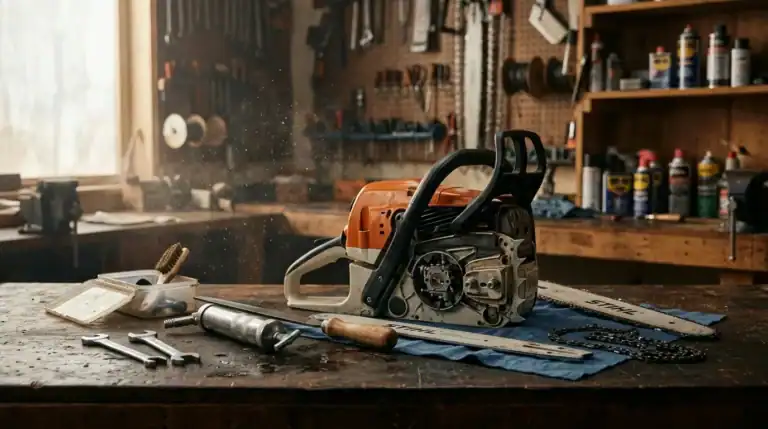
While daily checks keep things ticking, a professional maintenance regimen involves periodic, more in-depth attention to critical components. These steps ensure your chainsaw’s internal systems are functioning optimally, preventing major breakdowns and extending its service life considerably. Aim to perform these tasks at least monthly for regular users, or seasonally for occasional users.
Sharpening the Chain Like a Master
A sharp chain is the single most impactful factor for cutting efficiency, safety, and operator comfort. Dull chains tear at the wood, produce fine sawdust instead of chips, and require excessive force, increasing kickback risk. Mastering sharpening is essential.
You’ll need a round file (correct size for your chain pitch), a flat file, a depth gauge tool, and a filing guide (optional but highly recommended for consistency). For example, if you have a common .325″ pitch chain (found on many homeowner saws like the Stihl MS 271 Farm Boss or Husqvarna 455 Rancher), you’ll typically use a 5/32″ (4.0mm) round file. For a 3/8″ pitch chain, a 3/16″ (4.8mm) file is standard. Always consult your chainsaw’s manual for the precise file size.
- Secure the Chainsaw: Clamp the guide bar in a vise or use a stump vise to hold the saw steady. Engage the chain brake.
- Identify the Shortest Cutter: Start with the shortest cutter, as it dictates the length for all others.
- Find the Angles: Chainsaw cutters typically have two angles: the top plate filing angle (usually 25-35 degrees, 30 degrees is common) and the side plate angle. Use a filing guide to maintain consistency.
- File Each Cutter: Place the round file into the gullet between the top plate and the depth gauge. File from the inside of the cutter towards the outside, using smooth, even strokes. Apply pressure only on the forward stroke. Count the strokes for each cutter (e.g., 3-5 strokes) and apply the same number to all cutters on that side. Sharpen all cutters facing one direction, then flip the saw and sharpen the others.
- Check Depth Gauges: After sharpening a few times, the depth gauges (or rakers) will become too high, reducing the cutter’s ability to bite. Use a flat file and a depth gauge tool to file down the rakers until they are level with the gauge, ensuring a consistent chip size.
Remember, consistency is key. Every cutter should be equally sharp and have the same depth gauge setting for optimal performance. A personally favored tool for beginners is an Oregon filing kit, which often includes a round file, flat file, and depth gauge tool, simplifying the process.
Air Filter: The Lungs of Your Chainsaw
The air filter prevents sawdust and debris from entering your engine’s carburetor and cylinders, which could cause catastrophic damage. A clogged filter chokes the engine, leading to loss of power, poor fuel economy, and overheating.
- Access the Filter: Remove the air filter cover, usually located on top of the engine, often secured by clips or a single screw.
- Inspect and Clean: Carefully remove the air filter. For nylon mesh or flocked filters, tap out loose debris, then wash with warm, soapy water. Rinse thoroughly and allow it to air dry completely before reinstallation. For felt filters, brushing off debris or using compressed air (from the inside out) is usually sufficient; avoid washing felt filters unless specifically recommended by the manufacturer.
- Replacement: If the filter is heavily soiled, torn, or damaged, replace it with a new one. A good rule of thumb is to replace it annually or every 100 operating hours, whichever comes first, especially in dusty conditions.
Spark Plug: Ignition Heartbeat
The spark plug provides the ignition spark that ignites the fuel-air mixture in the engine. A faulty or fouled plug can cause starting issues, misfires, and reduced power.
- Locate and Remove: Disconnect the spark plug boot. Using a spark plug wrench, carefully unscrew and remove the spark plug.
- Inspect: Examine the electrode for wear, damage, or heavy carbon deposits. A light brown or grayish deposit is normal. Black, oily deposits indicate too much oil in the fuel mix or an overly rich carburetor setting. White, chalky deposits suggest a lean mixture or overheating.
- Clean and Gap: If the plug is salvageable, clean carbon deposits with a wire brush or fine sandpaper. Check the electrode gap using a feeler gauge (consult your manual for the correct gap, typically around 0.020-0.025 inches or 0.5-0.65 mm). Adjust if necessary by gently bending the ground electrode.
- Replace: If the plug is heavily worn, damaged, or cannot be cleaned effectively, replace it with the exact type recommended by the manufacturer.
Fuel Filter: Keeping the Engine Clean
The fuel filter prevents contaminants from the fuel tank from reaching the carburetor. A clogged fuel filter restricts fuel flow, leading to poor performance or preventing the saw from starting.
- Access the Filter: Ensure the fuel tank is mostly empty. Use a hook or a pair of long-nose pliers to carefully pull the fuel line and the filter assembly out through the fuel filler opening.
- Inspect and Replace: Visually inspect the filter for discoloration or debris. Fuel filters are not typically cleaned; they are replaced. Snap off the old filter and attach the new one, ensuring a secure connection.
- Reinstall: Carefully guide the fuel line and new filter back into the tank. It’s generally recommended to replace the fuel filter annually or every 50-100 hours of operation, especially if you use older fuel cans or non-stabilized fuel occasionally.
Guide Bar Care: The Cutting Edge
The guide bar supports and guides the chain, and its condition is crucial for straight, efficient cuts. Neglecting the bar can lead to uneven wear, chain binding, and premature chain stretching.
- Flip the Bar: Regularly (e.g., after every 8-10 hours of use or every few chain sharpenings), flip the guide bar over. This ensures even wear on both rails, significantly extending its life.
- De-burr the Rails: The chain running along the rails can create burrs on the edges. Use a flat file to gently remove these burrs, maintaining smooth movement for the chain.
- Clean the Bar Groove: As mentioned in post-cut care, regularly clean the bar groove to ensure proper oil flow and prevent debris buildup.
- Check for Wear: Inspect the rails for signs of uneven wear, pinching, or spreading. If the groove is too wide or too narrow, or if the rails are visibly worn down on one side, it’s time for a replacement. Also, check the sprocket nose (if applicable) for smooth rotation and damage.
Clutch & Sprocket Inspection
The clutch engages the chain when the engine revs, and the sprocket drives the chain. Both are subject to significant wear.
- Remove Sprocket Cover: Access these components by removing the side cover.
- Inspect Sprocket: Check the drive sprocket for wear. The teeth should be uniform. If they look like hooks or sharks’ fins, it’s time to replace the sprocket. Worn sprockets can damage the drive links of your chain.
- Inspect Clutch Drum & Bearings: While less frequently needed, check the clutch drum for excessive wear. Ensure the needle bearing (if present) is well-lubricated and rotates freely.
Fuel and Lubrication: The Lifeblood of Your Machine
The quality and type of fuel and lubricants you use directly impact your chainsaw’s performance, reliability, and longevity. This isn’t an area to cut corners; using the right fluids is paramount to professional-level chainsaw maintenance.
Fuel Mix & Storage: Powering Your Two-Stroke Engine
Modern chainsaws are typically powered by two-stroke engines, which require a precise mixture of gasoline and two-stroke engine oil. Most manufacturers recommend a 50:1 ratio (e.g., Stihl, Husqvarna), but always check your saw’s manual. Using straight gasoline will quickly destroy a two-stroke engine due to a lack of lubrication.
- Quality Oil is Key: Invest in high-quality two-stroke oil specifically designed for air-cooled engines, such as Stihl HP Ultra or Husqvarna XP. These oils are formulated to burn cleaner and provide superior lubrication, reducing carbon buildup and engine wear.
- Fresh Fuel: Always use fresh, high-octane (89+ octane) unleaded gasoline. Gasoline can start to degrade in as little as 30 days, especially if it contains ethanol, which can attract moisture and corrode fuel system components.
- Fuel Stabilizer: If you don’t use up your fuel mix within a few weeks, add a reputable fuel stabilizer (like Sta-Bil or Stihl MotoMix) to prevent degradation and keep the fuel fresh for longer periods. Better yet, consider using pre-mixed, ethanol-free fuels that come stabilized, especially for occasional use.
- Proper Storage: Store your mixed fuel in an approved, airtight fuel container in a cool, dark place, away from direct sunlight or heat sources.
Bar & Chain Oil: Essential Lubrication for Cutting Components
Bar and chain oil is crucial for reducing friction and heat between the chain and guide bar, extending the life of both components. Without it, the chain would quickly overheat, stretch, and potentially seize, causing significant damage.
- Viscosity Matters: Use a high-quality bar and chain oil with the appropriate viscosity for your climate. Thicker oil is generally better for warm weather, while thinner oil flows better in cold conditions. Many brands, like Stihl SynthPlus or Husqvarna Premium, offer all-season formulations.
- Biodegradable Options: For environmentally sensitive areas or those conscious about their ecological footprint, biodegradable bar and chain oils are an excellent choice. They perform just as well as conventional oils but break down naturally.
- Never Use Used Engine Oil: While tempting, never substitute used motor oil for bar and chain oil. Used engine oil lacks the proper tackifiers and viscosity, contains contaminants, and is highly detrimental to the environment. It will not adequately lubricate your chain and will likely clog the oil passages.
- Check Oiler System: Before each use, ensure your automatic oiler is working. Hold the running saw with the tip of the bar over a light-colored surface (e.g., a piece of cardboard). A thin line of oil should be slung off the chain within seconds. If not, check the oil reservoir, bar groove, and oil pump worm gear.
Winterizing (Seasonal Storage): Preparing for Downtime
If you’re storing your chainsaw for an extended period (e.g., over winter), proper winterization is critical to prevent issues like carburetor gumming, rust, and fuel degradation.
- Drain or Stabilize Fuel: The best practice is to drain all fuel from the tank and run the engine until it starves itself of fuel. This ensures no stale fuel is left in the carburetor. If draining isn’t an option, fill the tank with stabilized fuel and run the engine for a few minutes to circulate the stabilized fuel through the carburetor.
- Fog the Cylinder: Remove the spark plug and spray a small amount of fogging oil (or a few drops of clean two-stroke oil) into the cylinder. Gently pull the starter cord a few times to distribute the oil, which prevents rust on internal engine components. Reinstall the spark plug.
- Clean Thoroughly: Perform all post-cut and monthly maintenance steps, ensuring the saw is immaculately clean, especially the cooling fins and air filter.
- Lubricate: Apply a light coat of oil to the chain and guide bar to prevent rust.
- Store Properly: Store the chainsaw in a clean, dry, and temperature-stable environment, away from direct sunlight and moisture.
Troubleshooting Common Issues & When to Call a Pro
Even with meticulous maintenance, chainsaws can occasionally present issues. Knowing how to troubleshoot common problems can save you time and money. However, it’s equally important to recognize when a problem is beyond your expertise and requires a professional.
Common Chainsaw Problems and DIY Solutions
Many common issues can be traced back to neglected maintenance. Here are a few and their typical fixes:
- Saw Won’t Start:
- No Fuel/Old Fuel: Check fuel level and ensure it’s fresh and correctly mixed.
- Fouled Spark Plug: Inspect, clean, or replace the spark plug.
- Clogged Air Filter: Clean or replace the air filter.
- Flooded Engine: If you’ve pulled the cord many times with the choke on, the engine might be flooded. Remove the spark plug, dry it, and pull the cord a few times with the plug out to clear the cylinder.
- Loss of Power/Bogging Down:
- Dull Chain: Sharpen or replace the chain.
- Clogged Air Filter: Clean or replace.
- Clogged Fuel Filter: Replace the fuel filter.
- Incorrect Carburetor Settings: This might require professional adjustment, but a simple test is to ensure the high-speed and low-speed adjustment screws haven’t been tampered with.
- Excessive Smoke:
- Blue Smoke: Too much oil in the fuel mix, or engine burning oil (worn piston rings). Check your fuel mix ratio.
- White Smoke: Often indicates water in the fuel, or a very rich fuel mixture.
- Chain Not Oiling:
- Empty Oil Tank: Obvious, but worth checking.
- Clogged Bar Groove/Oiler Hole: Clean thoroughly.
- Clogged Oil Filter/Pump: This might be a deeper issue requiring professional inspection.
When to Call a Professional Chainsaw Technician
While DIY maintenance is empowering, there are times when specialized tools, diagnostic equipment, or in-depth mechanical knowledge are required. Attempting repairs beyond your skill level can lead to further damage, frustration, and potential safety risks. Don’t hesitate to seek professional help for these scenarios:
- Carburetor Issues: If your chainsaw isn’t starting or running correctly after checking the fuel, spark plug, and filters, the carburetor might need rebuilding, cleaning, or professional adjustment. These are intricate components.
- Major Engine Problems: Persistent loss of power, unusual noises (knocking, grinding), or refusal to start despite all basic checks often points to internal engine issues like piston scoring, worn bearings, or crankshaft problems. These require engine disassembly and specialized tools.
- Structural Damage: Cracks in the engine casing, bent crankshafts, or severe damage to safety components (like the chain brake mechanism) should always be addressed by a professional.
- Electrical System Faults: If you suspect issues with the ignition coil or wiring, a technician can diagnose and repair these safely.
- Recalls or Warranty Work: If your chainsaw is under warranty or subject to a recall, always take it to an authorized service center.
Remember, a professional technician has the expertise and specialized tools to diagnose and repair complex issues correctly and safely. Prioritizing safety and the longevity of your investment means knowing when to hand over the reins. By consistently applying these maintenance practices, you’ll ensure your chainsaw is always ready for the task, performing safely and efficiently, cut after cut.