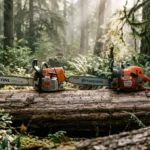
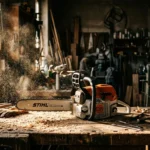
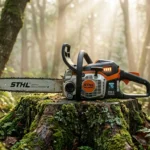

Navigating the vast landscape of chainsaws can be a daunting task, whether you’re a seasoned arborist or a homeowner looking to manage yard work. The market is saturated with options, each promising power, efficiency, and durability. But how do you cut through the marketing noise to find a tool that truly meets your specific demands? As someone who has spent decades with these machines, I understand the critical importance of selecting the right saw for the job at hand. This isn’t just about raw power; it’s about the right balance of ergonomics, safety features, maintenance requirements, and, of course, the cutting capability.
Table Of Content
- Understanding Your Needs: The Foundation of a Smart Purchase
- For the Homeowner: Light Work, High Convenience
- For the Professional and Serious Landowner: Power, Durability, Performance
- Top Picks for Homeowners: Balancing Power and Practicality
- Stihl MS 170: The Accessible Workhorse
- Husqvarna 120 Mark II: Dependable Power for the Backyard
- The Workhorses: Professional-Grade Chainsaws for Demanding Tasks
- Stihl MS 271 Farm Boss: The Landowner’s Heavy Hitter
- Husqvarna 450 Rancher: Performance Meets Versatility
- Crucial Considerations Before You Buy
- Frequently Asked Questions
- What’s the best bar length for general home use?
- How often should I sharpen my chainsaw chain?
- Is a battery chainsaw powerful enough for felling small trees?
Understanding Your Needs: The Foundation of a Smart Purchase
Before we delve into specific chainsaw reviews 2026, it’s paramount to identify your actual requirements. Many users fall into the trap of either overbuying or underbuying, leading to frustration, inefficiency, and potentially compromised safety. A powerful, professional-grade saw might seem appealing, but if you only clear brush twice a year, its weight and complexity could be a significant hindrance. Conversely, an underpowered homeowner model attempting to fell mature trees is a recipe for disaster. Let me add something here: the most common mistake I see is a mismatch between the user’s task list and the tool they choose. Honestly, a little introspection here saves a lot of headaches later.
For the Homeowner: Light Work, High Convenience
Homeowners typically tackle tasks like pruning branches, cutting firewood from smaller logs, clearing storm debris, or maintaining property lines. For these lighter-duty applications, the focus should be on ease of use, manageable weight, minimal maintenance, and robust safety features. Often, a battery chainsaw or a compact gas chainsaw with a bar length between 12 and 16 inches is ideal. These saws are designed for quicker starts, less vibration, and often quieter operation, making them far more approachable for intermittent use. You want a tool that’s ready to go when you are, without extensive preparation or a heavy physical toll.
For the Professional and Serious Landowner: Power, Durability, Performance
Professionals—arborists, loggers, or skilled landscapers—and landowners managing extensive acreage require tools built for relentless performance, exceptional durability, and sustained power output. Their work often involves felling large trees, bucking substantial logs, and operating for extended periods in challenging conditions. Here, professional chainsaws, almost exclusively gas-powered, with larger engine displacements (50cc and above) and bar length options ranging from 18 to 28 inches are the standard. These machines feature heavy-duty components, advanced anti-vibration systems, and superior chain speeds, all critical for productivity and operator endurance. They are an investment, no doubt, but one that pays dividends in reliability and capability.
Top Picks for Homeowners: Balancing Power and Practicality
For those who need a dependable saw for regular property maintenance without the demands of a commercial operation, certain models consistently stand out. These saws prioritize user-friendliness and safety without compromising on the ability to handle typical homeowner tasks. When considering homeowner chainsaws, you’re looking for a sweet spot of power and accessibility.
Stihl MS 170: The Accessible Workhorse
The Stihl MS 170 is a perennial favorite, and for good reason. It’s an entry-level gas chainsaw that doesn’t feel like a compromise. Powered by a 30.1 cc (1.7 cu. in.) engine delivering 1.7 bhp, it typically comes with a 14 or 16-inch guide bar. This saw is incredibly lightweight at just 8.6 lbs (powerhead only), making it easy to maneuver for tasks like limbing, small tree felling, and cutting firewood. When I used this product to clear out some fallen branches after a summer storm, I was impressed by its quick starting and smooth operation. It cut through 6-8 inch diameter limbs with surprising ease, and its compact size meant I could navigate tight spaces without issue. It’s truly an ideal option for those who might be new to gas-powered saws.
| Pros | Cons |
|---|---|
| Lightweight and easy to handle | Limited power for very large logs |
| Excellent fuel efficiency | Requires mixing fuel and oil |
| Reliable Stihl quality and dealer support | Can be loud, requires hearing protection |
| Affordable price point | Occasional carburetor adjustments may be needed |
Husqvarna 120 Mark II: Dependable Power for the Backyard
Another strong contender in the homeowner category is the Husqvarna 120 Mark II. This model offers a slightly larger 38.2 cc (2.3 cu. in.) engine, generating 2.15 hp, often paired with a 14 or 16-inch bar. It weighs around 10.7 lbs (powerhead only), giving it a bit more heft and power than the MS 170, which can be advantageous when you encounter slightly larger diameter wood. Husqvarna’s X-Torq engine technology means improved fuel efficiency and reduced emissions, which is a significant plus for environmentally conscious users. Its Air Injection system also helps keep the air filter cleaner for longer, reducing maintenance intervals. For homeowners with slightly more demanding tasks than just occasional pruning, this model truly strikes a fine balance.
| Pros | Cons |
|---|---|
| Stronger engine for tougher tasks | Slightly heavier than entry-level saws |
| X-Torq engine for efficiency & lower emissions | Chain tensioning can be a bit fiddly initially |
| Air Injection extends filter life | Not suitable for daily heavy commercial use |
| Good anti-vibration system | Initial break-in period for optimal performance |
The Workhorses: Professional-Grade Chainsaws for Demanding Tasks
When your livelihood or serious property management depends on consistent, powerful performance, you turn to saws designed for the long haul. These machines are engineered for endurance, speed, and the ability to conquer substantial cutting challenges day in and day out. They represent the pinnacle of chainsaw technology for demanding users.
Stihl MS 271 Farm Boss: The Landowner’s Heavy Hitter
The Stihl MS 271 Farm Boss is, in my opinion, one of the best all-around professional chainsaws for serious landowners and semi-professionals. It features a robust 50.2 cc (3.06 cu. in.) engine, kicking out 3.49 hp, and commonly runs 16 to 20-inch guide bars. Weighing 12.3 lbs (powerhead only), it’s a powerful yet still reasonably manageable saw for extended periods of work. The Farm Boss excels in cutting firewood, felling medium-sized trees, and general property maintenance that would bog down smaller saws. Its powerful engine and reliable build quality mean it can withstand rigorous use without flinching. It’s a true workhorse, built to last and perform consistently.
| Pros | Cons |
|---|---|
| Excellent power-to-weight ratio | Heavier and more powerful than beginner saws |
| Durable, professional-grade construction | Requires more careful chainsaw maintenance |
| Great for felling, limbing, and bucking larger wood | Higher initial investment |
| Advanced anti-vibration system for comfort | Not ideal for very light, quick tasks |
Husqvarna 450 Rancher: Performance Meets Versatility
The Husqvarna 450 Rancher is another highly respected mid-range gas chainsaw, often compared directly to the Stihl Farm Boss. It boasts a 50.2 cc (3.06 cu. in.) X-Torq engine that delivers 3.2 hp, making it a formidable tool for a wide range of tasks. Typically equipped with a 16- to 20-inch bar, it weighs in at 11.3 lbs (powerhead only), giving it a slight edge in maneuverability over some competitors in its class. The Rancher features Smart Start technology for easier starting and an ergonomic design that reduces user fatigue. But what would you do in a situation where you need consistent power for hours on end, without sacrificing agility? This is where the Rancher truly shines, offering a balance that many professionals find indispensable for diverse tasks, from felling to precise limbing. Its versatility makes it a standout choice.
| Pros | Cons |
|---|---|
| Strong X-Torq engine for efficiency & power | Can be intimidating for first-time users |
| Smart Start technology for easy ignition | Requires premium fuel mixture |
| Excellent anti-vibration and ergonomic design | More expensive than homeowner models |
| Effective for felling medium trees and heavy firewood | Slightly less dealer network density than Stihl in some areas |
Crucial Considerations Before You Buy
Beyond specific models, a few overarching factors should always influence your final decision. These are the aspects that differentiate a good purchase from a regrettable one, and based on my experience, they are often overlooked in the rush to buy a new saw. Understanding these elements will ensure you invest in a tool that serves you well for years to come.
First, consider the engine power and type. Gas chainsaws offer the highest power and run time, essential for large jobs or remote locations. However, they require fuel mixing, more maintenance, and produce emissions and noise. Battery chainsaws, on the other hand, are quiet, zero-emission, and require minimal maintenance, making them excellent for quick tasks around the house. Their main limitation is battery life and generally lower power compared to gas, though high-voltage models (like 60V or 80V systems) are rapidly closing that gap for many applications. For the vast majority of homeowners, a good battery saw can handle 80% of their needs, but for serious felling or all-day work, gas remains king.
Next, always evaluate the bar length and chain type. The bar length should match the typical diameter of the wood you’ll be cutting. A good rule of thumb is to use a bar at least 2 inches longer than the diameter of the wood. Don’t go excessively long; a longer bar requires more power and can be harder to control, increasing kickback risk. As for chain types, understand that a Best Professional Chainsaw often comes with different chain options – full chisel for aggressive, fast cuts in clean wood, or semi-chisel for better performance in dirty wood and reduced kickback. Always ensure your chain pitch and gauge match your bar and sprocket for optimal safety and performance. Finally, never skimp on chainsaw safety features, including chain brakes, anti-vibration systems, and handguards. Your personal safety is non-negotiable.
Here’s a brief comparison of typical characteristics across different chainsaw categories:
| Feature | Homeowner Gas Saw (e.g., Stihl MS 170) | Homeowner Battery Saw (e.g., Greenworks 40V) | Professional Gas Saw (e.g., Stihl MS 271) |
|---|---|---|---|
| Engine/Motor | 30-40cc 2-stroke gas | 40V-80V Brushless Motor | 50-70cc 2-stroke gas |
| Power Output (approx.) | 1.5 – 2.5 hp | Equivalent 1.5 – 2.5 hp | 3.5 – 5.0 hp |
| Bar Length Range | 12 – 16 inches | 12 – 18 inches | 16 – 28 inches |
| Weight (Powerhead) | 8 – 11 lbs | 9 – 14 lbs (with battery) | 12 – 15 lbs |
| Typical Tasks | Limbing, small tree felling, firewood | Pruning, storm cleanup, light firewood | Felling medium-large trees, heavy bucking |
| Noise Level | High | Low | Very High |
| Maintenance | Moderate (fuel mix, air filter) | Low (chain oil, battery care) | High (filters, spark plug, fuel system) |
| Price Range ($USD) | $200 – $350 | $250 – $600 (with battery/charger) | $450 – $800+ |
Frequently Asked Questions
What’s the best bar length for general home use?
For most general home use, a chainsaw with a 14-inch or 16-inch bar length is ideal. This range provides sufficient cutting capacity for limbing, bucking small-to-medium logs, and clearing storm debris, while remaining easy to handle and control for less experienced users.
How often should I sharpen my chainsaw chain?
Based on my experience, you should sharpen your chainsaw chain every time you refuel, or immediately if you notice the saw pulling to one side, producing sawdust instead of chips, or struggling to cut efficiently. A sharp chain is crucial for both safety and cutting performance.
Is a battery chainsaw powerful enough for felling small trees?
Modern high-voltage battery chainsaws (e.g., 60V or 80V systems) are indeed powerful enough for felling small to medium-sized trees, typically up to 10-14 inches in diameter, especially with a sharp chain. However, their run time will be limited, so they are best suited for a few fells or intermittent cutting rather than sustained, heavy felling tasks.
Choosing the right chainsaw is a significant decision, one that impacts not only your productivity but also your safety. I hope this detailed review of chainsaw reviews 2026 has provided you with the clarity needed to make an informed choice. Remember, the best chainsaw isn’t necessarily the most powerful or the most expensive; it’s the one that perfectly aligns with your specific needs, skill level, and safety considerations. Invest wisely, prioritize your safety gear, and always practice proper cutting techniques. The right tool, handled correctly, can make all the difference in tackling your outdoor projects efficiently and confidently.