




Why Felling Wedges Are Non-Negotiable for Safer Tree Work
You’re ready to fell a tree, chainsaw humming, adrenaline pumping. But what happens when the tree starts to lean back on your saw, pinching the bar and leaving you stuck? Or worse, what if it doesn’t fall in the intended direction, putting property or even lives at risk? This isn’t just a professional arborist’s concern; it’s a critical safety issue for any homeowner or landowner tackling tree removal. That’s where chainsaw felling wedges come into play – they’re not just an accessory; they’re a fundamental safety and control tool that every serious chainsaw user needs to master.
Table Of Content
- Why Felling Wedges Are Non-Negotiable for Safer Tree Work
- Understanding Felling Wedges: Your Essential Tool Kit
- Types of Felling Wedges and Their Uses
- The Art of Directional Felling with Wedges
- Step-by-Step Wedge Integration for Safer Felling
- Common Mistakes and How to Avoid Them
- Maintenance and Storage of Your Wedges
- Gain Confidence and Control in Your Felling Operations
Far too often, I see people underestimate the power and unpredictability of a falling tree. Trying to force a tree with just cuts can lead to disastrous kickback, getting your saw stuck, or losing control of the fall. Wedges provide a mechanical advantage, a simple yet incredibly effective way to ensure the tree falls precisely where you want it to, while keeping your saw free and your body safe. Honestly, if you’re felling anything larger than a small sapling, you should always have felling wedges on hand.
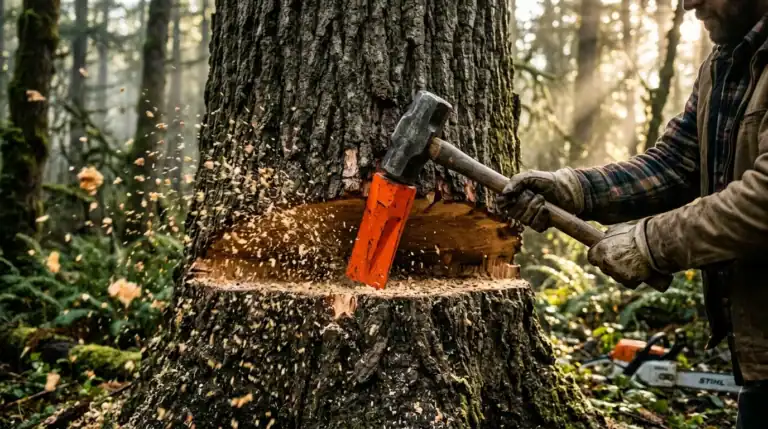
Understanding Felling Wedges: Your Essential Tool Kit
Before we dive into the “how-to,” let’s get familiar with these crucial pieces of equipment. A felling wedge is essentially a tapered tool, typically made from plastic or aluminum, designed to be driven into the back cut of a tree to force it to fall in a controlled direction. They work by creating internal pressure within the tree, helping to lift the tree’s center of gravity over the hinge, pushing it towards your desired felling direction.
Types of Felling Wedges and Their Uses
- Plastic/Poly Wedges: These are the most common type and what I recommend for most homeowners and DIY users. They are made from durable, high-impact plastic. The main advantage is that if you accidentally hit one with your chainsaw chain, it won’t damage your chain like a metal wedge would. They’re also lightweight and generally more affordable. You’ll find them in various lengths, typically from 5.5 inches up to 12 inches. For general felling of medium-sized trees (10-24 inch diameter), 8-inch wedges are a great all-around choice.
- Aluminum/Metal Wedges: These are much stronger and offer greater lifting power. They are often preferred by professionals for larger, tougher trees, or when dealing with significant lean. However, they come with a significant warning: hitting a metal wedge with your chain will dull or even damage it instantly. Use these with extreme caution and only when you’re confident in your cutting precision.
- Wood Wedges: While historically used, wood wedges are less common today due to their lower strength and tendency to splinter compared to modern alternatives. I wouldn’t recommend them for serious felling operations.
Choosing the right size depends on the tree’s diameter and how much lift you need. For most applications, having a couple of 8-inch plastic wedges and maybe one larger 10-inch wedge will cover your bases. Always have at least two wedges with you, because sometimes one isn’t enough to get the job done, or you might need to combine their power.
The Art of Directional Felling with Wedges
So far we’ve covered what wedges are and why they’re essential. Now let’s get to the really critical point: using them safely and effectively to direct your tree exactly where you want it. This process involves careful planning and precise cuts.
Step-by-Step Wedge Integration for Safer Felling
- Assess the Tree and Plan Your Fall: Before you even start your saw, survey the tree. Identify its natural lean, potential hazards, and the desired felling direction. Clear your escape routes – yes, plural, always have at least two. Determine the hinge size, which is the uncut wood that guides the tree’s fall. A good hinge is about 10% of the tree’s diameter.
- Make Your Face Cut (Directional Cut): This cut, also known as the “notch” or “directional notch,” determines the direction of the fall. It’s made on the side of the tree towards your desired fall direction. Typically, it consists of a horizontal cut about 1/3 of the tree’s diameter deep, and a slanting cut above it, meeting the horizontal cut to form a wedge-shaped opening. Use a saw with adequate power for the tree size; for example, a Stihl MS 271 Farm Boss with an 18-20 inch bar is great for many medium-sized trees.
- Make Your Back Cut: This is the cut made on the opposite side of the tree from the face cut. It should be parallel to your horizontal face cut and slightly above it (typically 1-2 inches higher) to create a good hinge. Begin cutting into the tree, but do not cut all the way through to the face cut. This is where the wedges come in.
- Insert the Wedges: Once your back cut has progressed about halfway or two-thirds through the tree, and before the saw blade gets pinched, stop cutting. Turn off your saw and safely remove it. Now, carefully insert one or two felling wedges into the back cut. Place them behind your saw’s cutting path, but not so far back that they’ll interfere with the hinge. Position them to provide maximum lift and leverage.
- Drive the Wedges: Using a sturdy sledgehammer or the blunt back of a felling axe, begin to drive the wedges into the back cut. Hit them firmly and evenly. As you drive them, you’ll start to hear and feel the tree shift. The idea is to create enough force to push the tree over the hinge, initiating the fall in the desired direction. Keep an eye on the top of the tree; it will start to move.
For example, imagine this situation: you’re felling a 20-inch diameter oak with a slight lean towards your house. You’ve made your face cut pointing away from the house. As you make your back cut, the saw starts to bind, and the tree begins to settle back, threatening to pinch your bar. Instead of forcing it, you stop, insert two plastic felling wedges into the back cut, and grab your sledgehammer. A few firm strikes to each wedge, and you hear a reassuring crack, see the tree visibly lift, and begin to lean away from your house, falling safely and predictably. This controlled fall is precisely the goal and the benefit of using wedges.
Common Mistakes and How to Avoid Them
Even with wedges, felling a tree carries inherent risks. Knowing common pitfalls can help you avoid dangerous situations.
- Using the Wrong Wedge Type/Size: Don’t try to use a small 5.5-inch plastic wedge on a massive oak with a heavy lean. It simply won’t have enough power. Conversely, using a metal wedge without extreme caution on a smaller tree is asking for chain damage. Match the wedge to the job.
- Improper Wedge Insertion: Inserting wedges too deep can damage the hinge, leading to an uncontrolled fall. Inserting them too shallow means they won’t provide enough lift. Always ensure they are firmly seated but not impacting the critical hinge area.
- Ignoring the Tree’s Natural Lean: While wedges can correct a slight lean, they are not magic. Trying to force a heavily leaning tree against its natural direction is incredibly dangerous and can lead to kickback or an unpredictable fall. Always work with the tree’s natural tendencies.
- Forgetting Your Escape Route: This is perhaps the most critical mistake. Once the tree starts to fall, you need to quickly and safely move away. Always have two clear paths to retreat, diagonally away from the direction of fall. What would you do if the tree unexpectedly twisted or bounced back upon impact? Having those escape routes is your ultimate safety net.
- Driving a Wedge with an Axe Head: While you can use the back of a felling axe, never use the cutting edge. It’s dangerous for you and bad for the axe. Always use the blunt poll of the axe or, ideally, a dedicated sledgehammer.
In my opinion, complacency is the biggest enemy in tree felling. Always treat every tree with respect and plan thoroughly. Rushing or cutting corners is a recipe for disaster.
Maintenance and Storage of Your Wedges
Your felling wedges might seem like simple tools, but proper care ensures their longevity and effectiveness.
After each use, clean any sap, dirt, or debris off your wedges. A stiff brush and some water usually do the trick. Inspect them for damage – cracks, significant gouges, or deformation. While plastic wedges are durable, they’re not indestructible. A heavily damaged wedge should be replaced immediately; its integrity might be compromised, making it unsafe to rely on during a critical felling operation.
Store your wedges in a tool box or a designated spot where they won’t get lost or damaged. Keeping them clean and in good condition ensures they’re ready for action when you need them most. Having a few spare wedges is also a smart move, just in case one gets stuck or damaged during a job. Remember, a reliable tool is a safe tool.
Gain Confidence and Control in Your Felling Operations
Felling a tree can be one of the most rewarding tasks for a chainsaw user, but it demands respect, knowledge, and the right tools. Chainsaw felling wedges are not just aids; they are fundamental components of a safe and controlled tree removal process. By understanding their types, mastering their insertion, and knowing how to avoid common mistakes, you’re not just buying a tool – you’re investing in your safety and the success of your felling projects.
Don’t let the fear of a pinched bar or an uncontrolled fall deter you. Equip yourself with quality wedges, practice these techniques, and always prioritize safety. You’ll gain confidence, improve your efficiency, and ensure that every tree you fell lands exactly where you intend it to. Visit Best Professional Chainsaw for more insights on optimizing your tree cutting equipment and techniques.