

Decoding Chainsaw Engine Displacement (CC): It’s Not Just About Raw Power
Walk into any chainsaw store or browse online, and one specification you’ll see highlighted prominently is “CC” – often accompanied by a larger number for bigger saws. It’s easy to fall into the trap of thinking that a higher CC always means a better chainsaw. But based on my decades of experience in the field, I can tell you straight up: that’s not the whole story. While engine displacement is undeniably crucial, understanding its true implications for your specific needs is far more important than just chasing the biggest number.
Table Of Content
- Decoding Chainsaw Engine Displacement (CC): It’s Not Just About Raw Power
- What Exactly is Engine Displacement (CC)?
- The “Bigger Isn’t Always Better” Principle in Action
- Matching CC to Your Cutting Needs: A Practical Guide
- Small Displacement Chainsaws (30-40cc)
- Medium Displacement Chainsaws (40-60cc)
- Large Displacement Chainsaws (60cc+)
- Beyond CC: Other Critical Factors for Chainsaw Performance
- Bar Length
- Power-to-Weight Ratio
- Torque vs. Horsepower
- Chain Type and Sharpness
- Anti-Vibration Systems and Ergonomics
- User Skill Level
- Make an Informed Decision for Your Next Chainsaw
Many folks, especially those new to chainsaws or even seasoned DIYers, often assume that more power is always the answer. While a powerful engine certainly has its place, an oversized saw for a small job can be inefficient, fatiguing, and even dangerous. This guide will demystify chainsaw engine displacement, explaining what it truly means, how it impacts your cutting tasks, and most importantly, how to choose the right CC for your specific needs, ensuring safety and efficiency every time you fire up your saw.
What Exactly is Engine Displacement (CC)?
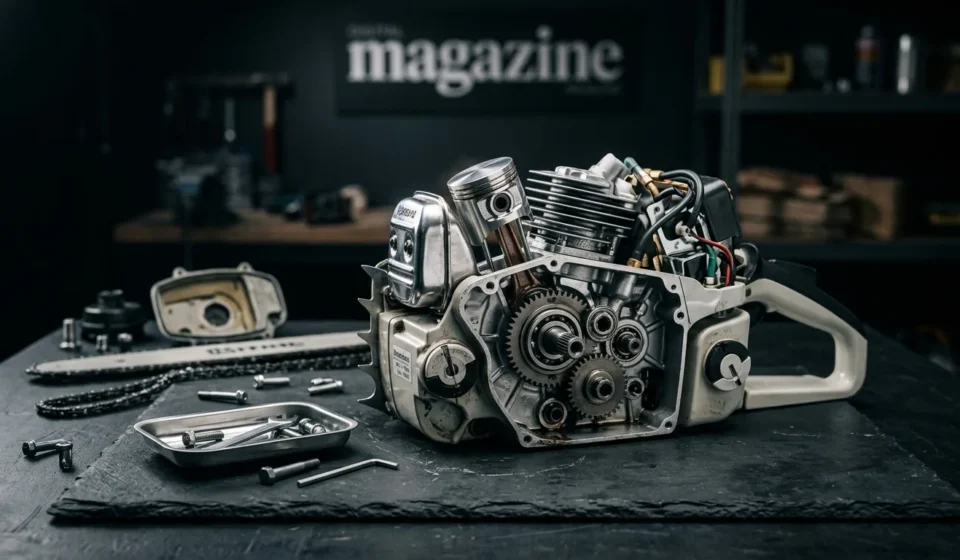
Let’s start with the basics. When we talk about a chainsaw’s engine displacement, “CC” stands for cubic centimeters. In simple terms, it refers to the total volume swept by the piston(s) inside the engine’s cylinder(s) as they move from the bottom of their stroke to the top. Think of it like this: it’s the amount of air and fuel mixture an engine can draw in and compress during one cycle. A larger CC means a larger cylinder volume, which generally allows the engine to burn more fuel and air, producing more power.
So, yes, a higher CC typically translates to greater potential for horsepower (HP) and torque. Horsepower is the rate at which work is done, essentially how fast the engine can spin the chain under a given load. Torque, on the other hand, is the rotational force, or the “grunt” that helps push that chain through tough wood without bogging down. While CC is a good indicator, it’s not the only factor determining HP or torque; engine design, porting, and even exhaust systems play significant roles. However, as a general rule, more CC means more potential for both.
The “Bigger Isn’t Always Better” Principle in Action
This is where things get really interesting and where many users make critical mistakes. While a 70cc saw might sound incredibly powerful, if you’re only trimming small branches or cutting up a few logs for a campfire, that saw is overkill. Honestly, it’s like using a sledgehammer to crack a nut.
Imagine this situation: You’re a homeowner with a small property, mostly dealing with limbing fallen branches after a storm, none thicker than 8-10 inches. You decide to buy a large 60cc professional-grade saw, thinking you’re getting the best. What would you quickly discover? First, that saw is going to be significantly heavier than a 40cc model. After just an hour of work, your arms and back will be screaming in protest. Second, it’s far less maneuverable in tight spaces, making precise cuts difficult and increasing the risk of kickback. Third, it guzzles fuel compared to a smaller saw, leading to more frequent refueling stops and higher operating costs. And finally, you paid a premium for power you simply don’t need.
In my opinion, the downsides of oversizing your chainsaw are clear: increased weight and fatigue, higher fuel consumption, greater purchase cost, reduced maneuverability, and potentially compromised safety due to a less controllable tool. For many tasks, a balanced, appropriately sized saw will be safer, more efficient, and much more enjoyable to use.
Matching CC to Your Cutting Needs: A Practical Guide
Choosing the right CC is all about aligning the saw’s capability with the demands of your typical cutting tasks. Let me break down the common displacement categories and what they’re best suited for:
Small Displacement Chainsaws (30-40cc)
- Ideal For: Light pruning, limbing small branches (up to 8-10 inches diameter), occasional firewood from smaller logs, general yard cleanup.
- Common Bar Lengths: 12 to 16 inches.
- Examples: Stihl MS 170, Husqvarna 120 Mark II.
- Benefits: Lightweight, excellent maneuverability, easy to start and handle, fuel-efficient, lower cost. These are perfect for homeowners who need a reliable tool for lighter duties and want to avoid unnecessary strain.
Medium Displacement Chainsaws (40-60cc)
- Ideal For: Felling small-to-medium trees (up to 20 inches diameter), cutting larger firewood, extensive property maintenance, storm cleanup. This range is often the “sweet spot” for many landowners and serious DIY enthusiasts.
- Common Bar Lengths: 16 to 20 inches, sometimes up to 24 inches for the higher end of this range.
- Examples: Stihl MS 250, Husqvarna 450 Rancher, Echo CS-590.
- Benefits: A fantastic balance of power and weight, versatile enough for a wide range of tasks, good cutting speed, and generally durable. If you’re tackling more than just small branches but aren’t felling mature forests, a saw in this category is likely your best friend.
Large Displacement Chainsaws (60cc+)
- Ideal For: Felling large, mature trees (20+ inches diameter), bucking large logs, professional logging, milling lumber, forestry work.
- Common Bar Lengths: 20 to 36+ inches.
- Examples: Stihl MS 462, Husqvarna 572 XP, Echo CS-7310.
- Benefits: Maximum power and torque for tackling the toughest, biggest wood. Built for sustained heavy use.
- Considerations: These are heavy, require significant physical strength and skill to operate safely, are more expensive, and consume more fuel. They are typically reserved for professionals or experienced landowners with genuine heavy-duty needs. If you’re not cutting truly massive wood regularly, you’re better off with a smaller, more manageable saw.
Beyond CC: Other Critical Factors for Chainsaw Performance
So far we’ve covered the crucial role of engine displacement. Now let’s get to the really critical point: CC is an important piece of the puzzle, but it’s not the only one. A chainsaw’s overall performance and suitability for you depend on several other interconnected factors:
Bar Length
The cutting bar length should always be appropriate for the saw’s engine displacement. A small engine with a long bar will struggle and bog down, while a huge engine with a tiny bar is just inefficient. Generally, a 40cc saw is well-matched with a 14-16 inch bar, while a 60cc saw can handle a 20-24 inch bar effectively. Always check the manufacturer’s recommended bar lengths for optimal performance.
Power-to-Weight Ratio
This is often overlooked but incredibly important. A high power-to-weight ratio means you get more cutting power for less physical strain. This significantly reduces fatigue, especially during prolonged use, and improves control. Professional-grade saws often excel here, utilizing lighter, stronger materials to maximize this ratio.
Torque vs. Horsepower
While related to CC, understand that some engines are designed to deliver higher torque at lower RPMs (great for sustained cutting through thick wood), while others prioritize peak horsepower for faster chain speed. For most cutting, especially through hardwoods, good torque is your best friend to prevent the saw from bogging down.
Chain Type and Sharpness
Honestly, a well-maintained, sharp chain on a moderately sized chainsaw can often outperform a dull chain on a much larger, more powerful saw. The type of chain (e.g., full chisel, semi-chisel) also impacts cutting speed and smoothness. Always keep your chain sharp and properly tensioned!
Anti-Vibration Systems and Ergonomics
Especially for longer work sessions, good anti-vibration systems and ergonomic handles will make a huge difference in comfort and reduce the risk of fatigue-related accidents. These features are critical for any saw you plan to use for more than a few minutes at a time.
User Skill Level
Let me add something here: A powerful chainsaw in inexperienced hands is not just inefficient, it’s dangerous. Always choose a saw you can comfortably control and handle. If you’re a beginner, start with a smaller, more manageable saw and build your skills before moving to larger, more demanding equipment. Safety should always be your number one priority.
Make an Informed Decision for Your Next Chainsaw
Choosing a chainsaw, whether it’s for occasional yard work or professional forestry, is about more than just checking the “CC” number. It’s about a thoughtful assessment of your typical cutting tasks, understanding the practical implications of engine displacement, and considering other vital factors like bar length, power-to-weight ratio, and ergonomics. By matching the tool to the job, you’ll not only invest in the right equipment but also ensure greater safety, efficiency, and satisfaction every time you cut. Don’t chase the biggest number; chase the smartest choice for your needs. Head over to Best Professional Chainsaw to explore models that perfectly balance power and practicality for every task.