


Have you ever stared at a stubborn tree branch, too thick for hand pruners but too small to justify hauling out your full-sized, heavy chainsaw? Or maybe you’re out camping, trying to gather firewood, and the thought of wrestling a large saw or a dull axe just saps your energy. This is precisely where the unsung hero of the power tool world steps in: the mini chainsaw.
Table Of Content
- What Exactly is a “Mini Chainsaw”? Demystifying the Compact Powerhouse
- Why Choose a Mini Chainsaw? The Benefits and Best Use Cases
- Unmatched Portability and Ease of Use
- Perfect for Pruning and Yard Maintenance
- Small DIY Projects and Crafting
- Key Features to Look For When Buying a Mini Chainsaw
- Battery Power and Life
- Bar Length and Chain Type
- Weight, Ergonomics, and Safety Features
- Safety and Maintenance: Keeping Your Pocket Powerhouse in Top Shape
- Essential Safety Practices
- Routine Maintenance for Longevity
- Final Thoughts: Empowering Your Small-Scale Tasks
These compact, surprisingly powerful tools are changing the game for homeowners, campers, and DIY enthusiasts alike. They offer a fantastic blend of portability, ease of use, and efficiency for a myriad of small tasks. As someone who’s spent years around all sorts of outdoor power equipment, I’ve seen firsthand how these little giants can make quick work of jobs that used to be tedious or even intimidating.
What Exactly is a “Mini Chainsaw”? Demystifying the Compact Powerhouse
When we talk about mini chainsaws, we’re generally referring to a class of lightweight, often battery-powered, cordless chainsaws typically featuring a guide bar length between 4 and 8 inches. Unlike their larger, gas-powered cousins that might boast 18-inch bars and roaring engines, mini chainsaws are designed for precision, maneuverability, and convenience rather than felling large trees.
They operate on the same fundamental principle as any chainsaw: a motor drives a specialized chain around a guide bar, allowing it to slice through wood. However, the key difference lies in their scale and power source. Most mini chainsaws run on rechargeable lithium-ion batteries, often sharing power packs with other cordless tools from brands like Ryobi, DeWalt, or Greenworks. This shared battery system is a huge plus for anyone already invested in a particular tool ecosystem. Honestly, the convenience of just grabbing a charged battery and getting to work is hard to beat.
While they might look like toys to some, let me be clear: these are legitimate cutting tools. They have sharp chains and can cause serious injury if not handled properly. Think of them as scaled-down versions of professional equipment, built for specific, lighter-duty tasks. They are engineered for balance and typically designed for comfortable, often one-handed operation, though I always recommend two hands for maximum control and safety when possible.
Why Choose a Mini Chainsaw? The Benefits and Best Use Cases
So, you might be asking, “Why would I need one if I already have a larger chainsaw or hand tools?” That’s a fair question! The answer lies in their unique combination of features that make them ideal for tasks where bigger saws are overkill and manual tools are too slow or labor-intensive.
Unmatched Portability and Ease of Use
The primary draw of a mini chainsaw is its incredible portability. Weighing typically between 2 to 5 pounds, they’re light enough to carry around all day without fatigue. Imagine this situation: you’re hiking into a remote campsite, and you stumble upon some perfect fallen branches for your campfire, but they’re just a bit too long. Instead of struggling with a cumbersome axe or a slow hand saw, you can pull out your compact, battery-powered mini chainsaw, quickly cut your wood, and be back on your way. It’s a game-changer for quick tasks and tight spaces.
Perfect for Pruning and Yard Maintenance
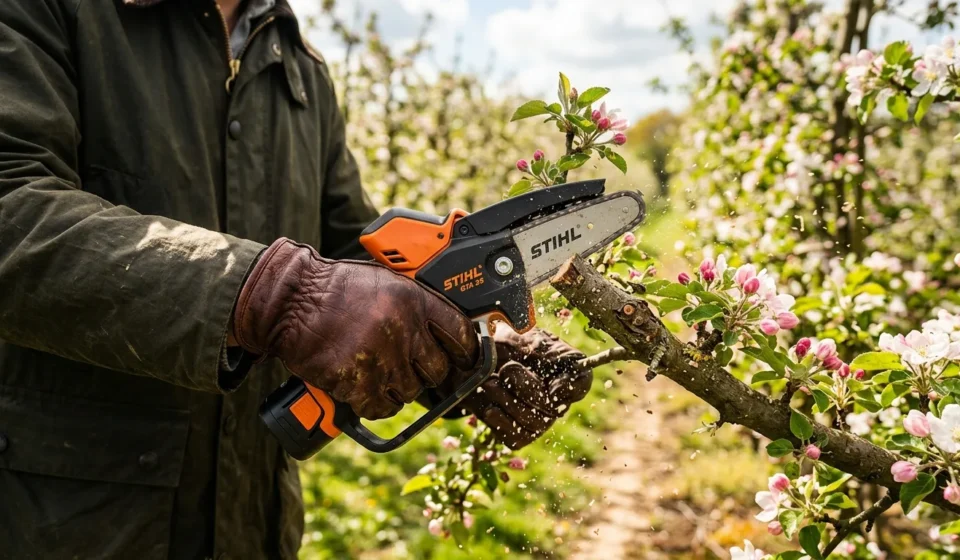
For homeowners, mini chainsaws excel at pruning. They make quick work of small to medium-sized branches (typically up to 4-6 inches in diameter) that are too large for loppers but don’t warrant bringing out a heavy-duty saw. Think about those unruly shrub branches, low-hanging tree limbs, or clearing out storm-damaged debris. Their precision allows you to make clean cuts without over-cutting or damaging the main plant structure. Based on my experience, for routine yard cleanup, they’re often the most efficient tool for the job.
Small DIY Projects and Crafting
Beyond the yard, mini chainsaws are surprisingly useful for small DIY projects. Need to cut some 2x4s for a raised garden bed? Or perhaps you’re into woodworking and need to rough-cut some small logs for a craft project? These tools offer more power than a reciprocating saw for thicker wood and much more control than a full-sized chainsaw. Their compact size makes them ideal for intricate cuts or working in confined areas where a larger saw would be impractical or dangerous.
Key Features to Look For When Buying a Mini Chainsaw
Choosing the right mini chainsaw means understanding what features will best serve your needs. Don’t just grab the cheapest one; invest a little time in knowing what matters.
Battery Power and Life
Since most mini chainsaws are cordless, the battery is paramount. Look for models with at least an 18V or 20V (often interchangeable terms) lithium-ion battery. A higher Amp-hour (Ah) rating means longer run time. For occasional use, a 2.0Ah battery might suffice, but for extended pruning sessions or camping trips, a 4.0Ah or even 5.0Ah battery will give you much more working time between charges. Always consider if the battery is compatible with other tools you own – this can save you money and simplify your charging setup.
Bar Length and Chain Type
As mentioned, bar lengths typically range from 4 to 8 inches. A 4-inch bar is excellent for very light pruning and small craft work, offering maximum maneuverability. A 6-inch bar strikes a great balance for most homeowners, tackling branches up to 4-5 inches effectively. An 8-inch bar offers the most cutting capacity in this class, suitable for slightly larger branches or small firewood. Most mini chainsaws use a standard low-kickback chain, which is crucial for safety. Ensure you can easily find replacement chains and bars.
Weight, Ergonomics, and Safety Features
Lightweight design is a huge advantage, especially if you plan on using it for extended periods or one-handed tasks (though, again, two hands are always safer!). Look for an ergonomic handle that fits comfortably in your hand. Critical safety features include a handguard to protect against flying debris and kickback, and a safety switch that prevents accidental starts. Some models might even include a small chain brake, though this is less common on the smallest units. Always prioritize safety – a feature-rich saw is a safer saw.
Safety and Maintenance: Keeping Your Pocket Powerhouse in Top Shape
Even though they’re small, mini chainsaws demand the same respect as their larger counterparts when it comes to safety and maintenance. A sharp chain and a well-maintained tool are not just about efficiency; they’re about preventing accidents.
Essential Safety Practices
First and foremost, always wear personal protective equipment (PPE). This means safety glasses or a face shield, sturdy gloves, and closed-toe shoes. Honestly, I wouldn’t even think about starting one up without my glasses on. Always maintain a firm grip with both hands whenever possible, even if the saw is designed for one-handed operation. Be acutely aware of your surroundings, ensuring no one is in the cutting zone and that your work area is clear of obstacles. Never cut above shoulder height, as this significantly increases the risk of kickback and loss of control. Understand how kickback occurs (when the chain tip strikes an object or gets pinched) and how to avoid it.
Routine Maintenance for Longevity
- Chain Tension: A properly tensioned chain is vital. Too loose, and it can derail; too tight, and it puts undue strain on the motor and bar. Check tension before each use, ensuring it’s snug but can still be pulled freely along the bar.
- Bar Oil: Most mini chainsaws have an automatic oiler, but some smaller ones might require manual lubrication or have a small, visible oil reservoir. Always keep the oil reservoir full with quality bar and chain oil. This reduces friction and heat, extending the life of your bar and chain.
- Chain Sharpening: A dull chain is inefficient and dangerous. Learn to sharpen your chain or have it professionally sharpened regularly. A sharp chain cuts smoothly with minimal effort; a dull one tears the wood and forces you to push harder.
- Cleaning: After each use, remove the battery and clean off sawdust and debris from the motor housing, bar, and chain. This prevents buildup that can lead to overheating and reduced performance.
- Battery Care: Store batteries in a cool, dry place. Don’t let them fully discharge for long periods, and follow the manufacturer’s charging guidelines.
To be fair, maintaining a mini chainsaw is much simpler than a gas-powered model, but it’s still non-negotiable for safe and effective operation.
Final Thoughts: Empowering Your Small-Scale Tasks
The rise of the mini chainsaw is a testament to the continuous innovation in outdoor power equipment. These compact tools truly bridge the gap between manual tools and heavy-duty machinery, providing an efficient, portable, and user-friendly solution for a wide range of tasks. Whether you’re trimming branches, preparing firewood for a camping trip, or tackling a small carpentry project, a mini chainsaw can significantly reduce your effort and increase your productivity.
When you’re ready to add one to your toolkit, remember to prioritize battery life, appropriate bar length for your typical tasks, and most importantly, robust safety features. And as always, respect the tool, follow safety guidelines diligently, and keep it well-maintained. A well-chosen and cared-for mini chainsaw isn’t just a convenience; it’s an investment in making your outdoor and DIY projects easier and more enjoyable. Happy cutting!