

Have you ever stood in front of a wall of chainsaws, wondering why some have short, nimble bars and others boast long, formidable blades? Choosing the right chainsaw bar length isn’t just about cutting capacity; it’s a critical decision that impacts safety, efficiency, and the lifespan of your saw. Get it wrong, and you might find yourself struggling with a saw that’s too weak, too dangerous, or simply ill-suited for the job at hand.
Table Of Content
- Understanding Chainsaw Bar Length: More Than Just Inches
- The Goldilocks Principle: Not Too Long, Not Too Short
- Common Chainsaw Bar Lengths and Their Best Uses
- Key Factors for Choosing Your Ideal Bar Length
- 1. What Are You Cutting?
- 2. Chainsaw Engine Power (CCs)
- 3. Your Experience Level and Safety
- 4. Maneuverability and Weight
- Making Your Final Decision: Actionable Advice
As an experienced outdoor power equipment specialist, I’ve seen countless folks pick a chainsaw based purely on price or perceived power, only to be disappointed. The truth is, the bar length is intrinsically linked to your saw’s engine power and the specific tasks you’ll tackle. Let’s cut through the confusion and ensure you make an informed choice that will serve you well for years.
Understanding Chainsaw Bar Length: More Than Just Inches
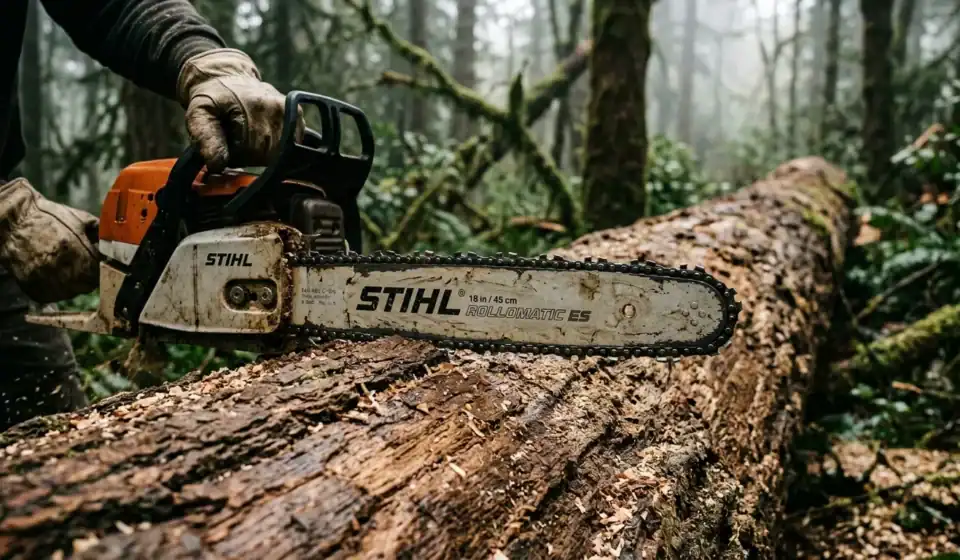
When we talk about chainsaw bar length, we’re referring to the effective cutting length – the distance from the tip of the bar to the point where it enters the chainsaw housing. This is the maximum thickness of material you can cut in a single pass.
But why is this measurement so crucial? A longer bar requires more power to drive the chain effectively. Imagine trying to run a marathon with ankle weights; that’s what a long bar on an underpowered engine feels like to your saw. It stresses the engine, slows down the chain, and makes cutting a chore. Conversely, a bar that’s too short for a large tree forces you to make multiple, often awkward, passes, which can be less safe and more time-consuming.
The Goldilocks Principle: Not Too Long, Not Too Short
The ideal bar length isn’t necessarily the longest one you can get. It’s the one that matches your cutting tasks, your chainsaw’s engine power, and your personal skill level. A well-matched bar and saw combination ensures optimal cutting speed, reduces fatigue, minimizes kickback risk, and keeps your equipment running smoothly.
Common Chainsaw Bar Lengths and Their Best Uses
Chainsaw bars typically range from 10 inches all the way up to 36 inches or more for specialized forestry work. For most homeowners, landowners, and DIY enthusiasts, the sweet spot usually falls between 14 and 20 inches. Let’s break down the common categories:
- 10-14 Inch Bars: Light-Duty & Precision Work
These smaller bars are typically found on electric, battery-powered, or very small gas chainsaws (under 40cc). They are perfect for pruning small branches, limbing felled trees, clearing brush, and cutting small firewood up to about 8-10 inches in diameter. They are lightweight, easy to maneuver, and ideal for beginners due to their reduced kickback potential. Think of models like the Stihl MS 170 or many cordless options. - 16-18 Inch Bars: The Homeowner’s Workhorse
This is, in my opinion, the most versatile size for general homeowner use. Paired with gas saws in the 40-50cc range, like the Husqvarna 450 Rancher or Stihl MS 250, these bars can handle a wide array of tasks. They’re excellent for cutting firewood, felling small to medium trees (up to 14-16 inches in diameter), and larger limbing jobs. They offer a great balance of power, maneuverability, and cutting capacity for most landowners. - 20-24 Inch Bars: Serious Cutting Power
Once you get into this range, you’re looking at saws with more substantial engines, typically 50-70cc or higher. These are for felling larger trees, bucking thick logs, and heavy-duty firewood processing. Saws like the Stihl MS 362 or Husqvarna 460 Rancher can easily handle a 20-inch bar. While they offer impressive cutting depth, they are heavier, require more skill to operate safely, and aren’t necessary for light tasks. - 24+ Inch Bars: Professional & Specialty Use
These long bars are almost exclusively found on professional-grade chainsaws with powerful engines (60cc and above). They are designed for felling very large trees, milling timber, or specialized forestry operations. Unless you’re a seasoned professional or dealing with genuinely massive timber, these bars are generally overkill and unsafe for the average user.
Key Factors for Choosing Your Ideal Bar Length
So far, we’ve covered the different bar length categories. Now, let’s get to the really critical point: how to choose the right one for your specific needs. It boils down to a few key considerations:
1. What Are You Cutting?
This is the primary question. Are you just pruning small fruit trees, or are you felling mature oaks? For pruning and limbing, a shorter 12-14 inch bar offers precision and light weight. For firewood and general yard work involving logs up to 16 inches, a 16-18 inch bar is ideal. If you’re consistently dealing with large trees (over 18 inches in diameter), then a 20-inch bar or longer, matched with a powerful saw, becomes necessary.
A good rule of thumb for felling is that your bar should be at least 2/3 the diameter of the tree you plan to cut. For bucking (cutting felled logs into sections), your bar should ideally be at least 2 inches longer than the diameter of the log you intend to cut in a single pass. This prevents pinching and allows for safer, more efficient cuts.
2. Chainsaw Engine Power (CCs)
This is non-negotiable. A small engine simply cannot efficiently drive a long bar. Trying to do so will lead to frustratingly slow cuts, premature wear on your engine, and potential overheating. Always consult your chainsaw’s manual for its recommended bar length range. Manufacturers design their saws to work optimally within these parameters.
- Under 40cc engines: Best with 12-16 inch bars.
- 40-50cc engines: Can comfortably handle 16-18 inch bars, some even up to 20 inches.
- 50-70cc engines: Ideal for 20-24 inch bars.
- 70cc+ engines: Can power 24-inch bars and longer for professional tasks.
For example, imagine this situation: you’ve got a trusty 35cc homeowner saw with a 14-inch bar. Now, you decide to tackle a fallen 20-inch oak tree, so you buy a 20-inch bar, thinking “bigger is better.” You put it on, start cutting, and immediately notice the chain bogging down, the engine straining, and the cut going nowhere fast. What would you do in this situation? You’d quickly realize that the saw simply doesn’t have the horsepower to pull that long chain through dense wood efficiently. It’s a frustrating and potentially dangerous mismatch. Always respect the manufacturer’s recommendations.
3. Your Experience Level and Safety
Longer bars are heavier and harder to control, increasing the risk of fatigue and kickback. Kickback occurs when the nose of the guide bar strikes an object or gets pinched, causing the saw to thrust violently backward and upward. Shorter bars have a smaller kickback zone at the tip, making them inherently safer and easier for beginners to manage. Honestly, for anyone new to chainsaws, starting with a 14 or 16-inch bar is a smart move.
4. Maneuverability and Weight
A longer bar adds weight, making the saw feel heavier and less balanced. If you’re doing a lot of limbing, trimming overhead, or working in tight spaces, a shorter, lighter bar will be far more comfortable and maneuverable. For long work sessions, a lighter setup can significantly reduce fatigue and improve control.
Making Your Final Decision: Actionable Advice
So, how do you put all this together? Here’s my advice:
- Assess Your Primary Needs: What kind of wood do you cut most often? What’s the typical diameter? Don’t buy a saw for the occasional giant log if 95% of your work is small firewood.
- Check Your Saw’s Specs: Look up the recommended bar lengths for your specific chainsaw model. This is the golden rule! You can often find this information right here on Best Professional Chainsaw or in your owner’s manual.
- Consider Your Comfort and Skill: If you’re a beginner, err on the side of a shorter bar. You can always gain experience and upgrade later if needed.
- Think Versatility: For homeowners, an 18-inch bar on a 40-50cc saw is often the sweet spot, providing enough power for most tasks without being unwieldy.
Remember, a chainsaw is a powerful tool that demands respect and proper technique. Choosing the right bar length is not just about getting the job done; it’s about getting it done safely and efficiently. Don’t hesitate to ask local dealers or experienced professionals for advice specific to your situation. Happy cutting, and stay safe out there!