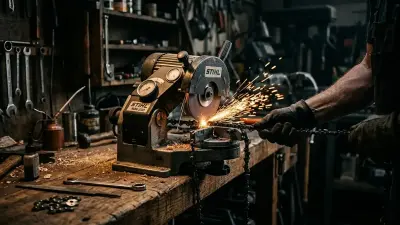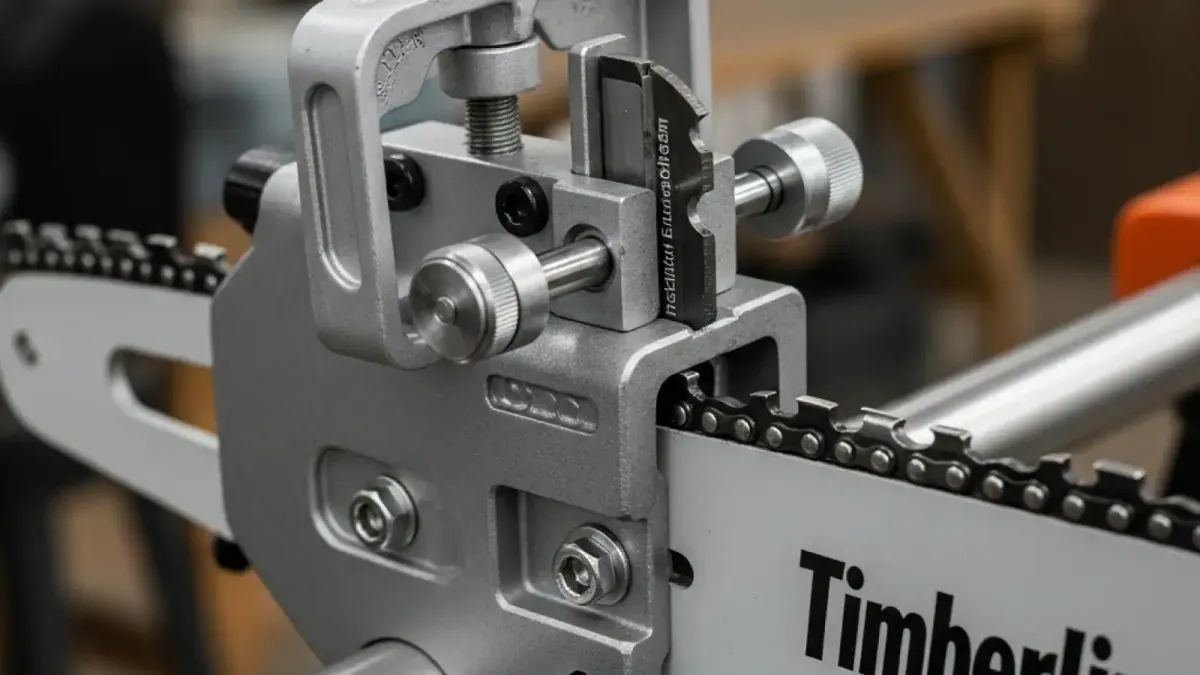
Quick answer: The Timberline chainsaw sharpener is a portable jig that clamps directly onto your saw's guide bar, utilizing tungsten carbide cutters to restore precise cutting angles on each cutter tooth. It offers factory-level accuracy in the field without requiring electricity or stripping excess steel, significantly extending the lifespan of your saw chains.
Engineering and Mechanics Behind the Timberline System
The core advantage of the Timberline sharpener lies in its rigid, solid-billet aluminum housing. Instead of relying on hand-eye coordination like standard file guides, the Timberline mounts directly to the guide bar with dual clamping thumbscrews. This creates a rock-solid platform that eliminates flex, ensuring every single cutter is ground to the exact same top-plate angle and length. Inside the housing, a hand-cranked tungsten carbide bit spins smoothly on sealed bearings. As you turn the handle, the carbide bit removes microscopic amounts of dull metal from the tooth chrome, leaving a razor-sharp crescent edge. An adjustable thumb-stop screw allows you to set the precise depth of cut, meaning you only remove the minimum amount of material necessary to bring back a keen edge. Unlike standard high-carbon steel files that dull after a few sharpenings—especially when hitting dirt or small rocks—the solid carbide bits used in this tool cut effortlessly through hardened steel. Whether you are running standard full-chisel chain or semi-chisel chain on a 50cc wood-cutting saw, the mechanism maintains absolute consistency across both left-hand and right-hand cutters.Carbide Bit Selection and Compatibility
Matching the correct carbide cutter bit size to your chain pitch and gauge is critical for maintaining correct side-plate and top-plate hook angles. chainsaw chains come in several standard pitches, such as 3/8" Low Profile (LP), .325", 3/8" standard, and .404". Using the wrong size carbide bit will alter the gullet shape and cause severe cutting performance issues.Pro tip: Always clean pitch and hardened sap out of the chain gullets with a brass wire brush before clamping the Timberline jig down. Gummed-up resin prevents the index stop from resting firmly against the back of the tooth, causing variations in tooth length down the line.
| Chain Pitch | Common Chain Gauge | Timberline Carbide Bit Size | Typical Saw Displacements |
|---|---|---|---|
| 3/8" Low Profile (LP) | .043" / .050" | 3/16" (4.0mm) | 30cc - 40cc (Top handle / Light homeowner) |
| .325" Standard | .050" / .058" / .063" | 3/16" (4.8mm) | 45cc - 60cc (Mid-range firewood saws) |
| 3/8" Standard | .050" / .058" / .063" | 7/32" (5.2mm / 5.5mm) | 60cc - 90cc (Professional felling saws) |
| .404" Heavy Duty | .058" / .063" | 7/32" or Special Order | 90cc+ (Harvester / Large timber saws) |
Step-by-Step Field Setup and Operational Guidance
Using the Timberline sharpener effectively requires a methodical setup routine. First, ensure the saw engine is turned off, the chain brake is disengaged, and proper personal protective equipment—especially heavy leather work gloves—is worn. Mount the saw on a flat surface or secure the guide bar in a stump vise for maximum stability.- Set the tooth stop: Pull the chain forward until the back of a cutter rests firmly against the pawl stop. Adjust the rear thumb screw until the carbide cutter gently contacts the face of the tooth gullet.
- Lock depth adjustment: Turn the micrometer dial in tiny increments—about 1/16th of a turn—to set a light cut. Over-tightening will stall the bit and damage the carbide teeth.
- Crank and sharpen: Turn the handle smoothly in a clockwise direction 3 to 5 full rotations until the bit glides cleanly across the cutter face without binding.
- Advance to the next cutter: Retract the bit slightly, disengage the tooth stop, slide the chain forward to the next same-side cutter, lock the stop, and repeat.
- Switch sides: Once one side is complete, move the guide sleeve to the opposite angle channel, reset the indexing pawl, and sharpen all opposite-hand teeth with identical depth settings.
Timberline vs. Traditional Filing Methods
To understand why this system commands a higher price tag than basic handheld files, it helps to weigh its design against conventional field maintenance options. Standard hand filing is cheap and portable, but human error frequently causes uneven cutter lengths, inconsistent angles, and sloped top plates. Electric bench-mounted grinders offer high speed, but they require a 120V power supply or generator, making them impractical deep in the woods. Furthermore, electric grinding wheels build up heat rapidly; a momentary slip blue-tempers the steel tooth, ruining its metallurgy and making future hand sharpening nearly impossible. The Timberline strikes a perfect balance. It delivers the micro-metric accuracy of an expensive shop grinder while remaining completely hand-powered, lightweight, and tough enough to throw into a gear bag alongside your 50:1 2-stroke fuel mix, bar oil jugs, and felling wedges. For landowners clearing storm debris, arborists climbing with top-handle saws, or homeowners maintaining an 18-inch bar on a firewood saw, adding the Timberline sharpener to your toolkit ensures you spend less time wrestling dull chain teeth and more time making clean, efficient cuts.Frequently Asked Questions
Can I use the Timberline sharpener on carbide-tipped chains?
No, standard Timberline carbide bits are designed for traditional carbon steel and chrome-plated saw chains. Hardened rescue chains or carbide-tipped specialty chains require diamond grinding wheels to sharpen properly.
How long does a single Timberline carbide bit last?
Under normal use on clean wood, a single high-grade tungsten carbide bit can sharpen up to 40 to 50 individual chains before showing wear. Hitting rocks, soil, or metal nails will shorten bit lifespan considerably.
Do I need to remove the chain from the saw to use this sharpener?
No, one of the main advantages of the Timberline system is that it clamps directly onto your saw's guide bar while the chain remains mounted and properly tensioned on the saw head.
Does the Timberline set the depth gauges (rakers) automatically?
No, the Timberline tool specifically sharpens the cutting edges of the tooth top and side plates. You will still need to check and lower your depth gauges periodically using a progressive raker gauge and a quality flat file.
Sources
- ANSI B175.1 Standard for Power Tools - Chainsaws
- OSHA 1910.266 Logging Operations Standards
- Timberline Tools Technical Specifications Sheet