Quick answer: Blue Max chainsaws offer excellent raw engine power and long bar lengths (typically 18 to 22 inches) for tight budgets, making them well-suited for light farm duties, storm cleanup, and firewood bucking. While their initial purchase price is hard to beat, they require active user maintenance, fresh fuel management, and an immediate chain upgrade to reach their full potential.
Understanding the Blue Max Chainsaw Lineup and Specs
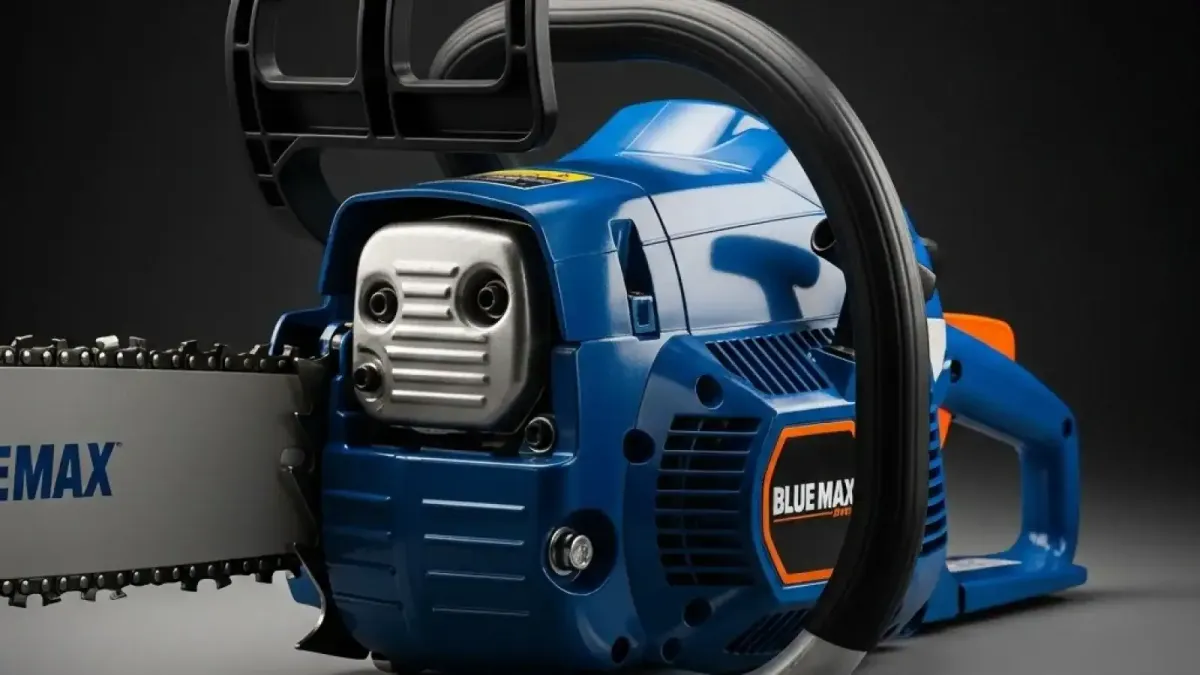
Blue Max tools are manufactured by North America Tool Industries (NATI) and are predominantly engineered for mid-duty consumer tasks. Unlike professional units built around magnesium crankcases meant to survive 40 hours of weekly abuse, these saws utilize high-impact polymer housings built around cast-aluminum cylinder blocks. They generally hit the market in the 45cc to 57cc range, which puts them squarely in the medium-to-heavy homeowner category as far as raw displacement goes.
The standard workhorse in their lineup is the Blue Max 52cc 20-inch gas chainsaw (often cataloged as model 8901 or similar variants). Operating a 52cc two-stroke engine provides roughly 2.4 to 2.8 horsepower, allowing the powerhead to pull a 20-inch cutting bar through medium hardwoods like oak, maple, and hickory. For context, commercial ground saws of similar displacement often cost three times as much, making the Blue Max an appealing entry point for rural property owners who want a large saw capacity without a heavy capital investment.
It is important to evaluate what these specifications mean on paper versus actual field performance. While the raw engine size is impressive for the price, the drive components, fuel lines, and stock chains are sourced to keep production costs low. Understanding how to work with these design trade-offs allows you to extract maximum utility from the machine without damaging the engine or putting yourself at risk.
| Feature / Specification | Blue Max 52cc (Typical Model) | Standard Mid-Range Competitor |
|---|---|---|
| Engine Displacement | 52.0 cc (2-stroke air-cooled) | 40.0 - 45.0 cc |
| Power Output | ~2.7 HP / 2.0 kW | 2.1 - 2.4 HP |
| Bar & Chain Combination | 20-inch Bar (.325" Pitch, .058" Gauge) | 16-inch to 18-inch Bar |
| Fuel Mix Ratio | 40:1 (Gasoline to 2-stroke oil) | 50:1 (Gasoline to 2-Stroke Oil) |
| Weight (Dry Powerhead) | 12.5 lbs (5.7 kg) | 10.5 - 11.5 lbs |
Field Performance and Hands-On Operation
Running a budget gas saw requires a slightly different approach than operating a professional ground saw. The carburetion on Blue Max units comes set from the factory to satisfy standard emissions, but two-stroke engines are sensitive to ambient temperature, elevation, and fuel quality. When cold starting, pulling the choke fully out, priming the bulb 5 to 7 times, and setting the master switch to ON will usually yield a pop within three to four pulls of the recoil starter.
Once running, the anti-vibration system uses steel coil springs combined with rubber buffer mounts to isolate engine harmonics from the handles. While not as plush as high-end professional vibration isolation systems, it adequately reduces hand fatigue during short cutting sessions. The automatic chain oiler is adjustable via a recessed screw on the underside of the crankcase, allowing you to increase oil delivery when working with dense, dry wood or longer guide bars.
Pro tip: On generic and budget import powerheads, the stock drive side plates and bar studs can stretch slightly during the first couple of thermal cycles. Always check your chain tension after the first 10 minutes of cutting on a new saw. A loose chain on a 20-inch bar can easily throw off the nose sprocket or derail entirely, damaging the drive links and posing a severe safety hazard.
When cutting logs larger than 12 inches in diameter, let the RPMs stay high before entering the wood. Avoid applying heavy downward arm force; instead, let the bumper spikes rest against the log and pivot the saw frame smoothy through the cut. For those getting started with timber processing, learning proper cutting techniques and safety practices will preserve both your body and your equipment over a long afternoon of work.
Addressing Common Troubleshooting and Maintenance Issues
Like many value-focused power tools, long-term owner satisfaction with a Blue Max saw depends heavily on preventive maintenance. The single most common issue reported by users involves hard starting or bogging down under load after a few months of storage. In nearly eight out of ten cases, this is caused by ethanol-blended gasoline breaking down inside the small passages of the carburetor, creating gum deposits that clog the jetting.
To avoid fuel delivery issues, always mix your two-stroke fuel using fresh 89+ octane ethanol-free gasoline paired with a high-quality synthetic 2-stroke air-cooled engine oil mixed at a strict 40:1 ratio (unless your specific manual designates otherwise). If the saw bogs when opening the throttle, inspecting the soft flexible rubber fuel lines inside the tank is your second diagnostic step, as low-cost fuel lines can stiffen, crack, or pull air into the system over time.
- Engine Won't Fire: Check for a wet, oil-fouled spark plug or a flooded crankcase; pull the plug, turn the saw upside down, and pull the recoil cord several times to clear excess fuel.
- Chain Keeps Running at Idle: Inspect the clutch springs for stretch or lower the idle speed screw (LA/I) on the side of the carburetor until the clutch disengages.
- Bar Runs Hot or Smokes: Clear wood dust and compacted debris from the oil passage hole near the bar mounting studs, and make sure the oil reservoir is filled every time you refuel.
- Dull Cutting Action: Stock factory chains lack hard-chrome plating; upgrading to an aftermarket Oregon or Carlton chain instantly boosts cutting speed by up to 30 percent.
When looking for replacement wear items like air filters, pull starter reels, or carburetors, you don't always need exact brand-name parts. The underlying chassis design of many Blue Max models shares geometry with standardized 4500, 5200, and 5800 import chainsaw platforms. Knowing how to source compatible components or selecting the right chainsaw parts and accessories will keep your machine cutting reliably season after season without expensive dealer visits.
Optimizing Performance: The Blue Max Electric Sharpener and Accessories
A chainsaw is only as good as the edge on its cutters. Because stock budget chains dull rapidly when contacting dirt, bark grit, or ground debris, keeping a sharpening system close by is essential. The bench-mounted Blue Max 120-volt electric chainsaw sharpener is a popular companion tool designed to quickly restore factory cutter angles without requiring tedious manual hand filing.
Electric grinders use a small abrasive wheel spinning at roughly 4,200 RPM to dress the top plate and side plate of each cutter link. When setting up the sharpener, match the vise angle to the chain's specifications—typically 30 degrees for standard full-chisel or semi-chisel chains. Adjust the depth stop bolt so the wheel just brushes the gullet of the tooth without cutting deep into the drive link tie straps, which could weaken the chain structure.
Proper personal protective equipment (PPE) should never be treated as an option, regardless of how much you spent on your saw. Always operate your equipment wearing cut-retardant chainsaw chaps (rated to ASTM F1897 standards), an ANSI-approved hard hat with an integrated mesh face shield, heavy leather work gloves, and ear protection with an NRR rating of at least 25 dB. A budget saw cuts human tissue with the exact same force as an expensive commercial unit.
Frequently Asked Questions
What is the correct fuel-to-oil mix ratio for a Blue Max chainsaw?
Most Blue Max 2-stroke engines require a 40:1 gas-to-oil ratio (which equals approximately 3.2 fluid ounces of 2-stroke oil per 1 gallon of gasoline). Always check your specific model manual, and use fresh, ethanol-free gasoline mixed with high-quality synthetic 2-stroke oil to prevent carburetor corrosion.
Can I put a STIHL or Husqvarna chain on my Blue Max saw?
Yes, provided the replacement chain matches three exact specifications: the bar length (e.g., 20 inches), the pitch (commonly .325" on these models), the gauge (.058" or .050"), and the exact count of drive links. Brands like Oregon, Carlton, and Stihl make replacement loops that fit Blue Max guide bars perfectly.
Why does my Blue Max chainsaw chain keep loosening while cutting?
New chains naturally stretch when first placed under load due to friction heat. Additionally, verify that you are lifting the nose of the guide bar upward while tightening the bar side-case nuts. If you tighten the nuts without holding the bar nose up, normal cutting forces will push the bar back, causing instant slack in the chain.
Where can I find replacement parts if the original manufacturer is out of stock?
Because these saws utilize standard import 52cc/58cc engine blocks (often referred to in small engine circles as 5200 chassis), generic small engine components sold on major online marketplaces are usually direct matches. Search using your engine displacement and the specific part name, such as "52cc chainsaw carburetor" or "52cc recoil starter pull assembly."
Practical Recommendation for Buyers
If you are a suburban homeowner facing seasonal yard cleanup, occasional storm debris, or cutting two to three cords of soft-to-medium firewood every autumn, a Blue Max gas chainsaw delivers solid engine performance for your dollar. Buy the 52cc 20-inch model if you need maximum reach, immediately swap out the factory fuel with a fresh 40:1 ethanol-free mix, purchase a backup Oregon chain, and invest in a quality pair of protective chaps before making your first cut.
Sources
- OSHA Safety Guidelines for Chainsaw Operations
- ANSI B175.1 Safety Requirements for Gasoline-Powered Chainsaws
- Wikipedia: Chainsaw Components and Operation Overview