
Beyond the Chainsaw: Your Complete Guide to Essential Yard Cleanup Power Tools

Why Your Chainsaw Needs Companions for a Picture-Perfect Yard
You’ve mastered your chainsaw, felling trees, bucking logs, and managing brush like a pro. That’s fantastic! But let’s be honest, a perfectly cut log or a neatly limbed branch is just one piece of the puzzle when it comes to maintaining a truly pristine property. What about the sprawling lawn, the overgrown edges, or the endless piles of leaves and debris after a big storm? A chainsaw, as mighty as it is, simply isn’t designed for the finesse of lawn care or the sweep of cleanup. To achieve that polished, envy-of-the-neighborhood look, you need an arsenal of complementary power tools. Think of your chainsaw as the heavy artillery, and these other tools as the precision instruments that finish the job.
Table Of Content
- Why Your Chainsaw Needs Companions for a Picture-Perfect Yard
- The Foundation of Clean: Mastering Your Lawn Mower
- Push, Self-Propelled, Riding, Zero-Turn
- Engine Power and Deck Size: What Matters Most
- Mower Maintenance Essentials
- The Detail Work: String Trimmers, Edgers, and Hedge Trimmers
- String Trimmers: Defining the Edges
- Hedge Trimmers: Sculpting Your Greenery
- The Grand Finale: Leaf Blowers and Vacuums for a Spotless Finish
- Handheld, Backpack, Walk-Behind: Choosing Your Power
- CFM & MPH: Understanding Air Power
- Building Your Cleanup Arsenal: Gas, Electric, or Battery?
- The Power Source Dilemma
- Investing in a System
- Beyond the Cut – Towards a Truly Tidy Property
As an experienced outdoor power equipment specialist, I’ve seen countless homeowners invest in a great chainsaw but then struggle with the aftermath, leaving their yard looking half-done. The truth is, a truly well-maintained property is the result of a coordinated effort from several specialized machines. This guide will walk you through the essential power tools that pick up where your chainsaw leaves off, ensuring your yard is not just managed, but immaculate. We’ll dive into everything from the foundation of a great lawn to the fine details and the final sweep, helping you choose the right tools and use them effectively.
The Foundation of Clean: Mastering Your Lawn Mower
Every beautiful yard starts with a well-maintained lawn. Your lawn mower isn’t just a machine; it’s the bedrock of your property’s aesthetic. Choosing the right type and understanding its capabilities are crucial for efficient and effective grass cutting. This is where the magic begins, transforming unruly growth into a neat carpet.
Push, Self-Propelled, Riding, Zero-Turn
For smaller yards (under a quarter-acre), a traditional push mower, either electric or gas-powered, might suffice. They’re affordable and offer a good workout. Step up to a self-propelled mower for yards between a quarter and half an acre. These machines power their own wheels, significantly reducing fatigue, especially on sloped terrain. You simply guide them. For larger properties, typically half an acre and up, a riding mower or a zero-turn mower becomes indispensable. Riding mowers are like small tractors, great for general lawn care, while zero-turn mowers, with their independent wheel motors, offer incredible maneuverability and speed, making quick work of complex landscapes with many obstacles. Honestly, once you try a zero-turn, you’ll wonder how you ever lived without it for a large property.
Engine Power and Deck Size: What Matters Most
When selecting a mower, consider its engine power and deck size – the width of the cutting path. A common residential push mower might have a 140cc to 190cc gas engine and a 20-22 inch deck. For riding mowers, engines can range from 15 to 25 horsepower, with deck sizes spanning 42 to 60 inches or more. A larger deck means fewer passes, saving you time. However, remember that larger decks are less agile around tight corners or garden beds. Match the engine power to your lawn size and grass type; thicker, taller grass demands more power. Don’t skimp here; an underpowered mower will bog down and leave an uneven cut.
Mower Maintenance Essentials
Just like your chainsaw, your mower needs consistent care. Regularly check and sharpen or replace the blades – a sharp blade cuts cleanly, preventing grass diseases. Change the oil, air filter, and spark plug according to the manufacturer’s schedule, typically once per season for most homeowners. For a gas mower, always use fresh fuel, and consider a fuel stabilizer if storing it for extended periods. Keep the underside of the deck clean of caked-on grass clippings; this improves airflow and cutting performance. Proper maintenance ensures your mower runs efficiently and lasts for years, giving you that perfect lawn every time.
The Detail Work: String Trimmers, Edgers, and Hedge Trimmers
Once the main lawn is cut, it’s time to bring out the precision tools. These are the machines that define the edges, sculpt the bushes, and give your yard that professional, finished look. Without them, even the best-mown lawn can look untidy.
String Trimmers: Defining the Edges
A string trimmer (often called a weed eater or weed wacker) is crucial for areas your mower can’t reach: around trees, fences, garden beds, and along walkways. They come in gas, electric (corded), and battery-powered models. Gas trimmers offer the most power and run time, ideal for larger properties and tougher weeds. Battery models have come a long way, offering decent power and convenience for medium-sized yards without the noise or fumes. When choosing, look at engine size (25-30cc for gas), battery voltage (20V-80V for battery), and head type. A bump-feed head is common for easy line advancement, while fixed-line heads are great for heavy-duty work. For impeccable lines along driveways and sidewalks, a dedicated edger, with its vertical metal blade, will give you a much cleaner cut than a string trimmer ever could. Trust me, the difference is night and day.
Hedge Trimmers: Sculpting Your Greenery
Hedge trimmers are your go-to for shaping hedges, shrubs, and ornamental bushes. They feature long, reciprocating blades that make quick work of unruly growth. Blade length varies, typically from 18 to 26 inches, with longer blades suitable for larger hedges and wider cuts, while shorter blades offer more control for intricate shaping. Look for models with dual-action blades for reduced vibration and cleaner cuts. Gas-powered hedge trimmers provide maximum power for thick, woody branches, while battery-powered options offer lightweight maneuverability and quiet operation, perfect for routine maintenance around the house. For those hard-to-reach tall hedges, a pole hedge trimmer can save you from teetering on a ladder, a safety aspect that’s always a priority here at Best Professional Chainsaw.
The Grand Finale: Leaf Blowers and Vacuums for a Spotless Finish
After all the cutting and trimming, you’re left with clippings, leaves, and debris. This is where the leaf blower steps in, often the most satisfying tool to use for that final, immaculate sweep. It’s truly the cleanup king.
Handheld, Backpack, Walk-Behind: Choosing Your Power
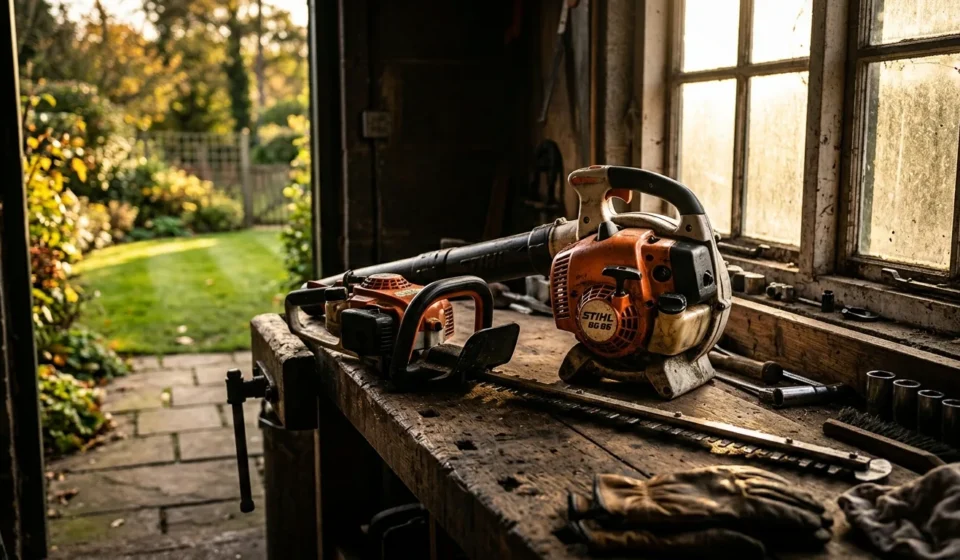
Leaf blowers are indispensable for clearing driveways, patios, and lawns of leaves, grass clippings, and light debris. For smaller tasks or quick tidying, a handheld blower (electric, battery, or small gas engine) is perfect. For medium to large properties, or significant leaf accumulation, a backpack blower is a game-changer. These gas-powered beasts, like the Stihl BR 800 X Magnum or the Echo PB-9010T, offer superior power and comfort for extended use. The weight is distributed across your back, making hours of work feel like minutes compared to lugging a handheld unit. For truly massive properties or commercial use, a walk-behind blower offers the ultimate clearing power, often with wider nozzles and higher air volume.
CFM & MPH: Understanding Air Power
When comparing blowers, you’ll often see two key metrics: CFM (Cubic Feet per Minute) and MPH (Miles Per Hour). CFM measures the volume of air expelled, while MPH measures the speed of that air. A high CFM is great for moving large piles of lighter debris quickly, while a high MPH is effective for dislodging heavy, wet leaves or matted debris. Often, a good blower strikes a balance, offering both strong volume and speed. For instance, a quality homeowner backpack blower might offer around 700-800 CFM and 170-200 MPH, providing excellent clearing power. Don’t get bogged down in just one number; consider how they work together for effective cleanup. Honestly, a good blower is a game-changer for finishing strong.
Building Your Cleanup Arsenal: Gas, Electric, or Battery?
Now that we’ve covered the essential tools, a crucial decision remains: what power source is right for you? This choice impacts convenience, power, noise, and maintenance, and it’s something I see many homeowners grapple with.
The Power Source Dilemma
Gas-powered tools generally offer the most power and unlimited runtime (as long as you have fuel), making them ideal for large properties, heavy-duty tasks, and professional use. However, they require more maintenance, produce emissions, and are noisier. Corded electric tools are lightweight, quiet, and require minimal maintenance, but they’re limited by the length of your extension cord, suitable mostly for smaller yards. Battery-powered tools, on the other hand, offer the best of both worlds for many homeowners: cordless freedom, quieter operation, zero emissions, and significantly less maintenance than gas. Their power and runtime have improved dramatically in recent years, with 40V, 60V, and even 80V systems becoming common. The main limitation is battery life and the initial cost of batteries and chargers.
Investing in a System
For example, imagine this situation: you’ve got a decent-sized suburban yard, maybe half an acre. You start with a gas mower, then buy a cheap corded trimmer, and a small handheld battery blower from different brands. Soon, you’re juggling multiple chargers, different types of fuel, and tools that don’t quite meet your needs. My advice? Consider investing in a battery system from a single manufacturer (e.g., DeWalt, EGO, Greenworks, Milwaukee, Stihl, Husqvarna). Many brands now offer a suite of tools – mowers, trimmers, blowers, hedge trimmers, even small chainsaws – all powered by interchangeable batteries. This streamlines charging, reduces clutter, and ensures compatibility. For most homeowners and even some landowners, a robust 40V or 60V battery system is more than capable of handling all but the most demanding tasks, simplifying your routine considerably.
Beyond the Cut – Towards a Truly Tidy Property
You’ve invested in a great chainsaw, and that’s a fantastic start for managing the heavier woodcutting tasks. But remember, a truly impeccable property demands more than just big cuts. It requires the precise grooming of a mower, the detailed edging of a trimmer, the artistic shaping of a hedge trimmer, and the final, sweeping elegance of a leaf blower. These tools aren’t just accessories; they are essential partners in transforming your outdoor space from good to genuinely outstanding.
By understanding the purpose of each tool, selecting the right type for your property size and needs, and committing to regular maintenance, you’ll not only enhance your yard’s appearance but also make your outdoor chores far more efficient and enjoyable. Take pride in your property, invest wisely in your power equipment, and enjoy the satisfaction of a job well done, from the largest tree down to the last fallen leaf. Here at Best Professional Chainsaw, we believe in equipping you for success, and that means looking beyond just the chain and bar.