

Introduction: Embrace the Warmth of DIY Firewood
There’s a unique satisfaction that comes from heating your home with firewood you’ve processed yourself. It’s not just about saving money; it’s about connecting with nature, getting a great workout, and enjoying the crackle of a fire fueled by your own effort. But before you dive into a pile of logs, it’s crucial to understand how to maximize both your efficiency and, most importantly, your safety. As an experienced outdoor power equipment specialist, I’m here to guide you through the process, step by step.
Table Of Content
- Introduction: Embrace the Warmth of DIY Firewood
- Safety First: Your Non-Negotiable Foundation
- Essential Personal Protective Equipment (PPE)
- Selecting Your Firewood Chainsaw
- Gas vs. Electric: What’s Right for You?
- Bar Length and Power Considerations
- Beyond the Chainsaw: Other Essential Tools
- Efficient Cutting Techniques (Bucking)
- Secure Your Wood
- Master the Cut
- Kickback Prevention
- Splitting Your Firewood
- Manual vs. Hydraulic Splitters
- Optimal Splitting Technique
- Chainsaw Maintenance: Keeping Your Tool Sharp and Safe
- Chain Sharpening
- Air Filter and Spark Plug
- Bar Maintenance
- Storing and Seasoning Your Firewood
- Conclusion: Enjoy the Fruits of Your Labor
Safety First: Your Non-Negotiable Foundation
Working with chainsaws and heavy logs demands respect and vigilance. Skipping safety precautions is never an option. Always operate with a clear head and an understanding of your equipment.
Essential Personal Protective Equipment (PPE)
Before you even think about starting your chainsaw, gear up properly:
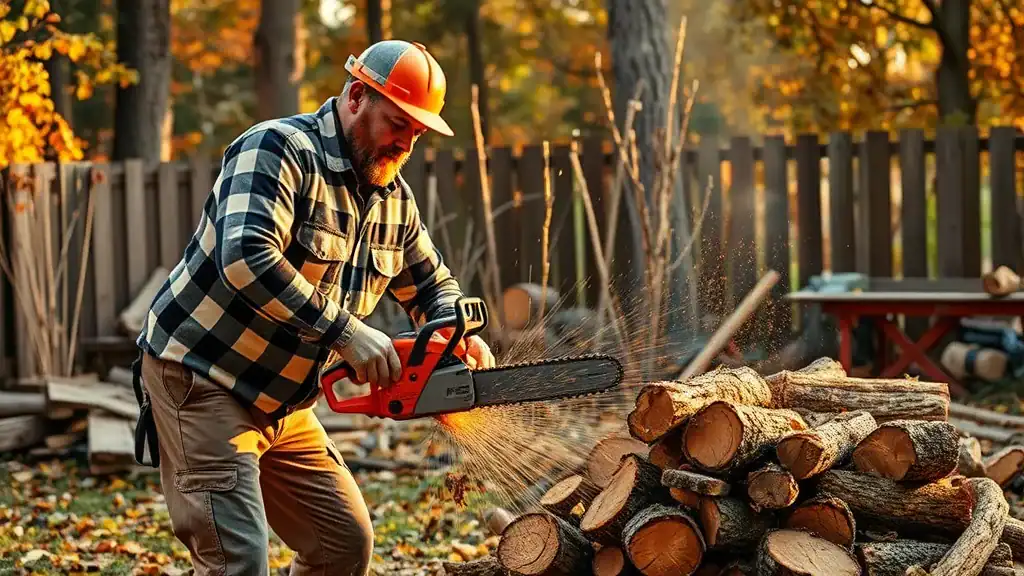
- Head Protection: A hard hat with a face shield and hearing protection is crucial. Look for combo helmets designed for forestry work.
- Eye Protection: Even with a face shield, safety glasses or goggles protect against fine debris.
- Hearing Protection: Chainsaws are loud. Earmuffs or earplugs are mandatory to prevent permanent hearing damage.
- Hand Protection: Heavy-duty work gloves improve grip and protect against splinters and cuts.
- Leg Protection: Chainsaw chaps or pants are non-negotiable. They are designed with protective fibers that can stop a moving chain in milliseconds.
- Foot Protection: Steel-toed boots with good ankle support protect your feet and provide stable footing.
Selecting Your Firewood Chainsaw
The right tool makes all the difference. For most homeowners tackling firewood, a medium-sized chainsaw is ideal.
Gas vs. Electric: What’s Right for You?
- Corded Electric Chainsaws: Best for smaller jobs near an outlet. They are lighter, quieter, and require less maintenance. Good for limbing or cutting smaller logs (up to 10-12 inches diameter).
- Battery-Powered Chainsaws: Offer cordless convenience with less noise and emissions than gas models. Modern battery chainsaws (e.g., EGO Power+, Greenworks) can handle significant cutting, often comparable to small gas saws, especially for logs up to 14-16 inches. Great for homeowners who value ease of use and reduced maintenance.
- Gas-Powered Chainsaws: The workhorse for larger volumes of firewood. They offer superior power and run time, essential for felling small trees or bucking large logs. For typical homeowner firewood needs, a saw in the 40-50cc range (like a Stihl MS 250 or Husqvarna 450 Rancher) with a 16-18 inch bar is a fantastic all-rounder.
Bar Length and Power Considerations
Your chainsaw’s bar length should be about 2 inches longer than the diameter of the largest log you expect to cut. For most firewood (logs typically 8-16 inches in diameter), a 16-18 inch bar is sufficient. Don’t go excessively long; a longer bar on an underpowered saw can lead to inefficient cutting and increased user fatigue.
Beyond the Chainsaw: Other Essential Tools
- Sawbuck/Sawhorse: A sturdy sawbuck holds logs securely off the ground, making cutting safer and more efficient by reducing bending and preventing your chain from hitting the dirt.
- Log Splitter: For logs larger than 6-8 inches in diameter, a splitter saves immense time and effort. Options range from manual kinetic splitters to hydraulic models (5-20+ tons). For occasional use, a 7-10 ton electric hydraulic splitter is often perfect for homeowners.
- Maul and Wedges: For splitting particularly knotty or oversized pieces that your splitter can’t handle, a heavy splitting maul and steel or plastic wedges are invaluable.
- Cant Hook/Log Tongs: These tools help you safely roll and move heavy logs without straining your back.
Efficient Cutting Techniques (Bucking)
Bucking is the process of cutting a felled tree or large log into smaller, manageable lengths for splitting. Standard firewood length is usually 16-18 inches to fit most fireboxes.
Secure Your Wood
Always work with stable wood. Use a sawbuck or block your logs so they can’t roll or shift. Avoid cutting logs directly on the ground, as this dulls your chain quickly.
Master the Cut
When bucking, identify potential pinch points. If the log is supported at both ends and sags in the middle, cut from the top (overbucking) until about two-thirds through, then roll the log and finish from the bottom (underbucking) to prevent pinching your bar. If the log is supported in the middle with ends hanging free, cut from the bottom first (underbucking) about one-third through, then finish from the top (overbucking). Use your chainsaw’s bumper spikes (dogs) for leverage.
Kickback Prevention
Kickback is when the chainsaw rapidly throws back towards the operator. It’s extremely dangerous. Always hold the chainsaw firmly with both hands, keep your elbows locked, and maintain a balanced stance. Avoid cutting with the tip of the bar (the kickback zone).
Splitting Your Firewood
Once bucked, it’s time to split your wood.
Manual vs. Hydraulic Splitters
- Manual Splitting: Using a maul and wedges is good for smaller quantities or as a backup. It’s a great workout but can be slow and physically demanding.
- Hydraulic Splitters: These are a game-changer for efficiency. Electric models are quieter and require less maintenance than gas-powered ones. For most homeowners, a 7-ton electric splitter (e.g., PowerSmart PS90) can handle common hardwood logs.
Optimal Splitting Technique
When using a splitter, place the log on its end, ensuring it’s stable. Start with the toughest, knottiest pieces first, as they can sometimes get easier to split after a few blows. Always keep hands clear of the splitting wedge and ram.
Chainsaw Maintenance: Keeping Your Tool Sharp and Safe
A well-maintained chainsaw is a safe and efficient chainsaw.
Chain Sharpening
A dull chain makes cutting difficult, dangerous, and puts unnecessary strain on your saw. Sharpen your chain regularly with a round file of the correct size (often 5/32″ or 3/16″) and a filing guide, or consider a dedicated electric sharpener for convenience. A sharp chain produces clean wood chips, not sawdust.
Air Filter and Spark Plug
Clean your air filter after every few hours of use to ensure proper engine performance. Check and clean/replace your spark plug annually or if you notice starting issues.
Bar Maintenance
Keep your bar groove clean and free of debris. Flip your bar periodically to ensure even wear. Check the sprocket nose (if present) for proper lubrication and wear.
Storing and Seasoning Your Firewood
After processing, stack your firewood in a well-ventilated area, off the ground, and ideally covered to protect it from rain. This allows it to “season” – drying out the moisture content. Properly seasoned wood burns hotter, cleaner, and produces less creosote buildup in your chimney. Aim for 6-12 months of seasoning, depending on the wood type and climate.
Conclusion: Enjoy the Fruits of Your Labor
Processing your own firewood is a rewarding endeavor that connects you with your home’s warmth on a deeper level. By prioritizing safety, choosing the right tools, employing efficient techniques, and maintaining your equipment, you can turn a pile of logs into a cozy fire with confidence and satisfaction. Stay safe, stay warm, and enjoy the fire!