

Taming the Aftermath: Why a Leaf Blower is Your Best Friend Post-Chainsaw
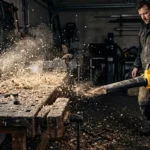
You’ve just spent a good chunk of time with your chainsaw, felling a troublesome tree, bucking logs for firewood, or clearing stubborn brush. The job is done, the wood is cut, but now you’re staring at the battlefield: a sprawling mess of sawdust, wood chips, bark, and small twigs. It’s an unavoidable part of chainsaw work, but honestly, it’s also the part many of us dread. Sweeping by hand is tedious, raking is often ineffective for fine dust, and leaving it can be a slip hazard, not to mention an eyesore.
Table Of Content
- Taming the Aftermath: Why a Leaf Blower is Your Best Friend Post-Chainsaw
- Understanding the Power: CFM, MPH, and Blower Types
- Choosing Your Cleanup Champion: Key Features for Chainsaw Debris
- Nozzle Design and Attachments
- Ergonomics and Weight
- Vacuum/Mulching Capability (Optional but Handy)
- Noise Level
- Top Picks for Different Needs: Finding Your Ideal Blower
- For the Serious Landowner & Pro-Amateur: High-Power Gas Backpack Blower
- For Mid-Sized Properties & Frequent Use: High-Performance Battery Blower
- For Smaller Jobs & Convenience: Robust Handheld Gas or High-Power Battery Blower
- Pro Tips for Efficient Cleanup and Safety
- The Final Sweep: A Clean Site is a Safe Site
That’s where a good leaf blower steps in, transforming what could be hours of back-breaking cleanup into a swift, satisfying task. Forget those flimsy electric models meant for a few leaves; we’re talking about serious power to tackle substantial chainsaw debris cleanup. As a seasoned pro, I can tell you, the right blower makes all the difference, not just in speed, but in how thoroughly you can clear an area, leaving it safe and tidy. But how do you pick the right one from the vast array of options out there?
Understanding the Power: CFM, MPH, and Blower Types
When you’re shopping for a leaf blower, you’ll constantly see two main specifications: CFM and MPH. These aren’t just technical jargon; they’re the heart of a blower’s performance, especially when dealing with heavy wood chip removal. CFM, or Cubic Feet per Minute, measures the volume of air the blower can move. Think of it as the sheer pushing power – how much material it can pick up and move at once. MPH, or Miles Per Hour, is the speed at which that air exits the nozzle. This is critical for dislodging stubborn, wet, or embedded debris.
For fine sawdust and lighter chips, a high CFM is often more important. For packed-down, wet, or larger wood chips and bark, you’ll want a good balance, but high MPH becomes increasingly valuable to break the material free. Generally, for chainsaw debris, aim for a minimum of 400 CFM and 150 MPH. The higher these numbers, the more effortlessly you’ll clear even challenging messes. Let me add something here: don’t get hung up on just one number. A blower with 600 CFM and 180 MPH will likely outperform one with 500 CFM and 220 MPH for general wood chip piles because the volume of air can move more material, even if the air speed is slightly lower.
Leaf blowers come in three primary power sources, each with its pros and cons for chainsaw debris:
- Gas-Powered Blowers: These are the undisputed champions for raw power and extended run times. They typically offer the highest CFM and MPH ratings, making them ideal for large properties, heavy wood chip piles, and continuous work without needing to recharge or find an outlet. They come in handheld and backpack configurations. The downside? They’re louder, heavier, require fuel mixing and maintenance, and produce emissions.
- Corded Electric Blowers: Offering unlimited run time and less noise, corded electric models are excellent for smaller cleanup jobs close to an outdoor power outlet. They’re lighter and require less maintenance than gas models. However, the cord can be a serious limitation, especially when clearing a wide area or working far from your power source. Their power also generally falls short for really heavy wood chips.
- Battery-Powered Blowers: These have come a long way! Modern 40V, 60V, or even 80V battery blowers can pack a serious punch, often rivaling mid-range gas models. They offer cordless convenience, lower noise, zero emissions, and minimal maintenance. The trade-off is run time, which is limited by battery capacity, and they can be pricier upfront due to battery and charger costs. For moderate wood chip removal on mid-sized properties, a powerful battery leaf blower is an excellent, versatile choice.
Choosing Your Cleanup Champion: Key Features for Chainsaw Debris
Beyond CFM and MPH, several features make a leaf blower particularly effective for post-chainsaw cleanup. Consider these points carefully when making your selection:
Nozzle Design and Attachments
The nozzle is where the action happens. A narrow, flat nozzle (sometimes called a “concentrator nozzle”) can significantly boost air speed, helping to dislodge stubborn, wet chips or push heavier debris. A wider, round nozzle is great for moving large volumes of lighter material. Some blowers come with interchangeable nozzles, which in my opinion, makes them much more versatile. For example, imagine this situation: you’ve just felled a large oak, and there’s a huge pile of dry sawdust and small chips. A wide nozzle will clear that quickly. But then you encounter some wet, compacted chips near the stump. Switching to a narrow nozzle will give you the focused power to blast those away.
Ergonomics and Weight
You’ll be swinging this tool around for a while, so comfort matters. Handheld blowers are lighter but can cause arm fatigue during prolonged use, especially more powerful gas models. For extensive chainsaw debris cleanup, a backpack leaf blower is often the superior choice. It distributes the weight across your shoulders and back, allowing for longer, more comfortable operation. Look for padded straps and a good hip belt. Battery models tend to be lighter than gas, making them a good handheld option for many users.
Vacuum/Mulching Capability (Optional but Handy)
Some leaf blowers double as vacuums, sucking up debris into a bag and often mulching it down. While you won’t use this for huge piles of chips, it can be incredibly useful for smaller, confined areas where you want to collect the debris rather than just blow it around. Think about clearing chips from a porch or a workshop corner. It’s an added feature that, while not essential for all wood chip removal, can certainly make certain tasks easier.
Noise Level
Let’s be honest, chainsaws are loud, and so are many leaf blowers. However, if you have close neighbors or work early mornings, a quieter model, typically battery-powered, might be a priority. Gas models are the loudest, followed by corded electric, with battery models generally being the quietest. Always wear hearing protection, regardless of the blower type!
Top Picks for Different Needs: Finding Your Ideal Blower
Choosing the “best” leaf blower really depends on your specific needs, the size of your property, and the typical volume of chainsaw debris you generate. Here’s how I break it down:
For the Serious Landowner & Pro-Amateur: High-Power Gas Backpack Blower
If you’re felling multiple trees, bucking cordwood regularly, or managing a large property with significant wood chip messes, nothing beats a powerful gas backpack leaf blower. These machines, often with engines ranging from 50cc to 70cc, deliver upwards of 700-900+ CFM and 200+ MPH. They can move mountains of chips, wet leaves, and even small stones. Brands like Stihl (e.g., BR 800 C-E Magnum), Husqvarna (e.g., 580BTS), and Echo (e.g., PB-9010T) are industry leaders here. They are an investment but pay dividends in efficiency and reduced back strain.
For Mid-Sized Properties & Frequent Use: High-Performance Battery Blower
Battery technology has advanced so much that high-voltage (60V or 80V) battery-powered blowers are now legitimate contenders for serious chainsaw debris cleanup. Many can hit 600-750 CFM and 170-200 MPH. They’re lighter than gas backpacks, much quieter, and require no fuel. Look at models from EGO (e.g., LB7654), Greenworks Pro (e.g., 80V Backpack Blower), or Milwaukee (e.g., M18 FUEL Blower). They offer fantastic convenience, and with a couple of spare batteries, you can tackle substantial jobs. This is my personal go-to for most residential and mid-sized property cleanups.
For Smaller Jobs & Convenience: Robust Handheld Gas or High-Power Battery Blower
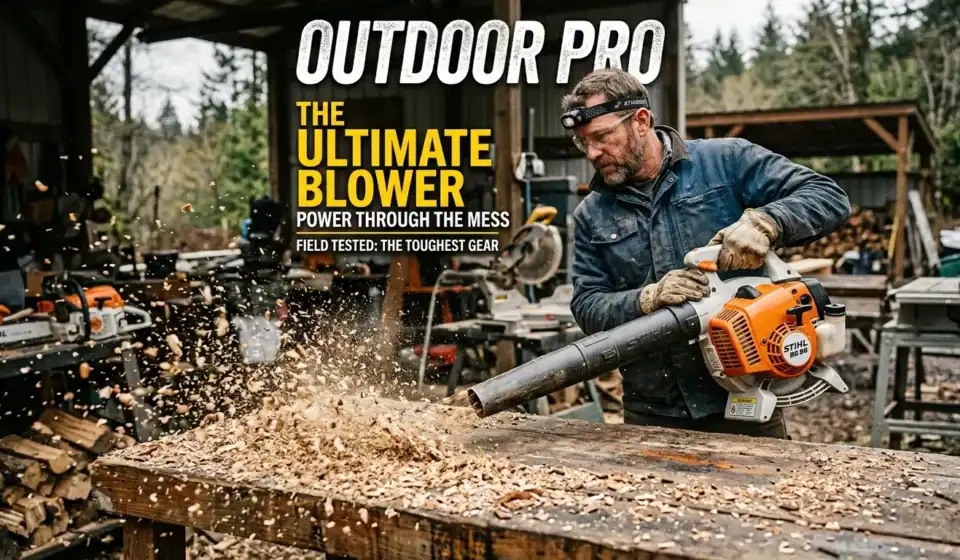
If your chainsaw work is typically limited to smaller projects or quick touch-ups, a robust handheld gas blower (like a Stihl BG 86 or Echo PB-2520) or a powerful handheld battery blower (such as the DeWalt 20V MAX XR Blower or Ryobi 40V HP Jet Fan Blower) might be all you need. They offer good maneuverability and are easier to store. Aim for at least 450 CFM and 160 MPH in this category to ensure they can handle more than just dry leaves.
Pro Tips for Efficient Cleanup and Safety
Okay, so you’ve got your power tool ready. Now, how do you use it effectively for wood chip removal?
- Work in Sections: Don’t try to clear everything at once. Create smaller piles or windrows (long, narrow rows) of debris, then consolidate those into one large pile. This is especially true for heavier chips.
- Angle Matters: Hold the nozzle at a shallow angle to the ground (about 10-20 degrees). This lifts and pushes the debris more effectively than blasting straight down.
- Work with the Wind: If there’s a breeze, use it to your advantage! Blow debris in the direction the wind is already moving it.
- Wear Proper PPE: Just like with your chainsaw, safety gear is non-negotiable. Always wear eye protection (safety glasses or a face shield), hearing protection (earmuffs or earplugs), and sturdy work boots. Dust can get everywhere, so a dust mask isn’t a bad idea either.
- Beware of Projectiles: A powerful blower can launch small rocks, twigs, or other hidden debris with surprising force. Be mindful of your surroundings, especially windows, vehicles, or people. Never aim the blower at anyone or anything that could be damaged.
- Mind Your Neighbors: Gas blowers, especially, can be very noisy. Try to schedule your cleanup during reasonable hours to avoid disturbing others.
The Final Sweep: A Clean Site is a Safe Site
After a demanding day of chainsawing, the last thing you want is a messy, potentially hazardous site. Investing in the right leaf blower for chainsaw debris is not just about convenience; it’s about maintaining a safe work environment and taking pride in a job well done. Whether you opt for the brute force of a gas backpack, the quiet efficiency of a battery model, or the nimble handling of a powerful handheld, choosing wisely will save you time, effort, and frustration. Go ahead, clear that chaos, and enjoy the satisfaction of a job finished from start to perfectly clean finish.