


The Chainsaw’s Supporting Cast: Building Your Complete Yard Arsenal
You’ve mastered your chainsaw, felling trees, bucking logs, and transforming unruly branches into manageable firewood or clear pathways. That’s fantastic! A chainsaw is undoubtedly the king of heavy-duty wood removal. But what good is a perfectly limbed tree if the lawn underneath is a shaggy mess? Or what about those stubborn grass blades creeping along your fence line, and the inevitable confetti of leaves after a good storm? As an experienced outdoor power equipment specialist, I can tell you that a truly pristine yard requires more than just raw cutting power. It demands a symphony of specialized tools, each playing its part to create a harmonious outdoor space.
Table Of Content
- The Chainsaw’s Supporting Cast: Building Your Complete Yard Arsenal
- Taming the Turf: Mowers for Every Lawn
- Push Mowers: For the Everyday Yard
- Riding Mowers: For Expansive Properties
- Detailing the Edges: Trimmers and Edgers
- String Trimmers (Weed Wackers): The Detail Artist
- Edgers: For That Perfect Line
- Clearing the Clutter: Blowers for Debris Management
- Handheld Blowers: Quick & Nimble
- Backpack & Walk-Behind Blowers: For the Big Jobs
- Bringing It All Together: Your Complete Yard Arsenal
Think of your chainsaw as the lead singer of a band; powerful, attention-grabbing, and essential for the big moments. But a band needs a rhythm section, a bassline, and some powerful brass to truly shine. In your yard, those supporting instruments are your mowers, trimmers, and blowers. This guide will walk you through the essential power tools that go beyond the chainsaw, explaining their purpose, types, and how to choose the right ones for your property. My goal is to equip you with the knowledge to create a comprehensive yard care strategy, ensuring every inch of your property looks its best.
Taming the Turf: Mowers for Every Lawn
The foundation of any well-kept yard is a neatly manicured lawn. Depending on the size and terrain of your property, your mowing needs can vary significantly. Let’s break down the main types of lawn mowers.
Push Mowers: For the Everyday Yard
For small to medium-sized lawns (typically under half an acre), a push mower is often the ideal choice. These come in gas, corded electric, and battery-powered versions, each with its own advantages.
- Gas Push Mowers: These offer robust power and unlimited range, making them great for larger residential lots or tough, thick grass. They require fuel and oil maintenance, but models like the Honda HRN216VKAA are known for their reliability and excellent bagging performance.
- Corded Electric Mowers: Lighter, quieter, and emission-free, corded electric models are perfect for smaller urban lawns where proximity to an outdoor outlet isn’t an issue. They’re low maintenance but limited by the length of their extension cord.
- Battery-Powered Push Mowers: Honestly, for most homeowners today, battery-powered mowers are a game-changer. They offer the quiet, low-maintenance benefits of electric models with the freedom of gas. Advances in battery technology mean they can tackle surprising amounts of grass. Look for models with larger voltage (e.g., 40V, 56V, 80V) and amp-hour (Ah) ratings for longer runtimes. The EGO LM2135SP, for instance, is a popular choice for its power and self-propelled convenience.
Regardless of the power source, proper mower maintenance is crucial. Keep your blades sharp for a clean cut that promotes healthy grass, check your oil regularly on gas models, and always use a fuel stabilizer if you’re storing a gas mower for an extended period.
Riding Mowers: For Expansive Properties
If your property stretches over half an acre, or if you simply prefer to sit while you mow, a riding mower becomes an invaluable asset. There are two primary categories:
- Lawn Tractors: These are versatile machines, often capable of pulling trailers, aerators, or dethatchers. They’re good for general yard work and properties with varied terrain, including gentle slopes. The John Deere E100 series is a common sight in many suburban and rural settings.
- Zero-Turn Mowers (ZTRs): Designed for speed and maneuverability, ZTRs can turn on a dime, making them incredibly efficient for large, open lawns with obstacles like trees or flower beds. They offer a professional-grade finish in a fraction of the time compared to traditional lawn tractors. Models like the Husqvarna Z242F are excellent for homeowners with larger, more complex landscapes.
Riding mowers, especially ZTRs, are a significant investment, so consider your property size, terrain, and budget carefully. I always recommend trying one out if possible, as the steering and feel are quite different from a car.
Detailing the Edges: Trimmers and Edgers
Once your main lawn is mowed, the details make all the difference. This is where string trimmers and edgers step in, giving your yard that crisp, finished look.
String Trimmers (Weed Wackers): The Detail Artist
A string trimmer, often called a weed wacker or weed eater, is indispensable for cutting grass and weeds in places your mower can’t reach: around trees, along fences, garden beds, and tight corners. Like mowers, they come in gas, corded electric, and battery-powered options.
- Gas String Trimmers: These provide the most power and runtime, ideal for larger properties with thick brush or extensive trimming needs. The Stihl FS 56 RC-E is a robust, reliable choice for demanding tasks.
- Electric (Corded/Battery) String Trimmers: Lighter, quieter, and easier to start, these are excellent for smaller yards or quick cleanups. Battery models, like the DeWalt DCST972X1 (often compatible with other DeWalt 60V FlexVolt tools you might own), offer fantastic portability without the hassle of cords or gas.
When choosing a string trimmer, consider the line type. Thicker, twisted, or multi-sided lines (like .095-inch diameter) cut through tougher vegetation more effectively than thinner, round lines (like .065-inch). Also, look for convenient head designs, such as “bump feed” heads that automatically advance the line when tapped on the ground.
Edgers: For That Perfect Line
While many string trimmers can be rotated to act as an edger, a dedicated edger creates a far cleaner, more precise line along driveways, sidewalks, and flower beds. They use a rigid blade rather than a string, slicing through turf for a professional finish. If you truly want to make your lawn stand out, a dedicated edger is worth considering. The Echo PE-2620 is a powerful gas-powered option that delivers consistent results.
When using trimmers and edgers, always wear appropriate safety gear, including eye protection and sturdy footwear. Maintain a steady, sweeping motion with your string trimmer, and with an edger, walk slowly and deliberately to achieve those razor-sharp lines. Remember, these tools excel at precision, so take your time and enjoy the transformation.
Clearing the Clutter: Blowers for Debris Management
After all the cutting and trimming, you’ll inevitably have clippings, leaves, and other debris to deal with. This is where leaf blowers become your best friend, making quick work of what would otherwise be a tedious raking job.
Handheld Blowers: Quick & Nimble
For smaller yards, quick cleanups, or moving light debris from patios and driveways, a handheld blower is perfect. They come in gas, corded electric, and battery versions.
- Gas Handheld Blowers: These offer the strongest airflow and portability without being tethered to an outlet. The Husqvarna 125B is a popular model known for its power-to-weight ratio.
- Electric (Corded/Battery) Handheld Blowers: Quieter, lighter, and zero-emission, these are excellent for residential use. Battery technology has made significant strides here; many 40V or 80V models, like the Ryobi 40V HP Brushless Blower, can rival the power of smaller gas units for everyday tasks.
When comparing blowers, look at two key metrics: CFM (Cubic Feet per Minute), which measures the volume of air moved, and MPH (Miles Per Hour), which measures the speed of the air. A higher CFM is generally better for moving large piles of leaves, while higher MPH is great for dislodging stuck-on debris. A good balance of both is ideal.
Backpack & Walk-Behind Blowers: For the Big Jobs
Ever tried raking a half-acre of wet leaves? It’s brutal. For larger properties or heavy seasonal leaf fall, you’ll want something more substantial:
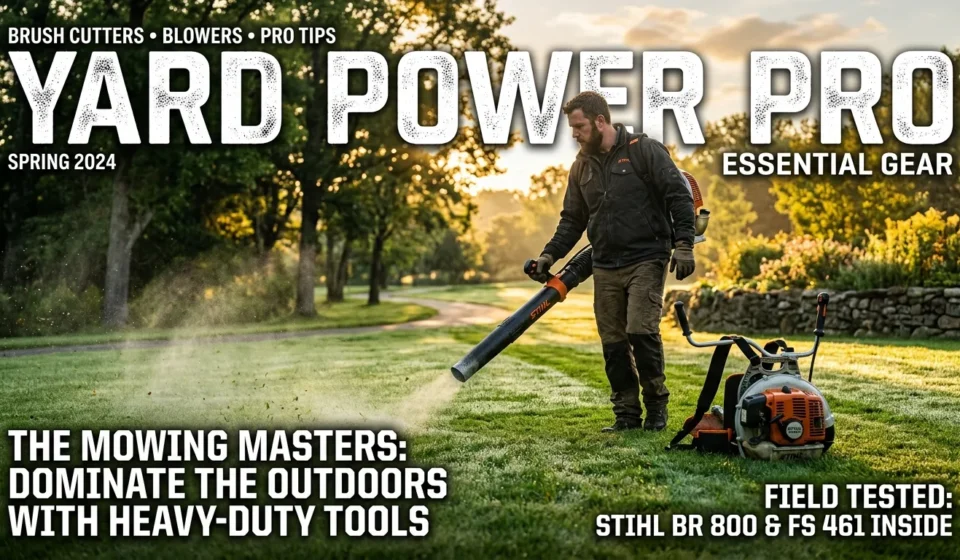
- Backpack Blowers: These powerful gas units distribute the weight across your shoulders, making them more comfortable for extended use. They boast much higher CFM and MPH ratings than handhelds, making them highly efficient for moving vast quantities of leaves. The Stihl BR 600 Magnum is a legendary model in this category, favored by professionals.
- Walk-Behind Blowers: These are typically reserved for very large properties or commercial use, offering extreme power and wide nozzles for clearing massive areas quickly. They’re like a vacuum cleaner for your yard, but instead of sucking, they blast. Brands like Billy Goat offer robust walk-behind options for the most demanding cleanup tasks.
When using a blower, remember to work with the wind, if possible, and always blow debris towards a central collection point. Don’t just scatter it into your neighbor’s yard! Safety glasses are a must, as flying debris can be a real hazard.
Bringing It All Together: Your Complete Yard Arsenal
So, we’ve covered the heavy-hitting tools that complement your trusted chainsaw. The real magic happens when you understand how these tools work together as a cohesive system. Imagine this situation: It’s late fall, your chainsaw has just finished felling a tricky old oak, and now your yard is buried under a mountain of leaves and wood chips. You start with your backpack blower to clear the open areas and pile the leaves. Then, you grab your string trimmer to neaten up around the stump and pathways. Finally, your mower (perhaps with a bagging attachment) makes a final pass, collecting any remaining small debris and leaving a pristine finish. Doesn’t that sound more efficient and satisfying than struggling with a rake?
Based on my experience, a smart homeowner considers their entire tool ecosystem. If you’re already invested in a battery platform for your chainsaw (like a Stihl MSA 220 C-B or a DeWalt FlexVolt), it often makes sense to buy compatible battery-powered mowers, trimmers, and blowers from the same brand. This allows you to share batteries and chargers, simplifying your setup and often saving you money in the long run. If you prefer the raw power and extended runtimes of gasoline, then embracing a full suite of reliable gas-powered tools from brands like Husqvarna, Stihl, or Echo makes perfect sense.
Ultimately, investing in the right supporting cast of outdoor power equipment transforms yard work from a dreaded chore into a satisfying, manageable task. You’ll not only save time and effort but also achieve a level of professionalism in your yard care that you might have thought was out of reach. Remember, safety and consistent maintenance are key across all your tools, from your chainsaw to your leaf blower. Keep them sharp, fueled, and clean, and they’ll serve you well for years to come. Now go out there and make your yard the envy of the neighborhood!