

Beyond the Saw: Why Chainsaw Accessories Are Non-Negotiable
You’ve got a powerful chainsaw in your hands, ready to tackle that stack of firewood or clear some overgrown brush. But here’s a crucial question: is that all you really need? Honestly, just having the saw itself is only half the battle. To truly work safely, efficiently, and to keep your valuable equipment in top shape, a suite of essential chainsaw accessories isn’t just a nice-to-have – it’s an absolute must-have. Think of it this way: you wouldn’t drive a car without seatbelts, would you? The same principle applies here.
Table Of Content
- Beyond the Saw: Why Chainsaw Accessories Are Non-Negotiable
- Safety First: Your Non-Negotiable Personal Protective Equipment (PPE)
- Keeping Your Chainsaw Sharp & Running: Maintenance & Sharpening Tools
- Enhancing Productivity & Control: Cutting & Felling Aids
- Storage, Transport & Beyond: Convenience & Specialized Gear
- Final Cut: Equipping Yourself for Success
As someone who’s spent countless hours with a saw in hand, I can tell you that the right accessories can transform your entire experience. They protect you from injury, ensure your saw runs smoothly for years, and even make tough jobs feel a little easier. In this ultimate guide, we’ll dive deep into everything you need to know about chainsaw accessories, from the absolute non-negotiable safety gear to the tools that keep your chain razor-sharp and your cutting efficient.
Safety First: Your Non-Negotiable Personal Protective Equipment (PPE)
Let’s be blunt: working with a chainsaw is inherently dangerous. There’s a rapidly moving chain, flying debris, and falling timber. This isn’t the time to cut corners. Investing in quality Personal Protective Equipment (PPE) isn’t an expense; it’s an investment in your well-being. So, what exactly do you need?
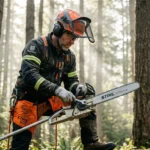
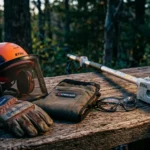
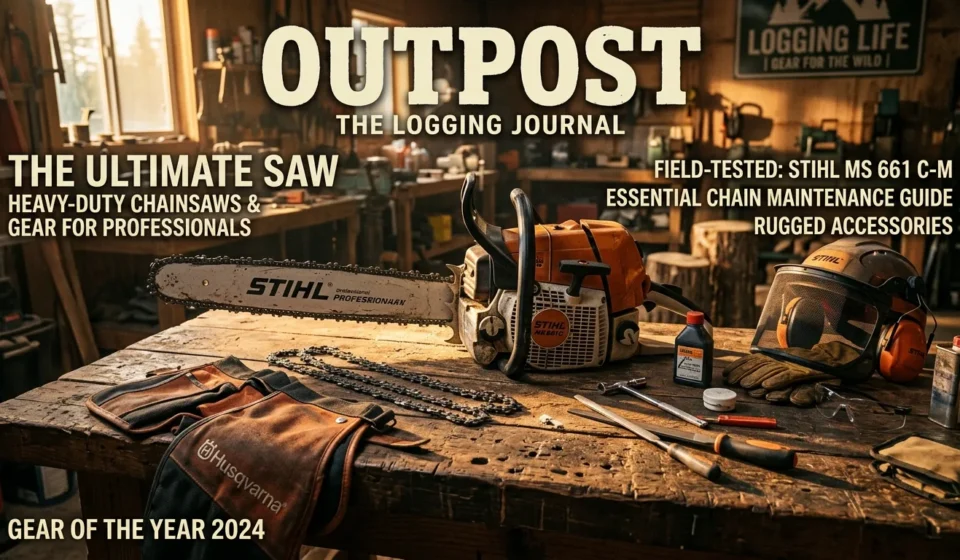
- Chainsaw Helmet System: This isn’t just a hard hat; it’s an integrated system. It typically includes a strong helmet (often ANSI Z89.1 certified) to protect against falling branches, a metal mesh or polycarbonate face shield to guard against chips and kickback, and earmuffs (often NRR 25+ rated) to protect your hearing from the chainsaw’s loud engine. Models like the Stihl Function Universal or Husqvarna Technical Helmet are excellent examples.
- Chainsaw Protective Chaps or Pants: These are, in my opinion, the single most critical piece of PPE after eye protection. They’re designed with multiple layers of ballistic nylon or similar material that, upon contact with a moving chain, are pulled into the sprocket, jamming the chain and stopping the saw. This can literally save your leg from severe injury. Always look for chaps that meet ASTM F1897 or UL standards. Imagine this situation: you’re limbing a branch, your saw slips, and instead of a trip to the emergency room, the chaps grab the chain, leaving you with just a scuff. That’s a game-changer.
- Heavy-Duty Work Gloves: Good gloves protect your hands from splinters, cuts, and vibrations. Look for gloves with good grip, durable leather palms, and ideally, some form of anti-vibration padding.
- Steel-Toe Work Boots: Beyond just regular work boots, opt for steel-toe (or composite-toe) boots with a good grip and ankle support. These protect your feet from dropped logs and the unlikely but devastating event of a chainsaw contacting your foot. Some specialized chainsaw boots even offer cut-resistant material similar to chaps.
Remember, your chainsaw is powerful, but it doesn’t care if you’re wearing protection. You’re the one who needs to make sure you’re geared up every single time.
Keeping Your Chainsaw Sharp & Running: Maintenance & Sharpening Tools
A dull chain is not only inefficient, making your saw work harder, but it’s also incredibly dangerous, increasing the risk of kickback. Proper maintenance is key to both safety and longevity for your equipment. So, what tools are essential for the upkeep?
- Chainsaw Sharpening Kit: This is a non-negotiable. A basic kit usually includes round files (matching your chain’s pitch, e.g., 5/32″ for 3/8″ low profile, 3/16″ for .325″, 7/32″ for 3/8″ full profile), a flat file for depth gauges, and a filing guide or roller guide to ensure you maintain the correct angle. Learning to sharpen your chain freehand is a skill worth developing, but guides make it much easier for beginners to achieve consistent results.
- Bar Groove Cleaner & Bar Dresser: Over time, sawdust and grime build up in your guide bar’s groove, and the rails can develop burrs. A bar groove cleaner (a simple pick-like tool) helps clear debris, while a bar dresser files down burrs, ensuring your chain runs smoothly and reduces wear on the bar itself. Neglecting this can lead to premature bar wear and chain binding.
- Bar & Chain Oil: This isn’t just any oil; it’s specifically formulated to lubricate the chain and guide bar as they move at high speeds. It’s typically tackier to help it cling to the chain. Always keep a good supply on hand. Using the wrong oil can lead to overheating and rapid wear.
- 2-Stroke Engine Oil & Fuel Can: If you have a gas-powered chainsaw, you’ll need specialized 2-stroke engine oil to mix with gasoline at the correct ratio (e.g., 50:1 or 40:1, check your saw’s manual). A dedicated, clearly marked fuel can is vital to prevent accidental contamination or incorrect fuel use. Some modern saws can also run on pre-mixed fuels, which is a convenient option.
- Spark Plug Wrench & Screwdriver: A basic tool kit specific to your chainsaw is often included with the saw. These tools are essential for routine maintenance like checking/replacing the spark plug, adjusting chain tension, and cleaning the air filter.
Regular cleaning and sharpening will not only make your cutting tasks easier but will also significantly extend the life of your chain, bar, and saw engine. A well-maintained saw is a happy and safe saw, in my experience.
Enhancing Productivity & Control: Cutting & Felling Aids
Beyond simply making cuts, there are accessories that help you manage the wood you’re cutting, ensuring safety and efficiency during the entire process. These tools are often overlooked but can dramatically improve your workflow.
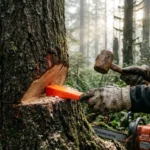
- Felling Wedges: These plastic or aluminum wedges are invaluable when felling trees. Inserted into the back cut, they help prevent the saw from pinching and can assist in controlling the tree’s fall direction. They are designed to be driven in with a hammer, applying pressure to help open the cut. For example, when felling a medium-sized oak, a couple of strategically placed wedges can ensure it falls exactly where you want it, away from structures or other trees.
- Splitting Wedges: Different from felling wedges, these heavy-duty steel wedges are used for splitting logs once they’re on the ground, especially those with knots or stubborn grain. They work by concentrating force to cleave the wood apart.
- Cant Hook / Timber Jack: These tools are lifesavers for moving and positioning logs without straining your back. A cant hook has a sharp point and a movable hook to grip and roll logs. A timber jack, also known as a log jack or log stand, lifts logs off the ground, making limbing and bucking much safer and easier by preventing your saw from hitting the dirt. This also greatly reduces chain dulling.
- Measuring Tape / Log Rule: For consistent firewood lengths or precise timber cuts, a durable measuring tape or a specialized log rule is incredibly useful. Marking your cuts accurately saves time and ensures uniformity.
These aids aren’t just for professionals; even homeowners processing firewood will find their value quickly. They transform awkward, potentially dangerous tasks into manageable, controlled operations.
Storage, Transport & Beyond: Convenience & Specialized Gear
So far we’ve covered safety and performance. Now let’s get to the really critical point of protecting your investment and being prepared for anything that comes your way while out in the field.
- Chainsaw Carrying Case or Scabbard: A durable carrying case or a simple guide bar scabbard (sheath) protects your chainsaw’s bar and chain during transport and storage, preventing damage to the chain and accidental cuts. A full case also keeps dirt and debris out of the engine, which is always a good idea.
- First Aid Kit: This isn’t strictly a chainsaw accessory, but it’s absolutely vital for any outdoor work involving power tools. Accidents can happen, and having a well-stocked first aid kit readily available for cuts, scrapes, or more serious injuries is paramount. Make sure it includes items for severe bleeding control.
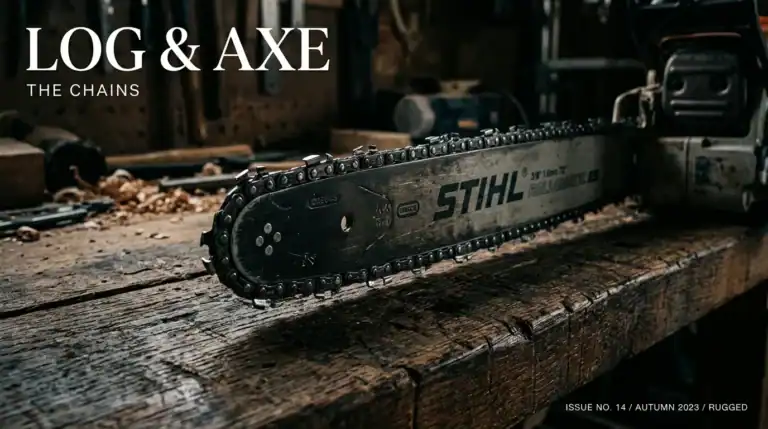
- Spare Chains & Guide Bars: Having a few sharp, spare chains on hand means you can quickly swap out a dull or damaged chain and get back to work without losing momentum. Likewise, a spare guide bar can be a lifesaver if your primary bar gets bent or damaged. This is especially true if you’re working on a larger project away from your workshop.
- Axe or Maul: While your chainsaw does the heavy lifting, a good axe or splitting maul is invaluable for driving wedges, clearing small brush, or splitting stubborn logs that the saw can’t handle.
These accessories provide convenience, ensure you’re prepared for unforeseen circumstances, and prolong the life of your chainsaw. After all, your chainsaw is a significant investment, and taking care of it means it will take care of you for years to come.
Final Cut: Equipping Yourself for Success
Hopefully, by now, you understand that your chainsaw is just one piece of the puzzle. The right accessories aren’t just “extras” or luxuries; they are fundamental to safe, efficient, and enjoyable chainsaw operation. From the moment you put on your PPE to the satisfaction of a clean, controlled cut thanks to your sharp chain and felling aids, these tools enhance every aspect of your experience.
Don’t wait for an accident to realize the importance of safety gear, or for a job to grind to a halt because of a dull chain. Take action now. Evaluate your current setup, identify any gaps, and start building your ultimate chainsaw accessory kit. Your safety, your efficiency, and the lifespan of your valuable equipment depend on it. Happy cutting, and stay safe out there!