



Tired of Dull Chains? Why Electric Sharpeners Are a Game Changer
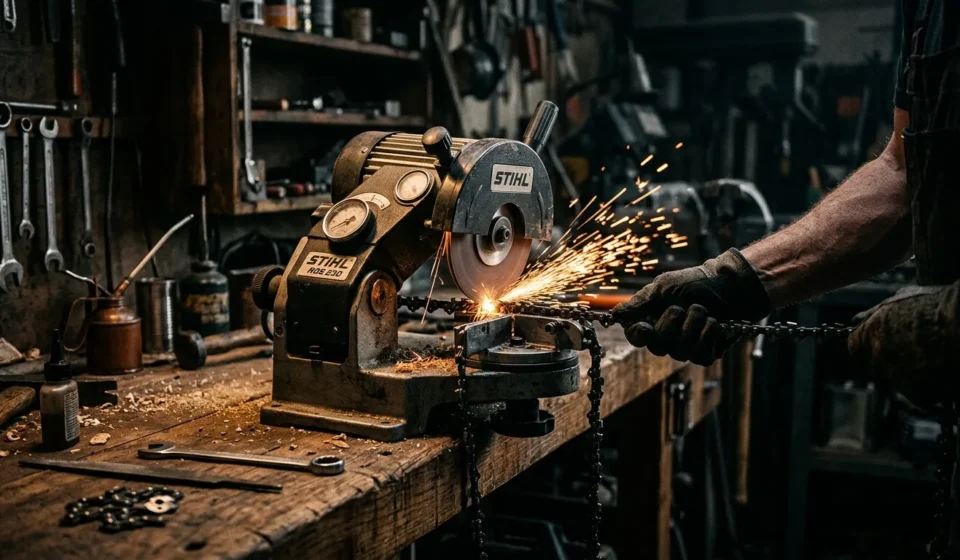
A dull chainsaw chain isn’t just inefficient; it’s downright dangerous and frustrating. It tears wood, wastes fuel, and puts unnecessary strain on both you and your chainsaw. A truly sharp chain, however, slices through timber like butter, making your work safer, faster, and much more enjoyable. But achieving that razor-sharp edge with a hand file can be tedious, inconsistent, and frankly, a bit of an art form that takes years to master. That’s where electric chainsaw sharpeners come into play, transforming a chore into a precise, efficient task.
Table Of Content
- Tired of Dull Chains? Why Electric Sharpeners Are a Game Changer
- The Unbeatable Advantages of Electric Precision Sharpening
- Key Terminology Explained
- Choosing Your Electric Sharpener: What to Look For
- Types of Electric Sharpeners
- Key Features to Prioritize
- Mastering Your Electric Sharpener: A Step-by-Step Guide
- Top Picks: Electric Sharpeners That Deliver Performance
- For the Serious Homeowner/Landowner
- For the Budget-Conscious DIYer
- For the Professional/High-Volume User
- Conclusion: Invest in Sharpness, Invest in Safety
Honestly, I’ve spent countless hours hunched over chains, trying to get that perfect angle with a hand file. And while manual filing has its place for quick touch-ups in the field, for consistent, workshop-quality sharpening, nothing beats an electric sharpener. It brings unparalleled speed and precision right to your workbench, ensuring every tooth is sharpened identically, maximizing your chain’s cutting potential and extending its life. Let’s dive into why these tools are a must-have for any serious chainsaw user.
The Unbeatable Advantages of Electric Precision Sharpening
So, why should you consider investing in an electric chainsaw sharpener? The benefits extend far beyond just saving time, although that’s certainly a huge plus. It’s about achieving a level of consistency and accuracy that’s incredibly difficult to replicate by hand, even for experienced users.
- Unmatched Precision and Consistency: An electric sharpener allows you to set precise angles for each tooth – the top plate cutting angle, the side plate angle, and even the depth gauge. Once set, every tooth is ground to the exact same specification, ensuring your chain cuts straight and efficiently without pulling to one side.
- Significant Time Savings: What might take 20-30 minutes with a hand file can often be done in 5-10 minutes with an electric sharpener. This is especially valuable when you’re dealing with multiple chains or have hit something abrasive, requiring a more aggressive grind.
- Restoring Damaged Chains: When your chain hits dirt, rocks, or even a nail, the damage can be significant. Manual filing might not be enough to restore the cutting edge effectively. Electric sharpeners, with their abrasive grinding wheels, can efficiently remove damaged material and re-establish the proper tooth geometry that allows the chain to cut properly again.
- Reduced Effort and Fatigue: Sharpening chains can be tiring, especially if you have several to do. An electric sharpener does the heavy lifting, reducing physical strain and allowing you to focus on accuracy rather than muscle.
For example, imagine this situation: You’ve been cutting firewood all morning, and suddenly your chain snags on a hidden rock, dulling several teeth instantly. With a hand file, you’d be looking at a significant delay and a lot of elbow grease to get back to work. But with an electric sharpener mounted on your bench, you can quickly and accurately restore that chain to pristine condition, often in less time than it takes to fuel up your saw. It’s a huge boost to productivity and minimizes downtime.
Key Terminology Explained:
- Cutting Angle (Top Plate Filing Angle): This is the angle at which the top of the tooth is filed. Most chainsaw chains require an angle between 25 and 35 degrees, with 30 degrees being common for general cutting. A steeper angle (e.g., 35 degrees) might be used for softer woods, while a shallower one (e.g., 25 degrees) can offer more durability in harder woods or dirty conditions.
- Side Plate Angle: This refers to the angle of the side of the tooth, which is usually around 10 degrees. It helps the tooth clear wood chips efficiently.
- Depth Gauge (Raker): The small bump in front of each cutting tooth. It controls the depth of cut for each tooth. If it’s too high, the chain won’t cut effectively; too low, and it will take too big a bite, leading to kickback and excessive vibration. After sharpening the cutting teeth, the depth gauges often need to be filed down slightly.
Choosing Your Electric Sharpener: What to Look For
Not all electric sharpeners are created equal. When you’re ready to buy, you’ll find a range of options, each with different features and price points. Understanding what makes a good sharpener will help you pick the right one for your needs and budget.
Types of Electric Sharpeners:
- Bench-Mounted Sharpeners: These are the most common and, in my opinion, the best choice for a workshop. They bolt securely to your workbench, offering stability and allowing for precise adjustments. They typically feature a robust motor, a sturdy chain vise, and often come with multiple grinding wheels to accommodate different chain pitches. These are ideal for homeowners, landowners, and even small-scale professionals who sharpen frequently.
- Handheld/Portable Sharpeners: While less common for detailed sharpening, some smaller, battery-powered or corded options exist that are designed for on-site touch-ups. They are generally less precise than bench models but offer convenience for quick fixes when you’re away from the workshop. To be fair, most people still grab a hand file for this scenario, but the option is there.
Key Features to Prioritize:
- Motor Power: Look for a sharpener with sufficient wattage (e.g., 85W to 230W) to handle continuous use without bogging down. A more powerful motor generally means smoother grinding and longer tool life.
- Angle Adjustments: The ability to precisely adjust the grinding angle (both horizontal and vertical) is crucial. Most quality sharpeners offer adjustments from 0-35 degrees for the top plate angle.
- Chain Vise Quality: A sturdy, easy-to-use chain vise that holds the chain firmly is paramount for accuracy and safety. Look for models with a quick-clamping mechanism.
- Grinding Wheels: Ensure the sharpener comes with or can accept wheels of various thicknesses (e.g., 1/8″, 3/16″, 7/32″) to match your chain’s pitch. For example, a 1/8″ (3.2mm) wheel is typically for 1/4″ and 3/8″ low profile chains, while a 3/16″ (4.8mm) wheel suits standard 0.325″ and 3/8″ pitch chains. Always use the correct wheel size.
- Safety Features: A sturdy safety shield to protect your eyes from sparks and debris is essential. An LED work light is also a nice bonus for better visibility.
Mastering Your Electric Sharpener: A Step-by-Step Guide
Using an electric sharpener effectively isn’t complicated, but it does require attention to detail. Follow these steps to achieve consistently sharp chains every time:
- Safety First: Always wear safety glasses and gloves. Grinding wheels can shatter, and sparks will fly.
- Mount the Sharpener: Securely bolt your bench-mounted sharpener to a stable workbench.
- Clean Your Chain: A clean chain is easier to sharpen. Remove any sawdust, pitch, or debris. </li&
- Set the Angles: This is the most critical step. Consult your chainsaw chain manufacturer’s specifications for the recommended top plate filing angle (usually 25-35 degrees) and side plate angle (often 10 degrees). Adjust your sharpener’s vise and grinding head accordingly. Consistency here is key!
- Secure the Chain: Place a cutting tooth into the sharpener’s vise. Ensure it’s held firmly and the grinding wheel aligns perfectly with the tooth’s cutting edge.
- Grind Each Tooth: With light, consistent pressure, bring the grinding wheel down onto the tooth for a brief moment. You’re aiming to remove just enough material to create a sharp edge. Avoid excessive pressure or prolonged grinding, which can overheat and damage the tooth. Sharpen all the teeth facing one direction (e.g., all left-hand cutters), then flip the chain in the vise or adjust the sharpener’s head to sharpen the teeth facing the other direction.
- Adjust Depth Gauges: After sharpening the cutting teeth, the depth gauges (rakers) may become too high, preventing the chain from cutting efficiently. Use a depth gauge filing tool and a flat file to carefully lower them to the recommended height for your chain. This step is often overlooked but vital for optimal cutting performance.
- Inspect and Lubricate: Once all teeth are sharpened and depth gauges are set, inspect your chain for any inconsistencies. Then, apply a light lubricant to prevent rust.
What happens if you skip a step, or if your angles are off? Well, at best, you’ll have a chain that still cuts poorly and inefficiently. At worst, you could face increased kickback risk or premature chain wear. Take your time, set it right, and enjoy the results.
Top Picks: Electric Sharpeners That Deliver Performance
Based on my experience and industry reputation, here are a few electric sharpeners that stand out for their reliability, precision, and value across different user needs. Keep in mind that specific models can vary, but these brands consistently offer quality.
For the Serious Homeowner/Landowner:
- Oregon 410-120 Bench Chain Grinder: This is a favorite for good reason. It’s incredibly robust, offers precise hydraulic-assisted clamping for accurate angle setting, and comes with a powerful motor. It handles a wide range of chain pitches and is built to last. It’s a step up in price but a solid long-term investment for those who sharpen frequently and demand consistent results.
For the Budget-Conscious DIYer:
- Buffalo Tools ECSS Electric Chainsaw Sharpener: If you’re looking for a reliable, no-frills option that gets the job done without breaking the bank, this type of sharpener is often a great choice. While it might not have all the bells and whistles of higher-end models, it offers decent motor power and essential angle adjustments, making it perfect for occasional sharpening needs.
For the Professional/High-Volume User:
- Tecomec Jolly Star / Jolly Chainsaw Sharpeners: These Italian-made sharpeners are often found in professional workshops. They boast heavy-duty construction, powerful motors, and extremely fine-tuned adjustments for critical precision. If you’re running multiple saws daily and need to maintain dozens of chains, a Tecomec unit offers the durability and accuracy required for consistent, professional-grade results.
Conclusion: Invest in Sharpness, Invest in Safety
A sharp chain is the cornerstone of safe and effective chainsaw operation. While manual filing has its place, an electric chainsaw sharpener brings a level of speed, precision, and consistency to your workshop that’s truly invaluable. It transforms a time-consuming, sometimes frustrating task into a quick, satisfying process, ensuring your chains are always ready to perform at their best.
Don’t underestimate the impact a properly sharpened chain has on your productivity and, more importantly, your safety. Investing in a quality electric sharpener is an investment in your tools, your time, and your peace of mind. Get yours today, master the technique, and experience the pure joy of a chainsaw that truly cuts like new. For more detailed insights on chainsaw maintenance and operation, remember to check out the expert resources here at Best Professional Chainsaw.