Echo Chainsaw Parts Explained: Find the Right Parts Fast & Boost Your Saw’s Performance

As a seasoned chainsaw professional, I’ve seen countless tools come and go, but Echo chainsaws consistently stand out for their robust performance, user-friendly design, and impressive durability. From the nimble top-handle CS-2511T, a favorite among arborists, to the homeowner-friendly CS-400 or the powerful CS-590 Timber Wolf, Echo offers reliability that makes them a go-to for many. However, even the most resilient equipment, when put through its paces, will eventually require a new part or a bit of tender loving care. Understanding the ins and outs of Echo chainsaw parts isn’t just about repair; it’s about maximizing your saw’s lifespan, ensuring peak performance, and above all, maintaining safety. This guide will equip you with the knowledge to confidently navigate the world of Echo replacement parts, keeping your chainsaw roaring for years to come.
Table Of Content
- Why Quality Echo Chainsaw Parts Are Non-Negotiable
- Safety First, Always
- Optimal Performance and Efficiency
- Longevity and Protecting Your Investment
- Warranty and Resale Value Considerations
- Deciphering Your Echo Chainsaw: The Power of Diagrams and Part Numbers
- Locating Your Chainsaw’s Identity
- Navigating the Echo Parts Diagram
- Understanding Part Numbers and Their Nuances
- Sourcing Your Echo Chainsaw Parts: Options and Considerations
- Authorized Echo Dealers
- Online Retailers (Amazon, Specialized Parts Stores)
- Local Hardware Stores / Big Box Retailers (Home Depot, Lowe’s)
- Aftermarket Parts: When and How to Choose Wisely
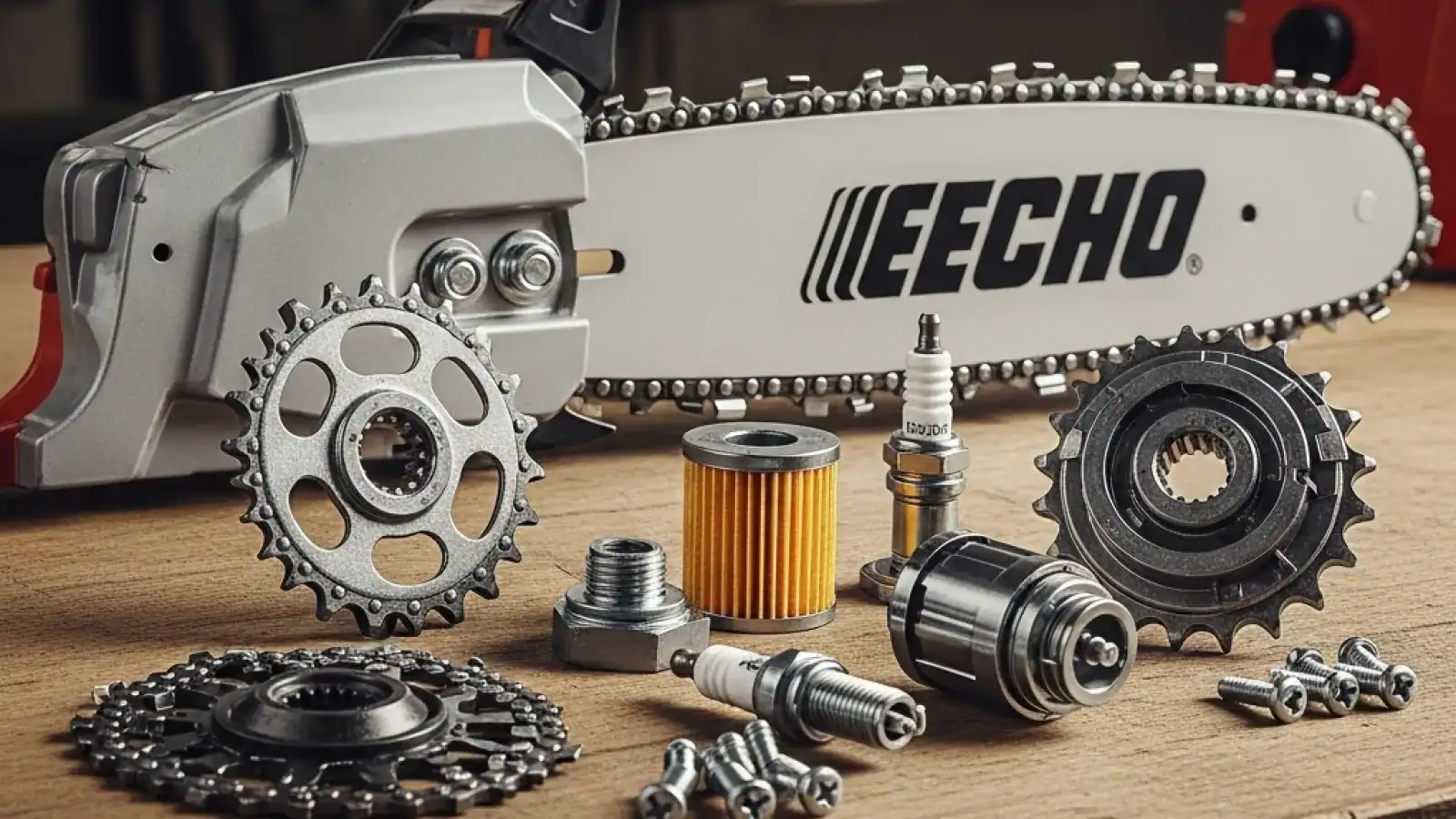
- Common Echo Chainsaw Parts and Their Maintenance Role
- Engine Components
- Cutting System Components
- Safety and Control Parts
- DIY Part Replacement Tips and When to Call a Pro
- Essential Tools for DIYers
- General Best Practices for Part Replacement
- When to Seek Professional Help
Why Quality Echo Chainsaw Parts Are Non-Negotiable
When it comes to maintaining your Echo chainsaw, the temptation to cut corners with cheaper, unverified parts can be strong. However, I can’t stress enough how critical it is to choose quality components – whether genuine OEM or reputable aftermarket options. This isn’t just about aesthetics; it profoundly impacts the saw’s safety, performance, longevity, and even its warranty.
Safety First, Always
Chainsaws are powerful tools, and safety features are not suggestions – they are lifelines. Components like the chain brake, chain catcher, and anti-vibration mounts are engineered with precision to protect the operator. For example, a properly functioning chain brake, which stops the chain in fractions of a second during kickback, relies on exact manufacturing tolerances. A low-quality aftermarket chain brake handle or internal spring might not engage reliably, putting you at severe risk. Similarly, degraded anti-vibration mounts, if made from inferior rubber, can crack, not only leading to operator fatigue but also causing control issues due to excessive vibration.
Optimal Performance and Efficiency
Every single part in your Echo chainsaw is designed to work in harmonious concert to deliver power to the chain. Consider the carburetor, for instance, which precisely mixes fuel and air; a poorly manufactured carburetor or even a faulty gasket can lead to improper fuel-air ratios, resulting in power loss, difficult starting, excessive fuel consumption, or even engine damage. The spark plug, air filter, and fuel filter also play crucial roles. A clogged or substandard air filter starves the engine of oxygen, while a cheap spark plug can lead to misfires, both drastically reducing your cutting efficiency and increasing wear on other components.
Longevity and Protecting Your Investment
Think of your chainsaw as a finely tuned system where each component relies on the integrity of others. A single low-quality part can initiate a disastrous domino effect. For example, a poorly fitting clutch drum can cause premature wear on the clutch shoes, or an inferior oil pump gear can lead to insufficient bar and chain lubrication, quickly destroying your guide bar and chain. Investing in quality parts upfront is a cost-effective strategy that prevents more expensive repairs down the line, safeguarding your Echo chainsaw, which is a significant investment.
Warranty and Resale Value Considerations
Most manufacturers, including Echo, stipulate that repairs must be conducted using genuine OEM (Original Equipment Manufacturer) parts to maintain warranty coverage. Using unapproved parts for certain repairs could void your warranty, leaving you financially exposed if a major component fails. Furthermore, when it comes time to sell your chainsaw, a history of proper maintenance with quality parts, especially OEM, significantly contributes to its resale value, assuring potential buyers of its reliable performance.
Deciphering Your Echo Chainsaw: The Power of Diagrams and Part Numbers
Before you even think about ordering a part, you need to know exactly what you’re looking for. This is where your chainsaw’s model number, serial number, and the invaluable Echo chainsaw parts diagram come into play. Trust me, guesswork leads to frustration and wasted money.
Locating Your Chainsaw’s Identity
The first step in any part search is to identify your specific Echo chainsaw model. You’ll typically find the model number (e.g., CS-400, CS-590, CS-2511T) and sometimes a serial number on a sticker or a stamped plate located on the chainsaw’s body. Common locations include the starter housing, under the handle, or on the engine casing itself. The model number is crucial for finding the correct parts diagram, while the serial number can sometimes help identify specific production runs where a part might have been updated or slightly changed.
Navigating the Echo Parts Diagram
The single most valuable tool for identifying the correct Echo chainsaw parts is the Echo chainsaw parts diagram. These diagrams provide an “exploded view” of your chainsaw’s internal and external components, meticulously labeling each part with a number that corresponds to an official part number. It’s like having X-ray vision for your saw!
Here’s how to effectively use one:
- Find Your Model Diagram: Go to the official Echo USA website, a reputable online parts retailer, or use a search engine for “[Your Echo Model Number] parts diagram”. For instance, if you own a popular model like the Echo CS-400, you’d search for “Echo CS-400 parts diagram”.
- Locate the Relevant Assembly: Diagrams are usually broken down into sections (e.g., engine, clutch, starter, handle, guide bar). Find the section that contains the part you need.
- Identify the Part: Visually locate the part on the diagram. It will be numbered. For example, if you need a new oil pump, find its depiction within the oiling system assembly.
- Match to the Part Number List: On the same page as the diagram, there will be a corresponding list of numbers and descriptions. Match the number from the diagram to this list to get the official OEM part number and description.
Having the correct part number is paramount. Many components, like a starter spring or a carburetor gasket, might appear visually similar across different Echo models but have subtle, critical differences in size, tension, or design. Trying to fit a part that’s “close enough” is a recipe for frustration and potential damage. This precision ensures you order exactly the right component for your specific chainsaw model and production run.
Understanding Part Numbers and Their Nuances
An Echo part number isn’t just a random sequence; it’s a unique identifier that ensures precision. Sometimes, a part number might have a suffix (e.g., -01, -A, -B) which indicates a revision or update to the part. While often interchangeable, it’s always best to try and match the exact part number from your diagram to ensure perfect compatibility. If you’re unsure, an authorized Echo dealer’s parts counter staff will have access to manufacturer updates and can confirm compatibility based on your model and serial number.
Sourcing Your Echo Chainsaw Parts: Options and Considerations
Once you’ve got that crucial part number, the hunt begins! There are several avenues for sourcing Echo chainsaw parts, each with its own advantages and disadvantages. Choosing the right source often depends on the urgency, the type of part, and your budget.
Authorized Echo Dealers
Where to find them: The most reliable method is to use the dealer locator on the official Echo USA website. Simply input your zip code, and it will show you authorized Echo chainsaw parts near me.
Pros: Authorized dealers are your gold standard for genuine OEM Echo parts. They have direct access to Echo’s entire catalog, including specialized or less common components that might not be stocked elsewhere. The staff are often highly knowledgeable, providing expert advice and ensuring you get the exact part you need, even for tricky compatibility issues. They can also offer professional installation services and warranty support.
Cons: Prices for genuine OEM parts may be slightly higher than some online or aftermarket options. Store hours and location might not always be convenient.
Online Retailers (Amazon, Specialized Parts Stores)
Availability: Online platforms like Amazon, eBay, and specialized outdoor power equipment parts websites (e.g., Jacks Small Engines, HL Supply) offer an incredibly vast selection of Echo chainsaw parts. You can find almost anything, from complete carburetor assemblies and clutch kits to pull starter ropes, fuel filters, and common wear items like guide bars and chains.
Pros: Convenience is a huge factor here – you can shop 24/7 from anywhere. Competitive pricing is common, especially with multiple sellers vying for your business. Customer reviews can also provide valuable insights into the quality and fit of aftermarket parts from various brands.
Cons: The biggest drawback is the risk of encountering counterfeit parts or low-quality aftermarket components, especially on large marketplaces like Amazon where various sellers operate. It’s crucial to verify the seller’s reputation and look for clear indications of whether a part is genuine OEM or a high-quality aftermarket alternative. Always double-check the part number against your diagram to ensure accuracy.
Local Hardware Stores / Big Box Retailers (Home Depot, Lowe’s)
Availability: Major retailers like Home Depot and Lowe’s, which often carry Echo chainsaws, will typically stock popular replacement items. This includes common Echo chainsaw chain and guide bars, spark plugs, air filters, and bar oil. They are ideal for quick, routine maintenance item pickups.
Pros: Unbeatable convenience for in-person shopping, especially when you need a common item quickly. You can often see the part before you buy it.
Cons: The selection of specialized internal Echo chainsaw parts is usually very limited. For more complex repairs or less common models, you’ll likely need to order online or visit a dedicated Echo dealer. Staff expertise regarding specific part compatibility can also vary significantly.
Aftermarket Parts: When and How to Choose Wisely
Aftermarket parts are manufactured by companies other than the original equipment manufacturer (Echo). They can be a cost-effective alternative, but quality varies wildly. I often recommend them for non-critical components, especially if you’re on a budget.
When to consider them: For parts like air filters, fuel filters, starter ropes, or even some guide bars and chains, a reputable aftermarket brand can offer good value. However, for critical engine components (carburetor, piston), safety features (chain brake components), or high-stress parts (clutch, crankshaft), I lean heavily towards OEM for peace of mind.
How to choose high-quality aftermarket: Look for brands with positive reviews, a good return policy, and clear descriptions of their materials and manufacturing standards. Be wary of extremely low-priced “no-name” parts, as they often use inferior materials and imprecise manufacturing, leading to poor fit and premature failure.
To help you decide, here’s a comparison table:
| Feature | OEM (Original Equipment Manufacturer) Parts | High-Quality Aftermarket Parts | Low-Quality Aftermarket Parts |
|---|---|---|---|
| Source | Manufactured by Echo (or approved supplier) | Independent manufacturers, reputable brands | Independent manufacturers, generic brands |
| Quality Assurance | Guaranteed to meet original specifications, rigorous testing | Can meet or exceed OEM specs, but varies by brand | Often subpar materials, loose tolerances |
| Fit & Finish | Perfect, designed for your specific model | Generally good, but always verify compatibility | Poor fit common, may require modification |
| Reliability | Highest, designed for optimal system performance | High, from trusted brands; reliable performance | Low, prone to premature wear and failure |
| Warranty Impact | Maintains chainsaw warranty for related repairs | May void warranty for related issues if not approved | Likely voids warranty; can cause other component failures |
| Price | Higher, reflecting R&D and quality control | Lower to moderate, good value alternative | Very low, often too good to be true |
| Best Use For | Critical engine parts, safety components, warranty concerns | Non-critical wear items (filters, ropes), budget-conscious repairs | Generally avoid due to safety and performance risks |
Common Echo Chainsaw Parts and Their Maintenance Role
Understanding what each major component does will empower you to perform better diagnostics and proactive maintenance. Let’s look at some key parts you’ll encounter and why they matter.
Engine Components
- Carburetor: This is the heart of your engine’s fuel system, mixing air and fuel in precise proportions. If your saw is hard to start, idles poorly, or lacks power, the carburetor might need cleaning, adjustment, or a rebuild kit (gaskets, diaphragms). Replacing a full carburetor assembly is also common.
- Spark Plug: Ignites the fuel-air mixture. A fouled, damaged, or incorrectly gapped spark plug can cause misfires, hard starting, and reduced power. Regularly inspect and replace it according to your Echo manual’s recommended intervals (e.g., annually or every 50 hours).
- Air Filter: Prevents dirt and debris from entering the engine. A clogged air filter starves the engine of air, leading to poor performance and fuel inefficiency. Clean it regularly (every 5-10 hours of use) and replace it when heavily soiled or damaged.
- Fuel Filter: Ensures clean fuel reaches the carburetor. Over time, it can get clogged with sediment, restricting fuel flow. Replace it annually or if you notice fuel delivery problems.
- Muffler & Spark Arrestor: Reduces engine noise and directs exhaust gases. The spark arrestor screen prevents hot carbon particles from exiting the muffler, crucial for fire prevention. Keep it clean; a clogged spark arrestor can reduce engine power.
Cutting System Components
- Guide Bar: Supports and guides the saw chain. It’s subjected to immense friction and heat. Regularly flip your guide bar to ensure even wear, clean the groove, and check the oil holes. Replace it if you see significant wear, cracks, or a pinched groove. Echo offers various bar lengths and types for models like the CS-590 (typically 18-24 inches) or the CS-400 (16-18 inches).
- Saw Chain: The actual cutting tool. There are different chain types (e.g., low-profile, semi-chisel, full chisel), each suited for specific tasks. Proper sharpening, tensioning, and lubrication are vital. Always replace dull, damaged, or stretched chains.
- Drive Sprocket: Located behind the clutch, it drives the chain. It wears down over time, often developing a “hooked” appearance. Always replace the drive sprocket when installing a new chain to ensure optimal chain life and smooth operation.
Safety and Control Parts
- Chain Brake: A critical safety feature that instantly stops the chain in the event of kickback. Always test its function before each use. If it feels loose, sticky, or doesn’t engage properly, components like the band, lever, or spring may need replacement.
- Chain Catcher: A small tab or fin located under the bar mount that prevents a derailed or broken chain from striking the operator. Ensure it’s intact and not bent.
- Anti-Vibration Mounts: These rubber or spring components isolate the handles from engine vibrations, enhancing operator comfort and reducing fatigue. Inspect them for cracks, hardening, or looseness.
- Starter Assembly: Comprises the pull rope, recoil spring, and pulley. The rope can fray, and the spring can break over time. Replacing the entire assembly or individual components (like the starter rope) is a common repair.
- Clutch Assembly: Engages the drive sprocket and chain when the engine speeds up and disengages when idling. Worn clutch shoes can cause the chain to spin at idle or slip during cutting.
DIY Part Replacement Tips and When to Call a Pro
Many Echo chainsaw parts replacements are well within the capabilities of a diligent DIYer. However, knowing your limits is key to safe and effective maintenance.
Essential Tools for DIYers
Before you dive into a repair, ensure you have the right tools. A basic chainsaw tool kit usually includes a spark plug wrench/scrench, a flat-head screwdriver for chain tensioning, and possibly a Torx or Allen key set depending on your model. For more involved repairs, you might need a circlip plier, a small torque wrench (for critical fasteners), and a soft-faced mallet. Always have safety glasses and gloves on hand!
General Best Practices for Part Replacement
Here are a few nuggets of wisdom from my years in the field:
- Safety First: ALWAYS disconnect the spark plug wire before performing any maintenance or part replacement to prevent accidental starting. This is non-negotiable.
- Read Your Manual: Your Echo owner’s manual is an invaluable resource. It often contains basic repair instructions, torque specifications, and maintenance schedules specific to your model.
- Take Photos: Before disassembling anything, take clear photos with your phone. These visual aids are lifesavers when you’re trying to remember how everything goes back together.
- Organize Parts: Use small containers or a magnetic tray to keep screws, washers, and springs organized. Label them if necessary. Nothing is worse than finishing a repair with a “mystery part” left over.
- Clean as You Go: Use a brush and compressed air to clean around the area you’re working on. Dirt and debris can contaminate new parts or get into critical areas.
- Torque Matters: For critical fasteners, especially on engine components, using a torque wrench to tighten to the manufacturer’s specification prevents damage from overtightening and ensures proper sealing.
When to Seek Professional Help
While I encourage homeowners to tackle common maintenance, there are times when calling a professional is the smarter, safer, and ultimately more cost-effective choice. If you’re dealing with complex internal engine repairs (like piston or crankshaft replacement), carburetor rebuilding and tuning beyond basic adjustments, or if you’re unsure about repairing safety-critical components (like the chain brake mechanism), it’s best to consult an authorized Echo service center. They have specialized tools, diagnostic equipment, and the expertise to handle intricate repairs correctly, ensuring your chainsaw operates safely and reliably.
Ultimately, a well-maintained Echo chainsaw is a joy to operate, capable of tackling tough tasks with ease. By understanding the importance of quality parts, knowing how to identify them, and being proactive with maintenance, you’ll ensure your Echo remains a dependable workhorse for many seasons to come. Keep those chains sharp, that engine tuned, and those parts genuine, and you’ll be cutting wood safely and efficiently for years.