



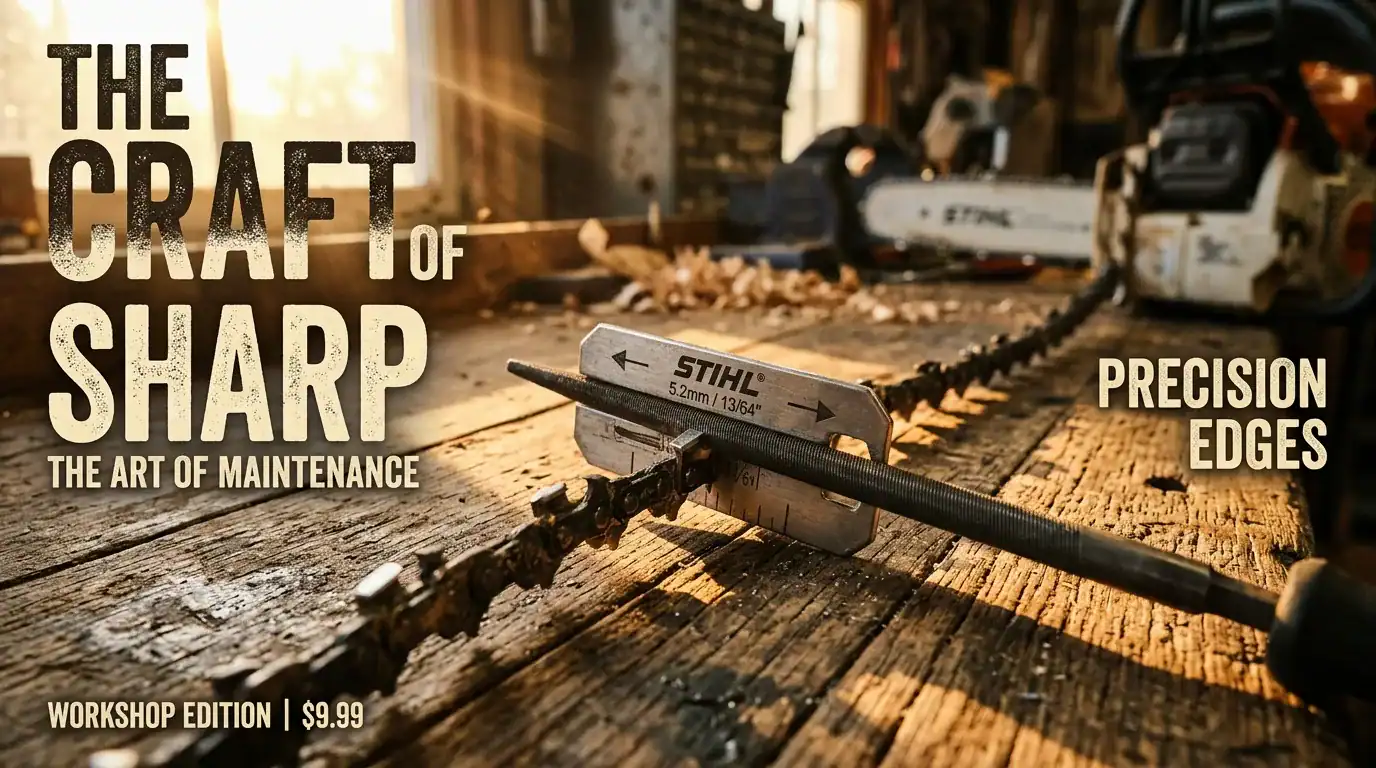

Unlock Sharpness: Choosing the Right Chainsaw File Guide
As a seasoned chainsaw professional, I can tell you that a sharp chain isn’t just a luxury; it’s a necessity for safe, efficient, and enjoyable cutting. A dull chain makes your saw work harder, wastes fuel, increases wear and tear, and most importantly, significantly raises the risk of kickback and other hazards. While freehand sharpening might seem appealing, achieving consistent, precise angles every time is incredibly difficult. That’s where a good chainsaw file guide comes in.
Table Of Content
- Unlock Sharpness: Choosing the Right Chainsaw File Guide
- Why a File Guide is Your Sharpening MVP
- Understanding Different Types of Chainsaw File Guides
- 1. Basic Round File Guide with Depth Gauge Tool
- 2. Roller Guides
- 3. Filing Jigs / Clamp-On Guides / Sharpening Frames
- 4. Electric Sharpeners (Brief Mention)
- Key Factors When Choosing Your File Guide
- 1. Chain Pitch & Corresponding File Diameter
- 2. Depth Gauge Setting
- 3. Ease of Use and Portability
- 4. Durability and Material
- Practical Steps for Using Your File Guide (General Overview)
- Final Thoughts from Your Chainsaw Pro
Think of a file guide as your personal sharpening assistant. It ensures you maintain the correct filing angles and depth gauge settings, transforming a tedious chore into a precise, repeatable task. Let’s dive into how to choose the right one for your needs.
Why a File Guide is Your Sharpening MVP
Many folks try to sharpen their chains by eye, only to end up with uneven teeth, incorrect angles, and a chain that’s still not cutting effectively. A file guide eliminates the guesswork, offering several crucial benefits:
- Consistency: Every tooth gets the same angle and depth, leading to balanced cutting.
- Accuracy: It helps you hit the critical 25-35 degree top plate cutting angle and the 10-degree down angle (or less, depending on chain type) consistently.
- Efficiency: A properly sharpened chain cuts faster and smoother, reducing effort and fuel consumption.
- Safety: Correctly filed teeth reduce the chance of kickback and other dangerous cutting behaviors.
- Longevity: Proper sharpening extends the life of your chain and your chainsaw itself.
Understanding Different Types of Chainsaw File Guides
There are a few main types of file guides, each with its own advantages:
1. Basic Round File Guide with Depth Gauge Tool
This is the most common and often the most affordable setup. It typically involves two main components:
- Round File Guide: This guide clips onto the chain and has markings or built-in rollers to help you maintain the correct top plate and side plate filing angles for your cutter teeth.
- Depth Gauge Tool: Separate from the round file guide, this tool is placed over the chain to check and file down the depth gauges (also known as rakers). The depth gauge determines how much wood each tooth takes out. If it’s too high, the chain won’t cut; too low, and it will cut aggressively, increasing kickback risk.
Many brands like Oregon, Stihl, and Husqvarna offer these sets. They are excellent for learning and offer great control.
2. Roller Guides
A roller guide is an enhancement to the basic round file guide. It features a small roller that rides along the top of the tooth, helping to maintain a consistent height and angle as you file. This can make the sharpening process smoother and more consistent, especially for those who struggle with maintaining a steady hand. They often integrate the depth gauge setting directly into the guide.
3. Filing Jigs / Clamp-On Guides / Sharpening Frames
These are more robust and precise systems. They typically clamp onto your chainsaw’s guide bar, holding the file at a fixed, predetermined angle. Examples include specific models from Husqvarna or Stihl that are designed to fit their respective chains. They offer a very high degree of accuracy and consistency, making them ideal for beginners who want perfect results or for users who sharpen frequently. Some models even have a built-in depth gauge setting.
4. Electric Sharpeners (Brief Mention)
While this article focuses on manual file guides, it’s worth noting that electric sharpeners exist. They mount to a workbench and use a grinding wheel. They offer speed and consistency but can remove more material if not used carefully, potentially shortening chain life. For most homeowners and on-the-go sharpening, manual file guides are the practical choice.
Key Factors When Choosing Your File Guide
To pick the perfect file guide, you need to understand your chain. The most critical factor is your chain pitch.
1. Chain Pitch & Corresponding File Diameter
The chain pitch is the distance between three consecutive rivets divided by two. It’s usually stamped on your chainsaw’s guide bar (often near the engine), on the original chain’s packaging, or in your chainsaw’s manual. Common pitches include:
- .325″ Pitch: Requires a 3/16″ (4.8mm) round file.
- 3/8″ Low Profile (LP) Pitch: Requires a 5/32″ (4.0mm) round file. (Often found on smaller homeowner saws.)
- 3/8″ Pitch: Requires a 13/64″ (5.2mm) or 7/32″ (5.5mm) round file. (Common on professional saws.)
- .404″ Pitch: Requires a 7/32″ (5.5mm) round file. (Typically on larger, professional forestry saws.)
This is non-negotiable! Using the wrong file size will damage your chain and prevent proper sharpening.
2. Depth Gauge Setting
Ensure your chosen file guide system includes a way to check and file down the depth gauges. Many complete kits, especially roller guides and filing jigs, integrate this function. If buying a basic round file guide, make sure to get a separate depth gauge tool.
3. Ease of Use and Portability
- For quick touch-ups in the field, a basic round file guide or roller guide is highly portable.
- If you prefer maximum precision and don’t mind a bit more setup, a clamp-on filing jig might be better for workshop use.
4. Durability and Material
Look for guides made from sturdy materials like high-quality plastic or metal that can withstand repeated use. Reputable brands like Stihl, Husqvarna, Oregon, and Pferd offer excellent, durable options.
Practical Steps for Using Your File Guide (General Overview)
- Secure Your Saw: Always clamp your chainsaw’s bar firmly in a vise. This is crucial for stability and safety.
- Identify the Shortest Tooth: Start with the shortest cutter tooth on your chain. Sharpen all other teeth to match its length to ensure even cutting.
- Place the Guide: Position the file guide securely on the tooth, ensuring it sits flush and the file is aligned with the guide’s markings for the correct angle.
- File with Consistency: Use smooth, even strokes, filing only on the forward stroke. Lift the file on the return stroke. Apply consistent pressure.
- Alternate Sides: Sharpen all teeth pointing in one direction (e.g., left cutters), then flip the saw or move to the other side and sharpen the remaining teeth (right cutters).
- Check Depth Gauges: After sharpening all cutter teeth, use your depth gauge tool to check and file down the depth gauges. File them lightly with a flat file until they are level with the guide’s slot.
For more detailed instructions and specific angle recommendations, always consult your chainsaw and chain manufacturer’s manuals.
Final Thoughts from Your Chainsaw Pro
Choosing the right chainsaw file guide is an investment in your safety, efficiency, and the longevity of your equipment. Don’t skimp on this essential tool! Match the file size to your chain’s pitch, and consider whether a basic guide, a roller guide, or a filing jig best suits your sharpening style and needs. With a quality file guide and a bit of practice, you’ll be able to keep your chain razor-sharp, ensuring your saw is always ready for peak performance, whether you’re felling trees or trimming firewood. Visit Best professional chainsaw for more expert advice on maintaining your power tools!