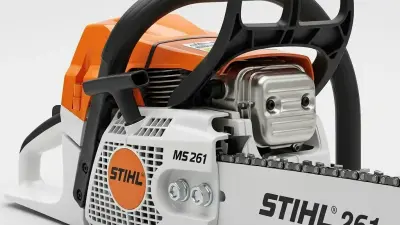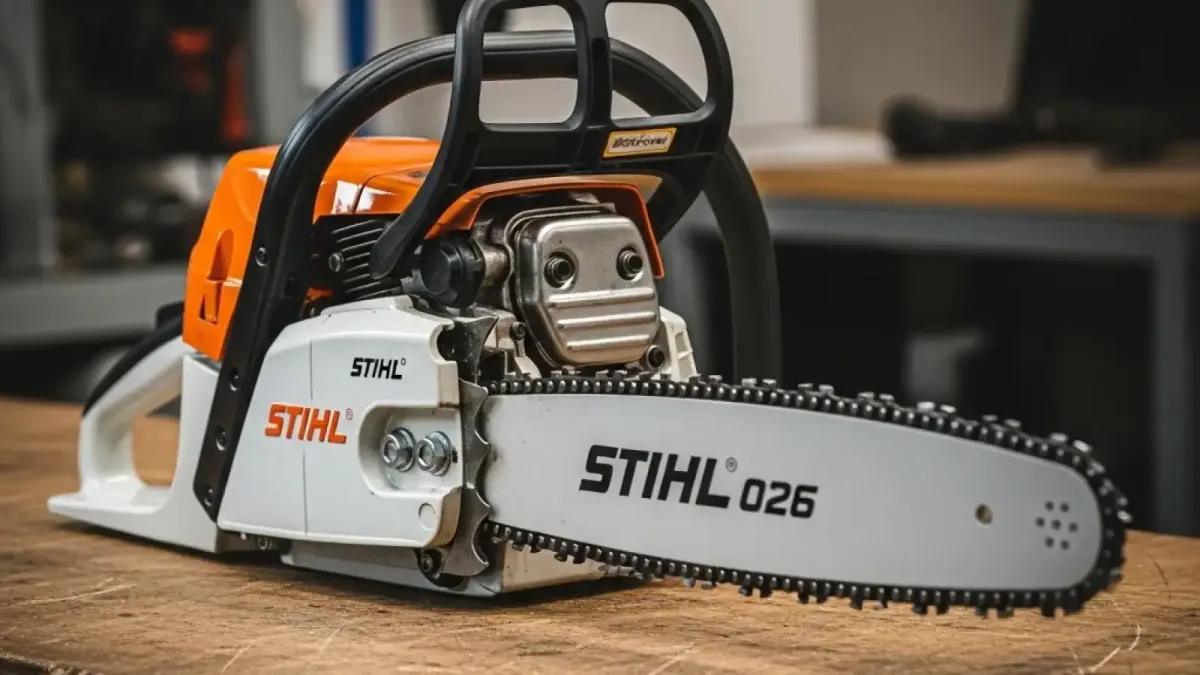
First introduced in the late 1980s, the Stihl 026 earned an absolute legendary status among forestry crews, professional arborists, and serious landowners. Engineered as a lightweight, mid-sized professional powerhead, this saw bridged the gap between smaller limbing saws and heavy timber fellers. Even today, decades after Stihl updated the lineup to the MS 260 and eventually the fuel-injected or M-Tronic MS 261, thousands of original 026 saws are still dropping trees and processing cordwood every weekend.
Quick answer: The Stihl 026 is a 48.7 cc professional gas chainsaw producing 3.5 horsepower (2.6 kW) with a bare powerhead weight of 10.8 lbs (4.9 kg). It features a durable professional-grade magnesium crankcase, revs up to 14,000 RPM, and performs best with a 16-inch or 18-inch guide bar running .325" pitch chain.
Stihl 026 Specs and Technical Engineering Overview
When studying the factory Stihl 026 specs, you quickly see why this tool routinely outlasts modern residential equipment. Unlike consumer saws built with plastic clamshell engine cases, the 026 utilizes a two-piece split die-cast magnesium crankcase. This rigid metal construction maintains dead-accurate crankshaft alignment under high thermal stress and heavy lateral forces when prying in a cut. A chrome-plated cylinder bore paired with dual piston rings ensures exceptional combustion seal and efficient heat dissipation, allowing the engine to hold high compression over decades of service.
Fuel delivery on the Stihl 026 is managed by high-grade diaphragm carburetors—typically Walbro WT-22 or Tillotson HU series units—equipped with high and low-speed adjustment screws alongside a standard idle speed screw. The ignition system uses a fully enclosed solid-state electronic module that resists moisture, vibration, and temperature extremes. Throughout its production run, Stihl made minor cosmetic and functional revisions, such as moving from the early "Red Top" air filter shrouds to the classic all-black covers, but the core engine geometry remained identical.
| Technical Parameter | Factory Specification |
|---|---|
| Engine Displacement | 48.7 cc (2.97 cu. in.) |
| Cylinder Bore x Stroke | 44 mm x 32 mm (1.73 in x 1.26 in) |
| Power Output | 3.5 bhp (2.6 kW) @ 9,500 RPM |
| Maximum Engine Speed | 13,000 – 14,000 RPM |
| Idle Speed | 2,700 – 2,800 RPM |
| Powerhead Weight (Dry) | 10.8 lbs (4.9 kg) |
| Recommended Bar Lengths | 16 in, 18 in, 20 in (40 cm to 50 cm) |
| Chain Pitch & Gauge | .325" Pitch / .063" (1.6mm) or .050" (1.3mm) Gauge |
| Fuel Tank Capacity | 15.6 fl. oz. (0.46 Liters) |
| Oil Tank Capacity | 9.5 fl. oz. (0.28 Liters) |
| Fuel Mix Ratio | 50:1 (89+ Octane Gasoline with JASO FD 2-stroke oil) |
Real-World Cutting Performance and Handling
Firing up a well-maintained 026 reveals instantaneous throttle response that modern emission-restricted saws struggle to match without electronic tuning. The power curve peaks around 9,500 RPM, but the engine continues pulling cleanly up to its top-end ceiling. When bucking 14-inch logs of hardwood like oak, hickory, or hard maple, the 48.7 cc displacement provides impressive torque for a sub-11-pound powerhead. It excels in timber stand improvement, thick brush clearing, and firewood processing where agility is just as important as raw lugging power.
For optimal balanced performance, pairing the 026 with a 16-inch or 18-inch guide bar running .325" pitch semi-chisel chain is the sweet spot. While the engine can pull a 20-inch bar in softwood, anything longer slows chain speed significantly and causes the oiling system to run close to its limit. Running high-quality gas chainsaws like this requires sticking strict to a 50:1 fuel-to-oil mix using mid-grade or premium unleaded fuel mixed with JASO FD certified two-stroke air-cooled engine oil to prevent piston scuffing.
Pro tip: If you are buying or tuning an older Stihl 026, inspect the flexible rubber impulse line and intake boot before adjusting carb screws. Over time, fuel vapor causes these vintage rubber components to harden and crack, pulling unmetered air into the crankcase. A lean air leak causes high erratic idling and will score your piston and cylinder wall in under two minutes under full throttle load.
Stihl 026 vs MS 260 vs MS 261: Evolution of the 50cc Class
To fully appreciate the 026, it helps to understand how Stihl evolved this 50cc chassis over three generations. The original 026 used standard threaded fuel and oil caps, an adjustable manual oiler on pro models, and fully mechanical carburetion without catalytic mufflers or EPA stratified scavenging. It was raw, high-revving, and lightweight.
When Stihl transitioned to the MS 260 in the early 2000s, they introduced toolless "flip-top" fuel caps, minor air filter housing changes, and initial environmental dampening. Engine power remained essentially identical at 3.5 hp, though late-model MS 260s ran slightly hotter due to muffler baffles. The modern MS 261 took a massive mechanical leap forward with a redesigned 50.2 cc 2-MIX engine, advanced anti-vibration spring mounts, and optional M-Tronic microprocessor fuel management. While the current MS 261 produces more power (4.0 hp), many retro enthusiasts still prefer the dead-simple maintenance and rebuildable nature of the original 026 chassis.
- Stihl 026: Mechanical carburetor, threaded tank caps, 10.8 lbs dry weight, classic analog 2-stroke design.
- Stihl MS 260: Toolless flip caps, updated shrouding, added EPA dampening, identical 3.5 hp output.
- Stihl MS 261: 50.2 cc displacement, 4.0 hp output, spring anti-vibration system, electronic M-Tronic carb option, heavier overall weight.
Maintenance Checklist, Safety Gear, and Operating Tips
Keeping an older professional saw running reliably requires routine preventative maintenance. Check your air filter after every major cutting session; the original fleece style filter on the 026 stops fine dust well, but requires gentle washing in warm soapy water rather than high-pressure compressed air, which can tear the fabric. Check chain tension often during work, keeping the drive links snug against the bottom bar rails while still allowing smooth rotation by hand.
Safety equipment is non-negotiable when operating high-rpm gas powerheads. Always gear up with cut-retardant chainsaw chaps or trousers rated for minimum 2,500 feet per minute chain speed, an ANSI-approved hard hat with an integrated mesh face shield, directional ear muffs, non-slip steel-toe leather work boots, and vibration-dampening gloves. Maintaining proper footing, cutting below shoulder height, and keeping your left thumb wrapped firmly around the front handlebar will keep you safe in the event of an unexpected kickback.
Is the Stihl 026 Worth Buying Today?
If you find a clean, well-cared-for Stihl 026 on the used market with good cylinder compression (150+ PSI), it remains one of the absolute best values in the 50cc chainsaw category. It offers superior durability compared to brand-new consumer-grade saws while weighing noticeably less than modern emissions-laden equipment. For cutting 2 to 5 cords of firewood annually, clearing storm debris, or limbing felled timber, mounting an 18-inch bar with a sharp .325" chain on an 026 gives you a fast, nimble, and easily repairable workhorse that will last for years to come.
Frequently Asked Questions
What is the exact horsepower rating of the Stihl 026?
The Stihl 026 produces 3.5 brake horsepower (bhp) or 2.6 kW of power at 9,500 RPM from its 48.7 cc engine powerhead.
What is the best bar length for a Stihl 026?
An 16-inch or 18-inch guide bar provides the best balance of cutting speed, balance, and lubrication for the 026 powerhead. While a 20-inch bar can be fitted, it tends to slow down chain revs in thick hardwoods.
What spark plug does a Stihl 026 take?
The factory recommendation for the Stihl 026 is a Bosch WSR 6F or NGK BPMR7A spark plug gapped to 0.020 inches (0.5 mm).
What fuel ratio should I run in a Stihl 026?
Run a strict 50:1 fuel mixture, which equals 2.6 fluid ounces of high-quality 2-stroke air-cooled engine oil per 1 gallon of 89+ octane unleaded gasoline.
Sources
- Stihl Brand Overview & History - Wikipedia
- OSHA Standard 1910.266 - Logging Operations Safety Standards
- ANSI B175.1 Safety Requirements for Gasoline Chainsaws