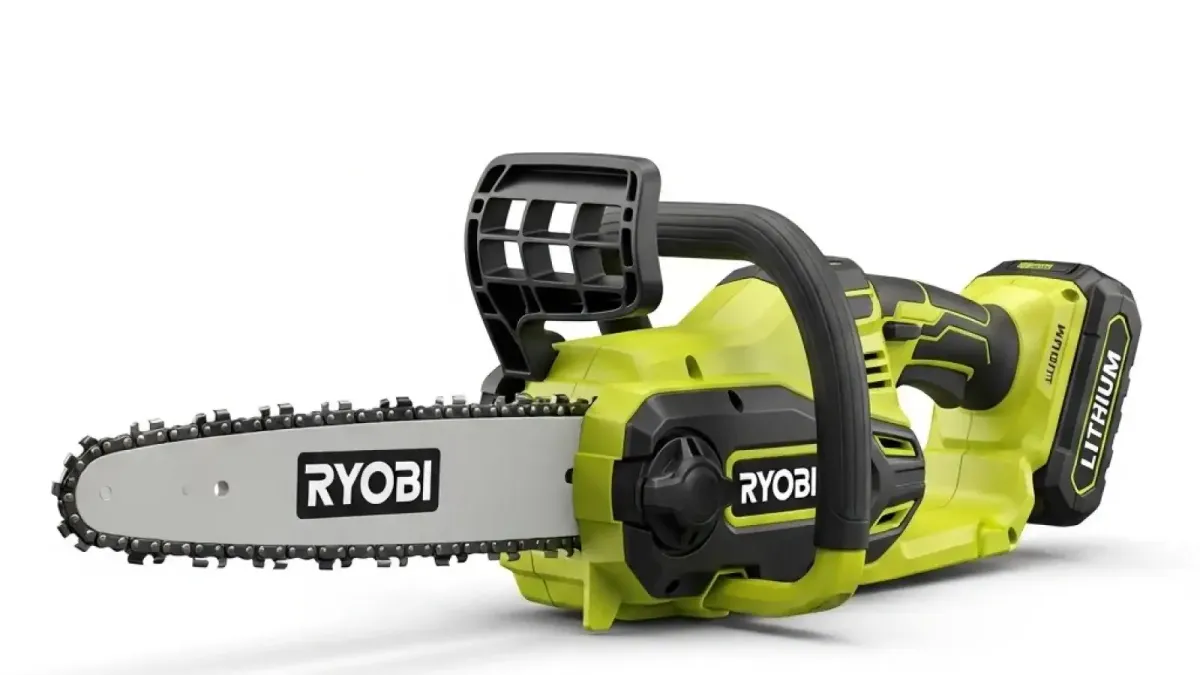
Gasoline-powered chainsaws have dominated timber cutting for decades, but modern lithium-ion engineering has completely changed how homeowners handle yard maintenance. Ryobi has established itself as a leading choice in the battery outdoor power equipment sector, offering versatile battery-driven saws that remove the need for 50:1 two-stroke fuel mixing, carburetor cleaning, and tedious pull-starting routines. Whether you need to clean up storm debris, cut firewood, or trim encroaching oak branches, selecting the right battery system determines how efficiently your work gets done.
Quick answer: If you need a lightweight tool for light pruning, limbs under 4 inches, and minor yard upkeep, an 18V ONE+ Ryobi chainsaw with battery (typically 4.0Ah or 6.0Ah) offers excellent maneuverability and value. For bucking firewood, clearing blowdowns, or felling small trees up to 12 inches thick, choose a 40V HP Brushless Ryobi chainsaw kit equipped with at least a 4.0Ah or 5.0Ah high-capacity battery to ensure gas-like power and sustained runtime.
Choosing a Ryobi Chainsaw with Battery and Charger
When shopping for a cordless setup, the single most critical decision is whether to purchase a standalone bare tool or a complete kit. Buying a Ryobi chainsaw with battery and charger included in a factory bundle almost always costs significantly less than buying the battery pack and charger separately later. Ryobi packages their tools under clear kit designations, where a bundled kit supplies the saw body, a lithium-ion battery cell, a compatible charger, and an initial bottle of bar and chain oil so you can start cutting right out of the box.
Battery capacity is measured in Ampere-hours (Ah), which directly correlates to your continuous cutting runtime under load. A standard 18V 2.0Ah battery pack works for quick branch trimming, but it will quickly overheat or drain during sustained heavy cuts. For meaningful wood cutting, an 18V saw requires a High Performance (HP) 4.0Ah or 6.0Ah battery pack. On the higher-voltage 40V platform, Ryobi pairs larger saws—like their 14-inch, 16-inch, and 18-inch models—with 4.0Ah, 5.0Ah, or 6.0Ah 40V batteries. A 40V 4.0Ah battery holds roughly 144 Watt-hours of energy, providing enough juice to execute over 100 full passes through 6-inch pine logs on a single charge.
For existing owners of Ryobi power tools, compatibility across product lines provides a major economic advantage. The 18V ONE+ battery slide mechanism has remained identical across hundreds of tools for over two decades. However, high-demand equipment like chainsaws draws substantial electrical current. Utilizing Ryobi’s High Performance (HP) lithium-ion batteries featuring 21700 battery cells ensures maximum power output, lower operating heat, and reduced voltage sag during hard buried cuts in dense hardwoods like hickory or oak.
Model Type Bar Length Typical Price Range (Kit) Intended User 18V ONE+ Pruning Saw 8 inches $179 – $250 Light branch work 18V ONE+ HP Chainsaw 12 inches $289 – $349 homeowner firewood, moderate limbs 40V HP Chainsaw 14 – 18 inches $350 – $699 Serious homeowner, property owner
18V ONE+ vs 40V HP Brushless: Performance & Specs
Understanding the actual mechanical output between Ryobi's two main battery platforms requires looking beyond simple voltage metrics. The 18V ONE+ line targets lightweight ergonomics, portability, and overhead branch pruning. Conversely, the 40V HP Brushless platform is designed to compete directly with 37cc to 42cc small-engine gas chainsaws. The 40V systems feature higher chain speeds (often exceeding 15 meters per second) and brushless motors that dynamically adjust torque output when the chain encounters tough knots or dense grain patterns.
Bar length, chain pitch, and drive link gauge dictate what kind of wood cutting a specific saw can safely handle. Ryobi 18V chainsaws typically utilize 8-inch, 10-inch, or 12-inch guide bars paired with narrow-kerf 3/8-inch Low Profile (LP) pitch chain and a .043-inch gauge. These thin cutting profiles minimize friction and drag on the motor, maximizing battery life. The 40V HP series scales up to 14-inch, 16-inch, 18-inch, and even 20-inch guide bars, utilizing 3/8-inch LP or .325-inch pitch with a sturdier .050-inch drive gauge capable of tackling major fallen limbs and tree trunks.
| Specification / Feature | Ryobi 18V ONE+ (e.g., 12" HP) | Ryobi 40V HP Brushless (e.g., 14"-18") |
|---|---|---|
| Target Application | Light pruning, limbing, branches < 6" | Storm cleanup, bucking firewood, trees < 14" |
| Gas Equivalent Power | ~25cc Gas Engine | 37cc to 42cc Gas Engine |
| Recommended Battery | 18V 4.0Ah / 6.0Ah HP | 40V 4.0Ah / 6.0Ah HP |
| Chain Pitch & Gauge | 3/8" Low Profile, .043" Gauge | 3/8" Low Profile, .050" Gauge |
| Tool-less Tensioning | Available on select models | Dual-stud scrench or tool-less wheel |
| Average Dry Weight | 5.8 lbs to 7.5 lbs | 9.5 lbs to 12.8 lbs |
Pro tip: Brand new saw chains stretch rapidly during their first 10 to 15 minutes of active cutting due to rivet seating. When running a new Ryobi cordless saw, stop after your first three cuts, remove the battery pack, check your chain tension, and adjust it so the drive lugs sit flush inside the guide bar groove without sagging underneath. Running a slack chain on a high-torque 40V battery saw causes rapid sprocket wear and risks dangerous chain derailment.
Essential Maintenance, Replacement Parts & User Instructions
While cordless chainsaws eliminate gasoline fuel stabilizer management, spark plug replacement, and air filter washings, they still require disciplined mechanical upkeep to operate safely. The bar and chain friction requires continuous oil delivery. Ryobi saws feature automatic oiling systems driven by internal gear pumps. You must monitor the translucent bar oil reservoir continuously and refill it using high-grade, high-tack bar and chain oil before every work cycle. Never run a battery saw dry; insufficient lubrication generates intense frictional heat that ruins the temper of the metal teeth and prematurely kills battery pack efficiency.
When maintenance is required, sourcing correct battery chainsaw replacement parts ensures longevity and safe operation. Over time, components such as the drive sprocket wheel, guide bar, cutting chain, bumper spikes, and oil fill caps will experience normal wear. Maintaining sharp cutter teeth is vital. A dull chain forces the electric motor to pull excessive electrical current from the battery cell, leading to thermal overload protection cutouts. Sharpen 3/8-inch LP chains using a precise 5/32-inch (4.0mm) round file maintained at a 30-degree top-plate filing angle.
Safety practices must remain top priority regardless of how quiet or friendly an electric motor sounds. Always wear proper Personal Protective Equipment (PPE) before engaging the motor, including ANSI-approved safety glasses, full chainsaw chaps with cut-retardant fibers, heavy leather work gloves, and steel-toe boots. Even though cordless motors stop instantly when the variable-speed trigger is released, the physical inertia of a spinning metal cutter chain can cause serious injury upon contact.
- Pre-Operation Inspection: Check that the chain brake handguard activates properly and check oil reservoir levels.
- Chain Tension Test: Pull the chain downward on the underside of the bar; the drive lugs should lift slightly out of the rail groove but spring back snugly when released.
- Post-Work Cleanup: Remove the side clutch cover, sweep out compressed wood chips mixed with oil sludge, and store the saw horizontally on a protective mat to prevent oil weeping.
- Battery Storage: Never store lithium-ion batteries in fully discharged states or under freezing temperatures; store them indoors at approximately 50% charge state for optimal lifespan.
For exact operational guidelines, replacement part numbers, and exploded circuit diagrams, consult your official Ryobi cordless chainsaw user manual. Manuals can be downloaded directly in PDF format from the manufacturer's technical support database by typing in your specific tool model number (located on the rating label beneath the motor housing).
How Ryobi Compares to Market Competitors
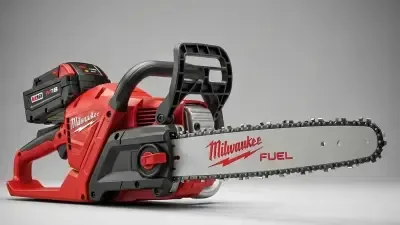
Evaluating Ryobi alongside competing residential battery systems helps establish clear performance expectations. Brands available across retail outlets—such as Milwaukee, DeWalt, Greenworks, and Ego—compete heavily in the cordless outdoor power space. While commercial arborists often lean toward high-voltage platforms or professional-grade gas equipment like those discussed in our guide to chainsaw mechanical maintenance, Ryobi maintains a distinct value advantage for typical homeowners.
Compared to premium 60V or 80V homeowner platforms, Ryobi 40V HP saws deliver around 85% to 90% of maximum cut speed while offering far greater battery cross-compatibility across lawn mowers, leaf blowers, string trimmers, and augers. Furthermore, the accessibility of repair parts and nationwide warranty support makes owning a Ryobi chainsaw with battery kit a lower-risk investment long-term compared to obscure off-brand battery tools sold exclusively online.
Frequently Asked Questions
How long does a Ryobi chainsaw battery last while cutting?
Runtime depends heavily on battery capacity (Ah), wood hardness, and log diameter. A Ryobi 40V HP chainsaw equipped with a 4.0Ah battery typically yields between 70 to 120 cuts through 6-inch softwoods per charge. Using smaller 2.0Ah batteries or cutting dense, seasoned hardwoods will shorten operating time significantly.
Can I use an 18V ONE+ battery in a 40V Ryobi chainsaw?
No. Ryobi 18V ONE+ and 40V battery platforms use entirely different physical mounting footprints, terminal configurations, and operating voltages. You cannot power a 40V saw with an 18V battery or vice versa.
Why is my Ryobi cordless chainsaw leaking bar oil during storage?
Automatic chain oilers rely on gravity and thermal expansion to feed oil across the guide bar groove. Temperature swings cause air inside the oil tank to expand, pushing residual oil out through the pump orifice while the tool sits on a bench. To prevent leaks, store the saw on flat cardboard or drain remaining bar oil back into its original container if storing the tool long-term.
What size file do I need to sharpen my Ryobi chainsaw chain?
Most 18V and 40v ryobi chainsaws featuring factory-installed 3/8-inch Low Profile (LP) chains require a standard 5/32-inch (4.0mm) round chainsaw file along with a matching depth gauge tool set to .025 inches.
Final Recommendation
For general light-duty yard maintenance, overhead limbing, and fast setup without gasoline hassles, select an 18V ONE+ HP 12-inch Ryobi chainsaw bundled with a 4.0Ah battery. If you face fallen trees, bucking logs over 8 inches thick, or post-storm cleanup duties, step up to a Ryobi 40V HP Brushless chainsaw kit featuring a 14-inch or 16-inch bar and a 4.0Ah or 5.0Ah high-capacity battery pack for maximum cutting speed and sustained runtime.
Sources
- Ryobi Tools Official Technical Documentation & User Manuals
- ANSI B175.1 Safety Requirements for Gasoline and Electric Powered Chainsaws
- OSHA Standard 1910.266 - Logging Operations & Chainsaw Safety Practices