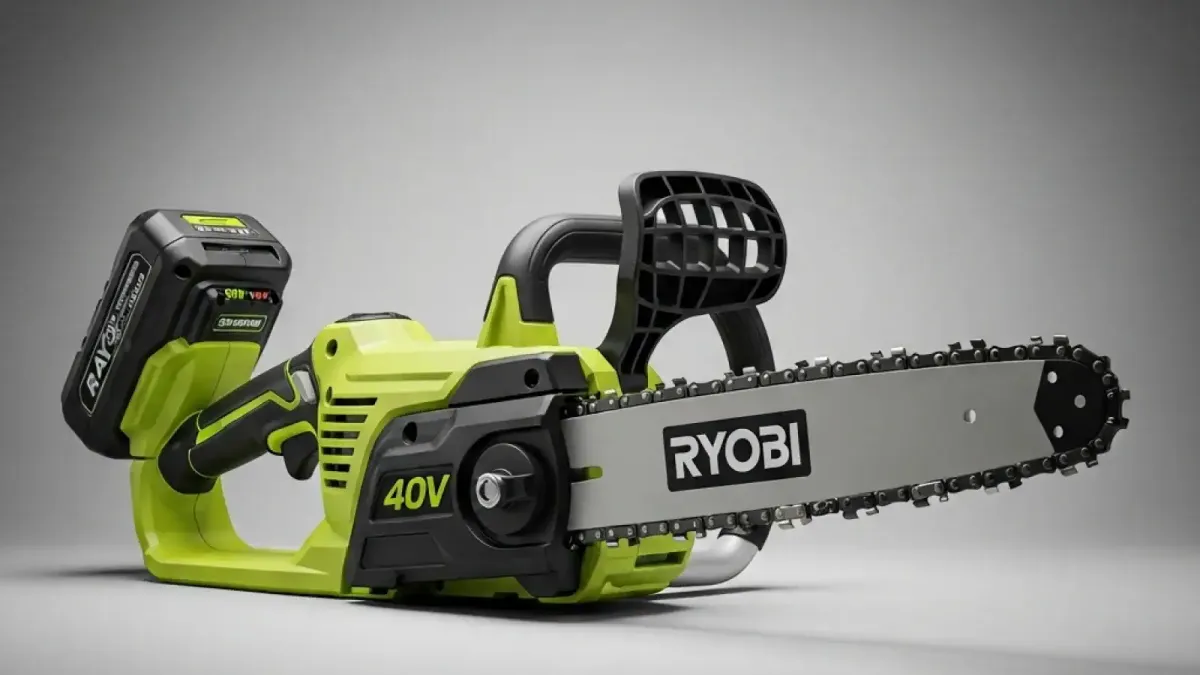
Quick answer: Ryobi 40V HP Brushless chainsaws deliver raw torque comparable to 38cc–40cc gas-powered saws while entirely eliminating carb tuning, fuel mixing, and pull-cord frustration. Models featuring 16-inch to 18-inch bar configurations paired with a 5.0Ah or 6.0Ah battery handle hardwood logs up to 14 inches in diameter with ease. For residential landowners needing clean, quiet, and low-maintenance firewood processing or storm response, Ryobi’s 40V platform offers top-tier value and performance.
Engine Tech and Real-World Cutting Performance
The core engine performance of Ryobi’s flagship 40V lineup relies heavily on modern brushless motor technology, specifically marketed under their HP (High Performance) tier. Traditional brushed motors generate heat and frictional drag through mechanical carbon brushes, which quickly drains battery reserves during heavy cuts. In contrast, Ryobi's HP brushless motors use electronic control circuits to continuously adjust power delivery based on resistance, maintaining consistent chain speed even as you bite into dense red oak or seasoned maple. This intelligent load monitoring prevents the saw from stalling under heavy downforce, providing a cutting feel that closely mirrors a healthy 40cc two-stroke engine.
Chain speed plays a crucial role in clean wood discharge and smooth cutting action across all timber species. Top-tier 40V models like the RY40580 achieve chain speeds reaching up to 22 meters per second (mps), while standard 16-inch models operate around 14.2 mps. Higher mps ratings allow the cutter teeth to sever wood fibers cleanly without tearing, which drastically reduces operator fatigue and prevents dangerous kickback caused by chatter. During bucking tests on 12-inch pine and ash logs, the 18-inch HP brushless saw buries its guide bar without sinking engine RPMs, provided the operator allows the weight of the saw to do the work rather than forcing the tip.
Noise production and starting mechanisms present two of the most significant performance upgrades over small-displacement gas engines. gas chainsaws operating at 10,000 RPM consistently generate sound levels exceeding 100 to 110 decibels (dB), requiring heavy hearing protection and irritating suburban neighbors. Ryobi’s 40V units operate around 85 to 90 dB under load, producing a soft electric whine rather than a deafening roar. Furthermore, starting the tool requires only depressing the safety lock lever and pulling the variable-speed trigger, eliminating flooded carburetors, fouled spark plugs, and stale 50:1 gas mixtures that plague seasonal users.
Battery Efficiency, Voltage, and Runtime Expectation
Battery performance on any cordless outdoor power tool directly dictates how much actual work you can accomplish before taking a break at the charger. Ryobi’s 40V system utilizes high-density 21700 battery cells in its higher-capacity packs, which deliver thermal management superior to older 18650 cell configurations. When pairing an 18-inch HP saw with a 6.0Ah battery pack, users can expect roughly 80 to 90 full cuts through 8-inch green hardwood logs under normal ambient temperatures. However, heavy bucking through wet 14-inch hickory logs will increase amp draw, dropping that output closer to 50 to 60 cuts per charge cycle.
Thermal cutoffs and battery health management are built directly into the pack architecture to prevent permanent cell damage during summer operation. When pushing a cordless saw continuously in 90°F (32°C) weather, the onboard battery management system (BMS) may shut down power temporarily to let internal temperatures stabilize. Investing in a rapid charger—capable of replenishing a 6.0Ah pack in roughly 60 minutes—or maintaining two rotating batteries completely resolves runtime delays for medium-duty land clearing projects.
Pro tip: Always let your 40V battery cool down for 15 minutes after draining it before snapping it onto the charger. Charging a hot battery triggers thermal delays in the charger circuit and degrades lithium-ion cell health prematurely over time.
Comparing Top Ryobi 40V Models & Specifications
Selecting the right saw within Ryobi’s 40V ecosystem depends primarily on timber diameter, target workload, and user physical comfort. The lineup ranges from lightweight 14-inch compact models tailored for limb pruning to heavy-duty 18-inch options designed for severe storm cleanup and small tree felling. Comparing technical specifications side-by-side helps clarify which bar length, chain profile, and weight class best aligns with your property maintenance requirements.
The table below summarizes key mechanical specifications across current flagship Ryobi 40V battery chainsaw models:
| Model Number | Bar Length | Motor Type | Chain Pitch / Gauge | Gas Equivalent | Weight (Bare Tool) |
|---|---|---|---|---|---|
| RY40480 / RY404100 | 14 Inches | Brushed / Standard | 3/8" LP / .043" | 30cc Gas | 8.8 lbs |
| RY40550 / RY40507 | 16 Inches | Brushless | 3/8" LP / .050" | 38cc Gas | 10.2 lbs |
| RY40HPCW02 | 16 Inches | HP Brushless | 3/8" LP / .050" | 40cc Gas | 12.8 lbs |
| RY40580 / RY40508 | 18 Inches | HP Brushless | 3/8" LP / .050" | 40cc+ Gas | 13.5 lbs |
While standard brushed 14-inch models offer an ultra-lightweight chassis ideal for overhead ladder work or light fence line pruning, the HP Brushless 16-inch and 18-inch models represent the true sweet spot for versatile cutting capacity. Moving up to the 18-inch RY40580 provides structural rigidity, high-torque output, and metal bucking spikes, which allow you to pivot the saw frame directly against logs for superior leverage during crosscuts.
Bar, Chain, Maintenance, and Safety Best Practices
Maintaining proper chain tension and cutter sharpness is twice as vital on a battery saw as it is on a gas unit. A dull chain increases friction exponentially, forcing the electric motor to draw double the amperage and draining your battery pack in half the usual time. Ryobi utilizes standard 3/8-inch Low Profile (LP) chain pitch with .050-inch gauge drive links on its 16-inch and 18-inch models, making high-quality replacement loops from Oregon or Stihl widely accessible at local hardware stores. Regular hand filing using a 5/32-inch (4.0mm) round file kept at a 30-degree top-plate angle restores keen cutting edges within minutes.
Guide bar oiling systems on Ryobi 40V saws operate automatically via a mechanical plunger pump driven off the main drive shaft. Modern models feature a translucent bar oil reservoir, enabling quick visual checks of fluid levels between cut sessions. Always use dedicated, high-viscosity bar and chain oil formulated with tackifier additives; standard motor oil lacks the tackiness required to cling to the drive links at maximum mps speed, resulting in dry bar grooves and ruined drive sprockets.
- Verify Chain Tension Frequently: New chains stretch quickly during their initial 15 minutes of cutting. Adjust tension until drive links sit flush in the bar groove but can still be pulled smoothly around the bar by hand with gloved fingers.
- Keep the Sprocket Pocket Clean: Wood chips mixed with bar oil accumulate behind the side clutch cover. Wipe away debris around the brake mechanism after every battery charge to maintain proper brake engagement.
- Dress the Guide Bar Rails: Remove the guide bar every few sharpenings, file off burrs along the outer side rails, and flip the bar upside down to ensure balanced rail wear over time.
- Wear Complete Personal Protective Equipment (PPE): Battery saws start instantly with zero idle warning. Always equip ANSI Z87.1 rated safety glasses, wrap-around chainsaw chaps, heavy leather gloves, and steel-toe boots when operating any power saw.
Chain brake functionality must be tested prior to every cutting session. Snapping the front hand guard forward mechanically locks the chain drive drum instantly, halting chain rotation within milliseconds. If kickback occurs—typically caused by contacting wood with the upper quadrant of the guide bar nose—the operator's left wrist contacts the guard, engaging the brake instantly to protect against severe head or neck trauma.
Choosing the Right Saw for Your Needs
Homeowners seeking a reliable tool for seasonal property maintenance, storm response, and moderate firewood cutting will find that the Ryobi 40V HP Brushless 18-inch (RY40580) or 16-inch (RY40HPCW02) offers the absolute best balance of cutting torque, battery runtime, and ergonomic balance. Start by assessing your typical timber size; if 80% of your cutting involves branches under 12 inches in diameter, pairing a 16-inch saw with two 4.0Ah or 5.0Ah 40V batteries provides an unbeatable combination of manageable weight, effortless starting, and long-term durability without ever storing gasoline in your garage.
Frequently Asked Questions
Can a Ryobi 40V chainsaw cut through hard woods like oak and maple?
Yes, Ryobi 40V HP Brushless chainsaws cut through dense hardwoods like oak, maple, and hickory cleanly. To achieve optimal speed and avoid stalling, keep your chain sharp with a 5/32-inch file, use a 5.0Ah or 6.0Ah battery, and let the saw's weight drive the cut rather than forcing downforce on the rear handle.
How long does a 40V Ryobi battery last while cutting wood?
A standard 4.0Ah 40V battery provides approximately 50 to 60 full cuts through 8-inch logs, while a larger 6.0Ah battery yields around 80 to 90 cuts under similar conditions. Actual operational time varies based on timber density, ambient temperature, chain sharpness, and operator technique.
What file size is needed to sharpen a Ryobi 40V chainsaw chain?
Most Ryobi 16-inch and 18-inch 40V chainsaws use a standard 3/8-inch Low Profile (LP) chain pitch with a .050-inch gauge, which requires a 5/32-inch (4.0mm) round chainsaw file for manual hand sharpening.