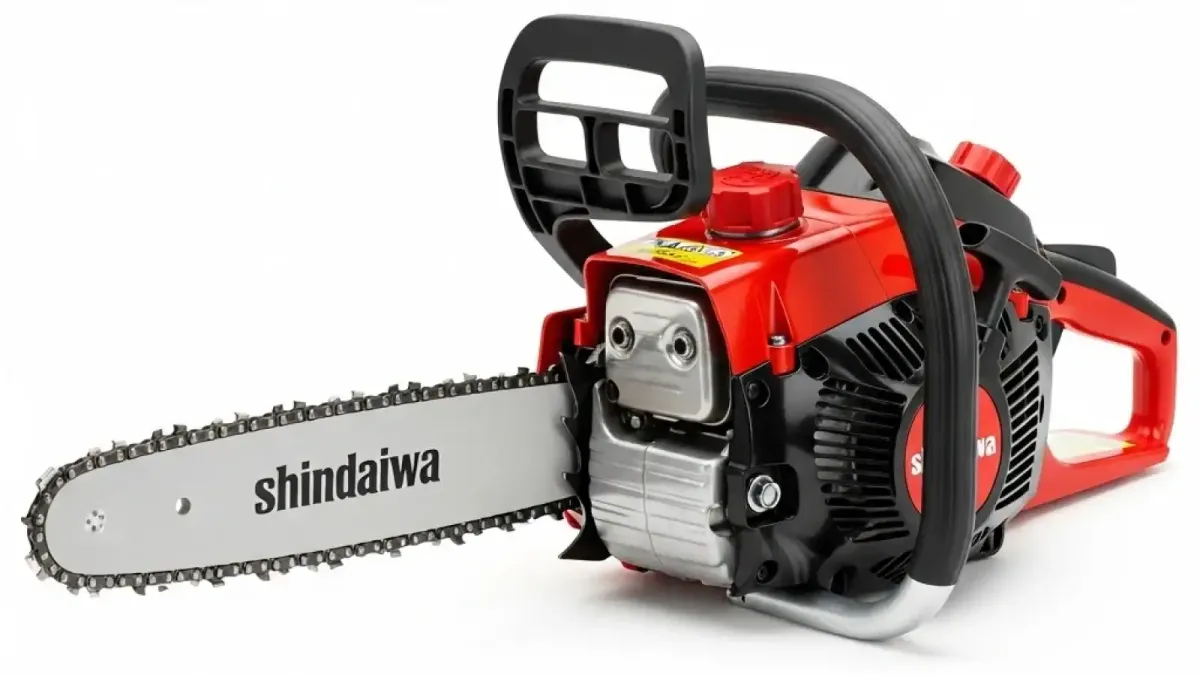
Quick answer: Shindaiwa chainsaws deliver exceptional Japanese build quality, featuring chrome-plated cylinder walls, heavy-duty crankcases, and outstanding balance that rival top-tier Stihl and Husqvarna professional models. Saws like the legendary 488 (47.9 cc) and 757 (73.5 cc) are engineered for long commercial service lives, offering lower long-term maintenance costs despite a smaller dealer network.
Japanese Precision Engineering: The Shindaiwa Advantage
Understanding what makes a Shindaiwa saw tick requires a look inside its engine block. Rather than relying on stamped steel and high-volume polymer assemblies, Shindaiwa built its reputation on die-cast aluminum crankcases, precision-machined forged steel crankshafts, and heavy-duty ball bearings. The cylinder walls feature electro-plated hard chrome coating, which resists heat scoring better than standard budget alloys and helps maintain high compression through thousands of cutting hours. The digital Capacitor Discharge Ignition (CDI) system used across their lineup modifies ignition timing automatically across the entire RPM spectrum. This ensures instant throttle response when accelerating out of a limb cut and prevents severe stalling under heavy loads. Fuel efficiency is managed via carefully tuned Walbro or Zama carburetors that maintain precise stoichiometric fuel-to-air ratios, working alongside high-efficiency centrifugal air pre-cleaners. This system slashes air filter cleaning intervals by slinging heavy sawdust out of the intake tract before it hits the main filter element.| Feature Comparison | Shindaiwa | Husqvarna | Stihl |
| Primary Focus | Durability, Balance, Engine Life | Lightweight, High-RPM Cutting Speed, Technology (AutoTune) | High Torque, Rugged Construction, Vast Dealer Network |
| Engine Feel | Smooth, high-quality, strong usable torque. | Free-revving, quicker acceleration at high RPMs. | Strong low-end grunt (torque) for tough wood. |
| Vibration Control | Excellent, often praised for its comfort. | Excellent, particularly on X-Torp and XP models. | Very good, known for solid, durable feel. |
| User Consensus | Highly preferred by those who demand Japanese quality and reliability over new technology. | Favored by professionals for all-day usability and innovative electronics. | Favored by professionals for raw torque and robust construction. |
Pro tip: On two-stroke commercial saws like Shindaiwa, always allow the engine to idle for 30 to 45 seconds before snapping the throttle wide open on a cold morning. A fast rev before the heavy-duty chrome cylinder and forged piston heat up evenly can lead to micro-scoring on the exhaust piston skirt, gradually robbing you of top-end compression over time.
Head-to-Head: Shindaiwa vs. Husqvarna and Stihl
Comparing Shindaiwa against industry heavyweights requires looking beyond raw peak RPM numbers to evaluate real-world torque curves, mechanical layout, and long-term maintenance requirements. While Stihl dominates raw dealer presence and Husqvarna leads in raw engine speed, Shindaiwa carves out its space through mechanical simplicity and durability. Reviewing chainsaw performance dynamics helps contextualize how these brands differ in daily commercial work.| Feature / Spec | Shindaiwa Professional Class | Stihl Professional Class | Husqvarna XP Series |
|---|---|---|---|
| Engine Construction | Two-piece chrome cylinder, cast aluminum | Nikasil plated cylinder, magnesium case | Nikasil plated cylinder, magnesium case |
| Carburetion | Traditional manual or digital tuning | M-Tronic electronic control | AutoTune electronic control |
| Weight Distribution | Extremely central, low profile | Slightly front/top weighted | Slim chassis, forward balanced |
| Typical Fuel Ratio | 50:1 (Premix synthetic) | 50:1 (Premix synthetic) | 50:1 (Premix synthetic) |
Spotlight on Key Models: The Legendary 488 and 757
To truly appreciate Shindaiwa's engineering heritage, one must analyze their standout mid-range and heavy-duty workhorses. These models represent the core design philosophies that helped the brand build its loyal following. Selecting the correct chainsaw model size depends largely on the timber diameter and duty cycle you anticipate on your property.| Model | Class | Approx. CC | Key Features |
| 488/492/501SX | Mid-Range Professional | $sim50$ cc | Excellent power-to-weight; ideal for felling small-to-medium trees and processing firewood. Long-term owners rave about its longevity. |
| Model | Class | Approx. CC | Key Features |
| 757/731SX | Heavy-Duty Professional | $sim73$ cc | Known for possessing massive, useable torque rather than just peak RPM. Built for $24"$ to $32"$ bars and harsh environments. |
| Model Example | CC Class | Typical New Price Range (USD) | Value Proposition |
| 335S | $34.4$ cc (Limb/Firewood) | $250 - $350 | Entry-Pro: Superior durability and engine life compared to other homeowner saws. |
| 492/501SX | $50.2$ cc (All-Rounder) | $400 - $550 | Mid-Range Workhorse: Japanese quality and balance for the serious homeowner or light contractor. |
| 600SX/731SX | $60$ cc+ (Heavy Duty) | $700 - $1,000+ | Professional Grade: Reliability and high torque for the professional logger who demands minimal downtime. |
Real-World Operational & Maintenance Guidelines
Operating a Shindaiwa saw safely and maximizing its lifespan requires sticking to strict fuel management and routine maintenance schedules. Because these high-compression engines run tight tolerances, fuel quality is critical. Always mix a high-grade 50:1 two-stroke fully synthetic oil with 89-octane or higher ethanol-free gasoline. Ethanol attracts moisture and breaks down rubber fuel lines, leading to lean fuel conditions that can destroy a piston in minutes. Prior to starting any saw, safety gear is non-negotiable. Always wear proper Personal Protective Equipment (PPE), including cut-retardant chainsaw chaps (ASTM F1897 certified), a hard hat equipped with a wire mesh face screen, wrap-around ANSI-rated safety glasses, and hearing protection with a minimum Noise Reduction Rating (NRR) of 25 dB. Proper grip and stance prevent loss of control during potential kickback events. Routine maintenance should be tracked by operating hours to keep performance at peak levels:- Every Tank: Check bar oil reservoir levels, verify chain tension (the chain tie straps should snug firmly against the bottom bar rail without sagging), and ensure the chain brake engages smoothly.
- 10 Operating Hours: Remove the air filter cover and blow out fine dust from the inside out using compressed air. Clean the guide bar groove and clear the oil inlet hole. Flip the guide bar 180 degrees to promote even rail wear.
- 50 Operating Hours: Inspect the spark plug gap (typically set to 0.024 inch / 0.6 mm), clean off carbon build-up on the spark arrestor screen in the muffler, and check the drive sprocket for wear grooves deeper than 0.5 mm.
- 100 Operating Hours: Replace the inline fuel filter weight inside the gas tank, fit a fresh spark plug, and inspect anti-vibration mounts for cracking or degradation.
Frequently Asked Questions
Are Shindaiwa and Echo the same company?
Yes, Shindaiwa and Echo operate under the parent company Yamabiko Corporation. While they share some manufacturing facilities and underlying tech platform components, Shindaiwa chainsaws are tuned and styled specifically for commercial and professional users, featuring premium heavy-duty engine components and distinct ergonomic setups.
What oil fuel mix ratio does a Shindaiwa chainsaw take?
Modern Shindaiwa two-stroke chainsaws require a 50:1 gas-to-oil mix ratio. This is achieved by mixing 2.6 fluid ounces of high-quality ISO-L-EGD or JASO FD certified synthetic two-stroke oil with one gallon of unleaded gasoline (minimum 89 octane, preferably ethanol-free).
Where are Shindaiwa chainsaws manufactured?
Shindaiwa chainsaws are designed and primarily manufactured in Japan. Yamabiko Corporation maintains strict Japanese manufacturing standards for engine casting, machining, and final powerhead assembly across their professional power equipment line.
Can I still get replacement parts for older Shindaiwa models like the 488 or 757?
Yes, routine maintenance parts such as air filters, fuel filters, spark plugs, drive sprockets, carburetors, and bar hardware remain widely available through authorized Yamabiko/Echo/Shindaiwa dealers and reputable online small engine suppliers.
Sources
- Shindaiwa USA Official Technical Specifications
- ANSI B175.1 Safety Requirements for Gasoline-Powered Chainsaws
- OSHA 1910.266 Logging Operations & Power Tool Safety Standards